

Reviewed · SOUTH AFRICA · TOURS IN JOHANNESBURG
Soweto: Walking Tour with a Local Guide and Lunch
Soweto is best understood on foot, with a guide who can connect the 1976 uprising to the streets, homes, food, and daily routines you see today. I like the way this tour combines major landmarks with a walk through less-touristed parts of the township. I also like the local lunch and short minibus-taxi ride, which add real texture to the day.
The main consideration is that this is a serious walking tour, not a quick coach circuit. Mandela’s House costs extra, lunch may be fairly simple, and the visit to an informal settlement requires sensitivity. Still, at $43 for four hours, including a guide, lunch, and water, it offers a strong value for anyone wanting more than a postcard view of Soweto.
Key points to know before booking

- The 1976 uprising is explained on the actual streets where it unfolded, beginning at the Hector Pieterson Memorial and continuing along Moema Street.
- Maweza is the guide most often named by visitors, praised for clear storytelling, personal experience, warmth, and his ability to answer difficult questions.
- Vilakazi Street brings together Mandela and Desmond Tutu landmarks, along with local food, shops, and plenty of street life.
- The tour includes a short minibus-taxi ride, giving you a practical taste of how many residents move around Soweto.
- Nomzamo Park adds a harder, more present-day view of township life, handled best with respect and an open mind.
- Wear proper walking shoes and carry cash, since you will cover ground on foot and may want to tip performers or support local people.
Why this four-hour Soweto walk works

This tour has a useful shape. It begins with the history most visitors come to learn, moves into famous homes and local food, then broadens into transport, housing, and everyday life.
That progression matters. If you only visit Mandela’s House and take photographs on Vilakazi Street, you see an important but narrow slice of Soweto. Here, the guide places those landmarks beside streets where people live, commute, work, eat, and raise families.
The strongest part is the guide-led storytelling. Maweza is the name that comes up most often, but Teboho, Mulalo, and Thabo have also led tours. The best guides do more than recite dates. They explain apartheid, the origins of Soweto, the 1976 student protests, and the area’s present-day realities in a way that connects past and present.
You should expect a conversational tour rather than a silent walk behind a flag. Guides answer questions, adjust the pace, and may tailor the amount of local interaction to your comfort. That personal approach is especially useful in an area where context matters.
Other walking tours in Johannesburg people book:
- Johannesburg: City Centre Walking Tour
★ 4.8 · 152 reviews - Cape Town: Nathi Langa Township Walking Tour
★ 4.9 · 493 reviews - Cape Town: Art, Culture & History Walking Tour
★ 4.9 · 392 reviews
Starting at Vilakazi Espresso and the Hector Pieterson Memorial
Meet your guide in front of Vilakazi Espresso, opposite the Hector Pieterson Memorial. This is a simple meeting point, but arrive ready to start on foot. Hotel pickup and drop-off are not included, so you need to arrange your own way to Vilakazi Street.
The Hector Pieterson Memorial sets a sober tone. It recalls the 1976 Soweto Uprising, when school students protested against the apartheid government’s language policy and faced police violence. The memorial is linked to the famous photograph of Hector Pieterson being carried after he was shot.
You spend about 20 minutes here with a guided visit and time for photographs. That may sound brief, but the guide’s explanation is what gives the site weight. You are not simply looking at a monument. You are learning why this place became a symbol of resistance and how the uprising changed South Africa’s political story.
From here, the walk continues down Moema Street, retracing part of the historic march. This is one of the tour’s most valuable details. History feels different when you are walking through the streets connected to it, rather than hearing about it from a distant museum room.
Mandela’s House and the famous Vilakazi Street address

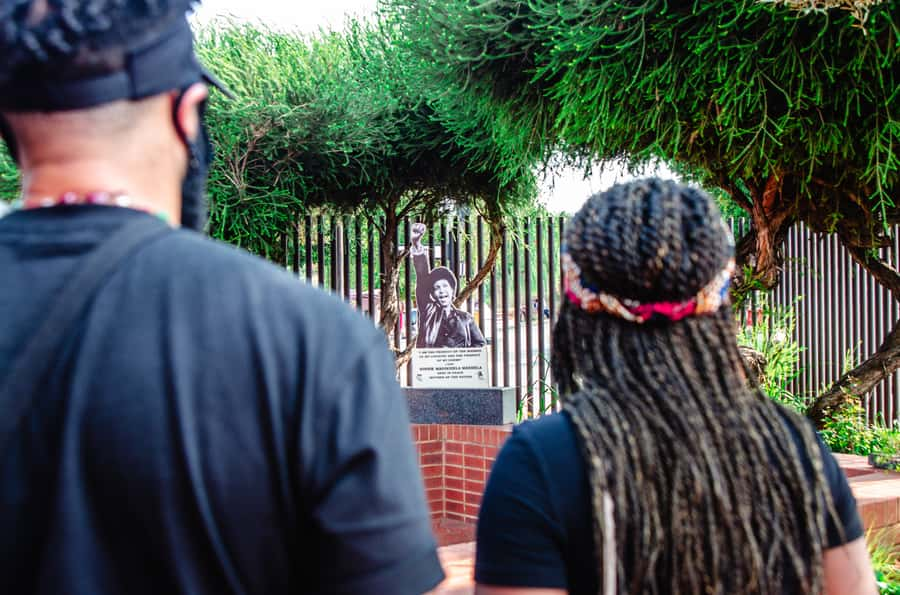
The route continues to Vilakazi Street in Orlando West, one of Soweto’s best-known streets. Nelson Mandela and Desmond Tutu both lived here, making the area unusual in South African public life.
At Mandela’s House, you have about 20 to 25 minutes for a visit and photographs. The tour price does not include the entrance fee, so bring extra cash if you want to go inside. The house offers a more intimate look at Mandela’s life than a large national museum can provide, though the short visit means you should not expect a long, leisurely museum session.
Your guide can explain Mandela’s connection to Soweto and the years before his 27-year imprisonment. This context helps keep the visit from becoming a simple celebrity stop. The point is not only where Mandela lived, but how his personal story fits into the larger struggle against apartheid.
Vilakazi Street itself has a more commercial feel than the quieter residential sections later in the tour. You will find food, shops, photo opportunities, and people moving through one of Soweto’s most visited areas. I like that the tour does not pretend this is untouched or frozen in the past. Soweto is a living place, and popular streets naturally have visitors and businesses.
Desmond Tutu’s house and the wider freedom story

A short stop follows at Desmond Tutu’s former home. The visit lasts about five minutes, so this is mainly a photo stop and a chance to hear the guide explain Tutu’s role in South Africa’s transition.
Seeing Mandela’s and Tutu’s homes on the same street gives you a useful lesson. The fight against apartheid was not shaped by one person or one political group. It involved activists, religious leaders, students, workers, families, and communities.
The guide can also help you understand why Soweto became such a powerful center of political action. The township was not merely a backdrop to national events. Its residents helped drive those events.
Other cultural tours in Johannesburg:
- Johannesburg: Hop-On Hop-Off Bus with Optional Soweto Tour
★ 4.6 · 985 reviews - Soweto /Johannesburg and Apartheid Museum Guided Full Day Tour
★ 5.0 · 932 reviews - Johannesburg Hop-On Hop-Off City Tour with Soweto Option
★ 4.5 · 768 reviews - Half-Day Tour of Soweto Tour
★ 4.5 · 712 reviews
Local lunch on Vilakazi Street

Lunch is included, and you eat at a local shop on or near Vilakazi Street. The food is described as Sowetan street food, with kota appearing in several accounts. A kota is a substantial township-style sandwich, and one description compared the included meal to a chip butty.
This is not a polished restaurant meal, and that is part of the point. You are eating the kind of casual local food that fits the setting and keeps the tour moving. Some meals may include a vegetarian option, but food choice appears limited compared with a restaurant menu.
If you have dietary restrictions, ask before booking or confirm with the operator. Drinks are not included, so carry cash for something extra. Bottled water is included, but I would still bring additional water, especially on a hot day.
Lunch also gives the walking group a natural pause. Four hours on foot can feel long in warm weather, so this break helps. It is also a chance to ask your guide about what you have seen before the route changes direction.
Winnie Mandela House and Orlando East

After lunch, the route includes a short stop outside Winnie Mandela’s house. This adds another important figure to the story of Soweto and the anti-apartheid movement.
The visit lasts about 10 minutes and is mainly for photographs and explanation. Do not expect a long interior tour here. Its value lies in the guide’s context, especially when the stop is considered alongside Mandela’s home, Tutu’s home, and the nearby sites connected with the uprising.
You then continue toward Orlando East. This section shows how different parts of Soweto fit together, rather than treating Vilakazi Street as the whole township. The walk lasts roughly 15 minutes, and the guide points out local sights along the way.
Riding a minibus taxi to the Soweto Towers
One of the tour’s more distinctive touches is the short minibus-taxi ride to the Soweto Towers. Public transport is part of normal life in Soweto, so this is more than a novelty ride for visitors.
You get a small taste of how people move around the township, then continue to the famous cooling towers. The towers are a strong visual landmark and a popular photo stop. Their bold painted surfaces make for memorable pictures, but the guide’s explanation gives the stop more purpose than a quick snapshot.
The taxi ride is also a useful reminder that travel in Soweto is not only about grand historical sites. Local transport, short connections, and ordinary movement through the township are part of the experience.
Keep some cash with you. One visitor specifically wished they had brought more to tip street entertainers and support people they met along the route. Tipping is not listed as an included cost, so plan for it separately if you want to do so.
Nomzamo Park and the difficult side of township life
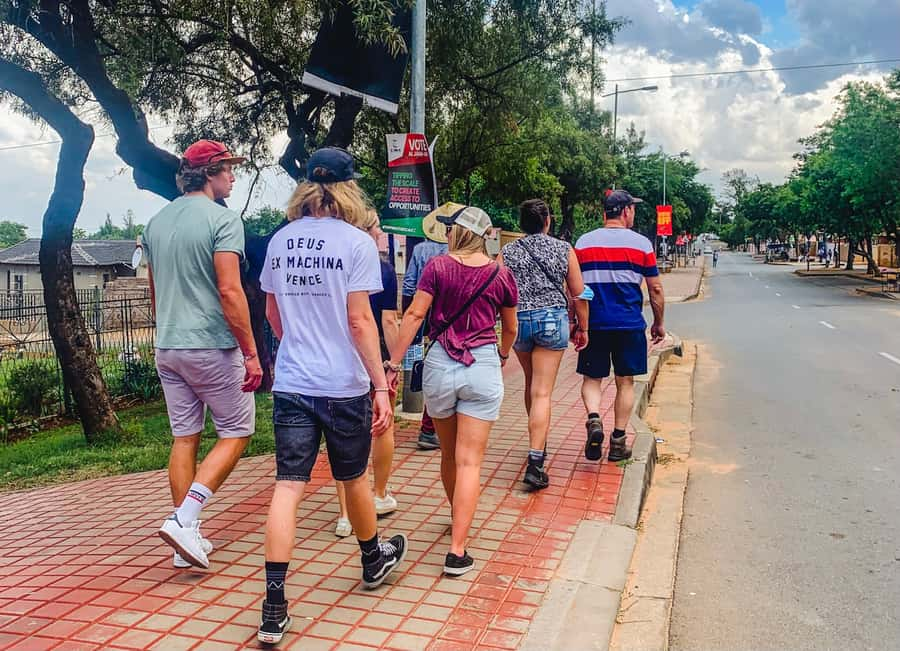
The final major stop is Nomzamo Park, described as an informal settlement. This is where the tour moves beyond famous names and public landmarks.
You may see corrugated-metal homes and get a closer sense of the housing conditions faced by some Soweto residents. The stop is not meant to turn hardship into a spectacle. A good guide explains what you are seeing, introduces the community with care, and gives you room to decide how much interaction feels appropriate.
Some people find this the most meaningful part of the tour because it shows present-day life rather than only historical memory. Others may find it emotionally difficult. Both reactions are reasonable. Go with humility, avoid intrusive photographs, and follow your guide’s advice about when to observe and when to engage.
The supplied tour information says local residents are accustomed to visitors and generally appreciate people coming to experience their community. That does not remove the need for good manners. Ask before taking close-up photographs, listen more than you speak, and remember that this is someone’s home.
The stop is listed at about 25 minutes, though some accounts describe it as optional. If you are uncomfortable, tell the guide. The tour’s strongest guides check how you are feeling and allow some flexibility without losing the main route.
Walking demands, safety, and practical comfort
You should be comfortable walking for much of the four hours. The route includes several streets, visits, and connections between stops, with a short minibus-taxi ride rather than private transport throughout.
Wear supportive shoes. Sunscreen, water, a hat, hand sanitizer or tissues, and a camera are sensible additions. The tour operates rain or shine, so check the forecast and bring a light rain layer when needed.
The activity is not suitable for wheelchair users. The walking, uneven conditions, and minibus-taxi segment make this a poor fit for travelers who need step-free access.
Safety is a fair concern for first-time visitors to Johannesburg. The guide stays with you and leads the route through the township. The strongest accounts describe feeling safe and looked after, including one guide who waited with a participant until an Uber arrived. Still, use normal city sense, stay with the group, and avoid displaying valuables.
The tour is in English, with a live guide and an English audio guide listed as included. The spoken guide is the more important part, since questions and conversations are central to the experience.
Is $43 good value for this Soweto tour?
At $43 per person, this is good value if you want a guided look at several sides of Soweto. The price includes four hours, a local guide, lunch, and bottled water. It also includes the minibus-taxi experience and the time spent moving between historic, residential, and cultural stops.
You still need to pay for your own transport to the meeting point, drinks, Mandela’s House entrance fee, and any tips or small purchases. Those extras can raise the day’s cost, but the base price remains fair for the amount of guide time involved.
The real value is the local interpretation. You could photograph the Hector Pieterson Memorial, Mandela’s House, and the Soweto Towers independently, but you would miss much of the connection between them. A good guide explains why the sites matter and helps you read the modern township beyond its tourist landmarks.
This tour is particularly worthwhile if you have already visited the Apartheid Museum or Constitution Hill and want to see where the history played out. It also works well as a first introduction to Soweto, provided you are ready for serious subject matter and plenty of walking.
Who should book this experience?
I would choose this tour if you want history, local food, and direct contact with daily life in one half-day. It suits curious first-time visitors to Johannesburg, people interested in apartheid-era history, and anyone who prefers a neighborhood walk to a bus window.
Families can manage it. One account describes children aged eight, 12, and 15 taking part, though parents should decide if the history and informal-settlement visit fit their children.
It is also suitable for South Africans who want a fresh look at Soweto. One local participant found the experience worthwhile, which says something about the guide’s ability to offer more than basic facts.
I would look elsewhere if you want a polished sightseeing tour, a full restaurant lunch, private transport, or a short list of photo stops. I would also avoid booking it if you dislike walking, have mobility limits, or feel uncomfortable visiting residential areas.
Should you book the Soweto walking tour?
Book it if you want to understand Soweto as both a historic center of resistance and a living community. The combination of the Hector Pieterson Memorial, Mandela and Tutu landmarks, street food, public transport, the Soweto Towers, and Nomzamo Park gives you a far fuller picture than a quick drive-through.
Bring comfortable shoes, extra cash, and an open attitude. If possible, request or look for Maweza, whose calm, personal storytelling is repeatedly singled out, though Teboho, Mulalo, and Thabo have also guided strong tours.
The visit to Mandela’s House costs extra, lunch is simple, and the informal-settlement stop calls for care. Those are fair tradeoffs for a four-hour experience that puts Soweto’s past and present in the same frame.
FAQ
Where does the Soweto walking tour meet?
Meet your guide in front of Vilakazi Espresso, opposite the Hector Pieterson Memorial.
How long does the tour last?
The tour lasts four hours.
What language is the tour conducted in?
The live tour guide speaks English, and an English audio guide is also included.
Is lunch included?
Yes. Lunch at a local shop is included, along with bottled water. Drinks are not included.
Is the entrance fee for Mandela’s House included?
No. The entrance fee for Mandela’s House is not included in the tour price.
Does the tour include hotel pickup and drop-off?
No. You must make your own way to the meeting point, and hotel pickup and drop-off are not included.
Is the tour suitable for wheelchair users?
No. The experience is not suitable for wheelchair users.
What should I bring?
Bring comfortable shoes, sunscreen, water, a camera, cash, hand sanitizer or tissues, and a face mask or protective covering. The tour runs rain or shine.
More walking tours elsewhere in Africa
- Marrakech: Ben Youssef, Secret Garden, & Souks Walking Tour
★ 4.6 · 2,802 reviews - Marrakech: Colorful Medina Souks Guided Walking Tour
★ 4.7 · 2,470 reviews - Explore Fes: Unforgettable Guided Walking Tour of the Medina
★ 4.7 · 1,339 reviews - Nairobi: Historic and Modern Highlights Walking Tour
★ 4.8 · 703 reviews
Just added in Johannesburg
- Soweto: Bike Tour with a Local Tour Guide★ 4.7 · 114 reviews
- From Johannesburg: Lion & Safari Park Half-Day Tour★ 4.6 · 384 reviews
- Johannesburg: Soweto & Apartheid Museum Half-Day Tour★ 4.9 · 99 reviews
- Johannesburg: Soweto Apartheid & Township Tour with Lunch★ 4.8 · 80 reviews
- Johannesburg: Street Art and Culture in Maboneng!★ 4.8 · 107 reviews
- Johannesburg: Half-Day Soweto Tour with a Local Guide★ 4.8 · 110 reviews
- Soweto: Hop-On Hop-Off Bus, City Tour and Apartheid Museum★ 4.5 · 250 reviews
- Johannesburg: Maboneng Street Art & Culture Tour★ 4.9 · 257 reviews
Township & Cultural Tours, compared.

Soweto /Johannesburg and Apartheid Museum Guided Full Day Tour
Read our review →
Johannesburg Hop-On Hop-Off City Tour with Soweto Option
Read our review →



Browse the lists this tour appears in