
Reviewed · SOUTH AFRICA · TOURS IN JOHANNESBURG
Johannesburg: City Centre Walking Tour
Johannesburg’s city centre is not a postcard version of South Africa. It is a working part of the city, full of grand old buildings, street life, political stories, and hard questions about urban change. This three-hour walking tour takes you from Gandhi Square through the CBD, Newtown, and Braamfontein, ending near a local shisanyama restaurant.
I like the way the tour connects gold-mining origins with modern Johannesburg, rather than treating the city as a collection of isolated sights. I also like the guides’ personal approach. Refiloe, Thabo, Mulalo, Mathapelo, Tebogo, and Clement have all led this walk, and the strongest feedback points to guides who explain the city clearly, help you feel at ease, and adjust the pace to your interests.
The main consideration is that access can change. The Workers Museum may be closed on Mondays, and the Carlton Centre’s famous 360-degree viewing access has reportedly stopped, even though the building remains part of the route. Also, the booking details call the tour wheelchair accessible but separately say it is not suitable for wheelchair users, so ask the operator to clarify before paying.
Key points to know
- Gandhi Square to Mandela Bridge: The route crosses several central districts instead of keeping you in one small pocket.
- Gold rush beginnings: Ferreirasdorp and Main Street help explain why Johannesburg grew where it did.
- Mandela and Tambo’s law office: Chancellor House connects the city to the political struggle against apartheid.
- Workers Museum and Newtown: You get a look at migrant labour, theatre, public art, and creative life.
- Guides make the difference: Refiloe is especially praised for his history, humour, care, and ability to answer questions.
- Bring practical gear: Wear comfortable shoes, carry sun protection, and expect a steady urban walk.
Why this Johannesburg walk is worth your time

Many first-time visitors base themselves in Sandton, where hotels, offices, and shopping centres make getting around easy. That can be useful, but it tells you little about how Johannesburg began. The CBD gives you a much clearer sense of the forces that shaped the city: gold, migration, segregation, political resistance, property decline, renewal, and youth culture.
For $40 per person, this tour offers a useful orientation in a short amount of time. You are paying for a local guide, entrance fees, bottled water, and a planned route through places that can be difficult to understand on your own. The value is not in grand interiors or long museum visits. It is in the explanations between stops, when a guide can point out why a building matters or connect a street corner to a wider South African story.
The three-hour schedule is fairly full. Some stops last only five or ten minutes, while the longer walks give your guide room to explain the city and answer questions. If you are the only person booked, the tour may become longer and more personal. One solo booking ran for four hours, with the guide adding extra time to show more of the CBD. That is a generous bonus, but you should plan around the advertised three hours rather than count on an extension.
Other walking tours in Johannesburg people book:
- Soweto: Walking Tour with a Local Guide and Lunch
★ 4.9 · 648 reviews - Cape Town: Nathi Langa Township Walking Tour
★ 4.9 · 493 reviews - Cape Town: Art, Culture & History Walking Tour
★ 4.9 · 392 reviews
Starting at Gandhi Square and the Carlton Centre
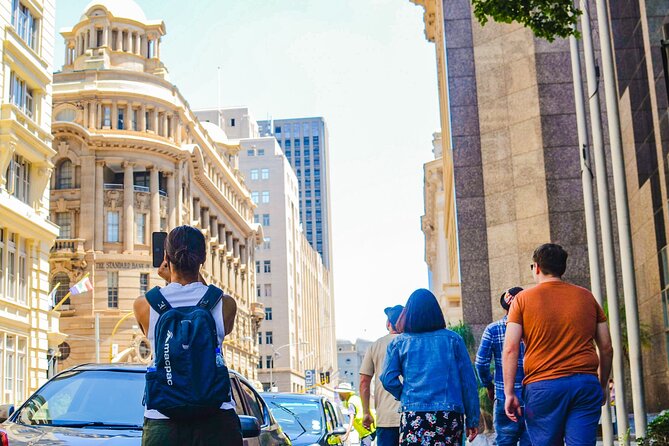
Meet your guide outside Nando’s at Gandhi Square, near the Metropolitan Building. This is a practical starting point because it places you in the middle of central Johannesburg, close to some of the city’s key civic and commercial buildings.
The first major stop is the Carlton Centre, where the guide spends about 20 minutes discussing the building and its place in Johannesburg. The tower is a useful introduction to the city’s scale and ambition, especially when your guide relates it to the office district and the era when central Johannesburg was a major business address.
Do not book this tour expecting a guaranteed panoramic visit to the old viewing deck. Access to the 360-degree view has reportedly stopped, despite the tower appearing in the route description. The building can still be discussed and viewed from the outside, but confirm current access if the skyline view is important to you.
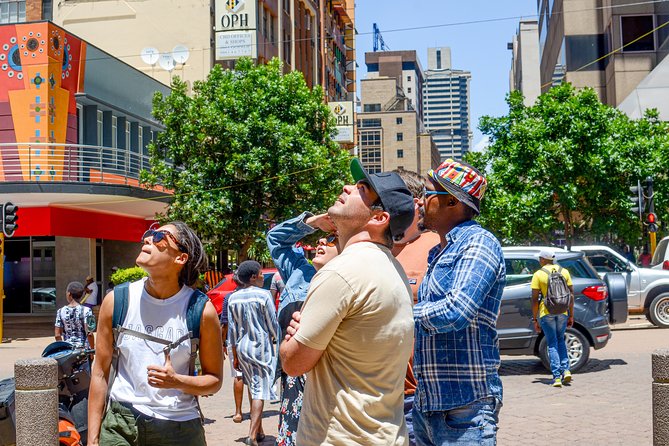
From here, the walk moves through streets where architecture and daily life sit side by side. This is one of the tour’s strengths. You are not simply shown a polished monument. You see a functioning city centre, with its upkeep problems, businesses, courts, workers, pedestrians, and changing public spaces.
Courts, post offices, and the story in the buildings
The High Court of South Africa, Gauteng Local Division, is next. You have around 20 minutes for a guided visit and photographs. The stop gives your guide a natural way to discuss law, public institutions, and the political battles that have shaped South Africa.
The Marshalltown Post Office follows, with about ten minutes. It may sound like a minor stop, but ordinary civic buildings often tell you how a city worked. Your guide can help you notice the architecture and explain how this part of the CBD fitted into Johannesburg’s growth.
The walk through Marshalltown lasts about 30 minutes. This is one of the longer sections, so it is a good place to ask questions. You may hear more about the gold economy, changing property conditions, and the tension between Johannesburg’s impressive past and its present-day challenges.
The tour does not hide difficult subjects. Guides discuss politics and the current condition of the CBD, including problems linked to overcrowding, vacant or poorly maintained buildings, and informal occupation. The tone is described as open and grounded rather than sensational. That matters in Johannesburg, where a glossy sightseeing script would leave out much of what you came to understand.
Ferreirasdorp, Main Street, and the first gold diggers
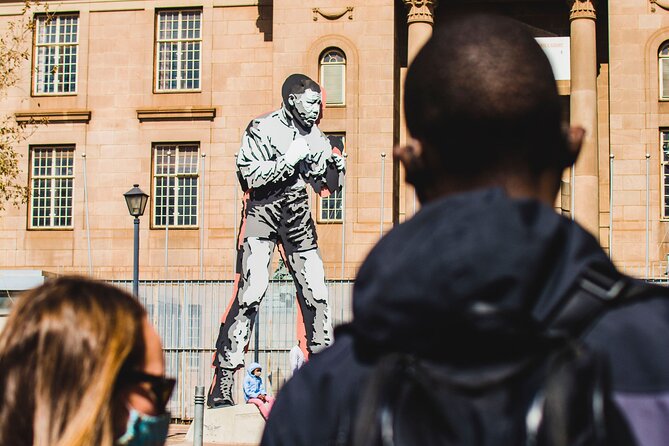
The route reaches Ferreirasdorp, often called the cradle of Johannesburg. This is where the first gold diggings began and where the early diggers settled. It is a key place to hear how a mining camp became a major city.
Main Street adds the physical setting for that story. The architecture reflects the wealth that gold created, while the street itself helps you picture the industrial and commercial force behind the city’s expansion. A good guide will move between the visible buildings and the people who made the mining economy possible.
I especially like this part of the walk because it avoids reducing Johannesburg to apartheid-era politics alone. Apartheid is central to the city’s story, but the tour also covers the gold rush, labour movement, law, business, migration, and present-day urban life. You get a fuller explanation of why the CBD looks and feels the way it does.
Other guided walks in Johannesburg:
- Marrakech: Ben Youssef, Secret Garden, & Souks Walking Tour
★ 4.6 · 2,802 reviews - Marrakech: Colorful Medina Souks Guided Walking Tour
★ 4.7 · 2,470 reviews - Explore Fes: Unforgettable Guided Walking Tour of the Medina
★ 4.7 · 1,339 reviews - Nairobi: Historic and Modern Highlights Walking Tour
★ 4.8 · 703 reviews
Chancellor House and Mandela’s legal work
Chancellor House is one of the most meaningful stops. Nelson Mandela and Oliver Tambo established their first black-owned law firm here, making the building an important link between central Johannesburg and the struggle against apartheid.
The stop is not just about taking a photograph. It gives the guide a chance to explain how Mandela and Tambo worked, who they represented, and why access to legal help mattered under a discriminatory political system. If you are interested in South African history, this is one of the places where the national story becomes personal and local.
The route also includes the Johannesburg Central Magistrate’s Court, with about 20 minutes for a guided visit and photographs. Together, the court and Chancellor House create a useful contrast: one represents the formal legal system, while the other recalls the efforts of lawyers who challenged injustice through that same system.
The guide’s skill matters here. Refiloe is repeatedly praised for knowing the city’s history, explaining difficult subjects in plain language, and keeping the walk friendly. Mathapelo has also been praised for combining historical detail with insight into young South African life. Those qualities help keep the political material human rather than dry.
Beyers Naude Square and central Johannesburg today
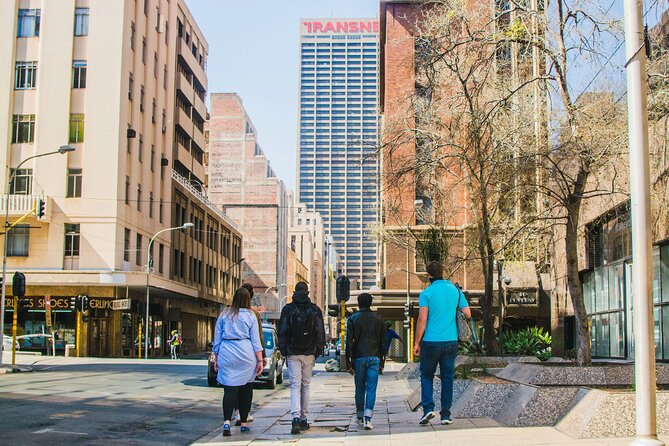
Beyers Naude Square receives about 20 minutes. The space gives you another chance to observe the city rather than rush from one landmark to the next. Your guide can point out the people, buildings, and public activity around you while explaining how central Johannesburg is changing.
The stop at the Anglo American corporate office lasts about ten minutes. This is a good reminder that mining is not just an old chapter. The industry still has a strong connection to South Africa’s economy and public life, even as the CBD has changed.
The walk also passes through areas where the contrast between corporate buildings, historic structures, and everyday street activity is clear. You should expect an honest look at the city’s strengths and weaknesses. Several guides are praised for making participants feel safe, but you should still use normal city awareness: keep valuables secure, stay with the guide, and follow local advice about where to walk.
The Workers Museum and Johannesburg’s migrant labour system
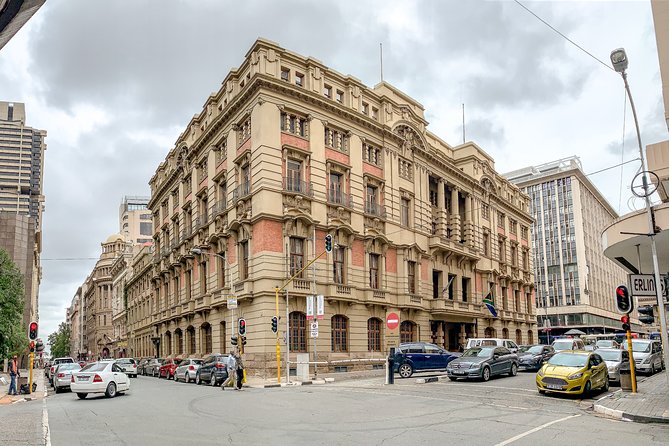
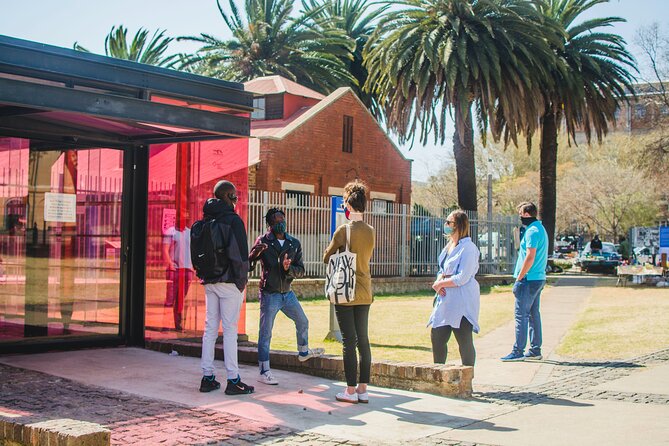
The Workers Museum is one of the most valuable stops because it shifts attention from famous leaders and mining companies to ordinary workers. The museum helps explain migrant labour, a system that separated many workers from their families and shaped South African cities, homes, and politics for generations.
The scheduled visit is about 15 minutes, so this is not a long museum session. Its value comes from the guide’s framing and the connection to the surrounding streets. One practical warning: the museum may be closed on Mondays. If it is shut, the guide can still explain workers’ living conditions and the migrant labour system, but you will not get the full indoor visit.
This is an example of why you should treat the exact order and access as flexible. The city’s museums and buildings do not always operate like clockwork. A strong guide can keep the story moving, but no short walking tour can guarantee every door will be open.
Newtown, Mary Fitzgerald Square, and the Market Theatre
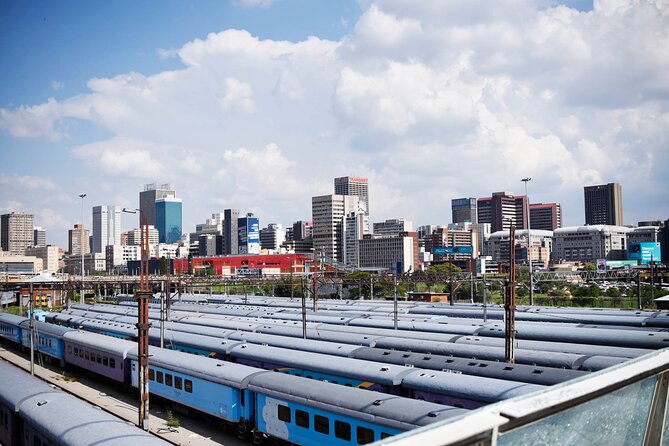
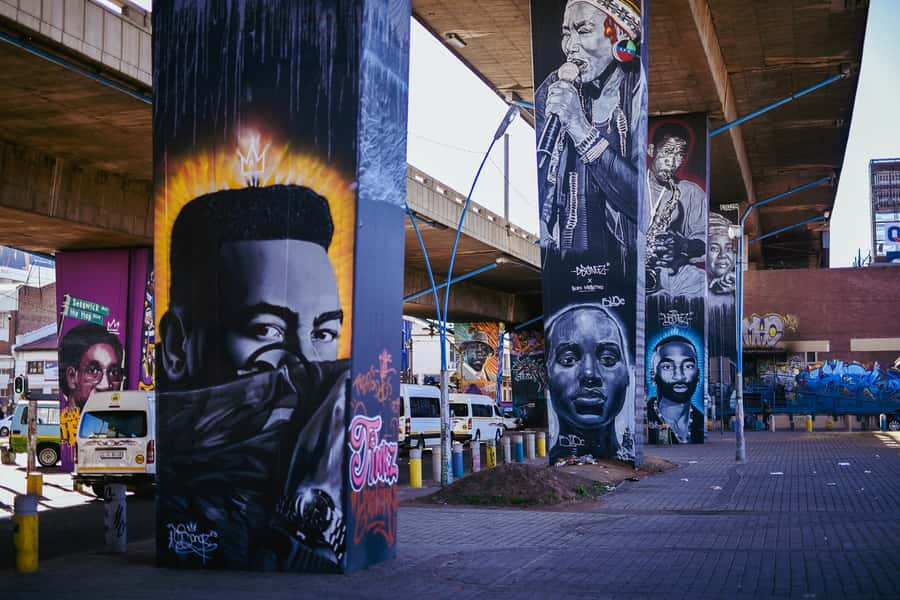
Newtown is the cultural centre of the walk. At Mary Fitzgerald Square, you get around 15 minutes to look around, take photographs, and hear how the district became associated with workers, performance, street art, galleries, and public events.
The Market Theatre is passed with a short five-minute stop. That may not sound long, but the theatre’s importance is larger than the time spent outside. It has a major place in South African cultural and political life, and it gives the guide a way to discuss how theatre and art challenged official narratives.
Newtown is also where the tour feels less like a conventional history walk and more like an introduction to Johannesburg’s creative side. Do not expect a long gallery visit or a scheduled performance. Instead, you get context for the cultural spaces and public art that shape the area.
The route’s focus on Newtown is a good reason to choose this experience over a bus tour. A bus can cover more ground, but walking lets you notice the transitions between districts. You can see how the city’s mood, architecture, and street activity change from one block to the next.
Mandela Bridge and the final walk to Braamfontein
Nelson Mandela Bridge is the visual high point of the route. The stop lasts about ten minutes and provides a strong photo opportunity, with views linking different parts of Johannesburg. The bridge is more than a scenic crossing. It connects neighbourhoods and makes a fitting symbol for a tour that joins history, politics, culture, and current city life.
The walk concludes in Braamfontein, described as a youthful artistic hub. This final section helps you see Johannesburg beyond mining and political history. The area’s creative energy and younger population point to the city’s ability to keep changing.
The official end point is Sha’p Braai, a shisanyama restaurant. Lunch is not included, but this gives you a chance to continue the experience with local food if you wish. The exact meal choice and cost are not provided, so bring extra money if you plan to eat there.
Guides, group size, and the feel of the walk
The guide is the main reason to book this tour rather than simply follow a map. Refiloe receives especially strong praise for his warmth, humour, careful attention, and broad command of Johannesburg history. He has also been described as helping with photographs and making solo bookings feel personal.
Other named guides include Thabo, Mulalo Mphuma, Mathapelo, Tebogo, Jerry, and Clement. The experience can vary by guide, but the common pattern is clear: you should expect an English-speaking local guide who explains the city and responds to questions rather than reciting a fixed script.
Group size is not stated. If demand is low, you might get a private or near-private walk, but that is not guaranteed. A small group makes it easier to ask about politics, architecture, safety, or daily life. A larger group may feel less flexible, especially on crowded pavements.
Wear shoes suitable for three hours of walking. The route includes stops, photographs, and slower sections, but it is still an urban walk. Bottled water is included. Hotel pickup and drop-off are not, so you need to reach Gandhi Square on your own.
Is $40 good value?
I think $40 is fair if you want context, not just landmarks. Entrance fees, a guide, bottled water, and three hours of organised walking are included. The strongest value comes from the guide’s ability to explain why each place matters.
The price is less compelling if you only want a quick architecture tour or a guaranteed tower view. Some stops are brief, and access to the Workers Museum or Carlton Centre viewing area may change. You are paying for interpretation and access to a difficult-to-read city, not a long list of indoor attractions.
The free cancellation period is up to 24 hours before the tour, and you can reserve now and pay later. Those terms are useful if your Johannesburg plans are still moving, but the central question is your interest. If you want to understand the CBD, $40 buys a strong introduction. If you prefer polished shopping districts and easy sightseeing, Sandton may feel simpler, but it will not offer the same sense of Johannesburg’s origins.
Who should book this tour?
I would choose this walk if you want local history, architecture, politics, and present-day city life in one experience. It suits curious first-time visitors, repeat visitors who want a different side of Johannesburg, solo visitors who value a guide, and anyone tired of seeing only hotels and shopping malls.
It is also a good choice if the CBD makes you uncertain. The guides are praised for helping people feel safe and showing them areas they might not visit alone. That does not remove the need for common sense, but it gives you a more informed way to move through the centre.
You should think twice if you dislike urban walking, want a relaxed sightseeing pace, or need guaranteed wheelchair access. The supplied details conflict on accessibility, so ask before booking. Pregnant visitors are listed as unsuitable, and comfortable shoes are essential for everyone.
FAQ
Where does the Johannesburg city centre walking tour start?
It starts outside Nando’s at Gandhi Square, in the Metropolitan Building area.
Where does the tour finish?
The tour finishes at Sha’p Braai, a shisanyama restaurant in the Braamfontein area.
How long does the walking tour last?
The advertised duration is three hours. A private booking may run longer, but you should plan for three hours.
What language is the tour conducted in?
The live guided tour is conducted in English.
What is included in the price?
The $40 price includes the walking tour, guide, entrance fees, and bottled water.
Is lunch included?
No. Lunch is not included, although the tour finishes at Sha’p Braai.
Is the Workers Museum always open during the tour?
No. The museum may be closed on Mondays. The guide can still explain the migrant labour system if the museum cannot be entered.
Can I visit the Carlton Centre viewing area?
Access to the Carlton Centre’s 360-degree viewing area has reportedly stopped. Confirm current access if this view is important to you.
Is the tour suitable for wheelchair users?
The activity details give conflicting information: one section says it is wheelchair accessible, while another says it is not suitable for wheelchair users. Contact One Day Africa before booking to confirm current conditions.
Just added in Johannesburg
- Soweto: Bike Tour with a Local Tour Guide★ 4.7 · 114 reviews
- From Johannesburg: Lion & Safari Park Half-Day Tour★ 4.6 · 384 reviews
- Johannesburg: Soweto & Apartheid Museum Half-Day Tour★ 4.9 · 99 reviews
- Johannesburg: Soweto Apartheid & Township Tour with Lunch★ 4.8 · 80 reviews
- Johannesburg: Street Art and Culture in Maboneng!★ 4.8 · 107 reviews
- Johannesburg: Half-Day Soweto Tour with a Local Guide★ 4.8 · 110 reviews
- Soweto: Hop-On Hop-Off Bus, City Tour and Apartheid Museum★ 4.5 · 250 reviews
- Johannesburg: Maboneng Street Art & Culture Tour★ 4.9 · 257 reviews
Walking Tours, compared.
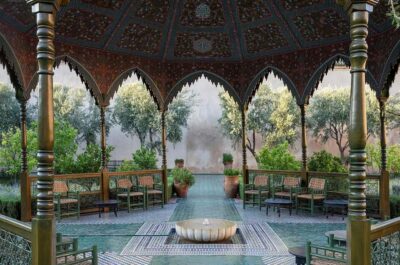
Ben Youssef, Secret Garden, & Souks Walking Tour
Read our review →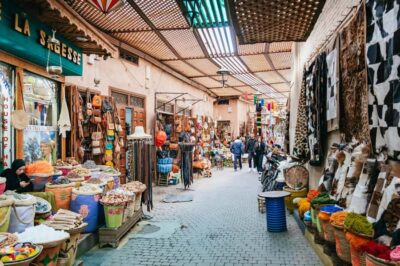

Explore Fes: Unforgettable Guided Walking Tour of the Medina
Read our review →

Soweto: Walking Tour with a Local Guide and Lunch
Read our review →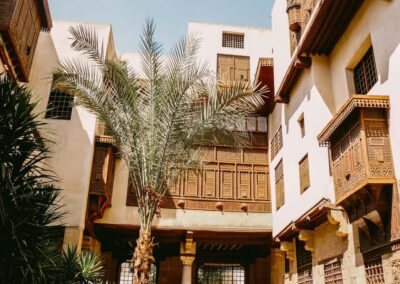
Old Cairo Guided Walk Tour: History, Culture & Street Bites
Read our review →

Browse the lists this tour appears in