
Reviewed · SOUTH AFRICA · TOURS IN JOHANNESBURG
Johannesburg: Street Art and Culture in Maboneng!
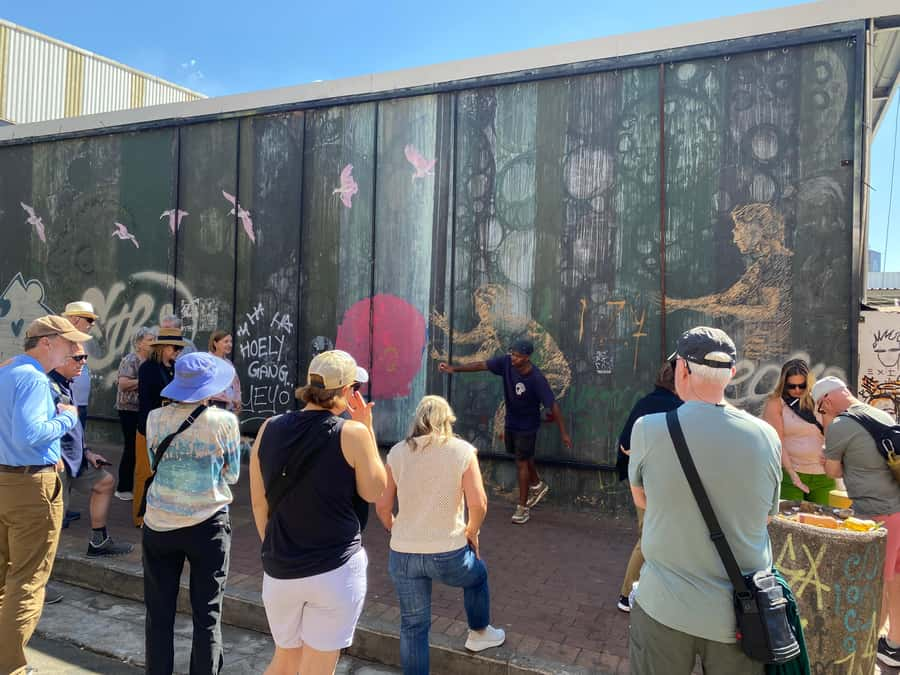
Maboneng’s best stories are painted on its walls. In two hours, you’ll see murals by artists such as ESPO Powers and DBongz, hear what their work means, and learn how a former industrial district changed after 2009. This is not just a photo walk. It is an introduction to Johannesburg’s art, politics, mining past, and changing inner city.
I especially like the local perspective and the stop at the alleged Hideout Bar, said to have sheltered Nelson Mandela and other anti-apartheid activists. Guides such as Ayanda bring personal ties to the area, while the small-group feel can make it easy to ask questions. The main limitation is time: two hours gives you a strong overview, not a full tour of Johannesburg or every corner of Maboneng.
At a glance
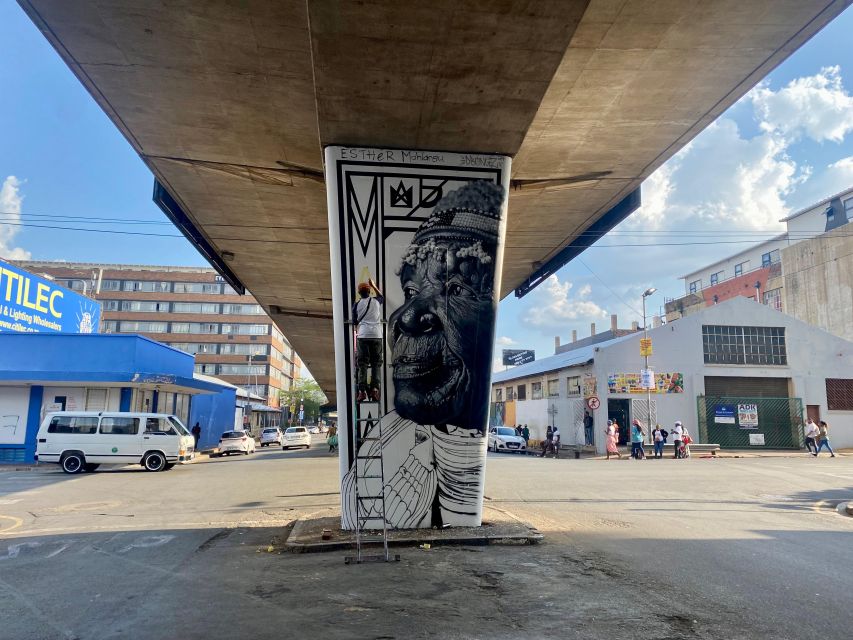
- Meet at Home of the Bean: Start with a coffee shop meeting point at Fox and Berea Streets, under the bridge.
- Read the walls: Learn about local and international artists, including ESPO Powers and DBongz.
- Trace Maboneng’s change: See how an old industrial area became a creative district from 2009 onward.
- Visit the alleged Hideout Bar: Hear its connection to Mandela and other anti-apartheid activists.
- See more with a local guide: The walk includes galleries, shops, food spots, informal traders, and public art.
- Allow for purchases: Bring cash or a card if you may buy art, crafts, or items from street sellers.
Why Maboneng works so well for a street art tour
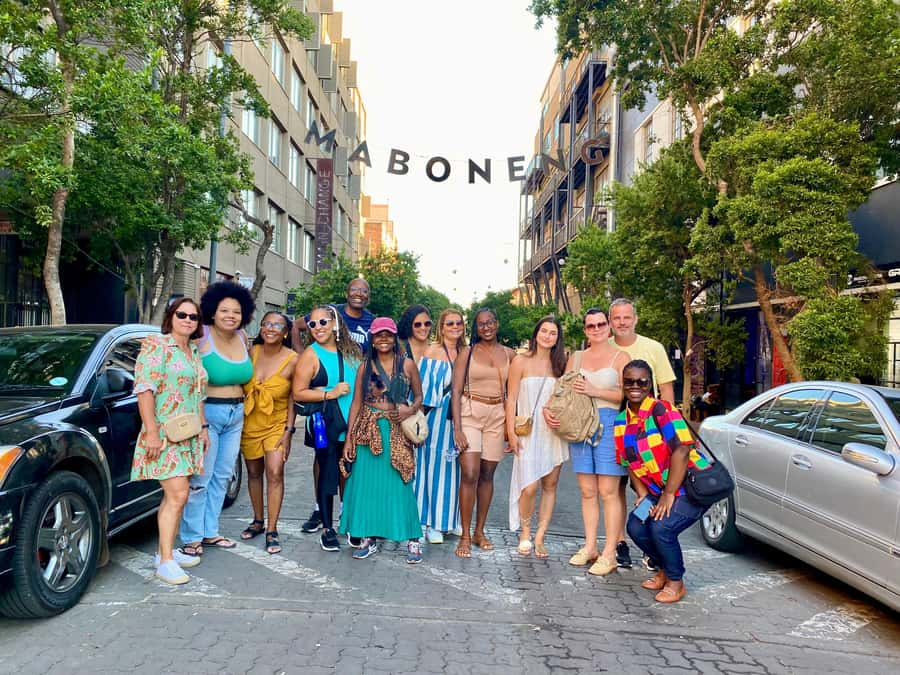
Maboneng means Place of Light, and the name fits its public image. The area brings together murals, studios, small shops, food businesses, galleries, and older industrial buildings. That mix gives you more to consider than a series of colorful walls.
The art helps explain the neighborhood. A mural may point to identity, politics, local life, or the artists’ view of Johannesburg. Your guide supplies the context that is easy to miss when you walk alone with a camera. You’ll hear about the people behind the work, not just where to stand for the best photograph.
I also like the way the walk connects Maboneng to the wider city. The district’s older links to mining and industry sit beside newer ideas about creative work, urban renewal, and inner-city living. You get a useful view of what Johannesburg has been and what some people hope it can become.
The change has not been simple. Redevelopment can bring new energy, restaurants, art, and jobs, but it can also raise questions about who the neighborhood is for and who can afford to remain there. The tour addresses this change rather than presenting Maboneng as a polished entertainment zone. That makes the experience more useful for anyone who wants to understand present-day Johannesburg.
A few more things to do in Johannesburg worth a look
- Johannesburg: Maboneng Street Art & Culture Tour
★ 4.9 · 257 reviews - Santiago: Landscapes, Street Art, and Markets Day Trip
★ 4.8 · 316 reviews - Cape Town: Street Art Walking Tour in Woodstock
★ 4.8 · 293 reviews
Starting at Home of the Bean
The meeting point is Home of the Bean, a coffee shop on the corner of Fox and Berea Streets, under the bridge. From the outside, the building can look like an old industrial structure, so go inside if you arrive early rather than waiting on the pavement.
The tour begins with a short safety briefing of about 15 minutes. You can order a coffee before setting off, but food and drinks are not included in the $40 price. This is a sensible start to a walking tour, especially if you are unfamiliar with the inner city and want clear advice before heading out.
The operator communicates by WhatsApp or message roughly 30 minutes before the start. Keep your phone available for updates, and contact the supplied emergency line if you have trouble finding the café or need help before the walk.
The first look at Maboneng
After the briefing, you begin walking through the precinct. The first sightseeing section lasts about 30 minutes, giving you time to get your bearings while your guide explains the district’s earlier industrial role and its later redevelopment.
The most useful part here is the link between buildings and change. Maboneng was not created as a blank new district. Its older structures and industrial character remain part of the setting, while art and small businesses have given the area a different public face.
You’ll pass places connected with art, food, retail, and local trade. That mix matters. It shows how Maboneng operates as a neighborhood, not only as an open-air gallery. You might see local informal traders alongside galleries, gift shops, restaurants, and people who live and work in the area.
Guides can add details that are hard to find on a map. Ayanda has been especially useful for visitors who want to ask about development, safety, local life, and the meaning of the art. Other guides named for this experience include Bonny, Kaiser, and Michael, so the exact style may depend on who leads your walk.
Reading murals by ESPO Powers, DBongz, and other artists
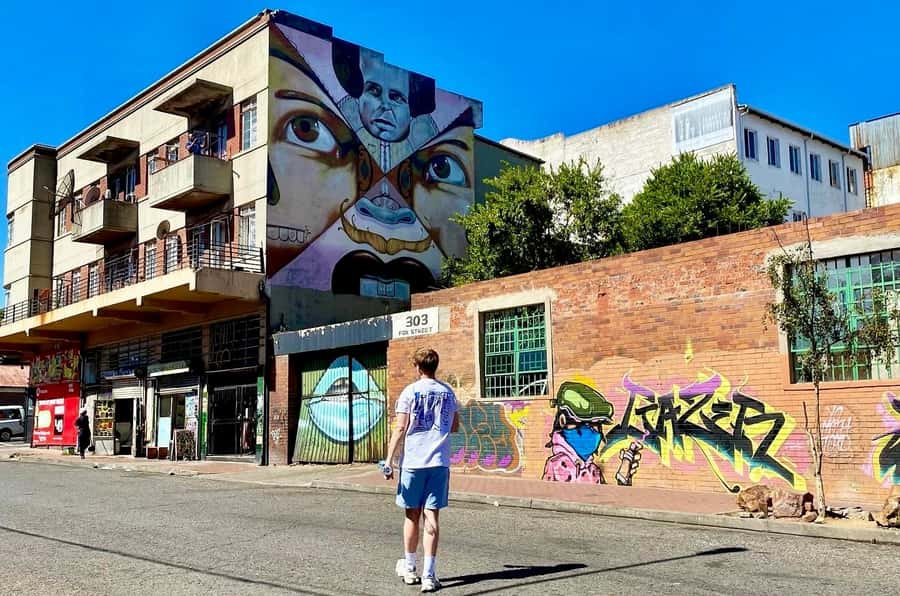
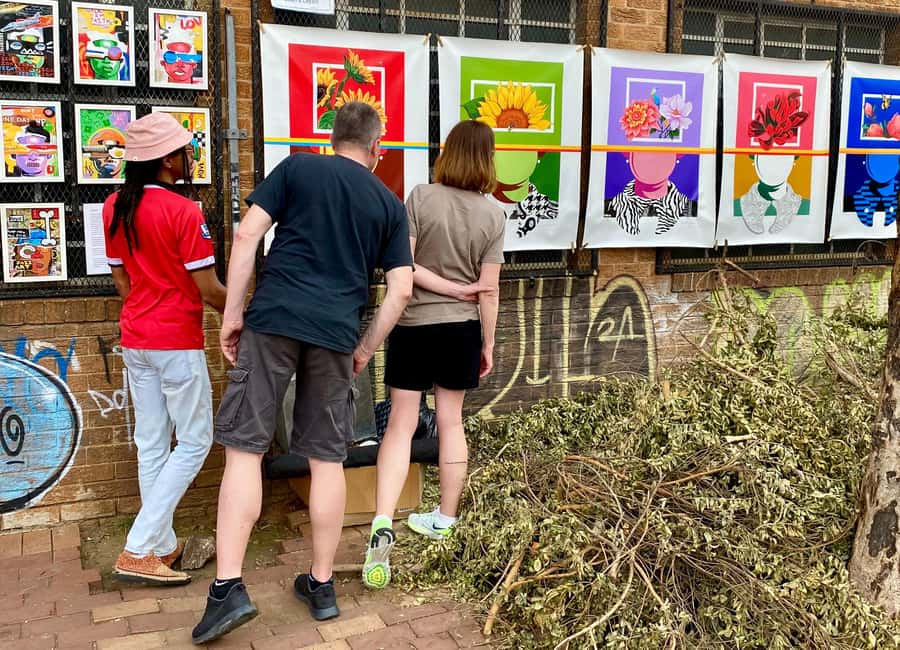
Street art is the central reason to book this experience. You’ll see work by local and international artists, including ESPO Powers and DBongz, and learn about the ideas and people behind selected pieces.
This is where the tour earns its price. On your own, you can admire the paint, photograph the wall, and move on. With a guide, you get a better sense of why a particular work matters, how street art fits into Johannesburg’s culture, and how public art can reflect the city’s current debates.
The art also works as a visual record. Some pieces connect to South African identity and social conditions. Others show the energy of the creative scene and the way artists use neglected or industrial spaces. You should not expect every wall to be explained in the same level of detail. The guide selects important works during the available time.
Bring a camera, but listen before you frame the shot. The strongest part of this walk is not simply collecting murals. It is understanding how the art sits within the district and why an artist chose a public wall rather than a gallery.
Same base, a different sort of day:
- From Johannesburg: Pilanesberg Nature Reserve Game Safari
★ 4.8 · 1,327 reviews - Johannesburg: Hop-On Hop-Off Bus with Optional Soweto Tour
★ 4.6 · 985 reviews - Soweto /Johannesburg and Apartheid Museum Guided Full Day Tour
★ 5.0 · 932 reviews - Johannesburg Hop-On Hop-Off City Tour with Soweto Option
★ 4.5 · 768 reviews
Maboneng Arts Village and local creative work
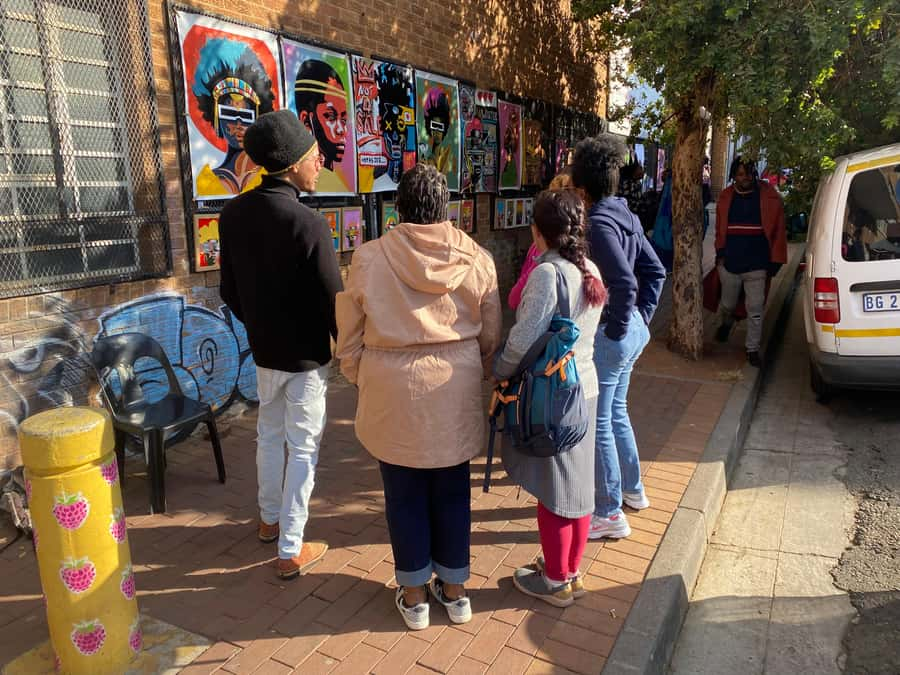
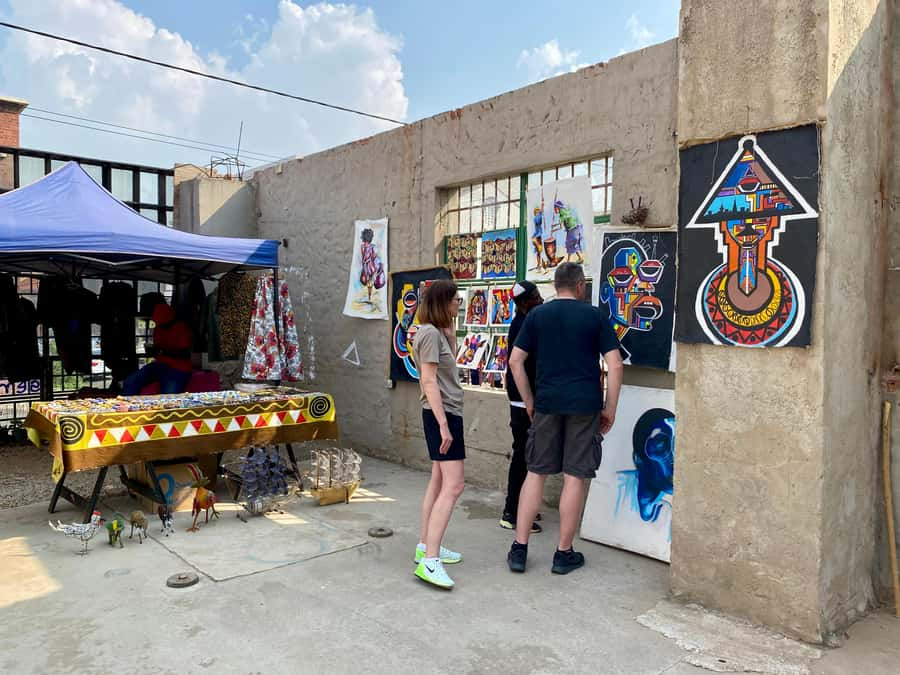
The walk includes Maboneng Arts Village, a space where artists and creative workers can sell their work. This adds a practical side to the public art you see outdoors. Instead of viewing creativity only as decoration, you get a look at how artists can present and sell their work.
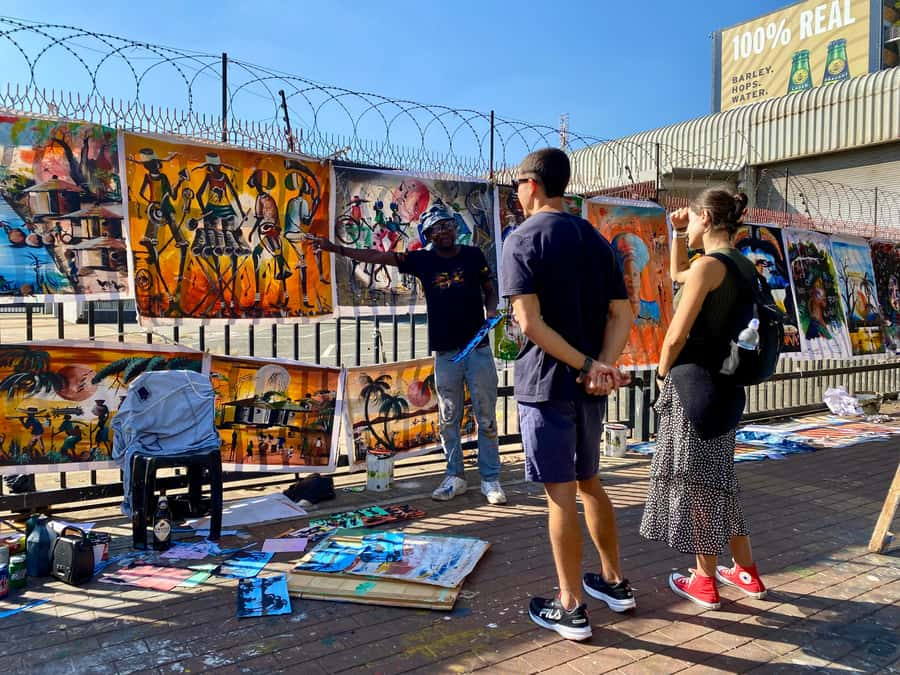
This stop is also useful if you want a small souvenir with a direct connection to Johannesburg. Local artists and informal traders may offer items for sale during the walk, so bring cash or a card if you are interested in buying something.
Do not expect purchases to be included. The tour covers entry to the places visited, but all food, drinks, and personal shopping are your responsibility. Prices and payment options may vary by seller, so ask before committing and keep your spending separate from the tour fee.
The alleged Hideout Bar
One of the more unusual stops is the Hideout Bar at Curiocity Backpackers. It is described as an alleged hiding place for Nelson Mandela and other anti-apartheid activists. The word alleged matters here. Treat this as a local historical story and part of the area’s remembered past, not as a fact established beyond question.
That uncertainty does not make the stop pointless. Places tied to political memory often show how history survives through buildings, stories, and community knowledge. Your guide can explain the claim and place it in the wider story of apartheid resistance.
The stop lasts about 15 minutes, so it is brief. Still, it breaks up the wall-to-wall art and reminds you that Maboneng’s identity is not only about food, fashion, and creative businesses. Its streets also sit within Johannesburg’s difficult political past.
A viewpoint and the changing inner city
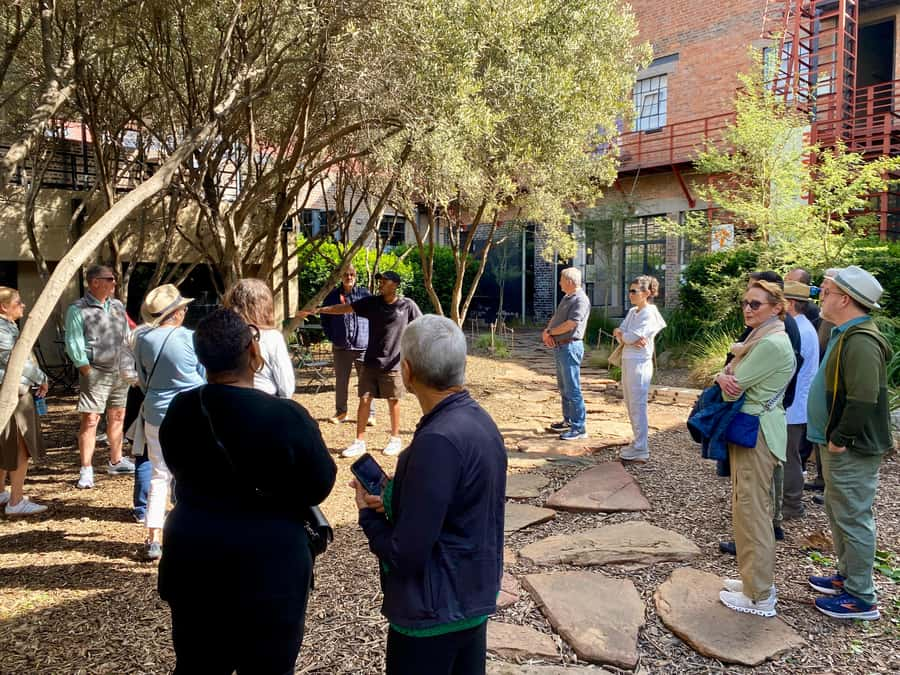
Later, the route includes a viewpoint, with about 15 minutes for walking, sightseeing, and scenic views along the way. The exact outlook may depend on the day’s route and access, but it gives you a pause from close-up murals and street-level details.
This section helps you see Maboneng as part of Johannesburg rather than an isolated district. The wider city context makes the redevelopment story easier to grasp. You can consider the contrast between older industrial structures, newer businesses, and the everyday community around them.
The final walking section through Maboneng lasts about 15 minutes before you return to Home of the Bean. In total, the route is active but manageable for most people who are comfortable walking for two hours. The experience is wheelchair accessible, though you may still want to confirm route conditions and access needs when booking.
Safety and how to feel comfortable
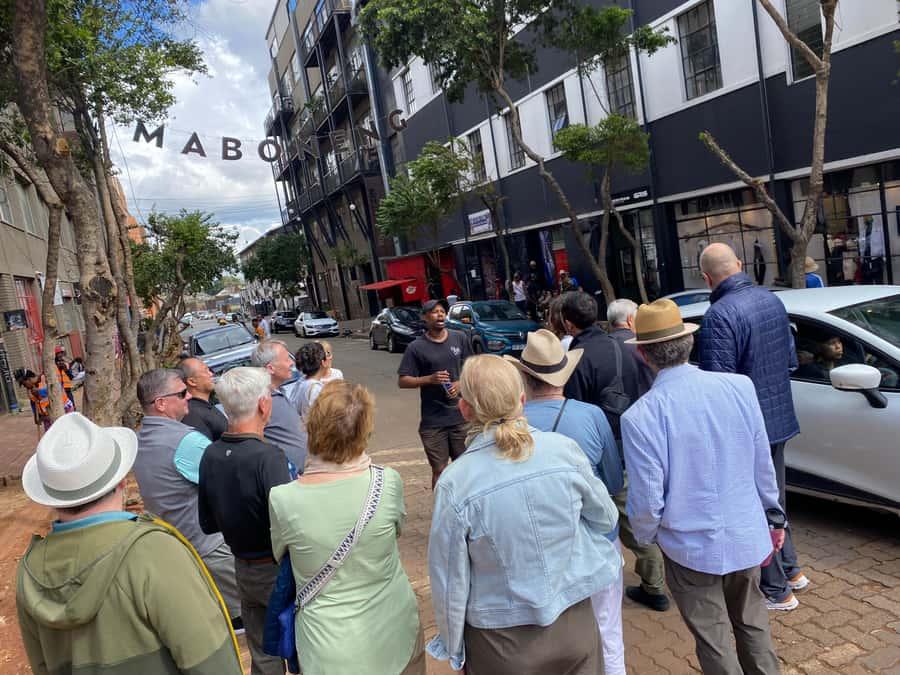
Safety is a fair concern when visiting Johannesburg’s inner city. The tour provides a local guide and a briefing before you start, and the route stays with someone who knows the district. Several visitors have also found that a guide helped them feel comfortable and understand where they were.
That does not mean you should switch off your judgment. Use common sense, stay with the group, follow the guide’s advice, and avoid displaying unnecessary valuables. Keep your phone and wallet secure, especially around busy streets and informal trading areas.
A local guide can also help with simple practical matters. Ayanda has helped people locate an ATM and arranged a parking spot near the meeting point when asked. Those details are not the main purpose of the tour, but they can make the morning easier.
What $40 buys you
At $40 per person, this is not the cheapest way to look at street art. You could walk around Maboneng without a guide and pay nothing beyond what you choose to eat or buy. The value comes from the explanation, local orientation, and access to several stops within a short visit.
I think the price is fair if you want more than photographs. You are paying for a live English-speaking guide, a planned route, entry to the places visited, and a concentrated introduction to Maboneng’s art and development. You also save time by seeing selected works instead of wandering without context.
The value is weaker if you already know the district well or mainly want free time to browse galleries and restaurants. Two hours passes quickly, and food and drinks cost extra. If you want a longer creative tour, more time for shopping, or a slower meal, plan another visit after the walk.
The small-group feel can improve the experience. One visitor described a group of two to four people, though group size can vary. A smaller group makes it easier to ask about individual artworks, local life, and the changes affecting the neighborhood.
Who should book this walk
I would choose this for a first visit to Johannesburg, especially if you want an introduction to the inner city through art rather than a standard sightseeing route. It suits curious adults, students, photographers, and anyone interested in how public art relates to politics and redevelopment.
It also works well for people with limited time. One visitor had to fit the tour in before going to the airport and still saw the main sights and received a useful introduction. You should still allow time to reach the meeting point and continue to your next appointment.
Families and older visitors can also manage the experience if they are comfortable walking. The route is wheelchair accessible, and the guide can explain the surroundings as you go. Since the tour is offered in English only, you should be confident enough in English to follow historical explanations and ask questions.
Art fans will get the most from it, but you do not need to know anything about graffiti before arriving. The guide explains the artists and the setting in plain terms. You can enjoy the colors first and then think about the bigger issues behind them.
Practical tips before you go
Wear comfortable shoes and expect to walk outdoors for most of the two hours. Start with water or coffee at Home of the Bean, since refreshments during the tour are not included.
Keep some cash or a card available for local art, crafts, and informal traders. Do not feel pressured to buy, but having a payment option means you will not miss something you genuinely want.
Stay alert for WhatsApp messages about 30 minutes before the start. If you arrive early, wait inside the café. The outside appearance can be easy to miss, especially if you are looking for a modern coffee shop rather than an old industrial building.
The tour is cancellable up to 24 hours before departure for a full refund, and you can reserve now and pay later. Starting times vary, so check availability for your date.
Should you book the Maboneng street art tour?
Book it if you want local context, strong street art, and a short introduction to Johannesburg’s changing inner city. The guides bring the area to life, with Ayanda receiving especially warm praise for his personal connection, clear explanations, humor, and care with safety.
Skip it if you want a long, relaxed gallery visit or a food tour. The walk is focused, the schedule is compact, and you pay separately for coffee, meals, and purchases. For most first-time visitors, though, $40 buys a useful starting point: not just a collection of murals, but a clearer understanding of why Maboneng matters.
FAQ
Where does the Maboneng street art tour begin?
It begins at Home of the Bean coffee shop on the corner of Fox and Berea Streets, under the bridge. If you arrive early, wait inside the café.
How long does the experience last?
The tour lasts two hours and returns to Home of the Bean at the end.
What language is the tour offered in?
The tour is offered in English only and includes a live English-speaking guide.
Is coffee included in the tour price?
No. You can order coffee at Home of the Bean before the tour, but food and drinks are paid for separately.
What does the tour cost?
The price is $40 per person.
Is the tour wheelchair accessible?
Yes, the experience is listed as wheelchair accessible.
Can I buy art or goods during the walk?
Yes. Local artists and informal traders may sell items along the route. Bring cash or a card if you may want to make a purchase.
Can I cancel for a full refund?
Yes. You can cancel up to 24 hours before the tour for a full refund.
Just added in Johannesburg
- Soweto: Bike Tour with a Local Tour Guide★ 4.7 · 114 reviews
- From Johannesburg: Lion & Safari Park Half-Day Tour★ 4.6 · 384 reviews
- Johannesburg: Soweto & Apartheid Museum Half-Day Tour★ 4.9 · 99 reviews
- Johannesburg: Soweto Apartheid & Township Tour with Lunch★ 4.8 · 80 reviews
- Johannesburg: Half-Day Soweto Tour with a Local Guide★ 4.8 · 110 reviews
- Soweto: Hop-On Hop-Off Bus, City Tour and Apartheid Museum★ 4.5 · 250 reviews
- Johannesburg: Maboneng Street Art & Culture Tour★ 4.9 · 257 reviews
- Johannesburg: City Centre Walking Tour★ 4.8 · 152 reviews
Street Art, compared.

Santiago: Landscapes, Street Art, and Markets Day Trip
Read our review →
Browse the lists this tour appears in