
Reviewed · SOUTH AFRICA · TOURS IN JOHANNESBURG
Johannesburg: Soweto Apartheid & Township Tour with Lunch
Soweto is not a postcard stop. It is a living place shaped by forced removals, protest, poverty, music, politics, and everyday work. This tour gives you both the street-level view, including an informal settlement and local encounters, and the fuller national story at the Apartheid Museum.
I like the way a guide born and raised in Soweto can explain what you are seeing, rather than simply point out buildings. I also like the practical setup: hotel pickup, a small group capped at 13 people, two museum admissions, and lunch are all covered. The day can feel rushed, especially at major stops, so you should come ready to listen, walk, and accept that this is an overview rather than a slow, private exploration.
Key points to know
- A local guide shapes the day: Guides such as Lebo, Prince, Thabang, Khutso, and Bobo have been singled out for clear explanations, humor, and strong local context.
- Two museums give the tour structure: Hector Pieterson Museum covers the 1976 Soweto uprising, while the Apartheid Museum places it within the wider liberation struggle.
- You see several sides of Soweto: The route includes Diepkloof vendors, Vilakazi Street, an informal settlement, the university campus, and the huge Chris Hani Baragwanath Hospital.
- Lunch is part of the price: You eat at Restaurant Vilakazi, with a traditional Soweto lunch included, though extra drinks and food cost more.
- Small-group travel helps: With no more than 13 participants, you have a better chance to hear the guide and ask questions than on a large coach tour.
- The donation adds a useful local link: Each individual booking sends R50 to Motsoaledi Day Care Centre for building upgrades and requested supplies.
Why Soweto needs more than a quick photo stop
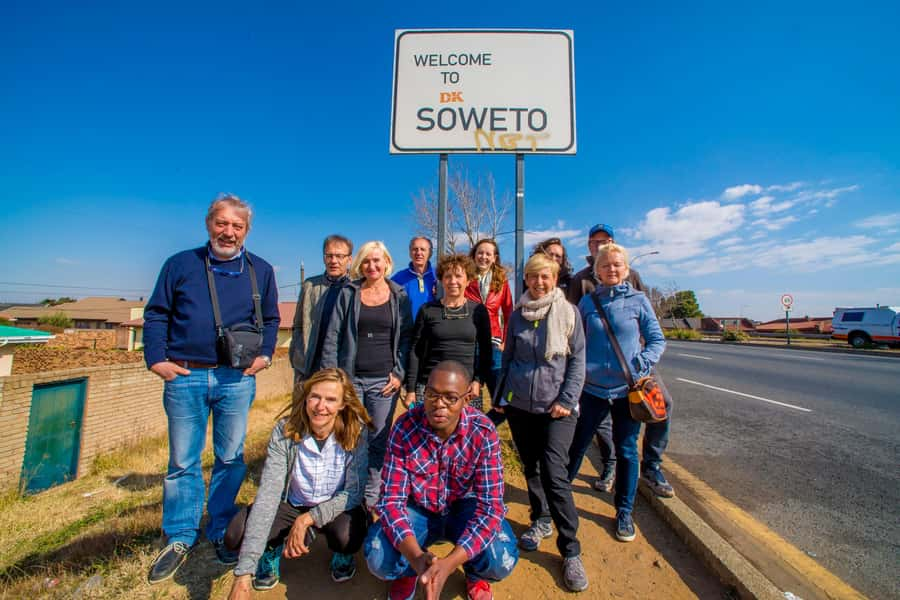
Soweto means South Western Township, and the name points to its location and its complicated place in Johannesburg. This is a city within the city, with formal streets, shops, schools, informal housing, historic homes, and busy public life all appearing along the same route.
I like that this tour does not present Soweto as only poor or only historic. You pass vendors in Diepkloof, see the university campus, drive by a major hospital, and visit places tied to Nelson Mandela and Archbishop Desmond Tutu. At the same time, you confront the conditions in an informal settlement and learn how apartheid shaped where people could live.
That balance matters. A short township visit can easily turn into a quick look from a vehicle, with little explanation. Here, the guide is central. The strongest guides named in the feedback, including Lebo, Prince, Thabang, Khutso, and Bobo, were praised for explaining context, answering questions, and keeping the day moving.
The small-group limit of 13 people is another practical advantage. You still travel in a shared vehicle, but the group is small enough for questions and conversation. Free onboard Wi-Fi is included, though I would treat it as a convenience rather than the reason to book.
Other cultural tours in Johannesburg:
- Johannesburg: Hop-On Hop-Off Bus with Optional Soweto Tour
★ 4.6 · 985 reviews - Soweto /Johannesburg and Apartheid Museum Guided Full Day Tour
★ 5.0 · 932 reviews - Johannesburg Hop-On Hop-Off City Tour with Soweto Option
★ 4.5 · 768 reviews
From Johannesburg to Diepkloof
The tour begins with pickup at your Johannesburg hotel or residence. You receive a short briefing before the drive toward Soweto, and the first part of the day includes about an hour in the van.
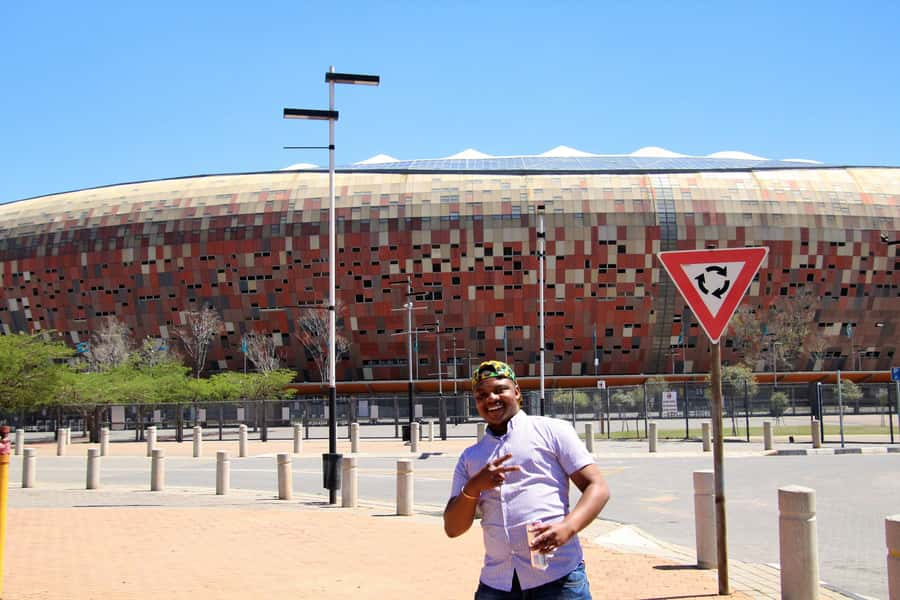
On the way, you pass the National Football Stadium, the venue used for the opening and closing ceremonies of the 2010 World Cup. It is a quick reminder that Johannesburg is not only a city of political history. It has also hosted major sporting events watched around the world.
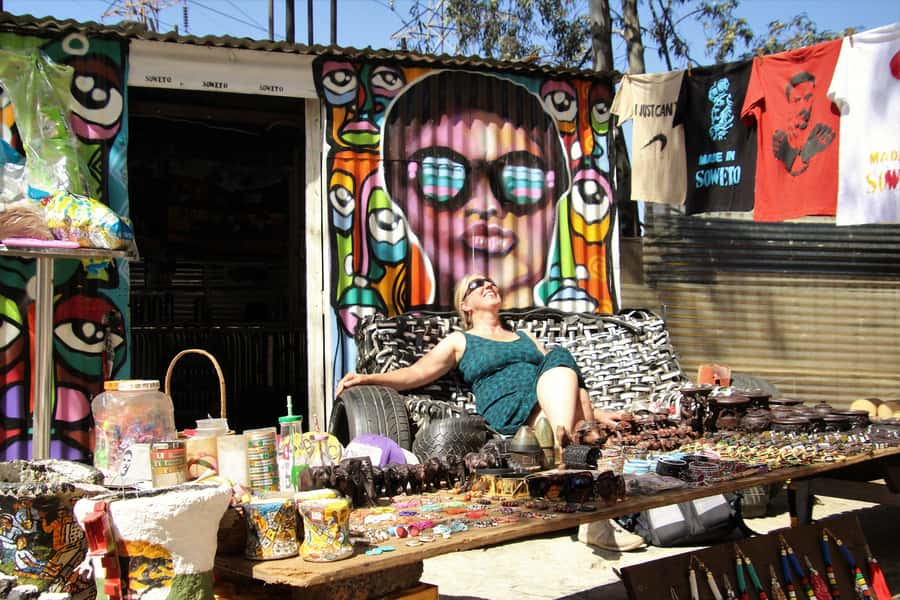
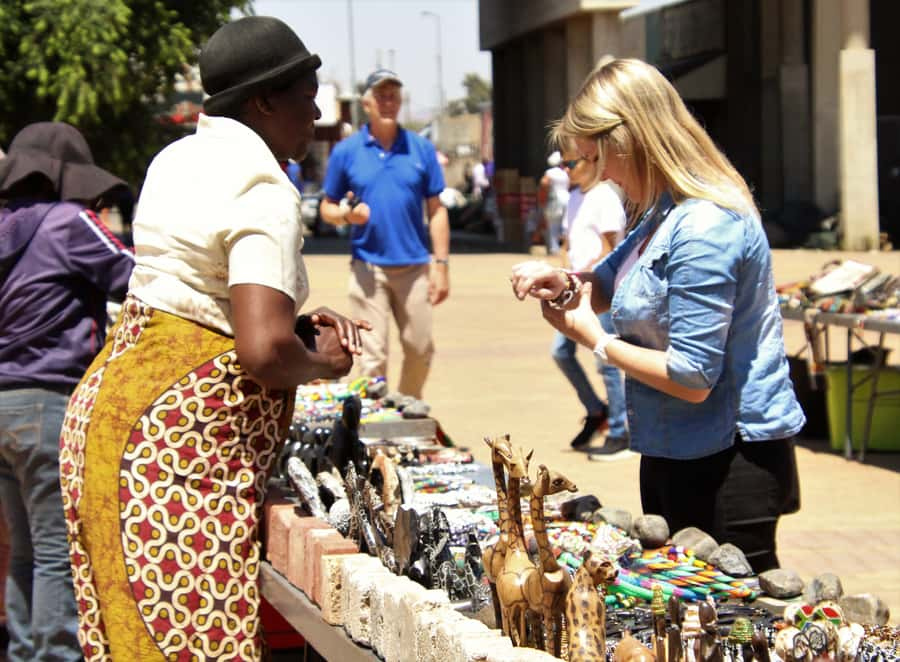
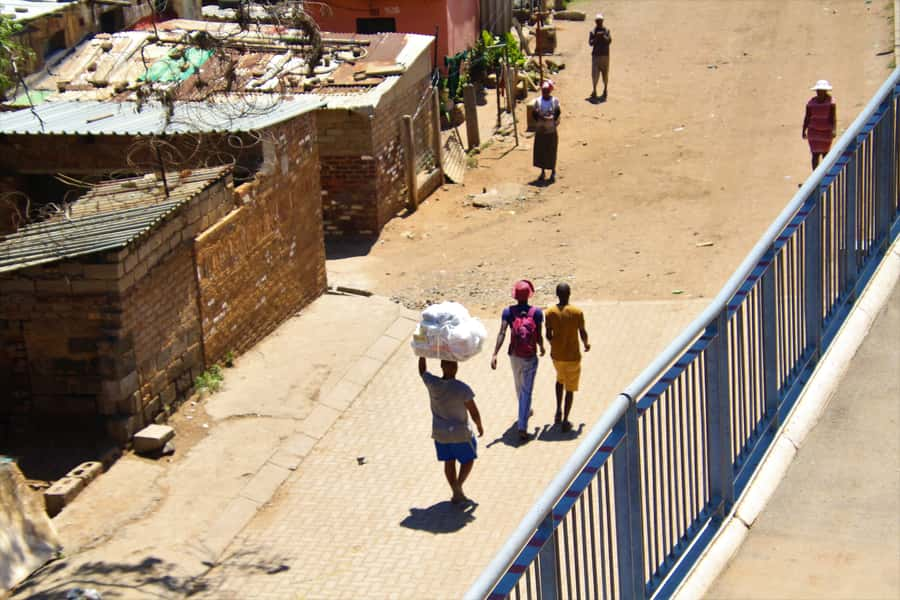
The route then enters Diepkloof. You can walk past vendors selling a wide range of goods, which gives you a more ordinary view of township commerce than a single memorial or museum can provide. This part is useful because it places the serious history in a working neighborhood rather than treating Soweto as an open-air museum.
Your guide’s explanation makes a real difference here. Ask questions as you go. The strongest feedback about the experience centers on guides who connect what you see with local culture, politics, and daily life.
Vilakazi Street and the two Nobel-linked homes
In Orlando West, the tour reaches Vilakazi Street. You drive past the former home of Nelson Mandela and the home of Archbishop Desmond Tutu. Having two homes associated with major figures of South Africa’s modern political and religious life on one street gives this stop unusual weight.
You also pass Mandela House. A visit inside the museum is optional, so check what your booking includes before assuming you will enter. The included admissions are for the Hector Pieterson Museum and the Apartheid Museum, not Mandela House.
Vilakazi Street can be one of the day’s most memorable stops, but it is not designed as a quiet, private house visit on this tour. The itinerary gives you time to see the street and understand its importance, while the optional museum visit may require extra time and cost. If Mandela House is a personal priority, ask the guide how it fits into the schedule before setting out.
Hector Pieterson Museum and the events of June 16, 1976

The Hector Pieterson Memorial and Museum receives about an hour. This is the most focused stop for understanding the Soweto uprising of June 16, 1976, when student protests became a major turning point in the struggle against apartheid.
The museum gives the uprising a human scale. Instead of treating apartheid as a distant political system, it helps you connect government policy with young people, education, protest, and the risks faced by families and communities.
Admission is included, which is important because the museum is more than a brief roadside memorial. You have time to read and take in the material, though the full tour still has a packed schedule. If you prefer to study every display slowly, two hours would feel more comfortable than the time available here.
Comfortable shoes are a good idea. You have a guided walk in Soweto and several stops where you will be on your feet.
A few more things to do in Johannesburg worth a look
- Soweto: Walking Tour with a Local Guide and Lunch
★ 4.9 · 648 reviews - Soweto: Guided Bicycle Tour with Lunch
★ 4.9 · 292 reviews - Johannesburg and Soweto Apartheid Full Day Tour w/Lunch
★ 4.9 · 219 reviews - Marrakech: Atlas Mountains, Ourika Valley, Waterfall & Lunch
★ 4.8 · 15,834 reviews
Seeing daily life in an informal settlement
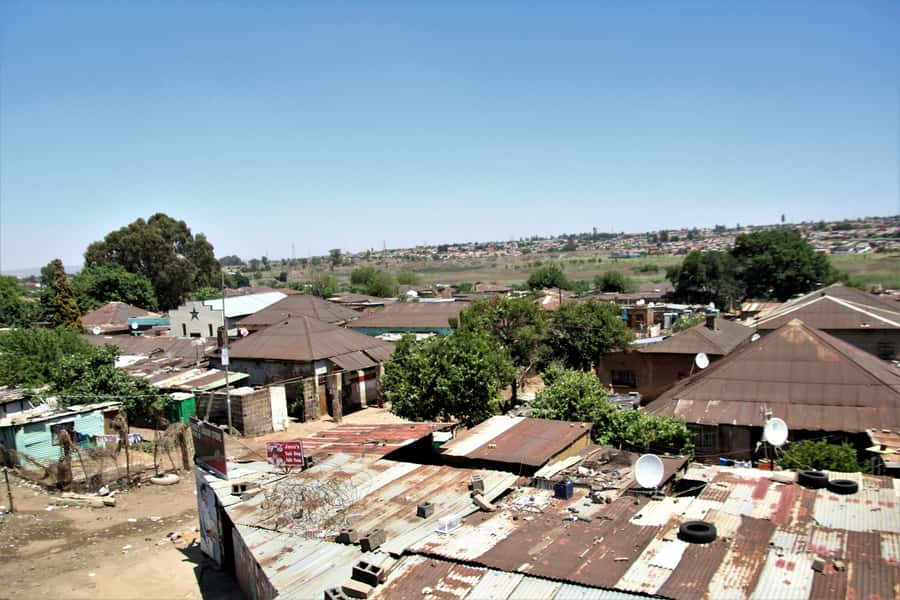
The tour continues to an informal settlement, described as a shanty town in the program. Here, you have a chance to meet local people and young community leaders.
This is the most sensitive part of the day. You are not simply looking at buildings. You are entering a place where people live, and your attitude matters. Listen to the guide, follow instructions, ask before taking photographs, and avoid treating anyone’s home or hardship as a spectacle.
The value of this stop depends heavily on how it is handled. The best version is a conversation that gives local people a voice and helps you understand community work. The tour also makes an R50 donation for each individual booking to Motsoaledi Day Care Centre, supporting building upgrades and items on its wish list. That does not erase the complexity of township tourism, but it gives the visit a concrete connection to local needs.
You may find this stop confronting. That is part of its purpose, but it can also be emotionally heavy. I would not choose this tour if you want a light sightseeing day.
Chris Hani Baragwanath Hospital and the Soweto campus
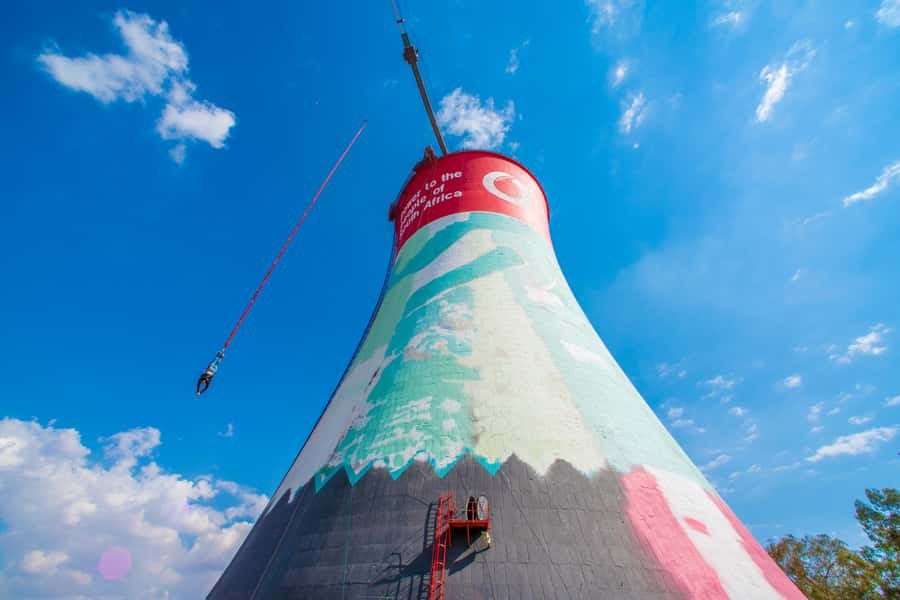
The route passes the Soweto Campus of the University of Johannesburg and includes a view of Chris Hani Baragwanath Hospital. The hospital is described as the largest in the world, making it one of the route’s major landmarks.
This section is shorter, around 30 minutes for the hospital stop, and is mainly a drive-by or viewing point rather than an interior hospital visit. It helps show the scale of Soweto and the public institutions that serve it.
Taken together, the campus and hospital prevent the tour from reducing Soweto to its apartheid-era past. You see education, health care, and modern township life alongside memorials and historic homes.
A traditional lunch at Restaurant Vilakazi
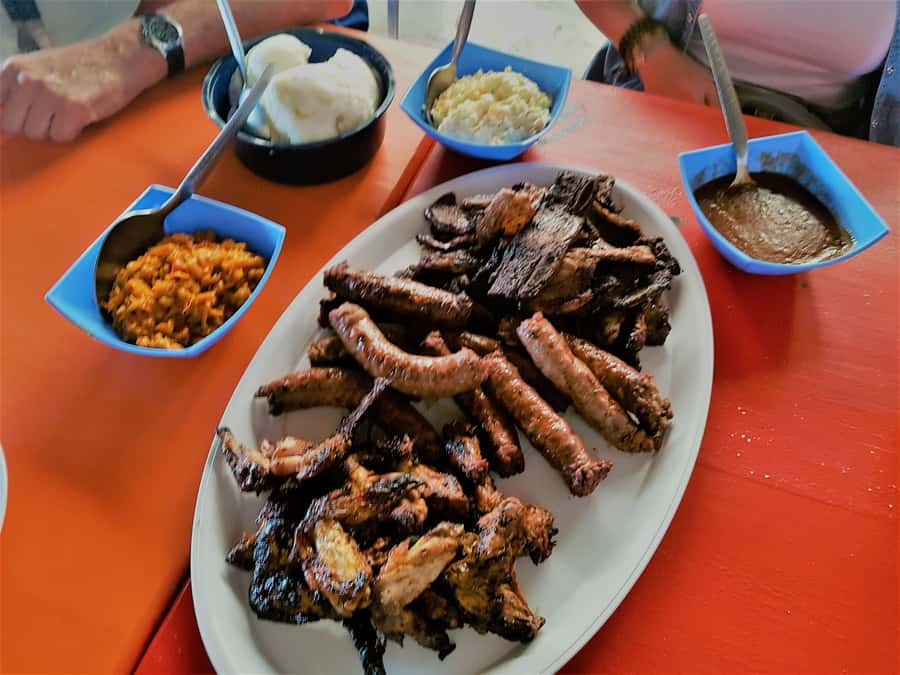
Lunch takes place at Restaurant Vilakazi and lasts about an hour. A traditional lunch is included, while additional food and drinks are not.
Food is one of the day’s useful breaks. After the museums and walking, sitting down gives you time to process what you have seen. The meal also adds a cultural element that a museum-only tour would miss.
The available information does not specify the exact menu, so do not book expecting a particular dish. The food received warm praise, but tastes and portions are personal. If you need extra drinks or anything beyond the included meal, bring money for that.
Restaurant Vilakazi also keeps lunch connected to the neighborhood rather than sending you back toward central Johannesburg for a generic meal. That makes the stop feel like part of the experience, not just a scheduled pause.
Two hours at the Apartheid Museum
The final major stop is the Apartheid Museum, with about two hours inside. This is where the separate pieces of the day come together.
The museum covers apartheid and the South African liberation struggle. After seeing Vilakazi Street, the Hector Pieterson material, and an informal settlement, you have more local reference points for the museum’s larger political story.
Two hours is enough to see a substantial portion of the museum, but not necessarily every display at a slow pace. I would pay attention to the sections that connect most clearly with what you learned earlier in Soweto. The museum is powerful, but the material is serious, and the day can feel long by this stage.
Admission is included, and the tour offers skip-the-ticket-line access. That saves time on a seven-hour schedule, especially when the day already includes a long return drive to Johannesburg.
Is $114 a fair price?
At $114 per person, this is not the cheapest way to see Soweto, but the price covers a lot: hotel pickup and drop-off, transport, a small group, a local English-speaking guide, Hector Pieterson Museum admission, Apartheid Museum admission, a traditional lunch, an informal-settlement visit, and onboard Wi-Fi.
The value is strongest if you want one organized day that combines township life and apartheid history. Buying transport, two museum tickets, lunch, and a private visit to Soweto separately could become costly and difficult to coordinate.
The tradeoff is pace. You are paying for breadth rather than a leisurely look at one neighborhood. Several stops have fixed time windows, and the route includes roughly an hour of driving at each end. One person who enjoyed the itinerary still found it somewhat rushed. I think that is a fair warning.
The price also includes the R50 donation to Motsoaledi Day Care Centre for each individual booking. That is a modest amount, but it gives part of the fee a direct community purpose.
Who should book this seven-hour tour?
I would recommend this tour if you are visiting Johannesburg for a short time and want a structured introduction to Soweto. It suits you especially well if you want political history, local context, museums, a traditional lunch, and a chance to meet people in the township in one day.
It is also a good choice if you prefer not to arrange Johannesburg transport yourself. Hotel pickup and drop-off reduce the practical work, and the small group is less cumbersome than a large sightseeing bus.
Families and older visitors should note that the tour is listed as wheelchair accessible, but the day still includes walking and several transitions. Ask for specific access details when booking if you have mobility needs.
I would hesitate if you dislike group tours, prefer long unstructured meals, or want to spend a full day at only one museum. The optional Mandela House visit may also be difficult to fit comfortably into an already full route.
English is the tour language. Bring comfortable shoes, water, and an open mind. The guide may vary, but names such as Lebo, Prince, Thabang, Khutso, and Bobo appear among the guides who have made a strong impression through clear explanations, humor, safe driving, and local insight.
Should you book it?
Book this tour if you want the broadest introduction to Soweto in a single day. Its best features are the local guide, the careful mix of street life and museum visits, the included lunch, and the chance to understand the 1976 uprising in the place where it unfolded.
Do not book it expecting a relaxed photo tour. The informal settlement visit can be sobering, the museums demand attention, and the schedule moves quickly. For a first look at Johannesburg’s political past and present, though, the combination offers solid value at $114.
FAQ
How long does the Soweto and Apartheid Museum tour last?
The tour lasts seven hours, including hotel pickup and drop-off in Johannesburg.
Is hotel pickup included?
Yes. Pickup and drop-off at your hotel or residence in Johannesburg are included.
What language is the tour conducted in?
The live tour guide speaks English.
How large is the group?
The tour is limited to 13 participants.
Are museum entrance fees included?
Yes. Admission to the Hector Pieterson Museum and the Apartheid Museum is included.
Is Mandela House included?
No. A visit to the Mandela House Museum is optional and is not included in the listed inclusions.
Is lunch included?
Yes. A traditional lunch at Restaurant Vilakazi is included. Additional food and drinks are not included.
Is the tour wheelchair accessible?
Yes, the activity is listed as wheelchair accessible. You should still confirm any specific access requirements before booking because the day includes walking and several stops.
Just added in Johannesburg
- Soweto: Bike Tour with a Local Tour Guide★ 4.7 · 114 reviews
- From Johannesburg: Lion & Safari Park Half-Day Tour★ 4.6 · 384 reviews
- Johannesburg: Soweto & Apartheid Museum Half-Day Tour★ 4.9 · 99 reviews
- Johannesburg: Street Art and Culture in Maboneng!★ 4.8 · 107 reviews
- Johannesburg: Half-Day Soweto Tour with a Local Guide★ 4.8 · 110 reviews
- Soweto: Hop-On Hop-Off Bus, City Tour and Apartheid Museum★ 4.5 · 250 reviews
- Johannesburg: Maboneng Street Art & Culture Tour★ 4.9 · 257 reviews
- Johannesburg: City Centre Walking Tour★ 4.8 · 152 reviews
Township & Cultural Tours, compared.
Soweto /Johannesburg and Apartheid Museum Guided Full Day Tour
Read our review →
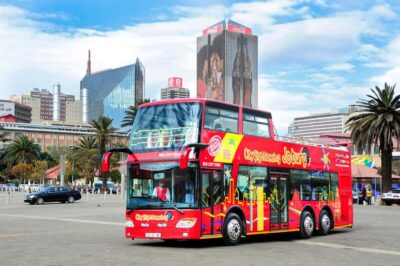
Johannesburg Hop-On Hop-Off City Tour with Soweto Option
Read our review →

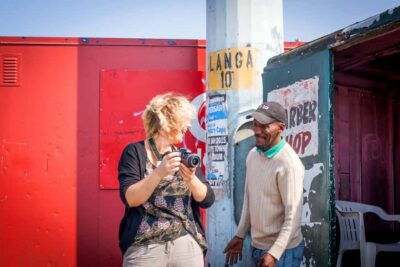
Soweto: Walking Tour with a Local Guide and Lunch
Read our review →

Browse the lists this tour appears in