

Reviewed · SOUTH AFRICA · TOURS IN CAPE TOWN
Cape Town: Nathi Langa Township Walking Tour
Langa is not a museum set up for tourists. It is a living Cape Town neighborhood, and that is the most important thing to understand before you go. With local guides such as Nathi and Zuzie, you walk streets where people live, work, shop, learn, and greet one another. The tour links South Africa’s past to the present without turning the community into a spectacle.
I like two things especially: the guides’ personal connection to Langa, and the chance to visit Guga S’thebe, where local arts and training projects give the tour a practical purpose. The main consideration is that you will see poverty and inequality at close range. This is an educational walk, not a polished sightseeing loop, so come with respect, curiosity, and a willingness to listen.
Key points at a glance
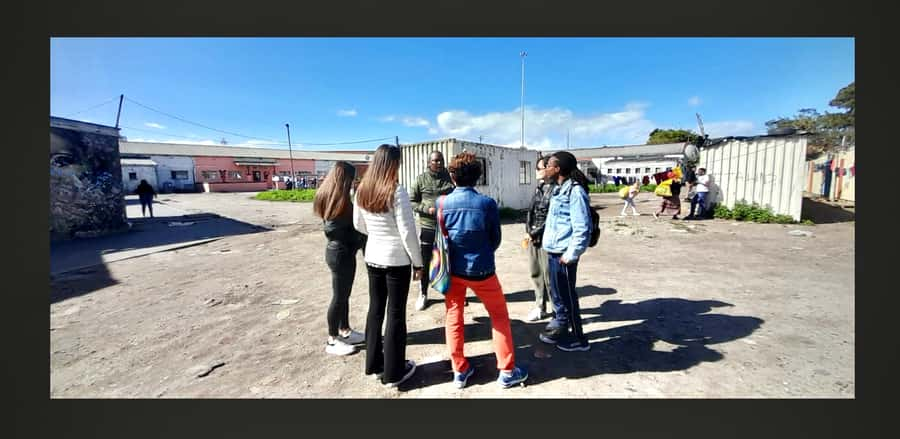
- Local guides with deep roots in Langa: Nathi grew up in the township and is known by many people along the route. Zuzie and other local guides also bring personal experience to the walk.
- Guga S’thebe cultural center: See crafts, community work, and local creative projects, with the chance to buy pottery or other handmade items.
- A clear link to South African history: The walk explains apartheid, township development, and how earlier policies still affect daily life.
- Real neighborhood contact: You may greet residents, meet local shopkeepers, see children at community projects, or stop at places such as a barber or hair salon.
- About two and a half hours on foot: The tour is long enough to give you context without taking over your day.
- Practical access: Meet at Guga S’thebe, 36 Washington Street, 15 minutes before the start. Pickup may be arranged from central Cape Town, the Waterfront, Camps Bay, and parts of the Atlantic seaboard.
Why Langa adds something important to Cape Town
Cape Town can be easy to experience through its postcard side: Table Mountain, the V&A Waterfront, beaches, vineyards, and fine restaurants. Those places are worth your time, but they do not explain the whole city. Langa gives you a different view, one shaped by forced removals, apartheid-era planning, limited opportunity, and strong community ties.
The value of this walk is not simply seeing a place that looks different from central Cape Town. It is hearing how the township came to be, then seeing how people live with the results today. Nathi is especially good at connecting national history with ordinary details. He explains the past, but he also talks about present-day problems, local hopes, and the work still needed to improve social conditions.
I appreciate that the tone is not only bleak. You will see difficult conditions, including homes made from shipping containers and sharp contrasts between parts of Langa. At the same time, you will see local projects, creative work, children at school, neighbors greeting one another, and people building businesses. That balance matters. Langa is more than hardship, just as Cape Town is more than its wealthy tourist districts.
Other walking tours in Cape Town people book:
- Cape Town: Art, Culture & History Walking Tour
★ 4.9 · 392 reviews - Cape Town: Street Art Walking Tour in Woodstock
★ 4.8 · 293 reviews - Cape Town: Langa Township Walking Tour
★ 4.8 · 272 reviews
Starting at Guga S’thebe on Washington Street
The meeting point is the main entrance of Guga S’thebe, at 36 Washington Street in Langa. Arrive 15 minutes early. This gives you time to find the entrance and meet your guide before the group sets off.
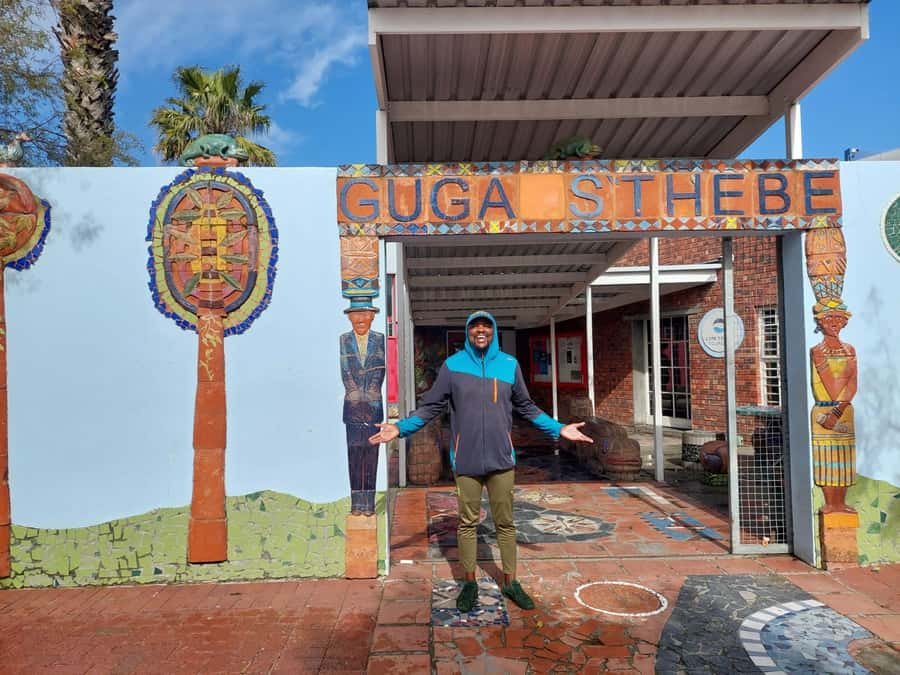
Guga S’thebe is more than a convenient starting point. It is one of the tour’s most useful stops because it shows how culture and job training can work together. Local artists make and sell crafts, and community projects help unemployed people and school leavers develop practical skills that may support future businesses.
You might see pottery and other handmade work, and you can buy something if you wish. There is no need to treat this as a compulsory shopping stop. Still, purchasing directly from local makers is a more meaningful way to spend money than buying a generic souvenir elsewhere in Cape Town.
Some tours also include a short djembe drumming session. It is a simple, hands-on introduction rather than a full performance, but it gives the opening part of the visit a friendly rhythm. Families with children may find this especially appealing because it offers something to do as well as something to hear.
Walking Langa with Nathi or Zuzie

The heart of the experience is the walk itself. Your guide leads you through streets, markets, neighborhood areas, and local meeting places while explaining what you are seeing. The exact route can vary, but the purpose stays the same: to connect the physical surroundings with the lives of the people who live there.
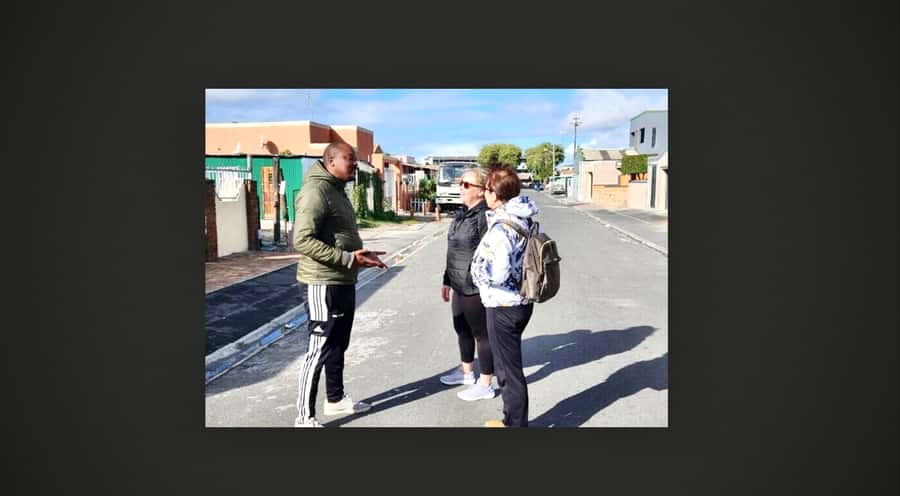
Nathi’s biggest strength is his personal network. He grew up in Langa and is recognized by people along the route. A greeting here, a quick conversation there, or a friendly exchange with a shopkeeper can make the walk feel less like an organized observation and more like an introduction through someone who belongs to the area.
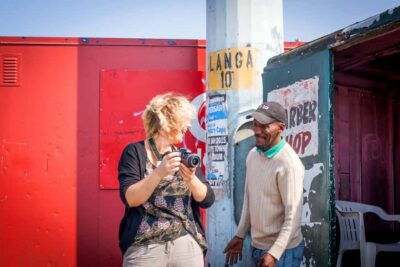
That relationship also helps with a common concern: safety. Many people arrive unsure about walking in a township. The experience is conducted with safety in mind, and the guide’s familiarity with residents helps you feel oriented. Several guests describe feeling comfortable throughout the walk, but you should still behave as you would in any unfamiliar urban area. Stay with the guide, listen to instructions, and ask before photographing people or homes.
Zuzie, also referred to as Zuzi or Xuzie in tour details, has guided many of the walks. She lives in the township and explains its past and present in a direct, friendly way. Her approach is useful if you want a personal account rather than a list of dates and political terms. She also answers questions, so bring them. This is a good tour for anyone who wants conversation, not just commentary.
The history behind the streets
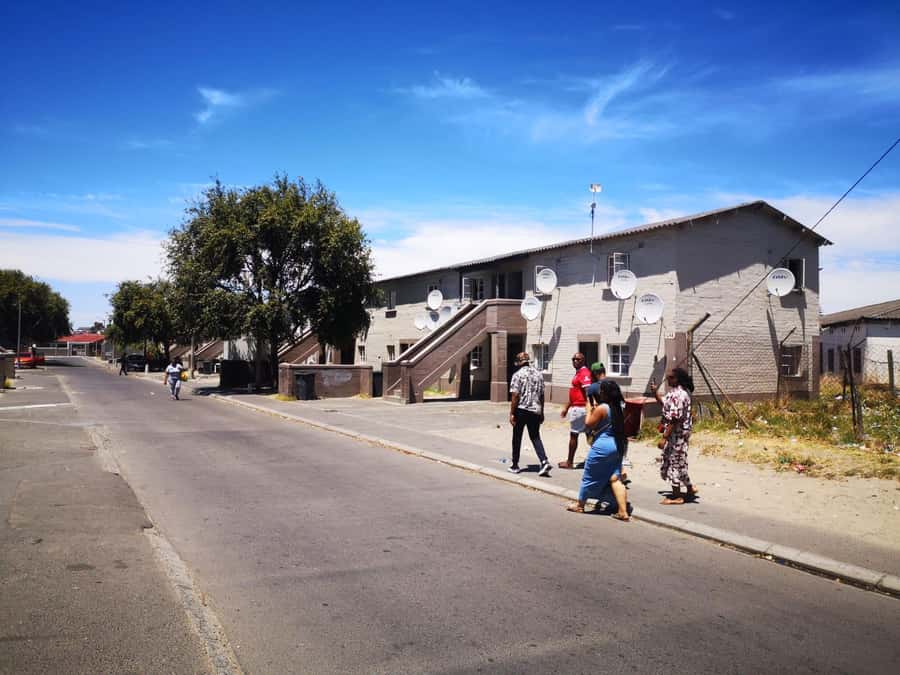
A strong part of the walk is the explanation of how townships developed under colonial rule and apartheid. You will learn why Langa exists, how segregation shaped movement and housing, and why inequality remains visible in Cape Town.
The historical information is most useful when paired with what you see. A building, road, home, or public space becomes easier to understand when your guide explains its place in the wider story. Rather than presenting apartheid as a closed chapter, the tour shows how its effects remain part of ordinary life.
You may also hear about improvements and problems in Langa today. The township has community spirit and local pride, but residents still face economic and social challenges. That combination can be uncomfortable, and it should be. The walk asks you to notice the gap between the polished areas marketed to visitors and the conditions faced by many South Africans.
I like that the guides do not pretend to have solved every problem. You hear about what is working, what is not, and what people hope to change. This makes the tour more useful than a sentimental presentation that shows only colorful streets and friendly greetings.
Same base, a different sort of day:
- Wine Tour: Paarl, Franschhoek & Stellenbosch incl 3 wineries
★ 5.0 · 3,940 reviews - Cape Town: Hop-On Hop-Off Bus Tour with Optional Cruise
★ 4.8 · 3,929 reviews - Cape Town: Cape of Good Hope & Penguins Day Tour with Pickup
★ 4.7 · 3,362 reviews - Zipline Cape Town – From Foot of Table Mountain Reserve
★ 5.0 · 3,179 reviews
Meeting residents and seeing daily life
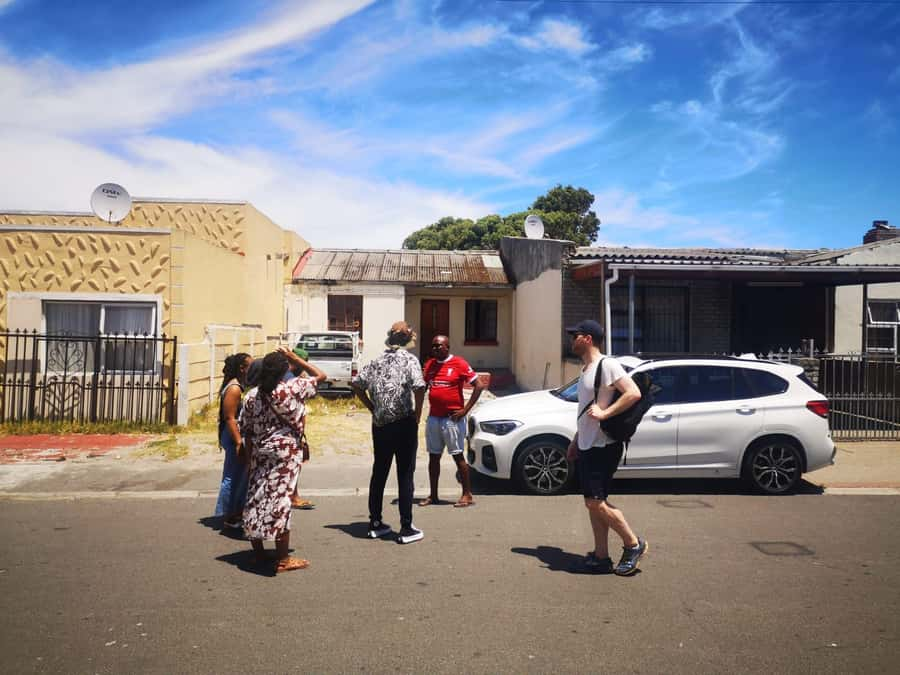
You may have casual contact with local residents as you walk. Children sometimes greet the group, and the guides may know people running small businesses or community projects. The welcome can be warm, but remember that this remains someone’s home neighborhood.
That point deserves emphasis. Do not treat residents as performers. Ask permission before taking photographs, avoid pointing cameras into homes, and do not hand out money or sweets without checking with the guide. One family mentioned bringing crayons, books, or sweets for children, but donations should be handled thoughtfully and through suitable local channels.
The walk can include ordinary stops that make the experience memorable. Past guests have had the chance to visit a local barber, see a hair salon, eat local food, or speak with people connected to community work. Street food and local eateries may be part of the day, though the exact food is not fixed in the activity details.
One unusual detail is the chance to see a shipping container converted into a home. This kind of stop can be sobering. It shows the housing pressure that statistics cannot. Your guide can explain the setting, but you should give the place the same respect you would give any private home.
Food, crafts, and small local purchases
Food is an optional part of the experience, not the main event. You may sample items from street vendors or local eateries, and past guests have mentioned dishes such as chicken feet. If you are adventurous with food, this adds a strong local touch. If you have allergies or dietary restrictions, tell the operator or guide before accepting anything.
Guga S’thebe provides the clearest chance to support local work through a purchase. Pottery and other crafts offer a direct way to take home something made in Langa. You can also ask about the projects on display and learn how training may help people earn income.
Bring some cash if you want to buy crafts, make a donation, or support a local preschool or community project. The supplied information does not give a required donation amount, so you should not feel pressured to spend beyond the tour price. A small, respectful purchase is enough if it fits your budget.
What the 150 minutes feel like
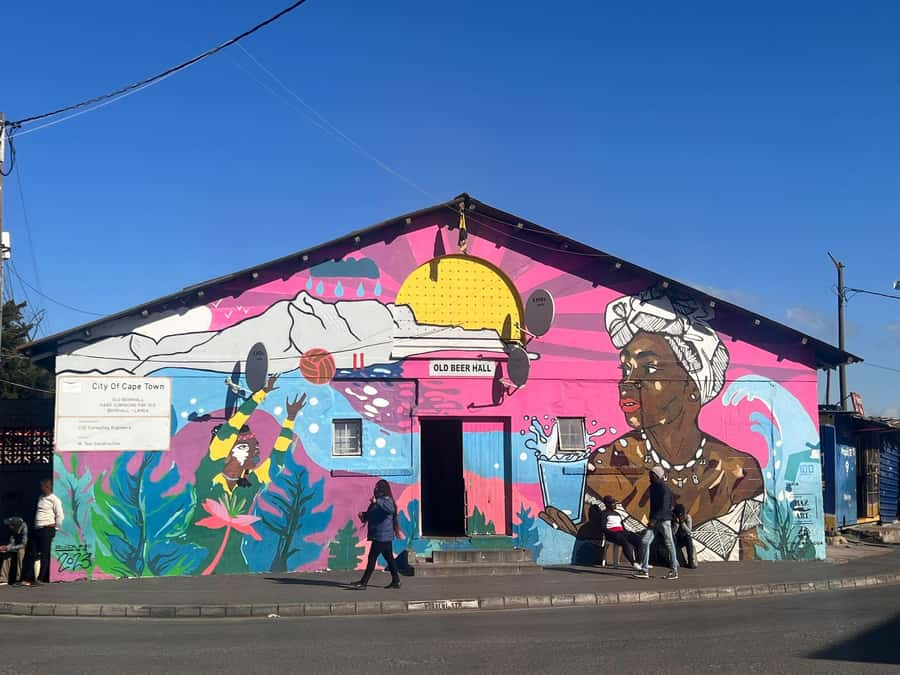
The tour lasts 150 minutes, or about two and a half hours. That is a useful length. A shorter visit might leave you with only a few impressions, while a much longer walk could become tiring, especially if you are also planning Table Mountain or another full-day activity.
You should expect a walking tour rather than a coach excursion. Wear comfortable shoes and dress for the day’s weather. The listing identifies the experience as wheelchair accessible, but the route passes through an active neighborhood, so it is sensible to confirm any specific mobility needs before booking.
Pickup may be available from hotels in central Cape Town, the Waterfront, and Atlantic seaboard areas such as Camps Bay. Contact the operator for details. If you make your own way there, the meeting point is clear, but allow time to arrive before the start.
The tour is offered in English and Xhosa. If you want to ask detailed questions about history, daily life, or local customs, English is the practical choice for most international visitors. Hearing Xhosa used in the neighborhood also adds to the sense of place.
Is the price of $31 good value?
At $31 per person, this is reasonably priced for a 150-minute guided experience, especially because the fee pays for more than a standard walk. You are getting a local guide, historical context, access to community spaces, and a route that would be difficult to navigate meaningfully on your own.
The value depends on what you want from Cape Town. If you prefer major sights, dramatic views, and a tightly scripted itinerary, you may find the tour less satisfying than a cable-car ride or sightseeing bus. If you want to understand how the city works beyond its tourist center, the price is easier to justify.
Remember that food, crafts, and donations are not clearly included in the $31. Carry extra cash only if you want those additions. The basic package is the guide and walking tour.
The booking terms are flexible: you can cancel up to 24 hours ahead for a full refund, and reserve now while paying later. That is useful if your Cape Town schedule depends on weather or changing plans.
Who should book this Langa walk?
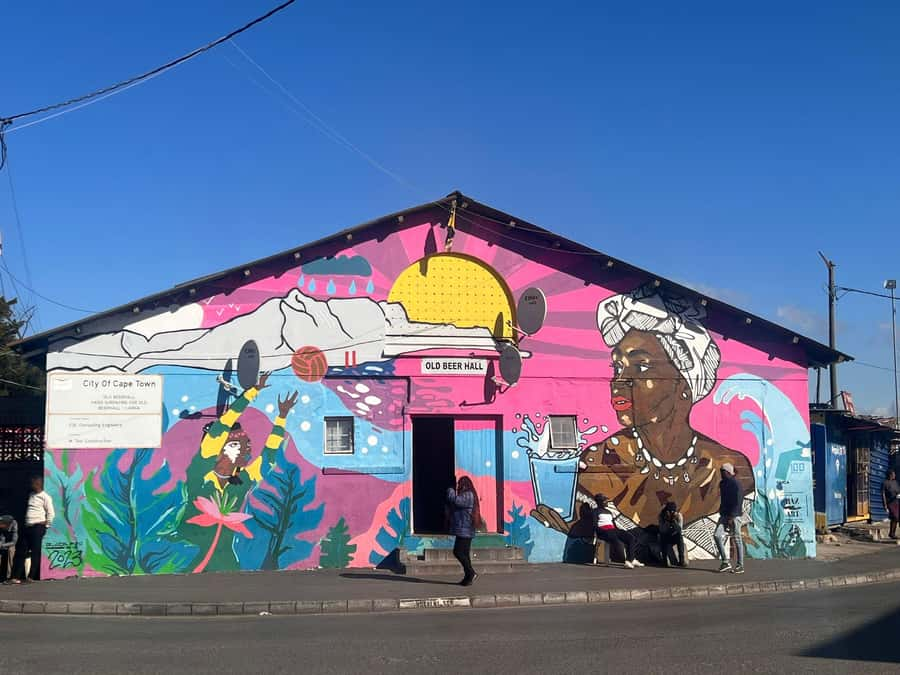
I would recommend it to first-time visitors who want historical context, families looking for a thoughtful activity, and anyone who feels that a city visit should include local voices. Children can enjoy the drumming, crafts, football, and friendly contact, though parents should prepare them to behave respectfully in a residential area.
It is also a good choice if you are nervous about visiting a township independently. A local guide gives you a clear meeting point, a planned route, and someone who can explain social situations as they arise.
You may want to skip it if you dislike walking, feel uncomfortable seeing poverty, or want entertainment without difficult subjects. The tour can be warm and humorous, but it does not hide inequality. That is part of its purpose.
Should you book the Nathi Langa Township Walking Tour?
Book it if you want a grounded view of Cape Town and are ready to treat Langa as a community, not a sightseeing display. The strongest reason to go is the local leadership: Nathi, Zuzie, and the other guides connect you with people and places through lived experience.
Choose this tour for history, conversation, and human contact. Keep your expectations realistic, ask before taking photos, and leave room for the walk to be slower and less predictable than a conventional attraction. For $31 and 150 minutes, it offers a valuable way to understand a side of Cape Town that most visitors miss.
FAQ
Where does the Langa Township Walking Tour meet?
The tour meets at the main entrance of Guga S’thebe, 36 Washington Street, Langa. You should arrive 15 minutes before the scheduled start.
How long does the tour last?
The tour lasts 150 minutes, or about two and a half hours.
What is included in the price?
The price includes a live guide and the walking tour. Food, crafts, and donations are not listed as included.
How much does the tour cost?
The listed price is $31 per person.
Which languages are available?
The tour is offered in English and Xhosa.
Who guides the tour?
Guides include Nathi and Zuzie, also referred to as Zuzi or Xuzie in the tour information. Nathi grew up in Langa, while Zuzie lives in the township.
Can I be picked up from my hotel?
Pickup may be available from hotels in Cape Town city center, the Waterfront, and Atlantic seaboard areas including Camps Bay. You need to contact the operator for details.
Is the tour wheelchair accessible?
Yes, the activity is listed as wheelchair accessible.
Can I cancel the booking?
Yes. You can cancel up to 24 hours in advance for a full refund.
Can I reserve now and pay later?
Yes. The activity allows you to reserve your place and pay later.
More walking tours elsewhere in Africa
- Cape Town: Private Walking Tour with a Local
★ 4.6 · 243 reviews - Cape Town Walking Tour: Bo-Kaap & City Highlights
★ 4.8 · 161 reviews - Cape Town: Bo-Kapp Walking Tour and Malay Cooking Class
★ 4.7 · 105 reviews - Marrakech: Ben Youssef, Secret Garden, & Souks Walking Tour
★ 4.6 · 2,802 reviews
More cultural tours in Cape Town
- Half-Day Tour Through Cape Town’s Townships
★ 4.8 · 979 reviews - Cape Town: Guided Township Tour with Hotel Pickup
★ 4.4 · 536 reviews - Cape Town: Robben Island Ferry Ticket and Townships Tour
★ 4.5 · 400 reviews - Cape Town: Half-Day Guided Township Tour
★ 4.6 · 237 reviews
Just added in Cape Town
- Cape Town: The Cape Point Instagram Small Group Tour★ 4.4 · 122 reviews
- Cape Town: Tandem Paragliding Flight with the Experts★ 4.7 · 280 reviews
- From Cape Town: Stellenbosch Four Estate Full-Day Wine Tour★ 4.8 · 266 reviews
- Stellenbosch: Half-Day Wine Tour★ 4.7 · 601 reviews
- Cape Town: Garden Route and Addo Elephant Park 6-Day Safari★ 4.7 · 175 reviews
- From Cape Town: Glass-Bottom Boat Seal Watching Tour★ 4.4 · 147 reviews
- Cape Town: Guided Township Tour with Hotel Pickup★ 4.4 · 536 reviews
- From Cape Town: Hermanus Whale Watching Boat Trip★ 4.4 · 378 reviews
Township & Cultural Tours, compared.

Soweto /Johannesburg and Apartheid Museum Guided Full Day Tour
Read our review →
Johannesburg Hop-On Hop-Off City Tour with Soweto Option
Read our review →

Soweto: Walking Tour with a Local Guide and Lunch
Read our review →

Browse the lists this tour appears in