

Reviewed · SOUTH AFRICA · TOURS IN JOHANNESBURG
Half-Day Tour of Soweto Tour
Soweto is not a sightseeing backdrop. It is a living place shaped by forced removals, the 1976 student uprising, music, politics, family life, and present-day challenges. This half-day tour gives you a local guide, a small group of no more than 15 people, and a chance to walk beyond the main roads into Motsoaledi informal settlement.
I like the personal guiding. Tshepo, Prince, Erick, Cpho, Patience, and other local guides have been praised for making the past understandable without turning the visit into a dry lecture. I also like the community connection, especially the sponsored preschool and the chance to meet residents respectfully.
The main drawback is that five hours can feel rushed. Mandela House is only an optional stop at your own cost, lunch is not included, and the advertised visit to Archbishop Desmond Tutu’s former home may not happen on every departure. This is an overview, not a slow, detailed study of every part of Soweto.
What makes this Soweto tour worth considering

- A guide from Soweto: Expect local stories about apartheid, township life, and present-day problems, not only a list of landmarks.
- A walk through Motsoaledi: You visit an informal settlement, pass local homes, and stop at a day care supported by the tour company and its visitors.
- Major freedom-struggle sites: The route includes Hector Pieterson Museum, Freedom Square, Regina Mundi Church, and Vilakazi Street.
- Mandela and Tutu connections: You pass the former homes of Nelson and Winnie Mandela and Archbishop Desmond Tutu.
- Simple logistics: Hotel pickup and drop-off, air-conditioned transport, mobile ticketing, and onboard uncapped WiFi are included.
- A thoughtful price point: At $63.26 per person, the tour offers transport and a local guide for a half-day, but you should budget extra for food and Mandela House.
Why a local guide changes the visit
You can drive through Soweto on your own, but it is harder to understand what you are seeing from the car window. A local guide can explain how neighborhoods differ, why certain sites matter, and how apartheid still affects daily life.
The strongest part of the experience is the guide’s voice. Tshepo has been praised for his passion, punctuality, and care for group safety. Prince is known for mixing humor with serious discussion. Cpho has been singled out for being attentive and easy to talk with, a useful quality if you are traveling alone.
Erick has been praised for explaining Johannesburg and Soweto through stories rather than dates alone. Patience has helped visitors connect apartheid-era events with life in the township today. Guide quality can vary from one departure to another, but the tour clearly depends on the person leading it. A good guide turns a drive into a conversation.
The tone is not polished or carefully softened. You may hear direct opinions about poverty, housing, unemployment, and inequality. That honesty is part of the value, though it can also make the morning emotionally heavy.
Other cultural tours in Johannesburg:
- Johannesburg: Hop-On Hop-Off Bus with Optional Soweto Tour
★ 4.6 · 985 reviews - Soweto /Johannesburg and Apartheid Museum Guided Full Day Tour
★ 5.0 · 932 reviews - Johannesburg Hop-On Hop-Off City Tour with Soweto Option
★ 4.5 · 768 reviews
From FNB Stadium to Diepkloof
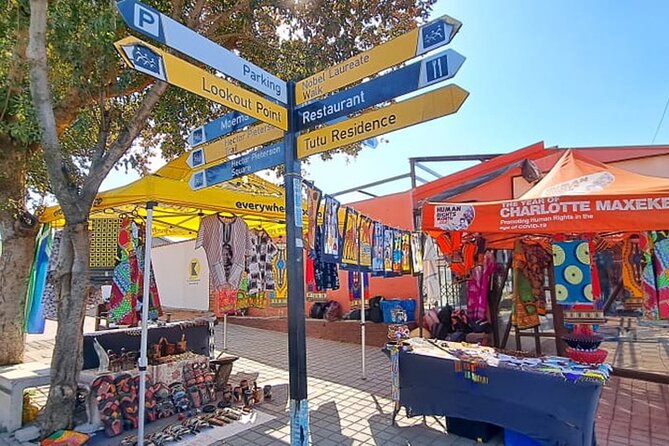
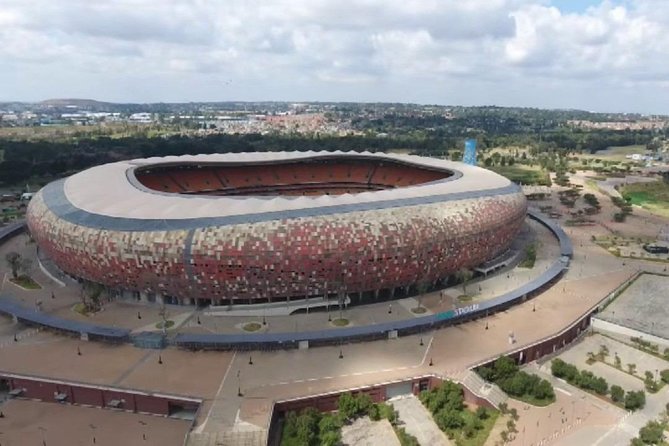
The tour begins with a drive toward Soweto, passing FNB Stadium. The stadium hosted the opening and closing ceremonies of the 2010 World Cup, so it offers a quick link between South Africa’s global image and the neighborhoods beyond the sports complex.
You then enter Diepkloof, where vendors sell a wide range of goods. This brief stop is not a formal attraction. It is useful because it shows the everyday economy of the township, with commerce happening along the road rather than inside a tourist market.
The scheduled time around FNB Stadium and Diepkloof is about 15 minutes. Do not expect an extended stadium visit or time for a full shopping stop. Think of it as a moving introduction to Soweto.
Baragwanath and the scale of Soweto
The route continues past Baragwanath Hospital, a large taxi rank, and the historic Diepkloof area. This section helps you grasp the size and movement of Soweto. The taxi rank is especially important because minibus taxis are a major part of local transport.
Again, the stop is short, around 15 minutes. The value comes from the guide’s explanation and the passing view, not from entering the hospital or spending time at the taxi rank. You are getting orientation before the walking portions begin.
I appreciate this sequence because it avoids rushing straight to famous political landmarks. Soweto is also hospitals, transport, vendors, schools, homes, and ordinary routines. Those details give the later museum visit more meaning.
Walking through Motsoaledi informal settlement
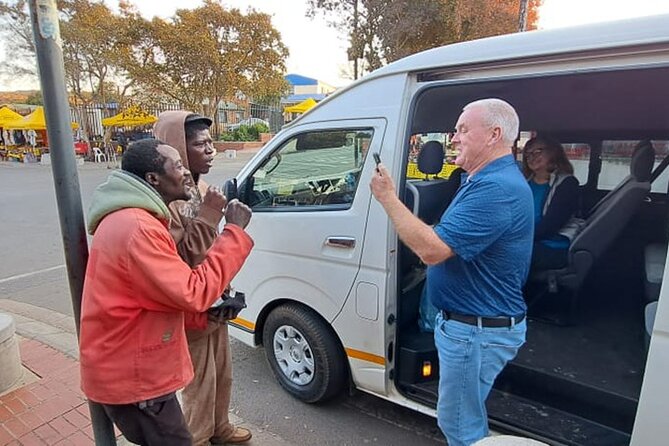
Motsoaledi is the most confronting part of the tour. You leave the vehicle and walk along sandy streets past local dwellings and a typical informal settlement day care. The guide introduces you to residents and explains how people live in the area.
This is where the tour needs a respectful attitude. You are not entering a theme park or a staged village. The homes are real, and the day care serves real children. The tour company says that it and visitors support the preschool through these visits, which gives the stop a practical community purpose.
Some departures have included a visit inside a very small home. One account described a mother and eight children sharing a tiny room without electricity or running water. That kind of encounter can be powerful, but it also raises questions about privacy and dignity. Listen to your guide, ask before taking photographs, and do not treat residents as photo subjects.
The experience can feel humbling. It can also become uncomfortable if you approach it as poverty tourism. I recommend focusing on the guide’s explanations, greeting people politely, and remembering that you are seeing one part of Soweto, not the whole township.
The preschool visit has been a highlight for many people, especially when children sing or greet the group. Still, you should avoid assuming that a cheerful welcome erases the difficulties around it. The tour is strongest when it holds both facts together: community warmth and serious material hardship.
A few more things to do in Johannesburg worth a look
- Johannesburg and Soweto: Half-Day Tour
★ 4.8 · 439 reviews - From Johannesburg: Lion & Safari Park Half-Day Tour
★ 4.6 · 384 reviews - Johannesburg: Half-Day Soweto Tour with a Local Guide
★ 4.8 · 110 reviews - Johannesburg: Soweto & Apartheid Museum Half-Day Tour
★ 4.9 · 99 reviews
Regina Mundi, Freedom Square, and the politics of place
After Motsoaledi, the minivan continues through Orlando West toward the center of Soweto. You stop outside Regina Mundi Church and Freedom Square for a quick overview.
Regina Mundi is linked to the political and social life of Soweto, while Walter Sisulu Square, formally called the Walter Sisulu Square of Dedication, sits in Kliptown. The square is tied to the Freedom Charter and the wider anti-apartheid struggle.
The stop at Freedom Square is brief, so do not expect a long guided tour of every feature. Its purpose is to help you place Soweto within South Africa’s political story. The guide’s explanation matters more here than the amount of time spent standing in the square.
This is also a point where a personal guide can help you avoid reducing the past to a simple good-versus-bad story. The township has been shaped by resistance, but also by work, families, faith, music, and daily survival.
Hector Pieterson Museum brings 1976 into focus
The Hector Pieterson Museum is one of the tour’s strongest scheduled stops. You have about 45 minutes, and admission is included.
The museum is in Orlando West, close to where Hector Pieterson was shot and killed on June 16, 1976. That date marks the Soweto uprising, when students protested the forced use of Afrikaans in schools. The museum presents the events and their human cost through exhibits connected to the students, the protest, and the wider political climate.
You should expect this stop to be serious rather than quick and cheerful. The museum gives names and faces to a turning point that is sometimes reduced to one famous photograph. The time allowed is enough for a meaningful visit, though not enough for an unhurried study of every display.
Several guides have made the museum a central part of their explanation of apartheid and Soweto. If you want to understand the political sites visited earlier, this is where the pieces begin to fit together.
Vilakazi Street and the Mandela connection
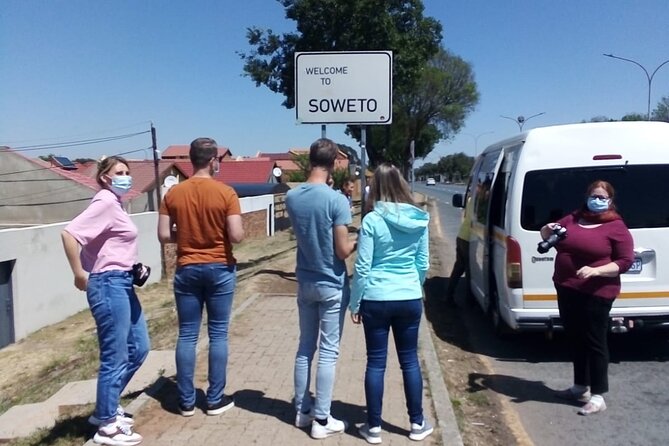
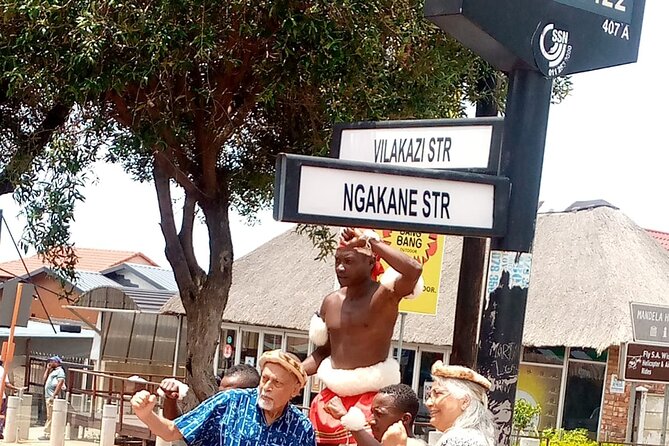
The minivan then reaches Vilakazi Street, one of Soweto’s best-known streets. You pass monuments and the former homes of Nelson and Winnie Mandela and Archbishop Desmond Tutu.
This is a rare place associated with two Nobel Peace Prize winners on the same street. It is also a working neighborhood, not only a heritage display. You may see restaurants, small businesses, craft stalls, and people going about their day.
The wording of the experience allows for a visit to Mandela House if time permits, but admission is not included. The stop is listed at about 20 minutes, so you should confirm with the guide how much time is available before deciding to pay for entry. If Mandela House is important to you, set aside extra money and be prepared for the possibility that the schedule will not allow a full visit.
The tour does not always offer a visit inside Archbishop Tutu’s former home. The route passes the house, but passing a landmark and entering it are different things. If you specifically want an interior visit, ask at the start of the tour rather than assuming it is included.
Soweto Towers finish the morning
The final stop is the Soweto Towers. These large painted cooling towers have become one of the township’s most recognizable modern sights.
The tour ends here, and lunch is not included. You can buy food and drinks at a café, browse the craft market, watch people, or, if time and budget allow, try bungee jumping from the towers. The jump is an optional extra and is not part of the tour price.
This ending changes the mood after the museum and informal settlement. It gives you space to eat, look around, and decide how much activity you want after an emotionally demanding morning. Bring money for food and drinks, since none are supplied.
The timing can be tight. If the group spends longer at Motsoaledi or the museum, there may be little time for lunch or the tower activity. I would treat the towers as a useful finish, not as the main reason to book.
What the $63.26 price includes
At $63.26 per person, this is a fair price for a half-day Johannesburg tour if you value convenience and interpretation. You receive hotel pickup and drop-off, air-conditioned minivan transport, a local guide, and free onboard uncapped WiFi.
You also avoid the stress of arranging transport into Soweto independently. That matters in Johannesburg, especially if you are unfamiliar with the city or have only one free morning. The group size is capped at 15, which is small enough for questions without promising a private tour.
The price does not include drinks, food, alcoholic beverages, Mandela House admission, or bungee jumping. Budget for at least a meal and refreshments at the end. If you want to enter Mandela House, keep a separate amount available.
The tour’s community element adds value beyond transport. The company says part of its proceeds goes to the Local Care Centre, and the Motsoaledi visit supports a local day care. You should still view that support as one part of responsible tourism, not a reason to ignore questions about consent and respectful behavior.
Practical details before you book
The tour lasts about five hours and is available with hotel pickup and drop-off. Confirmation is provided when you book, and you receive a mobile ticket.
Most people can take part, and service animals are allowed. Children must be accompanied by an adult, and the child rate applies only when sharing with two paying adults.
The tour is suitable for solo visitors. Cpho’s attentive style and the small group format can make it easier to ask questions or talk with the guide. It can also work well for couples, families with older children, and people using Johannesburg as a short stopover. One person used the tour during an afternoon arrival from an airport hotel, which shows how the five-hour format can fit into a tight visit, provided your pickup time works.
You should wear comfortable shoes for the sandy streets and walking sections. The provided details do not specify a dress code or exact pickup area, so check the confirmation carefully and allow time to meet the vehicle at your hotel.
The cancellation terms are simple: cancel at least 24 hours before the start time for a full refund. Cancellations or changes inside 24 hours are not refunded or accepted.
Who should book this Soweto experience?
Book it if you want a guided introduction to Soweto that combines political history with present-day community life. It is especially useful for a first visit, a short Johannesburg stay, or anyone uneasy about arranging independent transport.
It suits you if you are ready for serious subjects and direct discussion. You will see poverty as well as landmarks, and the visit to Motsoaledi may challenge your assumptions about township life.
You may want a different experience if you prefer long museum visits, private touring, or a relaxed lunch built into the schedule. The half-day format covers a lot of ground, but the pace leaves limited time at several sites. It also does not guarantee entry to Mandela House or the home associated with Archbishop Tutu.
My booking verdict
I would book this tour for a first look at Soweto, especially if your priority is context rather than collecting photographs. The best parts are the local guide, the Hector Pieterson Museum, and the chance to see how famous political landmarks sit alongside homes, schools, vendors, and informal settlements.
Go with patience and respect. Ask before photographing people, listen carefully during the Motsoaledi visit, and keep your expectations flexible. If you do that, the $63.26 fee buys more than a ride through Soweto. It gives you a structured way to begin understanding a place that cannot be reduced to its past.
FAQ
How long does the Soweto tour last?
The tour lasts approximately five hours.
What is the price of the tour?
The listed price is $63.26 per person.
Is hotel pickup included?
Yes. Hotel pickup and hotel drop-off are included.
Is transport provided during the experience?
Yes. Transport is provided in an air-conditioned minivan.
Is a local guide included?
Yes. A local guide is included, and the tour is led by guides from the Johannesburg and Soweto area.
Is the Hector Pieterson Museum admission included?
Yes. Admission to the Hector Pieterson Museum is included.
Is Mandela House admission included?
No. The visit to Mandela House is optional if time permits, and admission is at your own cost.
Is food included?
No. Food and drinks are not included. You can buy something at a café near the Soweto Towers at the end of the tour.
How large is the tour group?
The tour has a maximum of 15 participants.
What is the cancellation policy?
You can cancel at least 24 hours before the experience for a full refund. Cancellations or changes made less than 24 hours before the start time are not refunded or accepted.
Just added in Johannesburg
- Soweto: Bike Tour with a Local Tour Guide★ 4.7 · 114 reviews
- From Johannesburg: Lion & Safari Park Half-Day Tour★ 4.6 · 384 reviews
- Johannesburg: Street Art and Culture in Maboneng!★ 4.8 · 107 reviews
- Johannesburg: Soweto & Apartheid Museum Half-Day Tour★ 4.9 · 99 reviews
- Johannesburg: Soweto Apartheid & Township Tour with Lunch★ 4.8 · 80 reviews
- Johannesburg: Half-Day Soweto Tour with a Local Guide★ 4.8 · 110 reviews
- Soweto: Hop-On Hop-Off Bus, City Tour and Apartheid Museum★ 4.5 · 250 reviews
- Johannesburg: Maboneng Street Art & Culture Tour★ 4.9 · 257 reviews
Township & Cultural Tours, compared.
Soweto /Johannesburg and Apartheid Museum Guided Full Day Tour
Read our review →
Johannesburg Hop-On Hop-Off City Tour with Soweto Option
Read our review →
Soweto: Walking Tour with a Local Guide and Lunch
Read our review →


Browse the lists this tour appears in