
Reviewed · SOUTH AFRICA · TOURS IN JOHANNESBURG
Johannesburg and Soweto Apartheid Full Day Tour w/Lunch
Johannesburg makes more sense when you see its grand towers, old prison grounds, and Soweto streets in one day. This tour links the city’s major sights with the places where apartheid and the struggle against it became personal, including Constitutional Hill, Hector Pieterson Memorial, and Nelson Mandela’s former home.
I like the way the day combines landmark sightseeing with local context. I also like the included lunch at a Soweto shebeen, which gives you a chance to sit down over food instead of spending the entire day moving from one museum to the next. Guides such as James, Vincent, Pascal, Lauren, and Ruth have been praised for explaining difficult subjects clearly and adjusting the pace to suit their group.
The main catch is timing. The Apartheid Museum is open Wednesday through Sunday, and the full day packs in a lot. Two hours at the museum may not feel like enough, especially if you want to read every display.
Key points to know before booking
- Johannesburg and Soweto in one day: See central Johannesburg, Constitutional Hill, Soweto, and major apartheid sites without arranging several separate outings.
- Local guides shape the experience: Guides including James, Vincent, Pascal, Lauren, Ruth, and Nomonde have led this tour, with English, French, and Portuguese available.
- Museum days matter: The Apartheid Museum is open Wednesday through Sunday, so do not book this itinerary on a Monday or Tuesday if the museum is essential.
- Lunch is part of the day: You eat at a local shebeen, adding a cultural stop to the historical sightseeing.
- Hotel pickup is included: Pickup from Johannesburg or nearby hotels can take up to an hour, with collection generally scheduled between 8 and 9 a.m.
- Expect a serious subject: This is an educational tour about apartheid, police violence, forced separation, and South Africa’s movement toward democracy.
Seeing Johannesburg through its towers and streets
The day begins with hotel pickup in an air-conditioned vehicle. The collection window is usually between 8 and 9 a.m., but the vehicle may spend up to an hour gathering people from hotels around Johannesburg and nearby areas. If you prefer a tightly controlled start, this wait is worth keeping in mind.
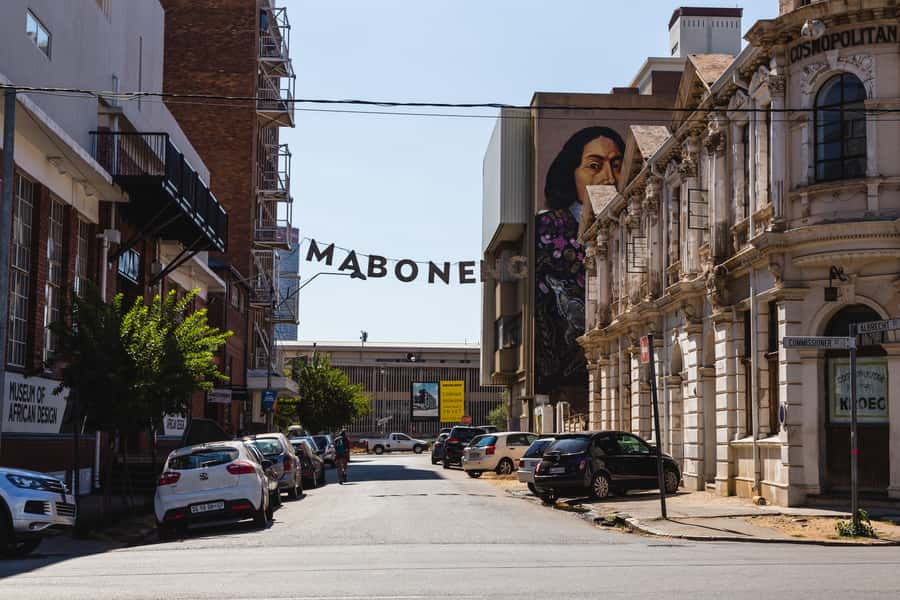
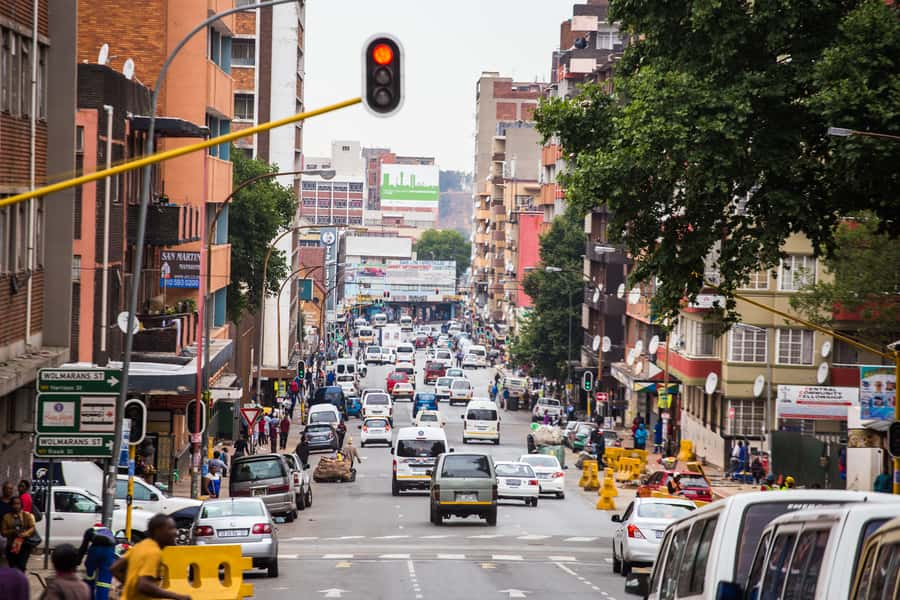
The first part of the route introduces you to central Johannesburg from the vehicle and at selected stops. You may see the Hillbrow Tower, Ponte City, Sentech Tower, Carlton Centre, and Nelson Mandela Bridge. These structures tell different parts of the city’s story: communications, commerce, changing neighborhoods, and the visual confidence of a modern South African city.
Carlton Centre is particularly useful as a landmark because it helps you understand Johannesburg’s vertical scale. Ponte City, with its unusual cylindrical form, is another memorable sight. The tour does not treat these buildings as isolated photo stops. Your guide explains how the city changed, how different areas developed, and how apartheid shaped movement, housing, and opportunity.
You will not get a slow walking tour of every downtown block. Much of this section is viewed from the vehicle, which is practical in an eight-hour itinerary. It also means your guide can cover more ground, though you should not expect long stops at every tower.
Other cultural tours in Johannesburg:
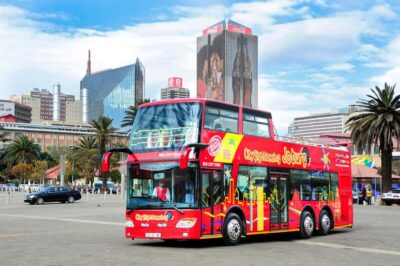
- Johannesburg: Hop-On Hop-Off Bus with Optional Soweto Tour
★ 4.6 · 985 reviews - Soweto /Johannesburg and Apartheid Museum Guided Full Day Tour
★ 5.0 · 932 reviews - Johannesburg Hop-On Hop-Off City Tour with Soweto Option
★ 4.5 · 768 reviews
Constitutional Hill and the road to democracy
Constitutional Hill is one of the strongest stops because it brings political history down to a human scale. The site was once a prison and military fort. Today, its museum presents South Africa’s difficult movement from racial rule toward democracy.
Expect to hear about the prison system, political prisoners, and the legal structures that supported apartheid. The court buildings and former prison areas make the subject less abstract. You are not only hearing about laws and political leaders. You are seeing a place where people were held, judged, and separated by a system designed to deny basic rights.
Your guide’s role matters greatly here. James, Pascal, Vincent, and Ruth have been especially praised for explaining the background in a clear, engaging way. Several guides have also adjusted their explanations to suit the group, answering questions about politics, culture, language, marriage customs, and daily life.
Constitutional Hill can sometimes replace the Apartheid Museum if the museum is closed. That is not an exact substitute, since each site has its own focus, but it does keep the day centered on South Africa’s legal and political past. If the museum is your main reason for booking, check the operating days before you pay.
The Apartheid Museum: allow time to read
The Apartheid Museum is the emotional center of the itinerary when it is open. Its displays cover the rise of apartheid, the restrictions placed on Black South Africans, resistance movements, state violence, and the long path toward democracy.
You should allow about two hours, and even that may feel short. The museum contains more information than you can absorb at a quick pace. If you try to read every panel, watch every film, and study every object, you may find yourself rushing later in the day.
I recommend deciding what matters most before entering. You might focus on the legal structure of apartheid, the student uprisings, the work of freedom fighters, or the transition to democracy. Your guide can provide the larger framework, allowing you to spend museum time on the displays that speak most strongly to you.
The museum is open from Wednesday through Sunday. This is the most important scheduling point in the entire tour. Monday and Tuesday bookings may involve more time at Constitutional Hill or another adjusted plan, but the Apartheid Museum itself will not be available on those days.
Entering Soweto and its divided stories
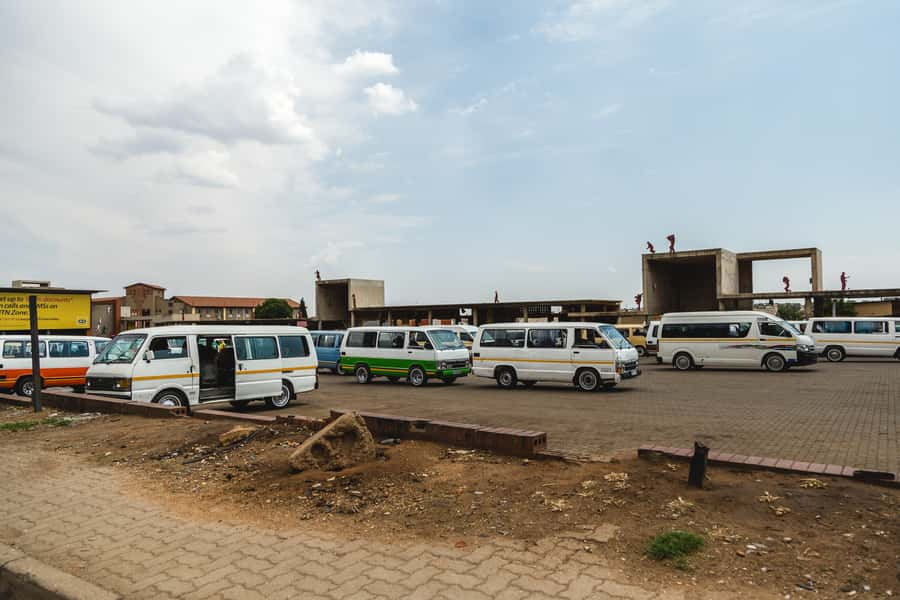
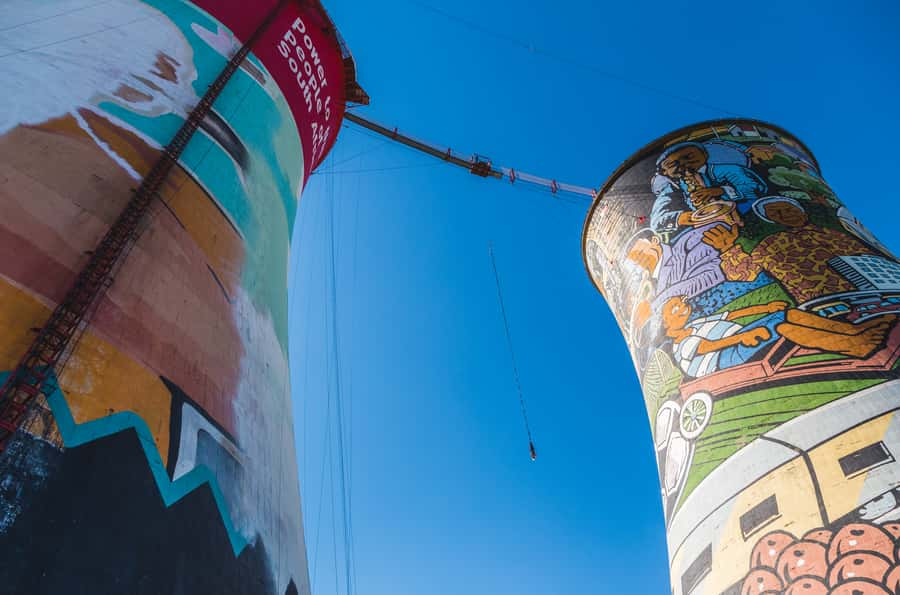
After central Johannesburg and the museum or Constitutional Hill, the tour heads to Soweto. The township is not presented as a single story of poverty. You see residential streets, major landmarks, an informal settlement, the cooling towers, Baragwanath Hospital, and places connected to the anti-apartheid struggle.
That range matters. Soweto is a living community, not an outdoor museum. The route gives you a look at different sides of the area, including places where daily life continues beyond the historic events that bring visitors here.
Safety also affects the way the sightseeing works. You may stop at some locations, while other places are viewed from the vehicle. A past guide explained that the group could not always stop where it wanted because conditions were not suitable. That can be disappointing if you are looking for constant photo opportunities, but it is better than treating every neighborhood as a backdrop.
A guide with local ties can add meaning here. James grew up in Soweto and has described life there from personal experience. Ruth has also guided visitors through Soweto with strong local knowledge. Nomonde, a female guide, has led the tour for solo women, and her calm, attentive approach was especially helpful for a guest traveling alone.
A few more things to do in Johannesburg worth a look
- Soweto: Walking Tour with a Local Guide and Lunch
★ 4.9 · 648 reviews - Soweto: Guided Bicycle Tour with Lunch
★ 4.9 · 292 reviews - Johannesburg: Soweto Apartheid & Township Tour with Lunch
★ 4.8 · 80 reviews - Marrakech: Atlas Mountains, Ourika Valley, Waterfall & Lunch
★ 4.8 · 15,834 reviews
Hector Pieterson Memorial and the student uprising

The Hector Pieterson Memorial is one of Soweto’s most important historical sites. It recalls the student uprising of 1976, when schoolchildren protested the apartheid government’s education policies and faced police violence.
The memorial is named for Hector Pieterson, whose death became a symbol of the uprising. The visit gives you a clearer sense of why young people, schools, language, and education became central to resistance.
This stop can be emotionally heavy. It is not simply a place for a quick photograph. Listen carefully to the guide’s explanation, then allow yourself a little quiet time to take in what happened. The subject is difficult, but the site helps connect national history with the actions of ordinary students.
Opening schedules can change, and one detailed account noted a closure on a Tuesday. If this memorial is a priority, ask about access when booking, particularly if you are visiting early in the week.
Vilakazi Street and the Mandela connection
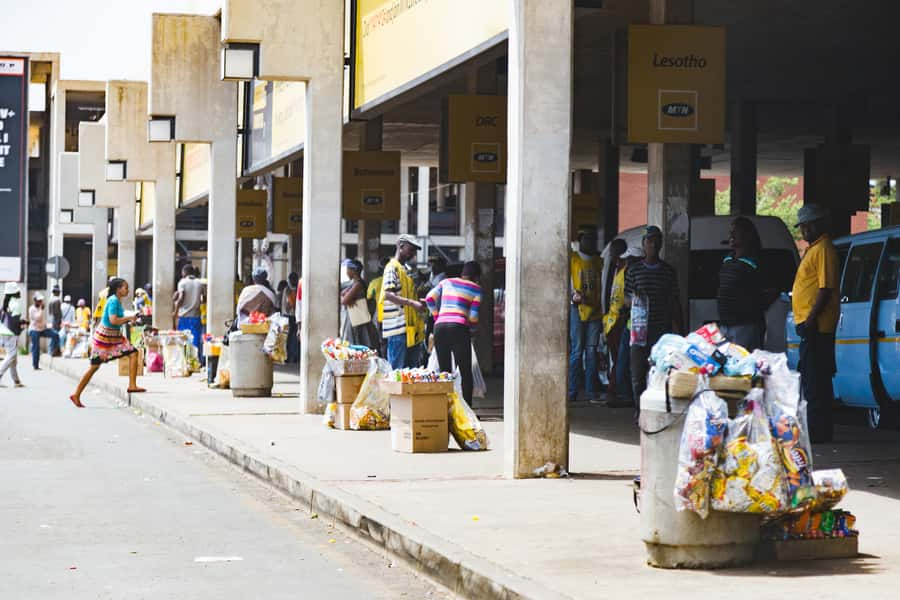
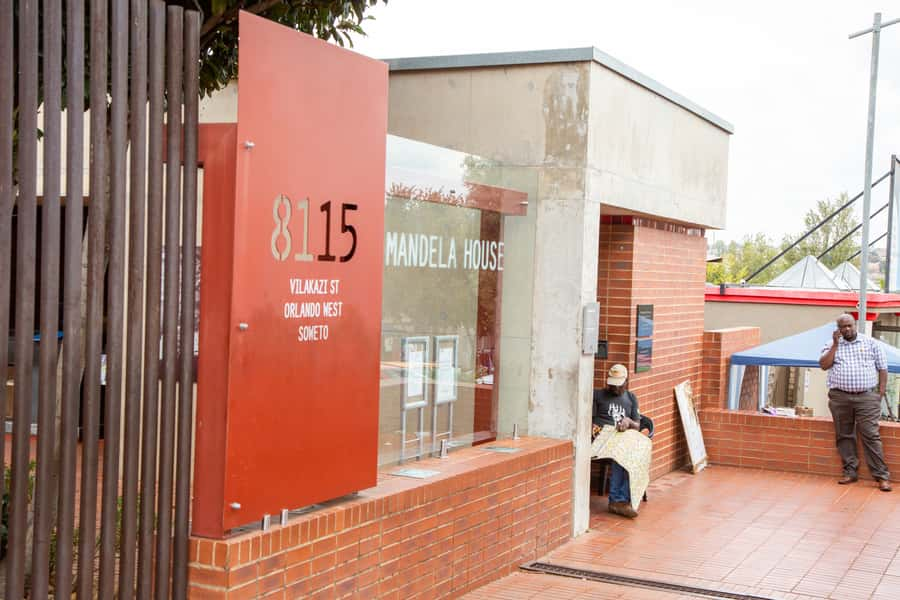
Vilakazi Street is a highlight because it links major political figures with an ordinary residential setting. You view Nelson Mandela’s former home, along with the houses associated with Desmond Tutu and Winnie Mandela.
Nelson Mandela House offers a more personal look at Mandela’s life than a large national museum can provide. You see the setting connected with his years in Soweto and gain a better sense of the neighborhood where political history unfolded.
The itinerary lists a view of Mandela House, and time inside the house can depend on the schedule and current access. Some versions of the day allow time at the house, while the broader tour may focus on the street and surrounding area. If going inside is essential to you, confirm exactly what is included on your chosen date.
Vilakazi Street is also a place where history and local commerce meet. You may have time to look around or shop, though personal purchases are not included. One useful point from past visits is that some guides allow time for browsing rather than keeping you moving every minute.
Lunch at a Soweto shebeen
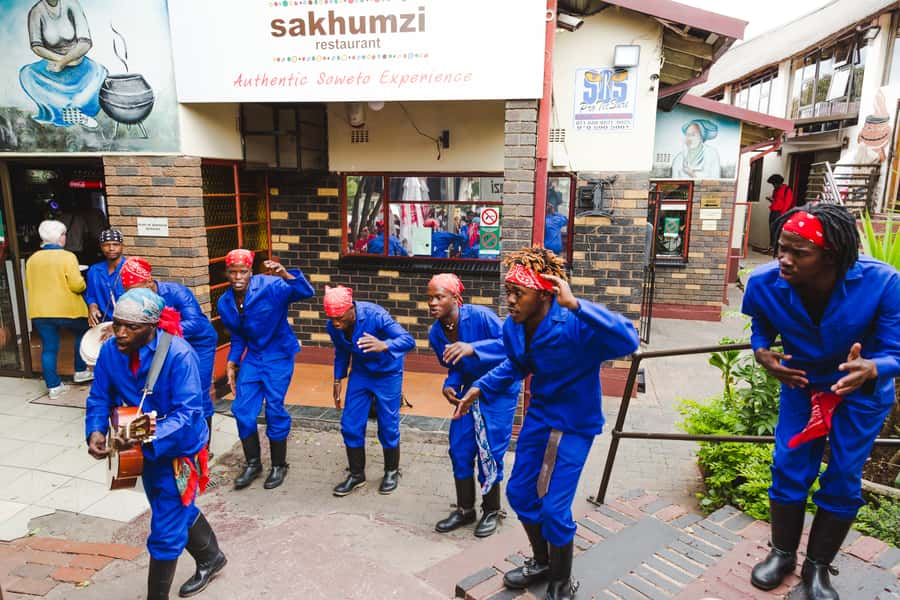
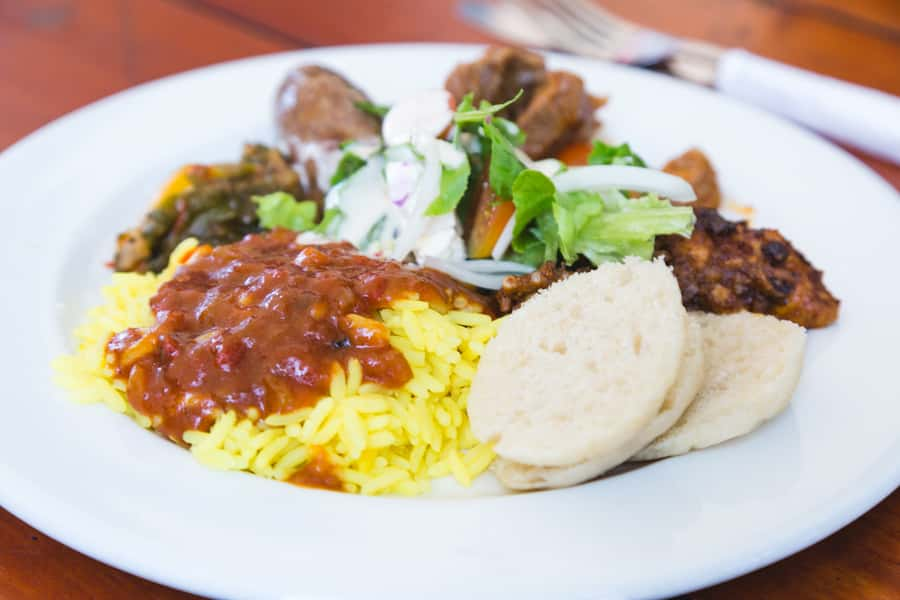
Lunch takes place at a local shebeen, a traditional neighborhood gathering place. The meal adds something that a museum cannot: a chance to sit, eat, and experience a social setting connected with Soweto.
The lunch is listed as included, along with bottled water. The specific menu is not given, so you should not book expecting a particular dish. A past account described the meal as a buffet-style local lunch and noted that food prices in Soweto can feel high by local standards, so confirm the current arrangement if meal costs are important to your budget.
I like this stop because it breaks up a demanding historical day. You have time to talk with your guide, ask questions, and process what you have seen. It also gives the tour a cultural element rather than making Soweto only a place of political memory.
Do keep your expectations practical. This is a local restaurant experience, not a polished fine-dining lunch. That is part of the point, but it may not suit you if you want a long meal or a detailed food tour.
How the guides affect the day

The guide may be the biggest factor in how much you get from this tour. The subject is complicated, and a good guide can explain the sequence of laws, protests, prison experiences, and political changes without turning the day into a lecture.
James has been praised for personal knowledge of South African history and for adapting the route when the museum was closed. Vincent has been described as especially strong on history, landmarks, culture, and local roads. Pascal has guided in a friendly, patient way and is available for French as well as English. Lauren has been praised for clear explanations and a good grasp of South African history.
French and Portuguese are also offered, though you should request your preferred language when booking. Group size can vary. Some departures have felt like private tours when other participants did not arrive, while other departures may include several people.
The vehicle includes WiFi, bottled water, and a map. You should still bring a phone or camera, comfortable clothing, and walking shoes. Casual dress is appropriate, and the day includes enough stops and museum time that uncomfortable footwear will become annoying.
Is the $93 price fair?
At $93 per person, this is not the cheapest way to see Johannesburg, but it covers a lot. You get hotel pickup and drop-off, a driver-guide, transport for eight hours, entrance to the Apartheid Museum, lunch, bottled water, WiFi, and several major sites in Johannesburg and Soweto.
The value is strongest if you have limited time in Johannesburg. Trying to arrange central Johannesburg, Constitutional Hill, the Apartheid Museum, Soweto, Hector Pieterson Memorial, and Mandela House on your own would require careful transport planning and a good understanding of local geography.
The price also buys interpretation, not just transportation. Johannesburg’s history is spread across large distances, and the connections between the places are not always obvious. A guide such as James, Vincent, Pascal, or Lauren can explain what you are seeing while handling the driving.
The value is weaker if you want long museum visits or slow photography stops. This is a packed overview. The Apartheid Museum alone can fill several hours, and the tour still needs to cover Soweto and central Johannesburg. You pay for range and convenience, not an unhurried visit to one location.
Free cancellation up to 24 hours before the start and reserve-now, pay-later booking add flexibility. Personal expenses are not included, so allow extra money for souvenirs or other purchases.
Who should book this Johannesburg day tour?
I would recommend it to a first-time visitor who wants a serious introduction to Johannesburg and Soweto in one day. It suits you especially well if you want historical context, hotel pickup, and a local guide rather than a self-guided museum visit.
It is also a good fit for solo visitors. Several guides have provided attentive service to people traveling alone, and a private-feeling departure may occur when a booking is small. That cannot be guaranteed, but the format works well for asking questions and setting a comfortable pace.
Families can book, but children must be accompanied by an adult, and unaccompanied minors are not allowed. The subject matter is serious, so parents should decide if the apartheid exhibitions and memorials suit their children.
I would skip this tour if your main goal is nightlife, shopping, or modern Johannesburg without difficult historical content. I would also choose another date if you cannot accept a short museum visit or if Monday and Tuesday are the only days you have available.
Should you book it?
Book this tour if you want the essential historical route through Johannesburg and Soweto, with transport and interpretation handled for you. The strongest reasons are the guide quality, the range of sites, the personal stories connected with Soweto, and the chance to combine Constitutional Hill with the Apartheid Museum.
Before booking, check three things: the museum’s Wednesday through Sunday schedule, the pickup area and possible one-hour collection window, and how much time will be available at Mandela House and the Apartheid Museum. Choose a midweek museum day if possible, wear comfortable shoes, and prepare for a full day of difficult but important history.
FAQ
How long does the tour last?
The tour lasts eight hours, including hotel pickup, sightseeing, museum visits, lunch, and return transport.
What places are included?
The route includes central Johannesburg, Constitutional Hill, the Apartheid Museum, Soweto, Vilakazi Street, Hector Pieterson Memorial, a view of Mandela House, views of the Desmond Tutu and Winnie Mandela houses, an informal settlement, the Soweto cooling towers, and Baragwanath Hospital.
Is hotel pickup included?
Yes. Pickup and drop-off are included from Johannesburg or surrounding-area hotels. Pickup may take up to one hour, and collection is generally scheduled between 8 and 9 a.m.
Which days is the Apartheid Museum open?
The Apartheid Museum is open Wednesday through Sunday. If it is closed, the itinerary may be adjusted, with extra time at Constitutional Hill or another historical visit.
Is lunch included?
Yes. Lunch at a local shebeen is included in the activity details. Personal expenses are not included.
What languages are available?
The live guide is available in English, French, and Portuguese.
Is transport included?
Yes. You travel in a comfortable, air-conditioned vehicle, with hotel pickup and drop-off included.
Are children allowed?
Children may join when accompanied by an adult. Unaccompanied minors are not allowed, and adult pricing applies to all travelers.
What should I wear?
Wear casual, comfortable clothing and walking shoes. The day includes museum visits, sightseeing stops, and time in Soweto.
Can I cancel the booking?
You can cancel up to 24 hours in advance for a full refund. Reserve-now, pay-later booking is also available.
Just added in Johannesburg
- Soweto: Bike Tour with a Local Tour Guide★ 4.7 · 114 reviews
- From Johannesburg: Lion & Safari Park Half-Day Tour★ 4.6 · 384 reviews
- Johannesburg: Soweto & Apartheid Museum Half-Day Tour★ 4.9 · 99 reviews
- Johannesburg: Soweto Apartheid & Township Tour with Lunch★ 4.8 · 80 reviews
- Johannesburg: Street Art and Culture in Maboneng!★ 4.8 · 107 reviews
- Johannesburg: Half-Day Soweto Tour with a Local Guide★ 4.8 · 110 reviews
- Soweto: Hop-On Hop-Off Bus, City Tour and Apartheid Museum★ 4.5 · 250 reviews
- Johannesburg: Maboneng Street Art & Culture Tour★ 4.9 · 257 reviews
Township & Cultural Tours, compared.
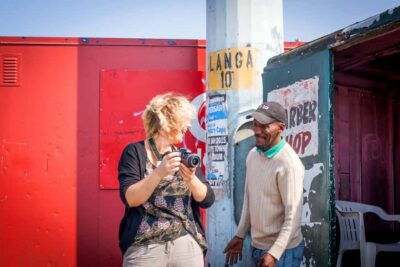
Soweto /Johannesburg and Apartheid Museum Guided Full Day Tour
Read our review →
Johannesburg Hop-On Hop-Off City Tour with Soweto Option
Read our review →

Soweto: Walking Tour with a Local Guide and Lunch
Read our review →

Browse the lists this tour appears in