
Reviewed · TOURS IN SOUTH AFRICA
Johannesburg: Soweto Half-Day Tour
Soweto is not a single attraction. It is a huge township where apartheid history, everyday life, memorials, markets, churches, and modern South Africa all sit close together. This tour gives you a useful first look, moving from Vilakazi Street and Mandela’s former home to the Hector Pieterson Museum and an informal settlement.
I like the way the tour combines major landmarks with time on foot in Diepkloof, and I like that local guides such as Sello, Thapelo, Lebo, and William explain what you are seeing rather than simply pointing from a vehicle. The main drawback is the pace: five hours covers a lot, and some stops can feel rushed.
Key points at a glance

- Vilakazi Street brings major South African history into one short walk, with views of Nelson Mandela’s former home and Archbishop Desmond Tutu’s home.
- The Hector Pieterson Museum gives the tour its emotional center, explaining the 1976 Soweto uprising and the death of Hector Pieterson.
- A visit to an informal settlement adds present-day context, but you should think carefully about privacy and respectful conduct.
- Local guides make a major difference, with past guides including Sello, Thapelo, Lebo, Patience, Mark, Tshepo, and William.
- The $74 price is fair for a five-hour introduction, since transport, pickup, museum admission, church entry, and WiFi are included.
- Mandela House admission costs extra, so decide in advance if you want to spend more time inside the museum.
Why Soweto works best with a local guide
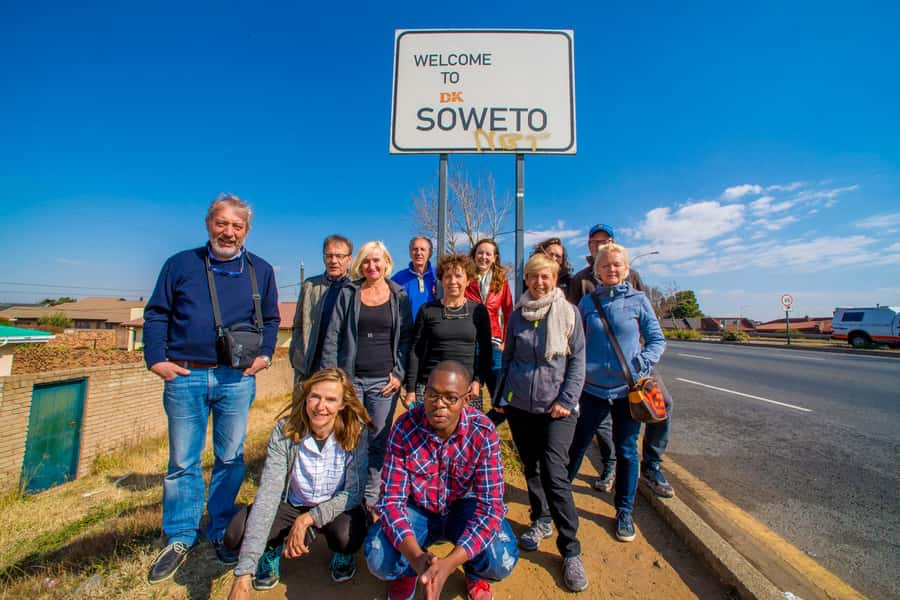
Soweto, short for South Western Township, is not easy to understand from a car window. Its streets carry the marks of forced segregation, political struggle, community life, and ongoing change. A guide gives those pieces some order.
The strongest part of this tour is the commentary during the drives. Your guide sets up the next stop before you arrive, explains why it matters, and answers questions as you go. Guides named in past bookings include Sello, Thapelo, Lebo, Patience, Mark, Tshepo, William, and Carson. The exact guide depends on the day, but the consistent theme is local knowledge, patience, and a friendly manner.
You are not simply being taken to a list of photo stops. You are shown how the places connect. The 1976 student uprising helps explain the Hector Pieterson memorial. Vilakazi Street connects political leaders with the wider struggle. The informal settlement shows that Soweto is not only a historical subject, but also a living community.
That said, a guide cannot turn five hours into a full study of Soweto. If you want long museum visits, extended conversations, or time for a meal, you will need a longer tour or a separate visit.
Other cultural tours in South Africa:
- Johannesburg: Hop-On Hop-Off Bus with Optional Soweto Tour
★ 4.6 · 985 reviews - Half-Day Tour Through Cape Town’s Townships
★ 4.8 · 979 reviews - Soweto /Johannesburg and Apartheid Museum Guided Full Day Tour
★ 5.0 · 932 reviews
From Johannesburg to Soweto: the first 45 minutes
Pickup is available from your Johannesburg hotel or residence. After a short briefing, you travel toward Soweto in a comfortable vehicle with onboard uncapped WiFi. The transfer takes about 45 minutes each way, depending on traffic and the pickup schedule.
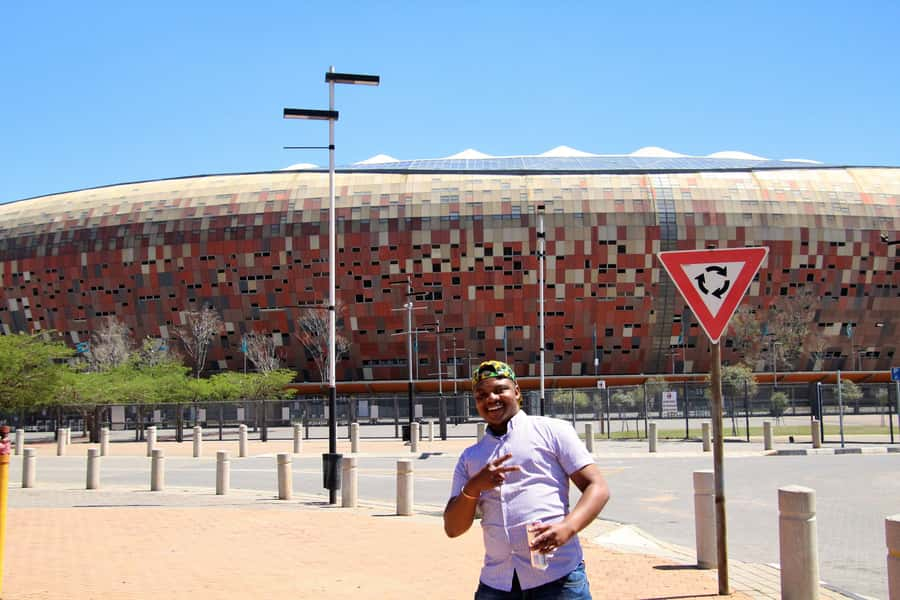
One early sight is the National Football Stadium, associated with the opening and closing ceremonies of the 2010 World Cup. It is a quick orientation point rather than a major stop, but it helps place Soweto within the wider Johannesburg area.
The drive also gives your guide room to explain apartheid-era planning and the township’s place in South African history. This is useful because the later visits make more sense when you understand why Soweto grew, how communities were controlled, and why certain streets became symbols of resistance.
Pickup timing can vary. One past booking had a late pickup, while another described the arrangements as punctual and clear. I would keep the morning flexible rather than scheduling a tight connection immediately after the tour.
Diepkloof: a short walk through daily life

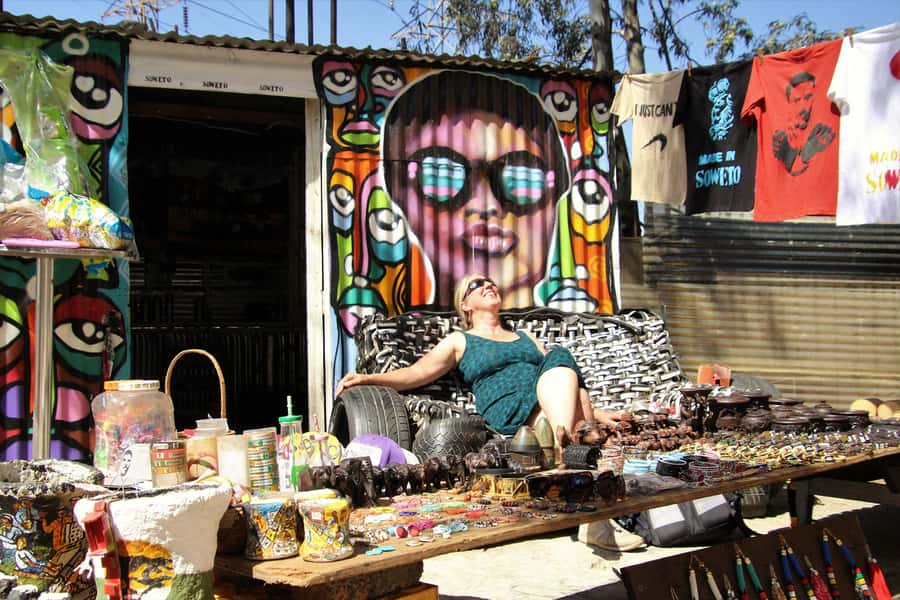
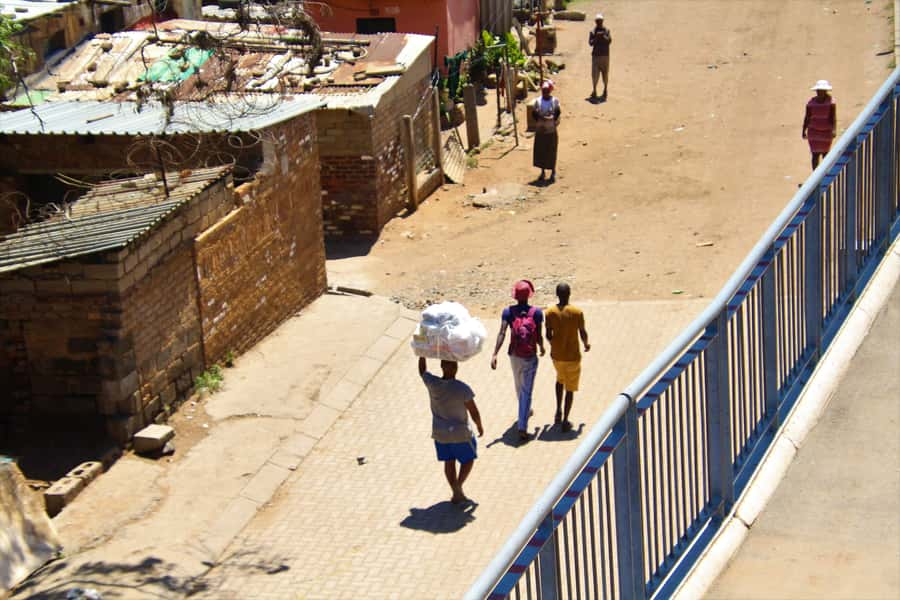
In Diepkloof, you leave the vehicle for roughly 30 minutes and walk past vendors selling a wide range of goods. This is one of the tour’s better choices because you see ordinary commerce rather than only famous names and memorials.
Your guide can help you read the scene: what is being sold, how people use the area, and how township life works beyond the sites most often shown in guidebooks. You should expect a working neighborhood, not a staged cultural display.
The stop is short, so do not expect time to browse every stall or hold lengthy conversations. Keep valuables secure and stay with the group, as you would in any busy urban market area. The point is to observe and learn, not to turn the walk into a shopping expedition.
Vilakazi Street and two Nobel-linked homes
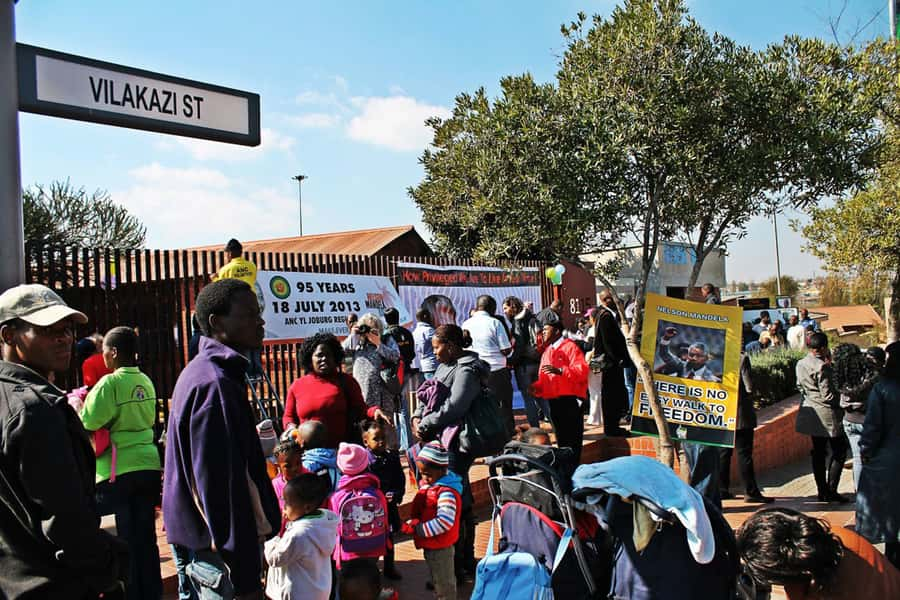
Vilakazi Street in Orlando West is the tour’s best-known address. It is famous for being associated with both Nelson Mandela and Archbishop Emeritus Desmond Tutu, two central figures in South Africa’s political story.
You drive past Mandela’s former home and see the home of Desmond Tutu. You also pass the former home associated with Winnie Madikizela-Mandela, Nelson Mandela’s former wife. These are views from the route, so expectations matter: this part is about seeing the addresses and understanding their place in the story, not receiving a private house tour.
You can also read about the Soweto uprising of June 16, 1976. That date marks the student protest against the forced use of Afrikaans in schools and the violent response that followed. The death of Hector Pieterson became one of the most powerful images of the struggle against apartheid.
Vilakazi Street can feel more commercial than the informal settlement and residential areas. That is not necessarily a weakness. It shows how an important political site has become part of Soweto’s public identity and visitor economy. Still, if you want a quieter neighborhood walk, the one-hour sightseeing period may feel too brief.
A few more things to do in South Africa worth a look
- Half-Day Tour of Soweto Tour
★ 4.5 · 712 reviews - Stellenbosch: Half-Day Wine Tour
★ 4.7 · 601 reviews - From Cape Town: Cape Point and Boulders Beach Half-Day Tour
★ 4.8 · 498 reviews - Johannesburg and Soweto: Half-Day Tour
★ 4.8 · 439 reviews
Hector Pieterson Museum: the emotional heart of the tour
Admission to the Hector Pieterson Museum is included, and this is the stop I would take most seriously. The museum gives structure to the events of 1976 and explains why young people played such a central role in the fight against apartheid.
The visit can be emotionally difficult. The subject is the killing of schoolchildren and the wider violence of the uprising, so this is not a light sightseeing stop. One useful feature of having a guide is the preparation before entering. Carson, for example, was praised for explaining the next stop during the drive, making the museum easier to understand once inside.
The museum visit may not feel long enough for every display. One past booking noted that an extra hour would have helped and suggested reducing time at less important stops. If you like museums and want to read every panel carefully, plan a separate visit on another day.
The museum also prevents the informal settlement visit from becoming detached from history. You first learn about state violence, student resistance, and the struggle for education. You then see how the township developed and how inequality still affects daily life.
Regina Mundi Church and the role of community

Entrance to Regina Mundi Church is included. The church is important in the wider story of Soweto because churches served as places of worship, gathering, refuge, and political discussion during apartheid.
This stop adds a different layer to the day. The museum focuses on protest and repression, while the church points to the role of community institutions. It is a quieter counterpoint to the street scenes and memorials.
The exact amount of time at the church depends on the day’s schedule. Since the tour includes several drives and short sightseeing periods, you may not get a long, unhurried visit. Listen to the guide’s explanation, ask questions, and take the chance to connect the building with the wider history being discussed.
Seeing an informal settlement respectfully
The tour continues into an informal settlement, where you can see living conditions and interact with local residents. This is the part that needs the most thought before booking.
For some people, it is the most important stop because it shows a side of Soweto that museums cannot. You see the gap between famous political landmarks and the harder realities faced by some residents. The visit can also show community strength, local generosity, and the practical ways people create homes and businesses with limited resources.
For others, walking through a poor area feels uncomfortable or intrusive. That concern is valid. Do not treat homes, residents, or children as photo props. Ask before taking photographs, follow your guide’s instructions, and do not assume that gifts or money are expected. Some past advice suggested small change or sweets for children, while another person felt awkward after not bringing cash. The safest approach is to ask your guide what is appropriate and respect a no.
You may visit a local community or childcare setting, but the exact details can vary. The tour information confirms an informal settlement visit, not a guaranteed home visit or school activity. That distinction matters. If entering private homes is a concern, tell the guide clearly that you prefer to observe from public areas.
Cooling towers, university, taxi rank, and hospital
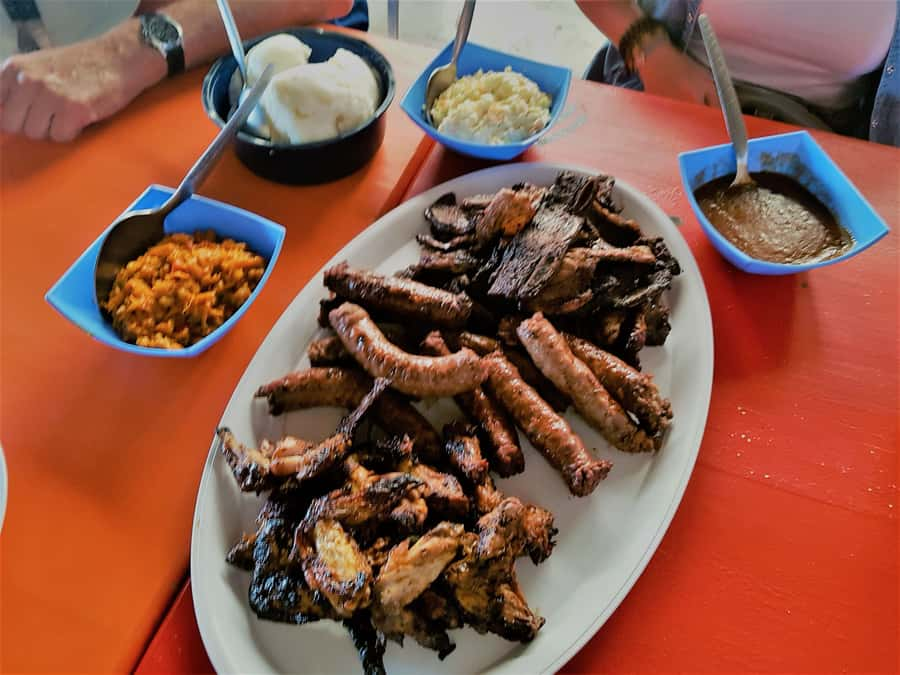
The tour keeps moving through Soweto, with views of the famous cooling towers, the Soweto Campus of the University of Johannesburg, and the Baragwanath Taxi Rank. These are not decorative extras. They show the township as a place where people study, commute, work, and build a future.
The taxi rank offers a glimpse of the transport system that connects residents with Johannesburg and surrounding areas. The university campus points to education and opportunity. The cooling towers are more visual, making an easy photo stop and a recognizable symbol of the area.
The final major sight is Chris Hani Baragwanath Hospital, described as the largest hospital in the world. You view it from the route rather than taking a hospital tour. It is a fitting closing sight because healthcare, access, and public services remain tied to the broader story of inequality and social change.
The schedule gives around 45 minutes for one later sightseeing section and about 30 minutes for another. Your guide may adjust the order because of traffic, local events, or timing. One past tour was disrupted by events, but the guide adapted well. Flexibility helps here.
What the $74 price really includes
At $74 per person, this is not the cheapest way to see Soweto, but it offers solid value for a half-day outing. You receive Johannesburg pickup, return transport, an English-speaking guide, Hector Pieterson Museum admission, Regina Mundi Church entry, and WiFi in the vehicle.
The value is strongest if you have limited time in Johannesburg. Transport alone can be inconvenient if you are unfamiliar with the city, and the guide’s historical context is a major part of what you are paying for. The tour also combines sites that would be difficult to arrange efficiently on your own in five hours.
The main extra cost is entry to the Nelson Mandela House Museum. You can view the house from outside without paying that admission fee, or choose to enter and pay on arrival. If Mandela’s personal story is your main reason for visiting, budget for the museum and be prepared for less time elsewhere.
Food and personal purchases are not included. Bring water and money for anything you want to buy, but there is no included meal or food stop listed. The tour is wheelchair accessible, though the amount of walking and the conditions at an informal settlement may be worth discussing with the provider before you go.
Free cancellation up to 24 hours before the start and reserve-now, pay-later booking make the plan easier to adjust. These are useful safeguards, but the main booking decision is whether the fast pace and informal settlement visit suit you.
Who will get the most from this tour
I would recommend it to a first-time Johannesburg visitor who wants a strong introduction to Soweto without giving up a full day. It suits anyone interested in apartheid history, local politics, township culture, photography, and present-day community life.
It is also a good choice if you are staying in Johannesburg and want hotel pickup rather than arranging several separate transfers. Solo participants can still expect the tour to operate, as one person reported receiving a full tour even when traveling alone.
You may want something else if you dislike group schedules, prefer long museum visits, or feel uncomfortable with poverty-focused sightseeing. A private visit with a clear agreement about photography and informal settlement access could be a better fit.
Should you book the Soweto half-day tour?
Book it if you want a well-organized first look at Soweto and understand that the experience moves quickly. The strongest reasons are the local guides, the Hector Pieterson Museum, Vilakazi Street, and the chance to see both famous landmarks and everyday township life.
Do not book it expecting a relaxed day of sitting in museums. You will spend much of the time moving between places, and the informal settlement visit asks you to be thoughtful about privacy and dignity.
For most first visits, I think the $74 cost is reasonable. You get transport, key admissions, and five hours of context that would be hard to assemble alone. If you can add extra time in Johannesburg, return to the Hector Pieterson Museum or Mandela House separately so you can explore without watching the clock.
FAQ
How long does the Soweto tour last?
The tour lasts five hours, including pickup from Johannesburg, the journey to Soweto, sightseeing, and the return transfer.
Where does pickup take place?
Pickup is available from your accommodation in Johannesburg. The exact pickup time depends on the available start times.
What language is the tour conducted in?
The live tour guide speaks English.
Is admission to the Hector Pieterson Museum included?
Yes. Entry to the Hector Pieterson Museum is included in the tour price.
Is entry to Nelson Mandela House included?
No. You can view Mandela House from outside, but entry to the Nelson Mandela House Museum costs extra and is payable on arrival.
Does the tour visit an informal settlement?
Yes. The tour includes a visit to an informal settlement where you can interact with local residents. Ask permission before taking photographs and follow the guide’s advice about respectful conduct.
Is the tour wheelchair accessible?
Yes, the activity is listed as wheelchair accessible. It is still sensible to discuss the walking sections and informal settlement conditions with the provider before booking.
Just added in South Africa
- Cape Town: The Cape Wheel Ticket★ 4.6 · 350 reviews
- Cape Town: The Cape Point Instagram Small Group Tour★ 4.4 · 122 reviews
- Cape Town: Tandem Paragliding Flight with the Experts★ 4.7 · 280 reviews
- Stellenbosch: Historical Bike Tour & Wine Tasting★ 4.9 · 248 reviews
- From Cape Town: Stellenbosch Four Estate Full-Day Wine Tour★ 4.8 · 266 reviews
- Stellenbosch: Half-Day Wine Tour★ 4.7 · 601 reviews
- Stellenbosch: Wine Farm E-Bike Guided Tour★ 4.6 · 88 reviews
- Stellenbosch: Guided Historical Walking Tour★ 4.7 · 283 reviews
Township & Cultural Tours, compared.
Soweto /Johannesburg and Apartheid Museum Guided Full Day Tour
Read our review →
Johannesburg Hop-On Hop-Off City Tour with Soweto Option
Read our review →

Soweto: Walking Tour with a Local Guide and Lunch
Read our review →

Browse the lists this tour appears in