
Reviewed · MOROCCO · TOURS IN MARRAKECH
Marrakech: Moroccan Cooking Workshop at La Maison Arabe
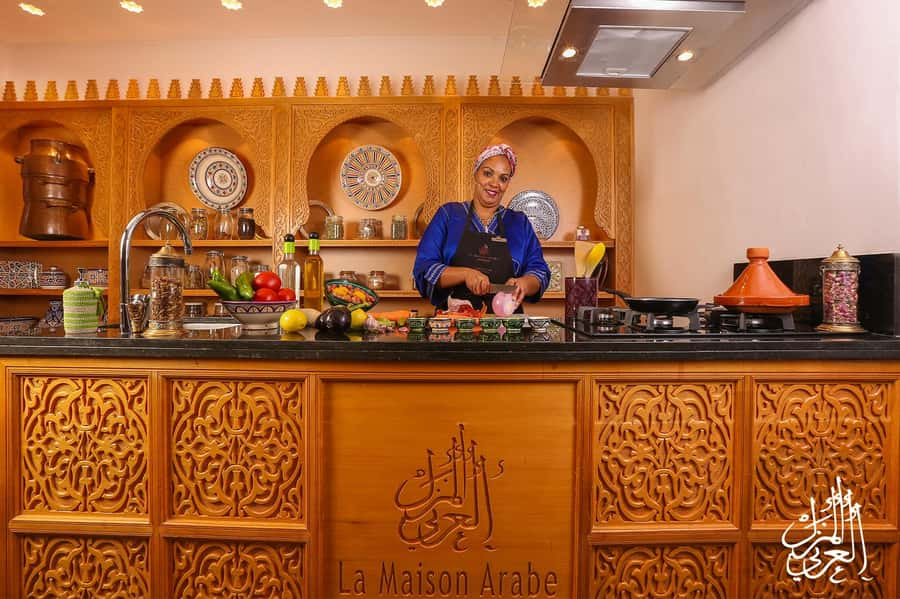
Moroccan cooking becomes much easier to understand when you are chopping, seasoning, and stirring instead of simply watching a restaurant kitchen. At La Maison Arabe, a traditional cook, or dada, guides you through the process with live translation, from fresh local ingredients to the final tagine.
I like the individual workstations and the bright, spotless kitchen. I also like the tea ceremony, which turns a cooking lesson into a small cultural encounter. The main drawback is that the $35 price is higher than some Marrakech cooking classes, and the 1-hour option gives you only a taste of the full program.
- Choose your pace: Take the 1-hour express class or the fuller 3-hour session.
- Cook your own meal: You work at an individual station rather than simply watching a chef.
- Learn from a dada: Traditional Moroccan cooking is explained with translation in Arabic, English, or French.
- Taste more than tagine: The longer class can include starters, dessert, bread, tea, and a main course.
- Eat what you prepare: The meal is served after the practical work, often with time to chat.
- Expect a polished setting: The workshop uses modern equipment and fresh local ingredients.
A Marrakech cooking class with real hands-on work
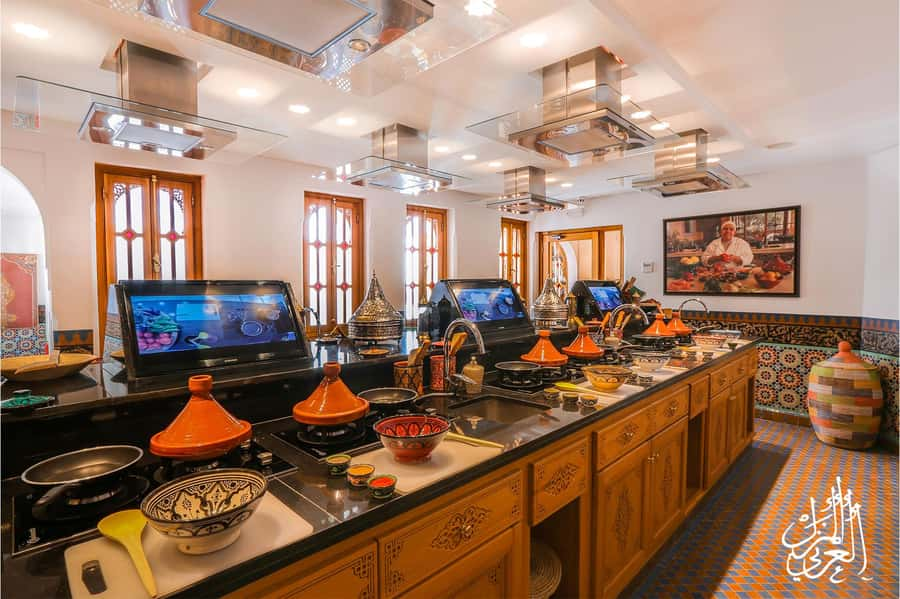
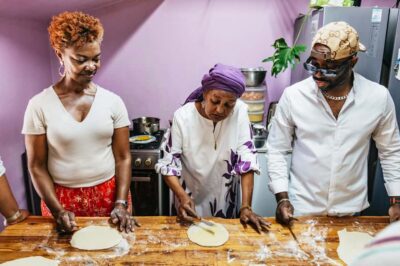
This workshop is built around participation. You do not simply sit at a counter while someone else prepares a dish. You chop, mix, season, and follow the cooking process at your own station, with help from the cook and translator.
That setup matters. Moroccan food can look simple on a menu, but the order of the ingredients, the balance of spices, and the slow cooking all shape the result. Preparing the dish yourself helps you see how a tagine develops its flavor.
The class is offered near the front desk of Riad-Hotel La Maison Arabe. Another setting may be the school’s secret gardens, away from the noise of the medina. Your meeting instructions should confirm the exact spot, so check them before setting out.
The cooking team may include Hayat, Sanaa, Wafa, Fatiha, Rokaya, Sana, Hasna, Habiba, or other members of the local staff. Mohammed and Hysan have also been praised for helping with instruction and organization. Staff names can change, but the format remains the same: a traditional cook leads the kitchen work while a translator keeps the explanations clear.
The 1-hour express class
The short class is the practical choice if you have a crowded Marrakech schedule. It focuses on a main dish, with chicken tagine appearing often in the class experience described by participants. You move quickly from introduction to preparation, then sit down to eat what you made.
You should choose this option if you want a useful taste of Moroccan cooking without giving up half a day. It is also a good fit for solo visitors who are unsure about committing to a longer class.
The tradeoff is clear. You will not get the same range of food and cultural explanation as in the 3-hour session. The express format may also leave less time for questions about spices, Moroccan food customs, and the tea ritual.
Still, a short class can be surprisingly satisfying. You make the tagine yourself, rather than receiving a standard demonstration, and the food is served after cooking. That gives the session a proper ending instead of sending you back into the medina hungry.
Other cooking classes in Marrakesh people book:
- Marrakech: Moroccan Cooking Class with Pickup
★ 4.6 · 1,862 reviews - Marrakech: Traditional Moroccan Cooking Class & Market Visit
★ 4.8 · 1,861 reviews - Marrakesh: Moroccan Dishes Cooking Class with a Local Chef
★ 5.0 · 1,615 reviews
What the 3-hour workshop adds
The 3-hour option is the better choice if food is one of your main reasons for visiting Morocco. It is not three straight hours of chopping. The time is spread across cooking, demonstrations, explanations, tea, and the meal.
The longer session can include starters, a tagine or couscous, dessert, handmade flatbread, and tea. One class format included two appetizers and a main course, followed by dessert, bread, and the tea ceremony. The exact dishes can vary, but you should expect a fuller meal than in the express class.
You also get more context. The cook can explain Moroccan food customs, local ingredients, spices, and the place of tea in daily life. One particularly useful part is learning how the Moroccan tea ritual is performed, rather than simply being handed a glass of mint tea.
I would pick the 3-hour session for couples, families with older children, and groups of friends. It gives you enough time to settle into the kitchen, ask questions, and enjoy the social side of the class. The session is also well suited to a small group activity because you eat together afterward.
Tagine, couscous, bread, and the Moroccan table
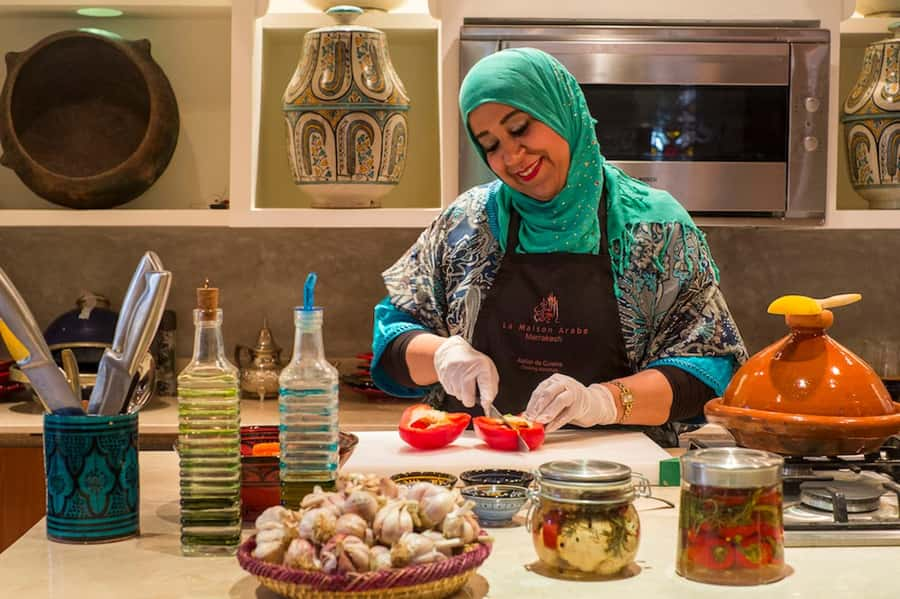
Tagine is usually the star. The clay cooking vessel is both a practical tool and one of Morocco’s best-known food symbols. Preparing the dish yourself shows how a few fresh ingredients can become a complete meal when seasoned and cooked patiently.
Chicken tagine is a common choice, and some people leave with a small tagine as a gift. That is a useful souvenir because it connects directly to the lesson, though you should follow any care instructions before using a clay cooking vessel at home.
The longer class may also cover couscous, salads, or small starters. These additions help you understand that Moroccan meals are not just one large main dish. A table can include several small preparations, bread for scooping, something sweet, and tea to finish.
The flatbread demonstration is another worthwhile detail. It shows a basic part of Moroccan eating culture that you might otherwise overlook. You may not prepare every item from start to finish, but watching the bread process alongside the main dish gives the meal more context.
The tea ceremony is part of the lesson
Tea is not merely a drink added at the end. The ceremony gives the workshop a slower, more social rhythm after the busy preparation.
You can expect afternoon tea as part of the experience, and the longer session includes an explanation of the ritual. The class may also cover saffron tea and other tea traditions. The live translation is helpful here because the ceremony carries cultural meaning that is easy to miss if you are only focused on taste.
This is one reason the longer format feels more complete. You are not just learning a recipe. You are seeing how food, hospitality, and conversation fit together in Moroccan life.
Drinks beyond the included tea are not included. Bring water, especially if you are cooking in warm weather, but note that drinks are listed among the items not allowed inside the activity. Follow the school’s instructions on what you may carry into the kitchen.
More cooking in Marrakesh:
- Marrakech: Moroccan Cooking Class with a Local Family
★ 4.9 · 668 reviews - Marrakech: Moroccan Cuisine Cooking Class in Local Home
★ 4.8 · 508 reviews - Marrakech: Tajine Cooking Class in a Traditional Riad
★ 4.8 · 424 reviews - Marrakech: Moroccan Cooking Class with Market Visit and Meal
★ 4.9 · 347 reviews
A clean, modern kitchen with individual stations
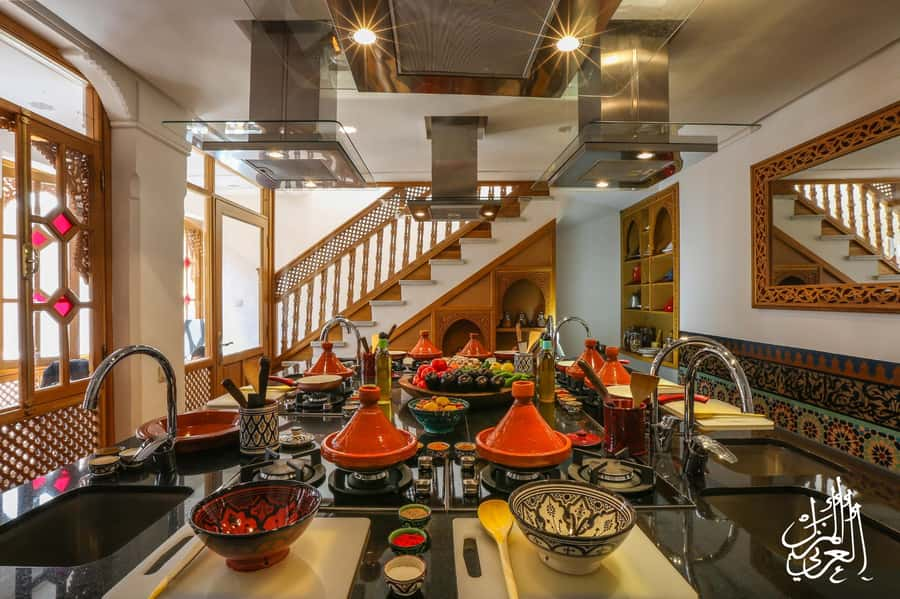
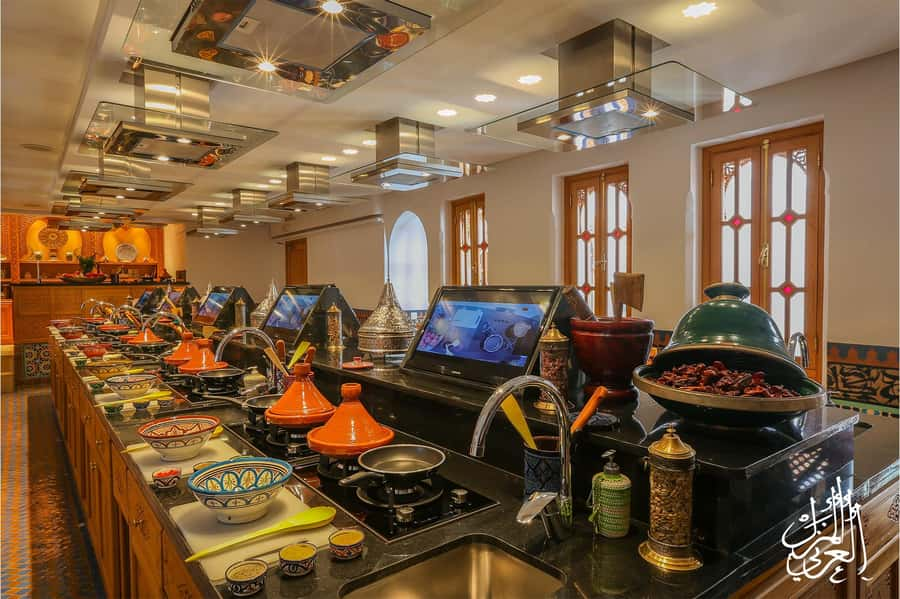
The workshop uses state-of-the-art equipment and individual workstations. That is a practical advantage over classes where several people crowd around one cutting board.
You can follow the recipe directly and handle the ingredients yourself. The setup also makes it easier to keep track of what you have added and ask for help at the right moment. A screen may display the recipe or instructions, which is useful when several languages are in play.
Cleanliness is a repeated strength of the experience. The kitchen is described as well prepared, organized, and professional. That matters in a cooking class because you are handling food for a group meal, not just observing a demonstration.
The polished setting may feel less rustic than cooking in a private family home. If you want an informal lesson in a local kitchen, this is not quite that. You are getting a carefully run workshop in a hotel-linked setting. For many people, the benefit is easier instruction, better equipment, and a more predictable experience.
Translation and the role of the dada
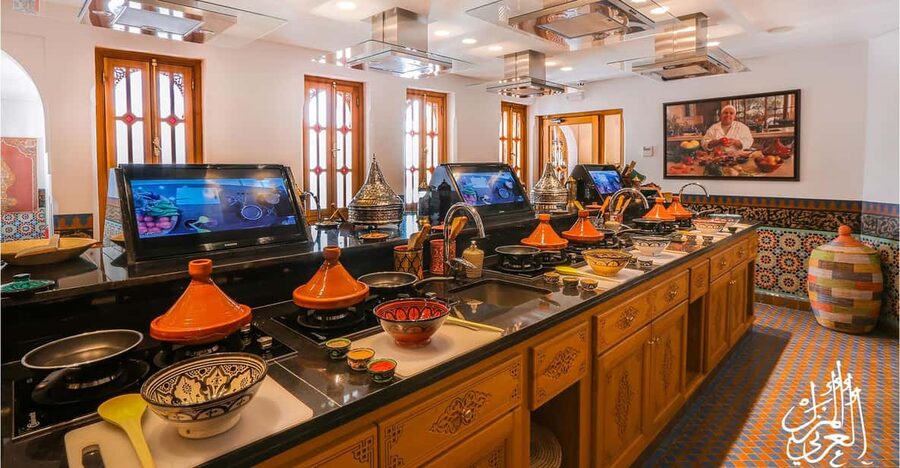
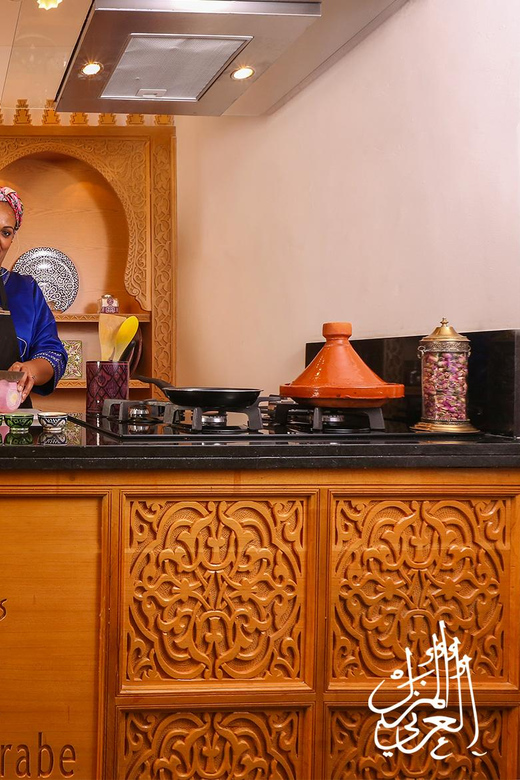
The lead cook is a dada, the traditional Moroccan term for a female cook. She brings the practical knowledge of Moroccan home cooking, while the translator explains the steps in the language you need.
Instruction is available in Arabic, English, and French. The translation is especially useful when the cook is speaking French to one group and English to another. You can expect the staff to explain the method, answer questions, and offer tips as the meal comes together.
The teaching style is warm and direct. Hayat, Wafa, Sanaa, Fatiha, Rokaya, Sana, and other staff members have been singled out for patience, clear instruction, humor, and friendliness. That combination works well for beginners. You do not need advanced cooking skills to take part.
The class also leaves room for questions about Moroccan culture. You can ask about spices, food traditions, tea, and the meaning of particular dishes as you work. That informal conversation is often as useful as the printed recipe.
Eating the food you prepared
The meal at the end is not an afterthought. It is the payoff for the practical work, and it gives you a chance to judge the method while it is still fresh in your mind.
You usually sit down with the rest of the group and eat the finished food together. Depending on the format, that may include tagine, salads, bread, dessert, and tea. Some sessions take place in a restaurant or rooftop setting connected with La Maison Arabe, adding a pleasant change of pace after the kitchen work.
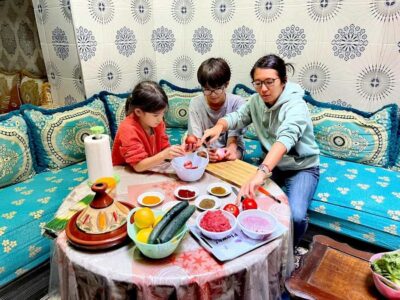
You are not rushed out as soon as the meal is served. The social part can continue as people compare results and talk with the staff. That makes the experience particularly good for a small group, though solo visitors can also join the shared table.
The meal is also a useful test of the recipe. Several participants have found the instructions simple enough to repeat at home, and a recipe is provided. If you enjoy the dish, you leave with more than a full stomach. You have a practical way to recreate part of Marrakech in your own kitchen.
Is $35 a good value?
At $35 per person, this is not the cheapest cooking class in Marrakech. Some informal classes cost less, so price-sensitive visitors should compare what is included before booking.
I think the value is strongest in the longer session. You get the use of an individual station, fresh local ingredients, instruction from a traditional cook, translation, tea, demonstrations, and a meal. The organized kitchen also removes some of the uncertainty that can come with a lower-cost class.
The express option offers a different kind of value. It is a compact activity, and you still prepare and eat a Moroccan dish. If your schedule is tight, paying for a short, well-run lesson can make more sense than forcing a longer class into an already full day.
A small tagine gift at the end is a welcome extra, but it should not be the reason you book. The real value is the clear instruction, the food you prepare, and the chance to learn how the meal fits into Moroccan culture.
Who should book this experience?
I would recommend the workshop to anyone who likes Moroccan food and wants to understand how it is made. It is especially good for beginners because the recipe is presented step by step and the staff can guide you through the difficult parts.
It also works well for:
- Couples looking for a shared activity
- Families with children aged 12 and older
- Solo visitors who want a social meal
- Friends or colleagues planning a group activity
- Home cooks who want a recipe they can repeat
- Visitors who prefer a polished kitchen to a rougher, informal setup
Children under 12 are not accepted, and the activity is not suitable for wheelchair users. You should wear comfortable clothes and bring water, while leaving drinks outside as instructed.
The class is not the best fit if you dislike group activities, want a fully private lesson, or only want to eat without cooking. It is also less appealing if your Marrakech itinerary has no room for a fixed 1-hour or 3-hour activity.
How to choose between one hour and three
Choose the 1-hour class if you want a quick introduction, a hands-on tagine lesson, and a meal afterward. It is enough to give you a feel for Moroccan cooking, but it does not offer the same range of dishes or cultural detail.
Choose the 3-hour class if you want the full event. You can expect more food, the tea ritual, flatbread, extra explanations, and more time to talk with the cooks. The longer class is also a better choice if you want to return home with a stronger grasp of Moroccan meal structure.
I would book the longer option unless your schedule makes that difficult. The extra time is not spent cooking every minute. It creates room for the parts that make the workshop memorable: the tea, the questions, the shared table, and the chance to understand why the food is prepared this way.
Should you book La Maison Arabe’s cooking workshop?
Yes, if you want a clean, well-organized introduction to Moroccan food with real participation. The individual stations, clear translation, friendly cooks, and meal at the end make this more than a standard demonstration.
Book the 1-hour version for a compact activity. Book the 3-hour version for the fuller cultural and culinary experience, especially if you are traveling with family or friends.
The price is not the lowest in Marrakech, and the polished setting may feel less intimate than a home kitchen. But for reliable instruction, fresh ingredients, modern equipment, and food you prepare yourself, $35 offers solid value. Bring comfortable clothes, arrive ready to work, and leave room in your luggage for the recipe and perhaps a small tagine.
FAQ
Where does the Moroccan cooking workshop meet?
The meeting point is the front desk of La Maison Arabe. The activity may also take place in the cooking school’s secret gardens, so check the meeting instructions for the exact setting.
How long does the cooking class last?
You can choose between a 1-hour express workshop and a 3-hour cooking workshop. Starting times vary, so availability must be checked when booking.
What food can I prepare?
The workshop can include a traditional Moroccan dish such as tagine. The 3-hour session may also include starters, couscous, dessert, handmade bread, and tea.
Is the meal included?
Yes. Lunch and food tasting are included, and you eat the food prepared during the workshop. Drinks other than the included tea are not included.
What languages are available?
Instruction and translation are available in Arabic, English, and French.
Who teaches the class?
A dada, or traditional Moroccan cook, leads the cooking instruction with help from a translator. Staff members named in connection with the class include Hayat, Sanaa, Wafa, Fatiha, Rokaya, Sana, Hasna, Habiba, Mohammed, and Hysan.
Is the class suitable for children?
The activity is not suitable for children under 12 years old.
Is the workshop wheelchair accessible?
The activity is listed as unsuitable for wheelchair users.
What should I bring and wear?
Bring water and wear comfortable clothes. Drinks are not allowed during the activity, so follow the school’s instructions about what you may bring into the kitchen.
Just added in Marrakesh
- Marrakech: Tailor-Made City Tour With Your Own Private Guide★ 4.9 · 236 reviews
- Marrakech palm grove: Sunset camel ride★ 4.8 · 194 reviews
- Sparkling Marrakech through the eyes of your local Guide★ 4.7 · 247 reviews
- Small-Group Day Trip from Marrakech to Essaouira Mogador★ 4.8 · 211 reviews
- Quad biking in Agafay Desert with lunch & Camel Ride & pool★ 4.5 · 186 reviews
- Marrakech: Historical Discovery Tour★ 4.1 · 87 reviews
- Marrakech: Palm Grove Horseback Riding Tour★ 4.6 · 163 reviews
- From Marrakech: Ouzoud Waterfalls Guided Hike and Boat Trip★ 4.9 · 161 reviews
Cooking Classes, compared.
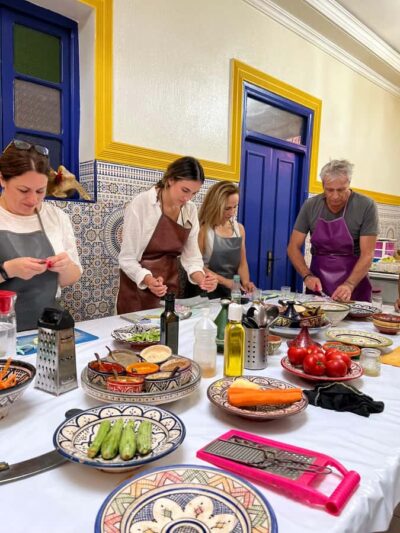
Traditional Moroccan Cooking Class & Market Visit
Read our review →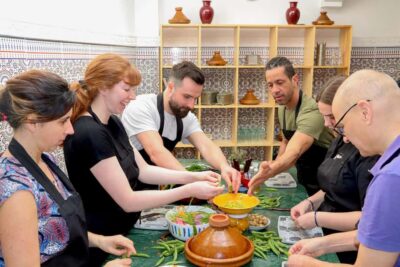
Moroccan Dishes Cooking Class with a Local Chef
Read our review →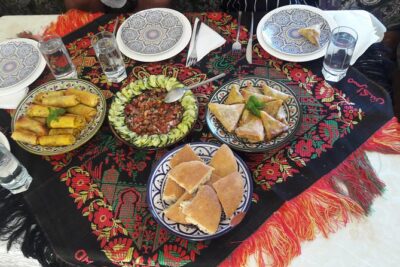
Moroccan Cooking Class & Marrakech Market Visit with Chef Khmisa
Read our review →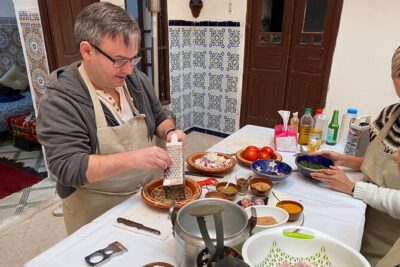
Half-Day Cooking Class with Local Chef Laila in Marrakech
Read our review →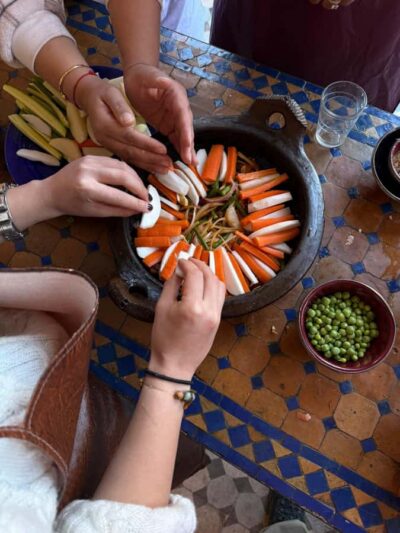
Browse the lists this tour appears in