Reviewed · MOROCCO · TOURS IN MARRAKECH
Sparkling Marrakech through the eyes of your local Guide
Marrakech makes more sense when someone explains what you are seeing. This three-hour walk links Jemaa el-Fnaa, Koutoubia Mosque, Bahia Palace, Ben Youssef Madrasa, and the souks with stories about Moroccan family life, religion, food, languages, festivals, and customs. Guides such as Abdoo, Abdul, Nasser, and Ahmed are praised for clear English, humor, patience, and practical shopping advice.
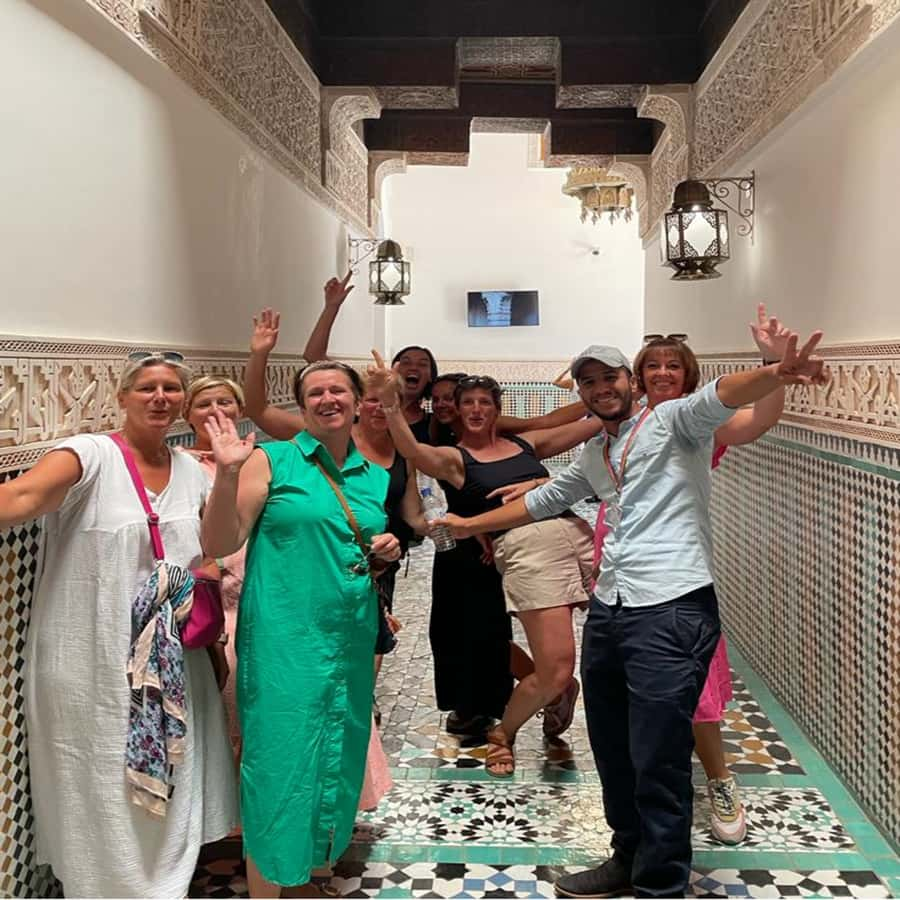
I like the way this tour reaches beyond famous monuments. You get help finding your way through the souks, see local craft workshops, and hear about traditions you would likely miss while walking alone. I also like the small-group feel reported on many departures, with groups of around five sometimes feeling almost private.
The main drawback is the pace. Seven or eight stops in three hours is ambitious, and monument tickets are extra. Some tours have lasted more than four hours, while others have needed a rest or drink stop, so plan with a little flexibility.
Key points to know before you book
- A strong first-day orientation: The route gives you a quick grasp of Marrakech’s old city, major sights, souks, and meeting points.
- Guides who add personality: Abdoo, Abdul, Nasser, and Ahmed are praised for humor, clear English, useful tips, and patient explanations.
- More than a monument walk: Expect discussion of marriage, family, religion, education, politics, food, languages, festivals, and daily customs.
- Souk help is genuinely useful: Your guide can lead you through confusing lanes and suggest sensible places for shopping.
- Budget-friendly headline price: At $25 per person, the guiding is good value, but Bahia Palace and Ben Youssef Madrasa admission cost extra.
- A compact but active route: Wear comfortable shoes, carry cash, and expect crowds, uneven walking, and little sitting.
Why this Marrakech walk works best at the start of your trip
Marrakech can feel like several cities pushed together. Jemaa el-Fnaa is a broad public square, the Medina is a maze of lanes, palaces sit behind plain walls, and the souks change character from one turn to the next.
This tour gives you a working map of that mix. You start outside Café Argana in Jemaa el-Fnaa and finish there after a circuit through central Marrakech. I like that arrangement because it leaves you in a familiar place after the walk, rather than dropping you into an unfamiliar lane.
The guide does more than point out buildings. The stated focus includes Moroccan rituals, family customs, religious practice, eating habits, education, politics, and the country’s several languages. That wider context matters. A palace becomes more interesting when you understand how households, hospitality, religion, and social life shape the city today.
The guides also adjust the route when possible. If you want more time at a monument, less shopping, or extra help with local customs, it is worth asking early. This flexibility has limits, since the route covers a lot of ground, but it makes the experience less rigid than a simple checklist walk.
A few more things to do in Marrakesh worth a look
- From Marrakech: Ouzoud Waterfalls Guided Hike and Boat Trip
★ 4.7 · 33,630 reviews - From Marrakech: Ouzoud Waterfalls Guided Trip with Boat Ride
★ 4.9 · 10,915 reviews - Marrakech: Ouzoud Waterfalls Guided Day Trip with Boat Ride
★ 4.4 · 4,995 reviews
Meeting at Jemaa el-Fnaa and starting with tea
The meeting point is in front of Café Argana, marked by a green symbol. It is near juice sellers and a large ice cream sculpture, which makes it easier to spot than a small street address.
From the main entrance of Jemaa el-Fnaa, walk toward the center of the square and look for the café. Your guide is expected to wait outside with an official guiding card or license and confirm your name.
The first scheduled stop includes tea in Jemaa el-Fnaa. This is a sensible opening. The square is one of the best places to begin understanding Marrakech, but it can be confusing on a first visit. Your guide can explain how the space changes through the day and help you get oriented before the walk moves into narrower streets.
Do not expect a long café break. With so much on the route, tea is likely to be a short pause rather than a full meal stop. Bring water anyway. One bottle is included, but a three-hour walk through crowded streets and warm weather can leave you wanting more.
Koutoubia Mosque and the city’s main landmark
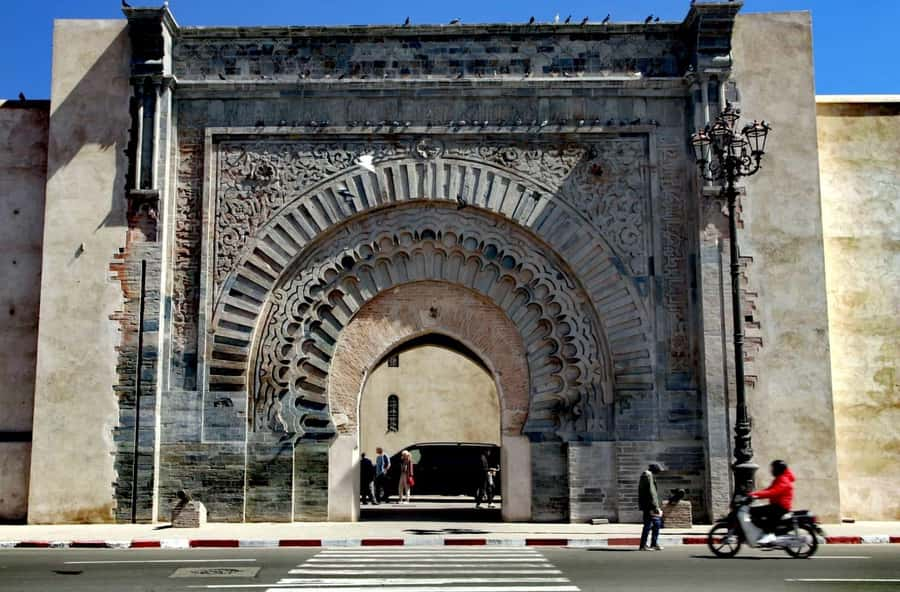
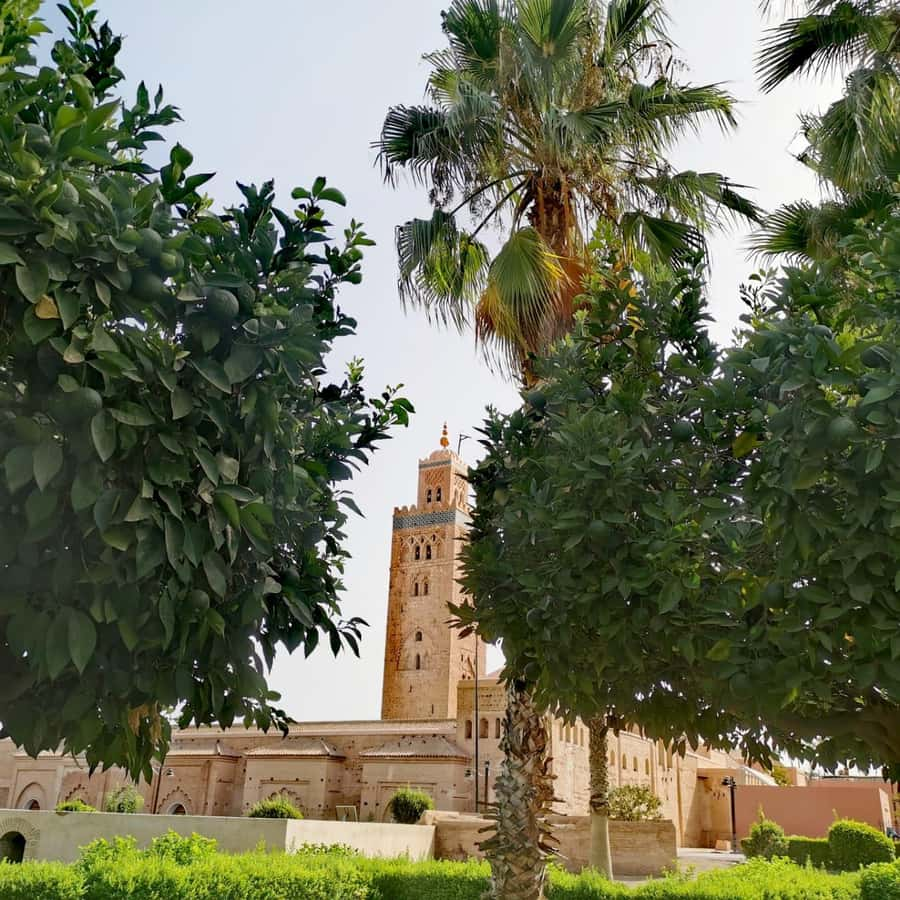
The Koutoubia Mosque is one of the clearest reference points in Marrakech. Its minaret rises above the surrounding buildings and helps you regain your bearings when the Medina starts to feel like a puzzle.
The tour includes a guided visit and walk around the mosque area. As a non-Muslim visitor, your experience is generally centered on the exterior and surrounding grounds rather than entry into the prayer hall. The value here is the explanation: the guide can place the mosque within Marrakech’s religious and civic life instead of treating it as a quick photo stop.
This is also where a guide’s communication skills matter. Several guides used on this experience are described as fluent in English, with French, German, Dutch, and Arabic also available depending on the departure. Confirm your preferred language when booking.
Bab Agnaou and the old city walls
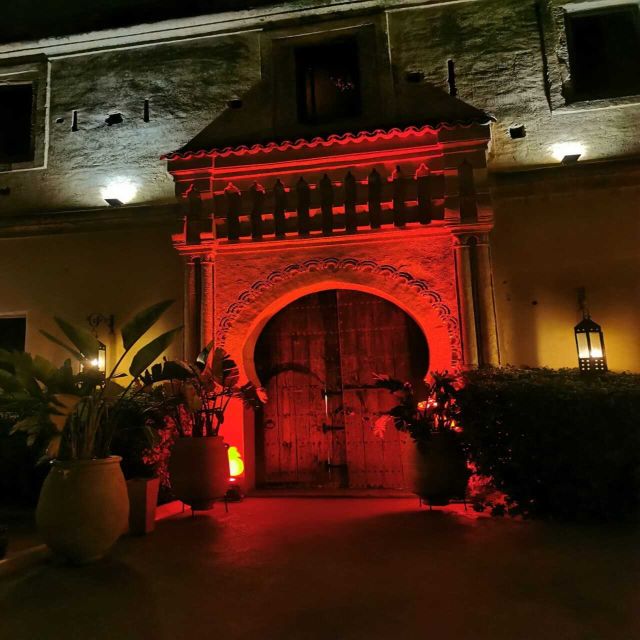
Bab Agnaou brings the route toward the southern part of the historic city. The gate is an important piece of Marrakech’s defensive architecture and a useful reminder that the old city was once entered through controlled gateways rather than open streets.
You stop for a guided explanation and walk. Do not expect a long interior visit here. The point is to read the gate, walls, and surrounding streets as part of the city’s older structure.
This stop also helps break up the route between major monuments. You are still walking, but the experience is not limited to palaces and ticketed sites. The guide’s local perspective can connect the architecture to the practical life of the Medina, where movement, trade, worship, and home life all take place close together.
Same base, a different sort of day:
- Marrakech: Agafay Desert Sunset, Camel Ride, and Dinner Show
★ 4.6 · 35,119 reviews - Marrakech: Agafay Desert Quad & Camel Rides with Dinner Show
★ 4.8 · 27,382 reviews - Marrakech: Agafay Desert Quad Biking Tour with Dinner-Show
★ 4.8 · 16,569 reviews - Marrakech: Atlas Mountains, Ourika Valley, Waterfall & Lunch
★ 4.8 · 15,834 reviews
Bahia Palace, where admission costs extra
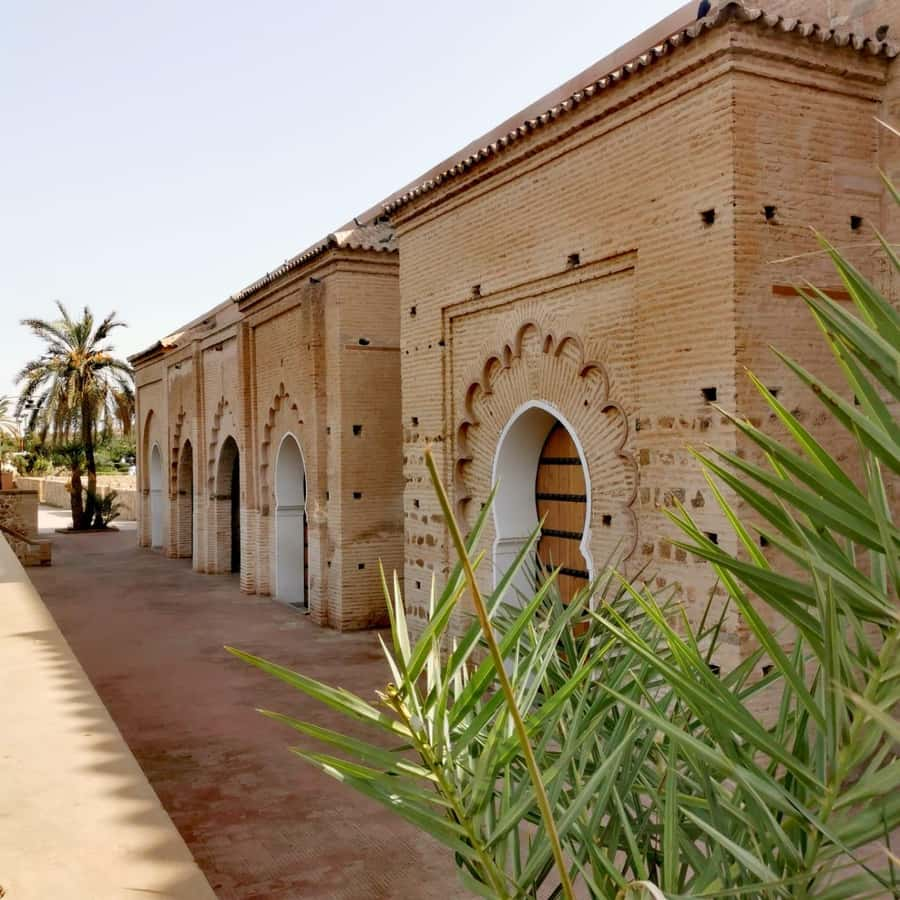
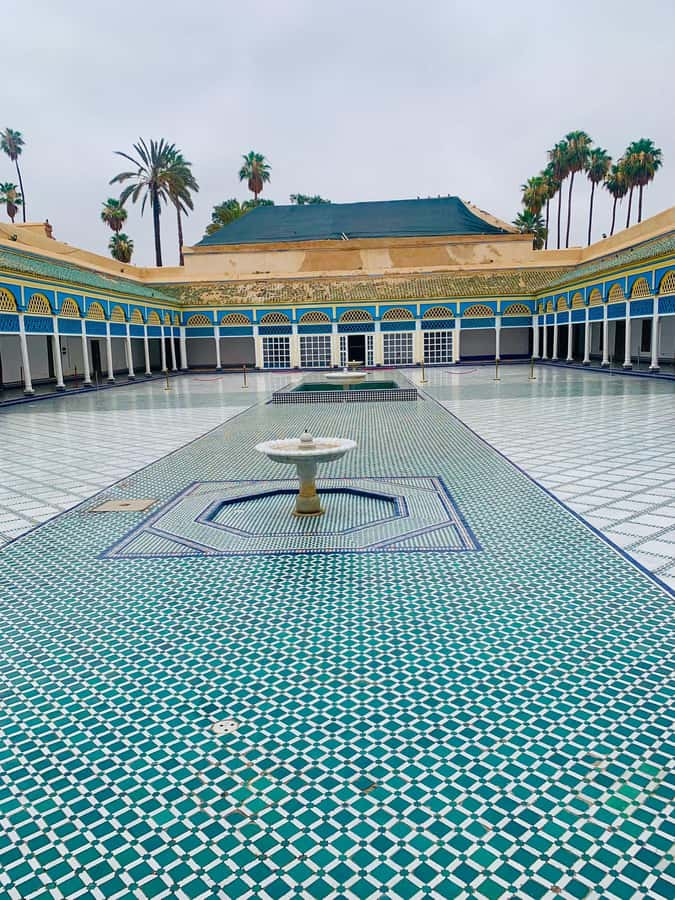
Bahia Palace is one of the tour’s major draws. The route lists it as a photo stop, while the practical information gives an admission price of about 100 dirhams, roughly 10 euros. Since the ticket is not included, carry cash and check the current fee before entering.
The palace is worth seeing for its courtyards, decorated rooms, tilework, painted surfaces, and sense of layered household life. A guide adds value by explaining how the rooms functioned and by pointing out details that can be easy to miss when the site is crowded.
The time available may depend on the group and the day. If Bahia Palace matters most to you, tell the guide at the beginning. The overall route is packed, and a short photo stop will not provide the same experience as a full visit.
This is one point where the tour’s low price needs context. The $25 covers the guide, water, and guidance through the city, not the monuments. Add the palace fee, and possibly the Ben Youssef admission, when working out your true budget.
Ben Youssef Madrasa and a second ticket to plan for
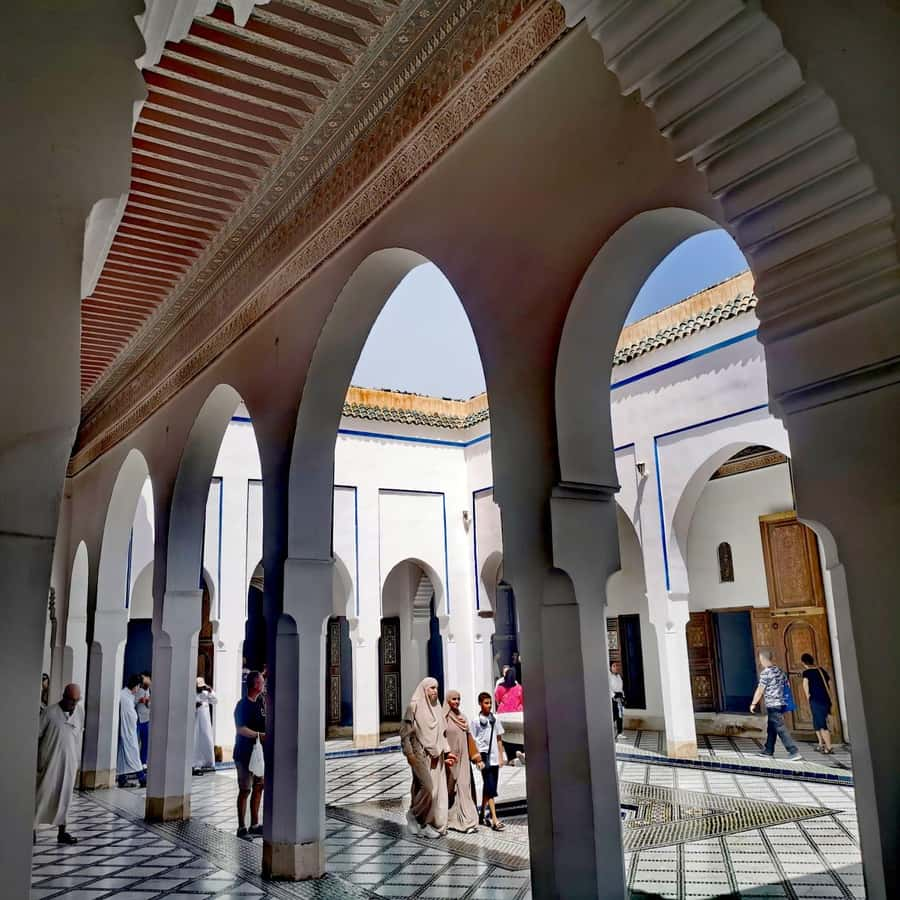
Ben Youssef Madrasa is listed as a visit rather than just an outside look. Admission is given as about 50 dirhams, or roughly 5 euros, and is paid separately.
The madrasa adds a different layer to the route. Instead of a palace built around domestic rooms and courtyards, you get a former religious school with an interior designed around study, prayer, and a central courtyard. The contrast helps you see that Marrakech’s historic center was not only a market town. It was also a place of learning and religious life.
This is another stop where the guide’s explanation makes a real difference. Architectural details can be beautiful but puzzling without context. Ask questions about education, religious practice, and how the school fit into the wider city.
The route can feel rushed here if the group spends too long at earlier stops. If you want proper time inside the madrasa, mention it before the tour begins and accept that another stop may receive less attention.
Souk Semmarine and the useful part of shopping
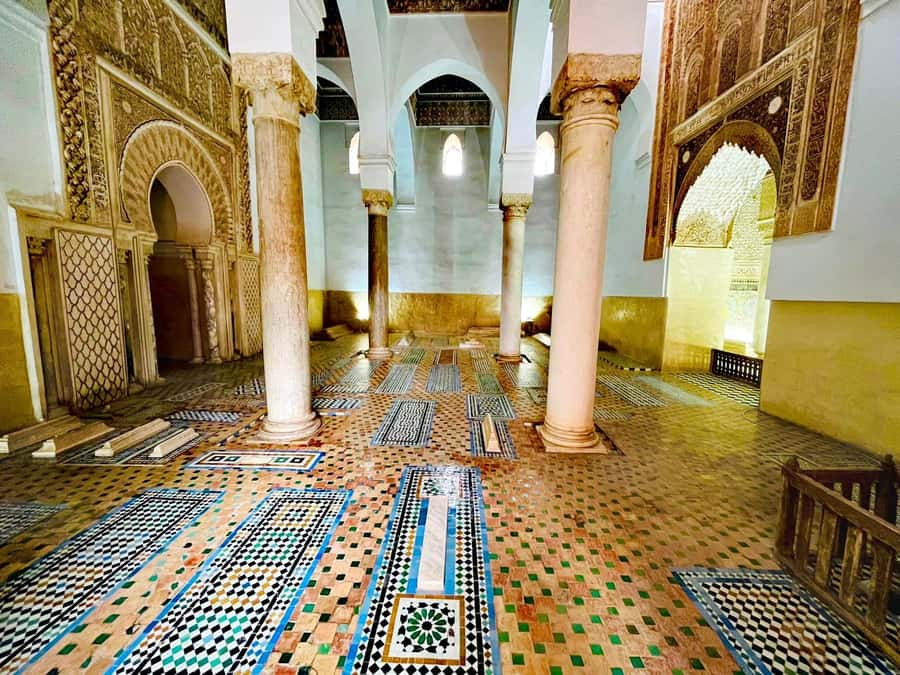
Souk Semmarine is where the tour becomes especially practical. You move through the market lanes, see goods made and sold in the Medina, and may visit workshops where Moroccan crafts are produced.
A local guide is valuable here for more than directions. The souks can be hard to navigate, and it is easy to lose the route back to Jemaa el-Fnaa. Several guests specifically appreciated having help through the maze and receiving shopping suggestions.
The tour does include shopping, so this is not a strictly no-pressure cultural walk. You should expect opportunities to buy souvenirs, and purchases are not included. A good approach is to look first, ask about materials and making methods, and compare prices before committing.
The workshop visits are one of the more worthwhile features. They show the work behind the finished goods and give you a chance to meet people making traditional products. The exact workshop or shop may vary, so keep an open mind rather than expecting a fixed retail list.
Carry cash and a credit card, but do not assume every small seller accepts cards. The tour information specifically advises bringing both. If you are not interested in buying, say so politely and focus on the craft process and the guide’s explanation.
Secret Garden, a quieter finish to the Medina
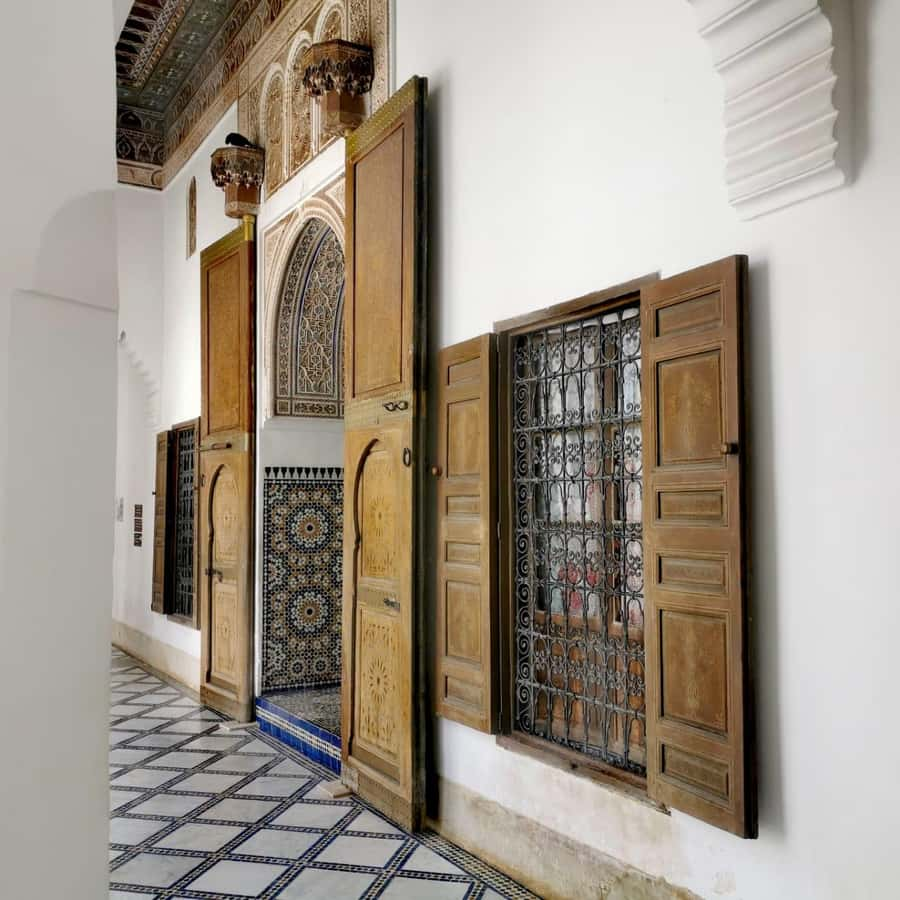
Secret Garden gives the route a calmer final stop. After crowded lanes and market noise, a garden visit provides a change of pace and a chance to talk without quite so much movement around you.
The itinerary includes a visit, guided tour, sightseeing, and walking. Entrance fees are not included, so ask about the current price before deciding how long to stay. The garden works well as a closing stop because it offers a different view of Marrakech, one built around water, planting, design, and private space rather than trade and traffic.
The route then returns to Argana Café. That makes it easy to continue exploring Jemaa el-Fnaa, return to your riad, or stop for lunch nearby.
What the guide adds to Moroccan culture
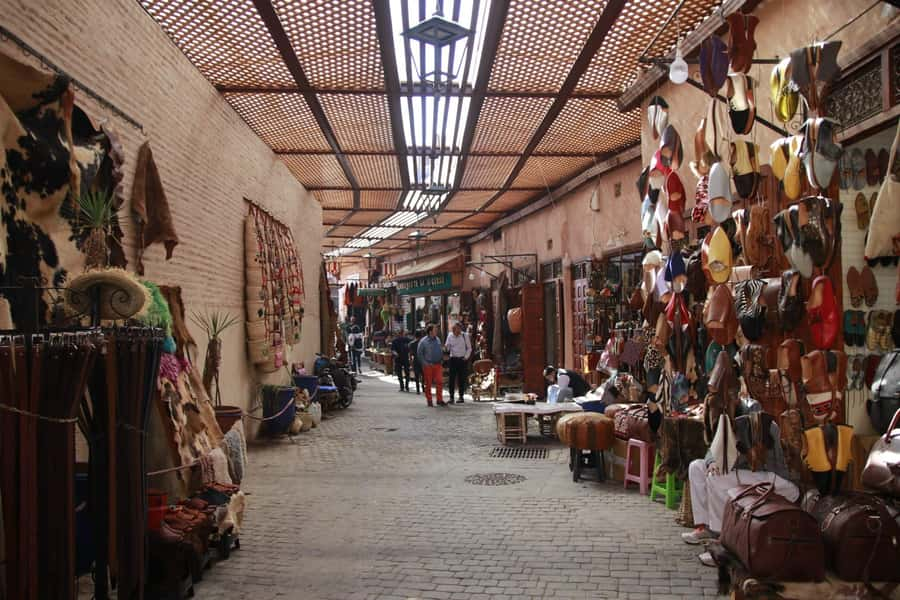
The strongest part of the experience is the human explanation around the sights. The tour promises discussion of marriage and family traditions, religious beliefs, languages, eating habits, politics, education, festivals, and local customs.
That is a lot for three hours, so you should not expect a full course in Moroccan society. Still, it gives you useful openings. Ask the guide about something you have noticed, such as family life, market etiquette, food customs, or the role of religion in daily routines.
The guides are repeatedly praised for being funny, calm, and easy to understand. Abdoo is noted for fluent English and German, while Abdul is praised for his storytelling and patience, including with children. Nasser is described as giving detailed explanations of the sites and souks. Ahmed is also singled out for keeping a small group well organized.
Names and guide assignments can vary, but these details suggest what to look for: a guide who answers questions, includes everyone, and explains rather than simply reciting dates. The experience is at its best when you treat it as a conversation.
Pace, walking, and group size
Three hours is enough for a useful introduction, not enough for a slow inspection of every site. You will walk through narrow lanes, public squares, market areas, and monument grounds. Comfortable shoes are essential.
The route may involve crowds and repeated stops. One departure lasted more than four hours, while another needed a drink break because the walking and crowd movement became tiring. This is not necessarily a problem if your schedule is loose, but do not book it immediately before a train, flight, or fixed dinner reservation.
Group size appears to vary. Some departures have had only three or five people, creating an almost private feel. A larger group would make the souks slower and monument explanations less personal, so ask about the expected size if that matters to you.
The activity is listed as wheelchair accessible, but the Medina’s narrow lanes and crowded areas can still make movement slower. If you use a wheelchair, contact the provider in advance to discuss the route and any monument access details.
Is $25 a good value?
Yes, if you view the price as payment for orientation, local explanation, and help in the souks. A private guide for three hours would normally cost more, and small groups can make this departure feel personal even at a shared-tour price.
The value drops if you expect all entrance tickets, food, transport, and shopping to be covered. None of those are included. You pay separately for Bahia Palace, Ben Youssef Madrasa, other monument fees, drinks, food, souvenirs, and transportation.
Free hotel or riad delivery of purchased goods is included, which can be useful if you buy something awkward to carry. Free connection service during the tour is also listed. Confirm how this works with the guide at the start.
The reservation terms are flexible: you can reserve and pay later, and cancellation is free up to 24 hours in advance for a full refund. These are helpful safeguards when your Marrakech plans are still shifting.
Who should book this Marrakech tour?
I would choose it for a first day in Marrakech, especially if you want to understand the Medina before exploring alone. It suits visitors who like history but also want practical help with food, customs, shopping, and local life.
Families may appreciate the patient approach, especially since a guide has been praised for working well with children. The walk also suits solo visitors and couples who want company without paying for a fully private tour.
It is less suited to someone who wants a slow photographic study of every palace or a food tour with several full tastings. It is also not ideal if you dislike markets, walking, crowds, or the possibility of shopping stops.
FAQ
Where does the tour meet?
The meeting point is in front of Café Argana in Jemaa el-Fnaa Square. Look for the café’s green symbol, juice sellers, and a large ice cream sculpture near the entrance.
How long does the tour last?
The scheduled duration is three hours. The itinerary is full, and some departures have lasted longer, so allow extra time if your schedule is tight.
Which languages are available?
Live guiding is available in English, German, Dutch, French, and Arabic.
Are monument entrance fees included?
No. Bahia Palace is listed at about 100 dirhams, and Ben Youssef Madrasa at about 50 dirhams. Prices can change, so bring enough cash.
Is transportation included?
No. Transportation is not included. The experience begins and ends at Café Argana in Jemaa el-Fnaa.
What should I bring?
Bring comfortable shoes, cash, and a credit card. You should also carry water, although one bottle is included.
Is the tour wheelchair accessible?
The activity is listed as wheelchair accessible. Contact the provider ahead of time to discuss the walking route and monument access.
Can the itinerary change?
Yes. The route can be adapted to guest needs when possible. Tell the guide early if you want more time at a particular sight or need a slower pace.
Should you book it?
Book this tour if you want a friendly, practical introduction to Marrakech with a guide who can explain both monuments and daily life. At $25, it offers strong value for the city orientation, souk guidance, and cultural conversation.
Go in with realistic expectations. You will walk a lot, pay monument fees separately, and may not have time for a slow visit at every stop. If you bring cash, wear sensible shoes, and leave room in your schedule, this is a smart way to get your bearings before exploring Marrakech on your own.
Just added in Marrakesh
- Marrakech: Tailor-Made City Tour With Your Own Private Guide★ 4.9 · 236 reviews
- Marrakech palm grove: Sunset camel ride★ 4.8 · 194 reviews
- Small-Group Day Trip from Marrakech to Essaouira Mogador★ 4.8 · 211 reviews
- Quad biking in Agafay Desert with lunch & Camel Ride & pool★ 4.5 · 186 reviews
- Marrakech: Historical Discovery Tour★ 4.1 · 87 reviews
- Marrakech: Palm Grove Horseback Riding Tour★ 4.6 · 163 reviews
- From Marrakesh: Ouarzazate & Ait Ben Haddou Day Tour★ 4.5 · 198 reviews
- From Marrakech: Ouzoud Waterfalls Guided Hike and Boat Trip★ 4.9 · 161 reviews
Tours in Marrakech, compared.
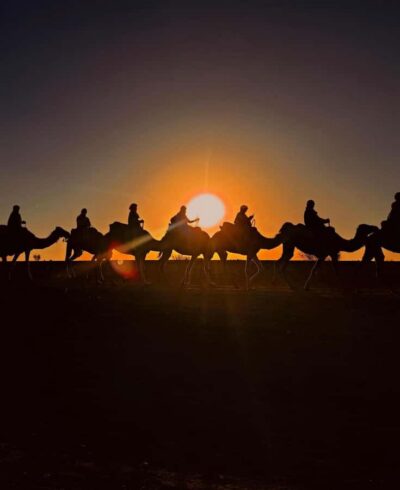
Agafay Desert Sunset, Camel Ride, and Dinner Show
Read our review →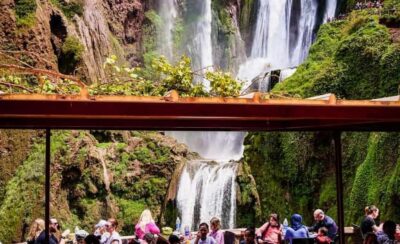
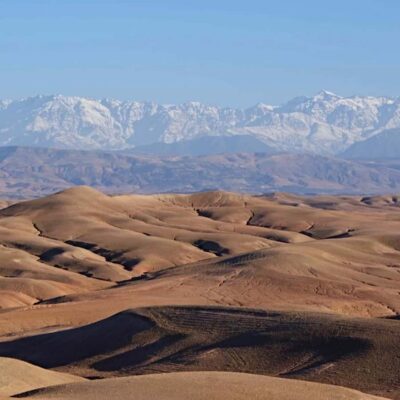
Agafay Desert Quad & Camel Rides with Dinner Show
Read our review →
Agafay Desert Quad Biking Tour with Dinner-Show
Read our review →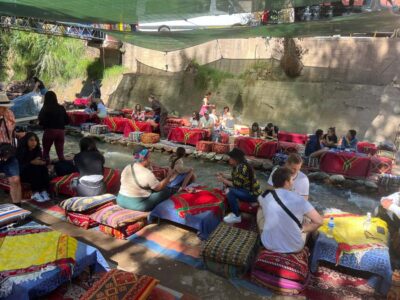
Atlas Mountains, Ourika Valley, Waterfall & Lunch
Read our review →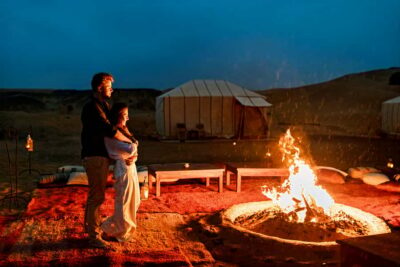
Berber villages : Atlas Mountains Day Hike from Marrakech
Read our review →