
Reviewed · MOROCCO · TOURS IN MARRAKECH
Marrakech: Traditional Moroccan Cooking Class & Market Visit
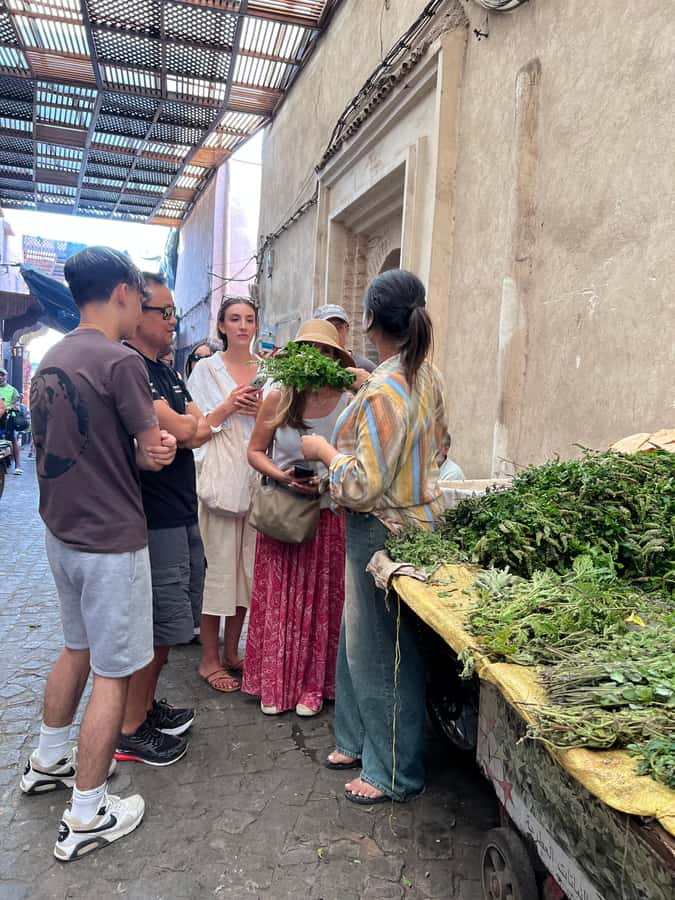
The best part of this Marrakech cooking class begins before anyone turns on the stove. You walk through a local souk with your hosts, choose fresh vegetables and other ingredients, then carry them to Khmisa Workshops, an intimate riad in the Medina. The meal grows from what you have just seen and bought.
I like the market-to-table format, because it gives the food a clear context. I also like the friendly, hands-on teaching style of Kawtar, Khmisa, and their cooking team. You chop, season, stir, and make tea rather than sit and watch. The main consideration is that this is a shared class, usually with up to 12 people, and the meeting point near the mosque can be hard to pinpoint without clear directions.
Key points to know before booking
- Shop before you cook: A short walk through a less tourist-focused part of the local market introduces you to fresh produce, spices, and everyday Moroccan ingredients.
- Learn the full tea ritual: This is more than adding mint to hot water. You are shown the traditional preparation and serving method.
- Prepare several dishes: Menus can include three to six dishes, with starters, a main course, and Pastilla of Milk for dessert.
- Cook inside a traditional riad: The class takes place in an intimate, air-conditioned workshop in the Medina.
- Recipes go home with you: Electronic recipes are sent afterward, so the tagines and salads are realistic projects for your own kitchen.
- Good value at $40: Lunch or dinner, ingredients, tea, instruction, the market walk, and recipes are included.
From the souk to the cooking table
This experience has a useful rhythm. First comes the market visit, then the tea lesson, then the cooking, and finally a shared meal. That order matters because you see the raw ingredients before tasting the finished dishes.
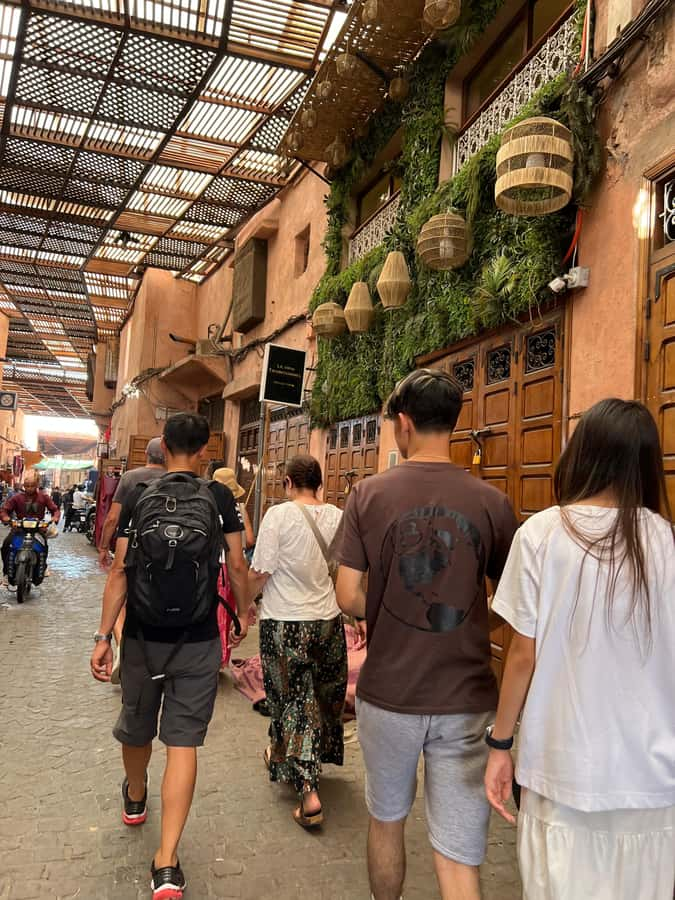
After discussing allergies and dietary restrictions, you walk with the guide through the local market. The route is described as being away from the most tourist-focused side of Marrakech, though it remains a short market walk rather than a long food tour. You can expect stalls with fresh produce, spices, and other groceries needed for the day’s recipes.
I like this opening because it makes Moroccan cooking feel practical. You see the ingredients in their everyday setting, then learn how they are handled in the kitchen. It is also a useful introduction if you are still finding your way around the Medina. Wear comfortable shoes, since the walk takes place on market streets and the class includes time on your feet.
One small practical issue deserves attention: the meeting point is near a large mosque, and the entrance may not be obvious. Ask for the exact front entrance rather than relying only on the mosque name. That simple clarification can save you from circling through the Medina.
Other cooking classes in Marrakesh people book:
- Marrakech: Moroccan Cooking Class with Pickup
★ 4.6 · 1,862 reviews - Marrakesh: Moroccan Dishes Cooking Class with a Local Chef
★ 5.0 · 1,615 reviews - Marrakech: Moroccan Cooking Class with a Local Family
★ 4.9 · 668 reviews
Mint tea is the first lesson
At the riad, you are welcomed with Moroccan mint tea before the main cooking begins. The tea demonstration is one of the most distinctive parts of the class, especially if your previous method has been little more than steeping mint in hot water and adding sugar.
You learn the steps of the traditional tea ritual, including how the tea is prepared and served. The lesson gives the afternoon or evening a cultural frame, not just a recipe. Moroccan tea is a social custom as much as a drink, and learning the method helps explain why it appears so often in homes, cafés, and welcoming ceremonies.
This is also a good moment to ask about the spices and ingredients you saw at the market. The class is led in English, French, and Arabic, and translation can be part of the teaching. Ilham has helped translate for the chef during some sessions, while Kawtar is often the main welcoming guide. The precise team can vary, but the format is designed to keep the group involved.
Cooking tagines, salads, and Moroccan dessert
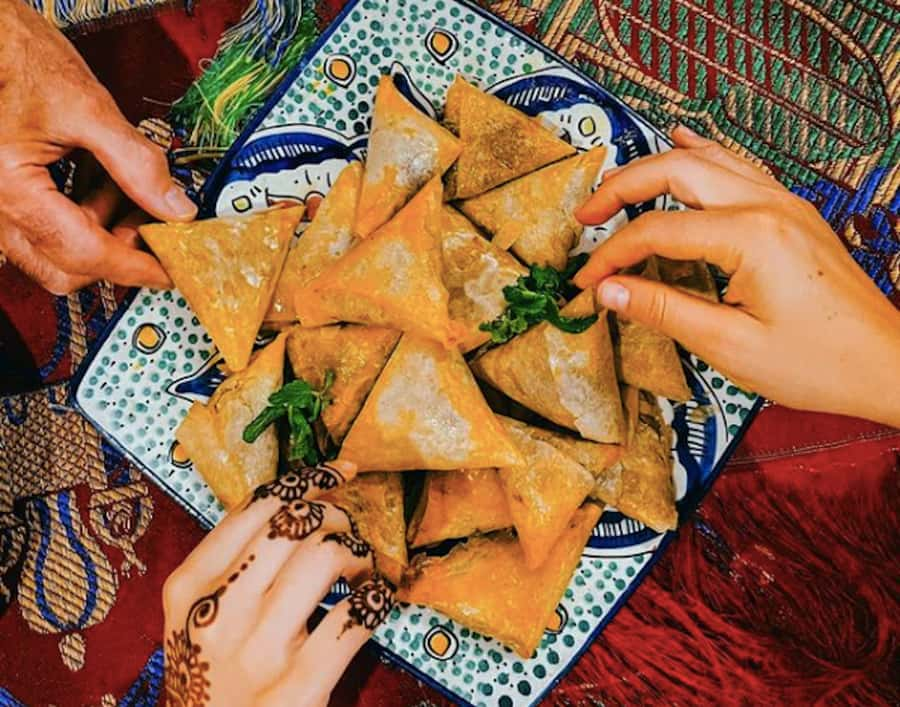
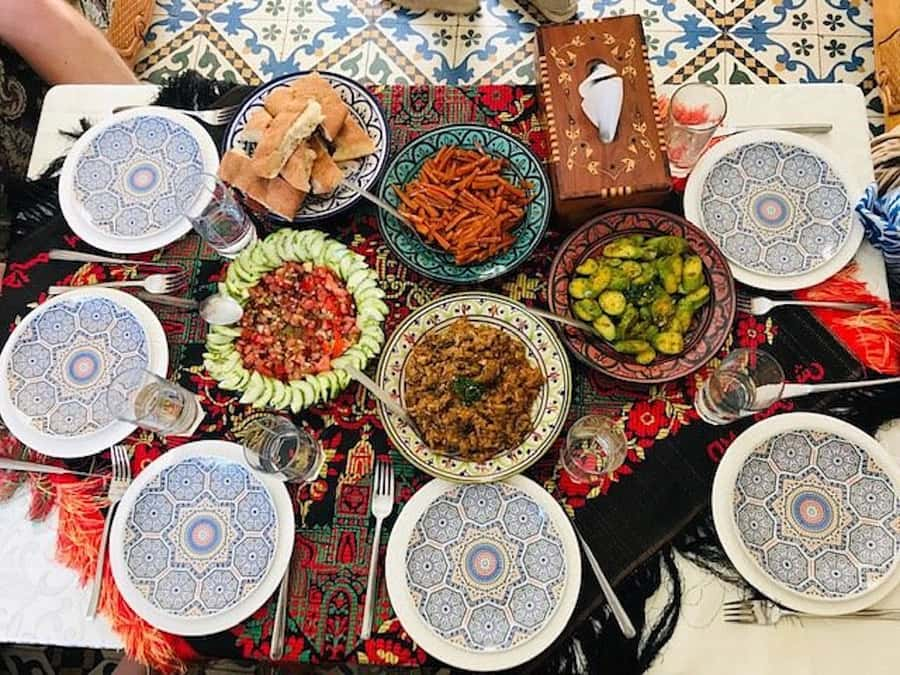
The menu changes, but the meal generally covers several parts of a Moroccan spread. You might prepare four vegetable-based starters, a vegetarian tagine, a chicken tagine, and a small dessert. The stated menu allows for three to six dishes, including starters, a main course, and Pastilla of Milk.
That range is a strong point. You are not learning one isolated dish and then leaving. Instead, you get a useful look at how a Moroccan meal is built, from small salads and vegetable plates to the central tagine and something sweet at the end.
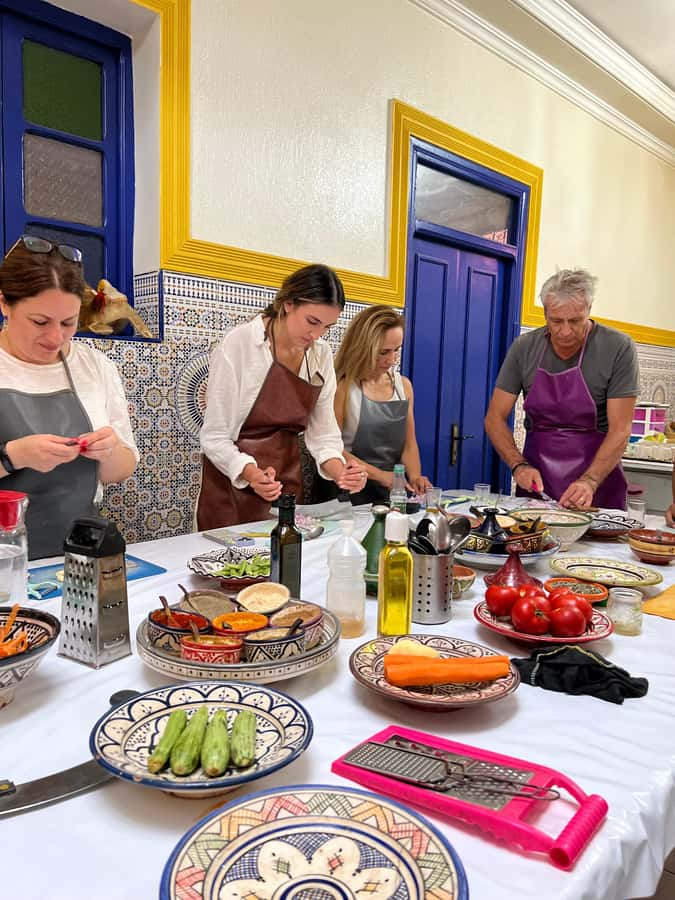
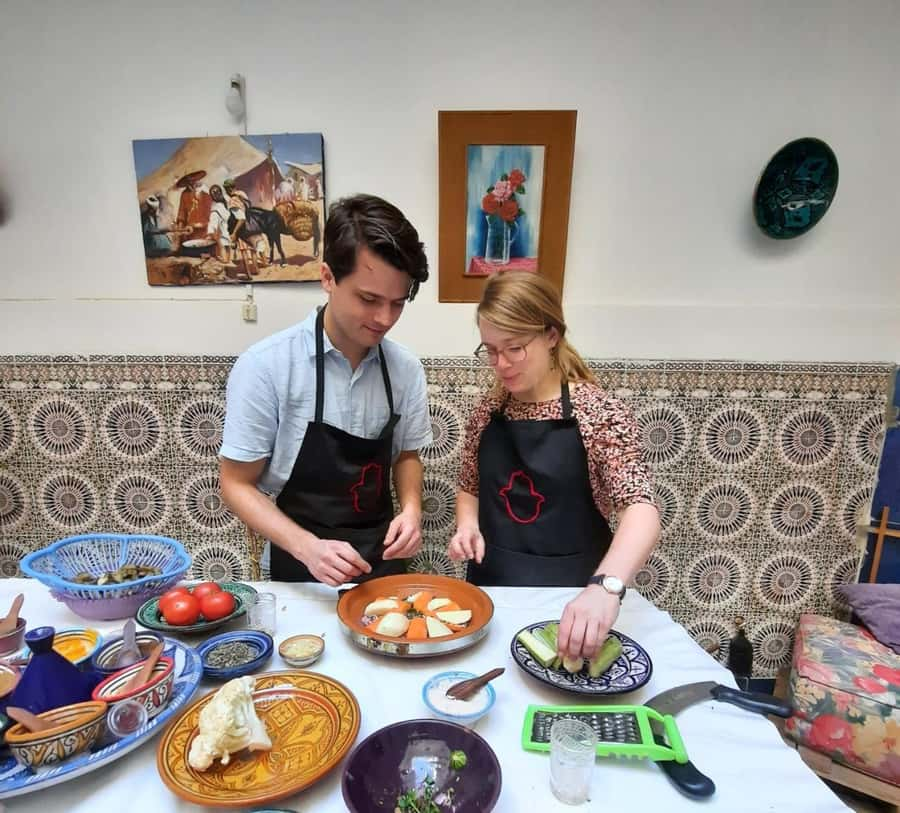
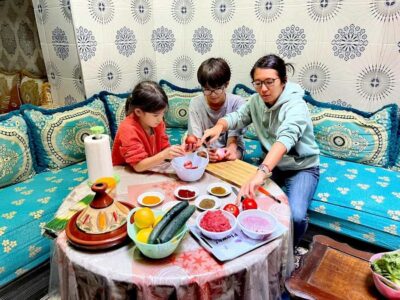
The class is hands-on. You may select produce, chop vegetables, add spices, and take turns working on the tagines. The local cooks guide the process and adjust the seasoning as they go. One especially useful detail is that the chefs do not simply hand you a fixed list of measurements. They show how Moroccan cooks judge flavor and balance, including the importance of spices and the final adjustment before serving.
The chicken tagine receives particular attention from me because it is both traditional and manageable at home. Lemon chicken appears in the cooking sessions, and the recipe is practical enough to repeat outside Morocco. The vegetarian options are also substantial rather than an afterthought. A vegetarian can expect several starters and a vegetarian tagine, although you should discuss restrictions before the class.
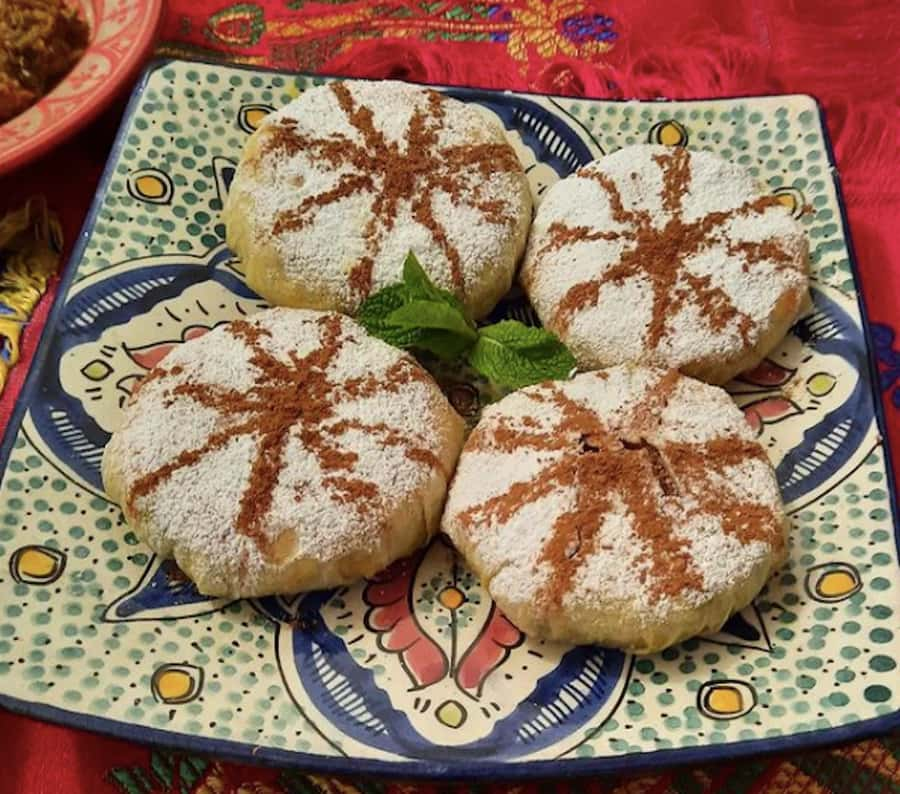
Dessert is part of the experience, not an optional extra. Pastilla of Milk is listed as the signature sweet, and the wider class descriptions also refer to preparing and eating a traditional dessert after the main meal. If you have a small appetite, pace yourself. The food is plentiful, and the full meal can be very filling.
A warm riad setting with local women
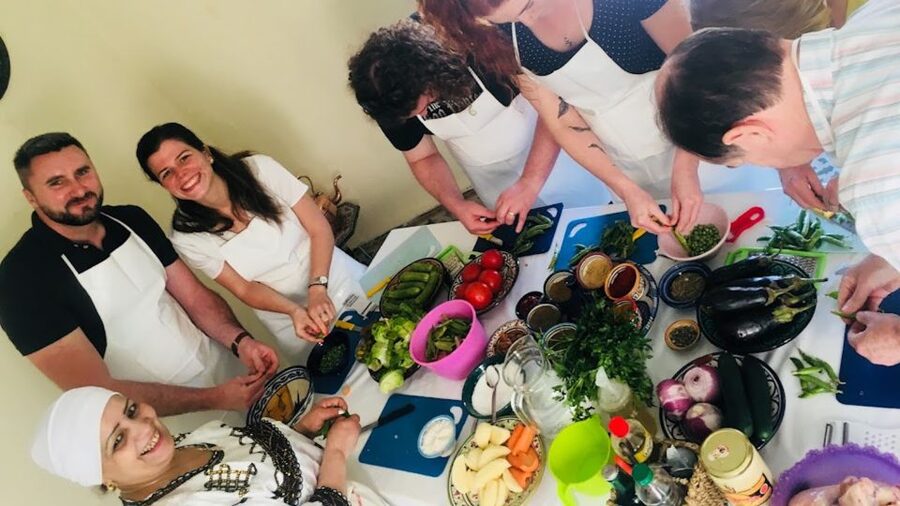
Khmisa Workshops presents the class as a family-style experience in a traditional riad in the heart of the Marrakech Medina. The setting is intimate rather than formal. You cook around a table with the group, share tasks, and eat together when everything is ready.
The workshop is described as air-conditioned, which is welcome during warmer months. Cooking in a cool indoor space makes a real difference when several people are working around the stove and table. The riad setting also gives the class a more personal feel than a large demonstration kitchen.
The women leading the class have experience in Moroccan cooking, pastry, hotels, restaurants, catering, and cooking instruction. Khmisa has worked with well-known hotel establishments and catering services in Morocco and abroad. That background shows in the balance between home-style warmth and organized instruction.
The tone is friendly and informal. The cooking team uses humor, patience, and clear demonstrations to keep people involved. Language differences can be present, but the teaching is supported by translation and by watching each step. If you want a polished culinary school with technical lectures, this may feel relaxed. If you want a welcoming introduction that lets you handle the food yourself, the approach is a better match.
More cooking in Marrakesh:
- Marrakech: Moroccan Cuisine Cooking Class in Local Home
★ 4.8 · 508 reviews - Marrakech: Moroccan Cooking Workshop at La Maison Arabe
★ 5.0 · 446 reviews - Marrakech: Tajine Cooking Class in a Traditional Riad
★ 4.8 · 424 reviews - Marrakech: Moroccan Cooking Class with Market Visit and Meal
★ 4.9 · 347 reviews
Eating what you made
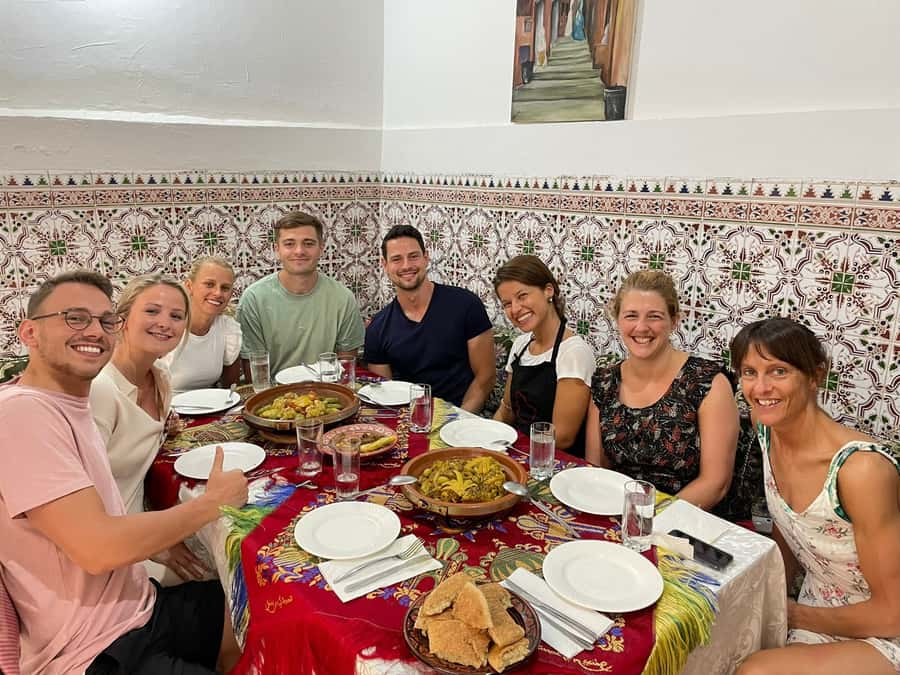
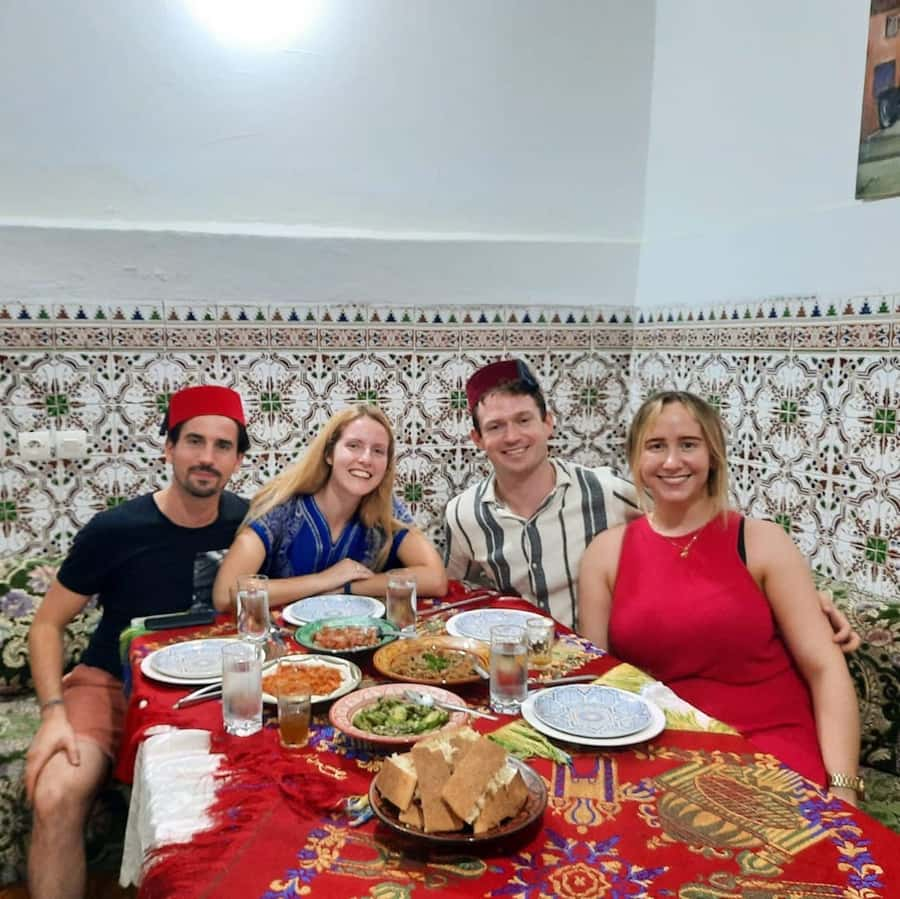
Once the food is ready, the class becomes lunch or dinner. You sit down with the group and eat the dishes you prepared together. This is where the market walk and kitchen work pay off: the meal is not simply served to you, and you have a clear sense of what went into each plate.
The food is described as plentiful, with several starters, tagines, dessert, and tea. The meal can easily become one of the larger meals of your day, so avoid arriving overly full. The shared table also gives the experience a social side. Groups can include families, solo visitors, couples, and people from different countries.
This format suits families particularly well. Children can take part in simple preparation tasks, and an eight-year-old has been able to enjoy the experience. Teenagers also have enough to do to avoid feeling like spectators. Still, knives, hot cookware, and the busy market mean parents should stay involved.
At the end, you can buy homemade spices used during the class. That is a useful extra, especially if you want to recreate the flavors at home. Spices can be sent or purchased in forms that are easier to use in your own kitchen, and the recipes are sent electronically afterward, usually by email or WhatsApp.
What the $40 price really covers
At $40 per person, this is a strong-value food experience in Marrakech. The price includes the market walk, all ingredients, a Moroccan chef, a local guide, mint tea, the cooked meal, and electronic recipes. You are paying for a full activity rather than a short tasting.
The main value comes from the amount of participation. A restaurant meal might cost less or more depending on where you eat, but it would not include ingredient shopping, instruction, and recipes. This class also gives you a practical way to understand flavors you may encounter elsewhere in Morocco.
The value is best if you intend to cook Moroccan food at home. The recipes are not only souvenirs. The chicken tagine, vegetable starters, mint tea, and some desserts use ingredients and methods that can be adapted outside Morocco. If you do not cook and mainly want to eat, a food tour or restaurant meal may be a simpler choice.
The group size can reach 12 people, though some sessions are much smaller. A group of six, for example, allows more room around the worktable and more chances to handle each dish. A larger group may mean more waiting between tasks, but the class is structured around shared participation rather than a long demonstration.
Timing, comfort, and practical details
The class is offered as a lunch or dinner experience. Individual sessions have lasted about two and a half hours, though the exact timing can change. One session shifted from 10 a.m. to 11 a.m., with advance notice, so keep some flexibility in your day.
There is no hotel pickup or drop-off. You need to reach the meeting point in the Medina yourself. Since the meeting spot can be difficult to identify near the mosque, confirm the exact entrance and allow extra time.
Bring comfortable shoes and a hair tie. The hair tie is especially useful during food preparation, and comfortable footwear helps with the market walk and time spent standing. Smoking, alcohol, drugs, and pets are not allowed.
The activity is not suitable for wheelchair users. The market route and riad setting may involve uneven or narrow access, so anyone with mobility concerns should ask the provider for current details before booking.
You can reserve and pay later, and cancellation is allowed up to 24 hours in advance for a full refund. That flexibility is helpful if your Marrakech plans are still shifting.
Who should book this cooking class?
I would choose this for anyone who wants more than a meal and less than a formal culinary course. It is especially well suited to food lovers, families, first-time visitors to Marrakech, and people who like learning by doing.
It is also a good option for vegetarians, since the menu can include several vegetable starters and a vegetarian tagine. Still, discuss all allergies and restrictions before shopping so the team can plan the ingredients safely.
Solo visitors can join a shared group and meet other people around the cooking table. Couples and families should expect to share the space rather than receive private attention. Private sessions are available on request, but they are not the standard arrangement.
I would be less likely to recommend it if you want a quiet, private dinner, have serious mobility limits, or dislike group cooking. The experience is active, social, and sometimes informal. That is part of its appeal, but it will not suit every style of holiday.
Should you book Khmisa Workshops?
Yes, if you want to connect the market, the kitchen, and the finished meal in one compact experience. The strongest features are the fresh ingredient shopping, the tea ritual, the chance to prepare several dishes, and the practical recipes you can use at home.
At $40, the class gives you a meal plus instruction, ingredients, local guidance, and a cultural introduction. Confirm the meeting-point details, mention dietary needs in advance, and leave room in your schedule for a session of roughly two and a half hours. If you do that, this is an easy choice for a hands-on taste of Moroccan home cooking.
FAQ
How much does the Marrakech cooking class cost?
The experience costs $40 per person.
What does the price include?
The price includes lunch or dinner, a local guide, a Moroccan chef, all ingredients, a short market walk, Moroccan tea, and electronic recipes.
Is the market visit included?
Yes. You take a short walk through a local market with the group to shop for the fresh ingredients used in the class.
What dishes will I cook?
The menu can include three to six Moroccan dishes, with starters, a main course, and Pastilla of Milk for dessert. Sessions may include vegetable starters, vegetarian tagine, and chicken tagine.
What languages are available?
The experience is offered in English, French, and Arabic.
Do I receive the recipes afterward?
Yes. The recipes are sent electronically after the class, by email according to the activity information.
Is the class suitable for wheelchair users?
No. The activity is listed as not suitable for wheelchair users.
Just added in Marrakesh
- Marrakech: Tailor-Made City Tour With Your Own Private Guide★ 4.9 · 236 reviews
- Marrakech palm grove: Sunset camel ride★ 4.8 · 194 reviews
- Sparkling Marrakech through the eyes of your local Guide★ 4.7 · 247 reviews
- Small-Group Day Trip from Marrakech to Essaouira Mogador★ 4.8 · 211 reviews
- Quad biking in Agafay Desert with lunch & Camel Ride & pool★ 4.5 · 186 reviews
- Marrakech: Historical Discovery Tour★ 4.1 · 87 reviews
- Marrakech: Palm Grove Horseback Riding Tour★ 4.6 · 163 reviews
- From Marrakesh: Ouarzazate & Ait Ben Haddou Day Tour★ 4.5 · 198 reviews
Cooking Classes, compared.
Moroccan Dishes Cooking Class with a Local Chef
Read our review →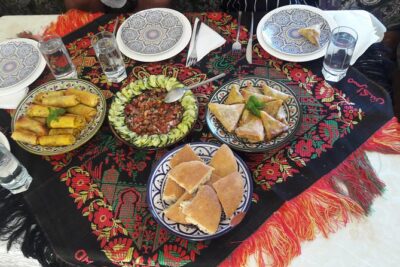
Moroccan Cooking Class & Marrakech Market Visit with Chef Khmisa
Read our review →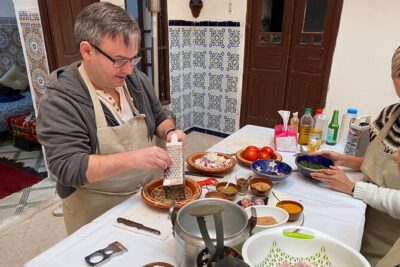
Half-Day Cooking Class with Local Chef Laila in Marrakech
Read our review →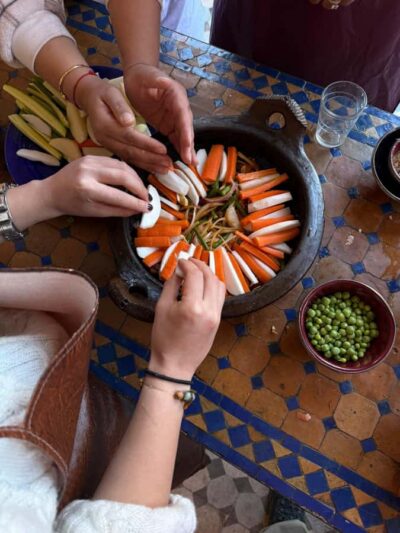
Browse the lists this tour appears in