
Reviewed · MOROCCO · TOURS IN MARRAKECH
Marrakech: Moroccan Cooking Class with Amazing Local Chef!
Moroccan cooking is built on patience, spice balance, and food shared around a table. This four-hour class takes you from mint tea and pastries to two salads, a tagine, m’semen bread, and dessert, with local chefs such as Chafik, Mehdi, Fatima, and Chaima guiding the work.
I like the warm welcome and the practical recipes you can use at home. I also like the family feel: you chop, shape bread, arrange the tagine, and eat together rather than watch a chef perform. The main consideration is the meeting point. ArtEscape Marrakech can be easy to miss from outside, so use the Google Maps pin, look for door number 312, and ring the bell if there is no sign.
Key points
- A four-course meal: Prepare two Moroccan salads, a tagine, m’semen flatbread, and a sweet finish.
- Local guidance: Chefs and hosts speak English, French, and Arabic, with clear demonstrations for first-time cooks.
- A useful welcome: Mint tea and pastries begin the session and introduce Morocco’s hospitality customs.
- A social table: After cooking, you eat the food together, often with people from several countries.
- Good family value: Teenagers and adults can take part, and the class is suitable for curious beginners.
- Practical extras: Fresh ingredients, utensils, recipe cards, vegetarian options, and wheelchair access are included.
From Mint Tea to the First Knife Work

The class starts at 10:30 a.m. and runs until 2:30 p.m. Arrive about 15 minutes early. That gives you time to find the door, settle in, and take part in the welcome tea rather than arriving as the cooking begins.
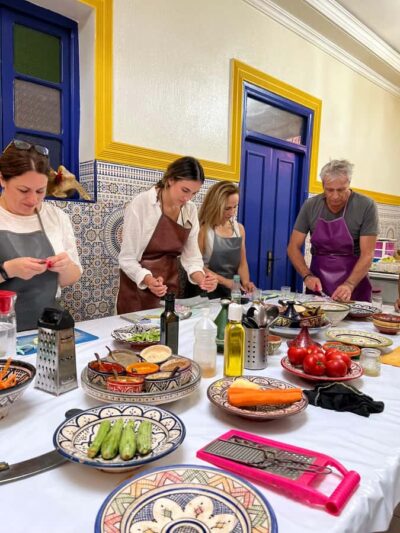
You start with Moroccan mint tea and pastries. This is not just a drink handed over while you wait. Tea is part of the social welcome, and it sets the tone for the class. You have a chance to meet the chef and the rest of the group before everyone puts on an apron and begins preparing food.
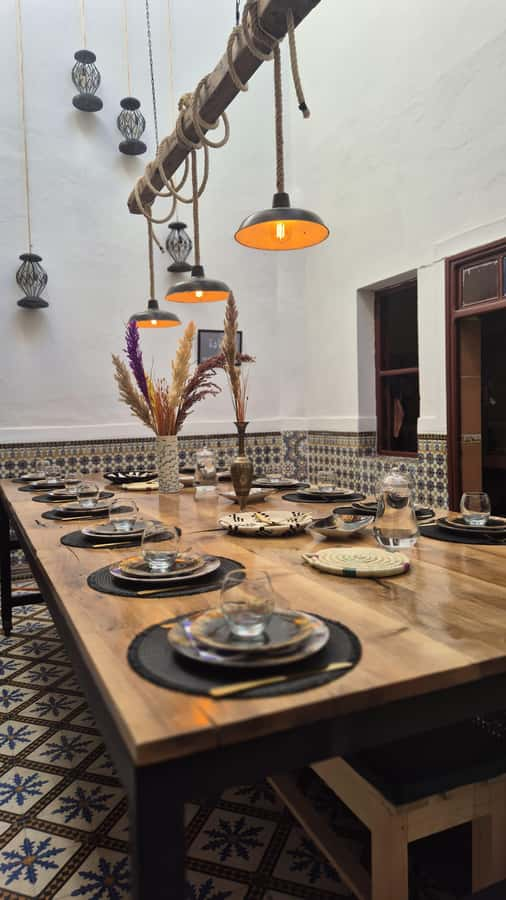
The setting is described as a traditional riad in Marrakech or a farmhouse, with the exact location connected to ArtEscape Marrakech. The space is designed for cooking and shared meals, and the facilities have been praised for being clean and comfortable. The outside may not have a clear sign, though, so do not assume you have arrived at the wrong place. Check the map pin and ring the bell at door 312.
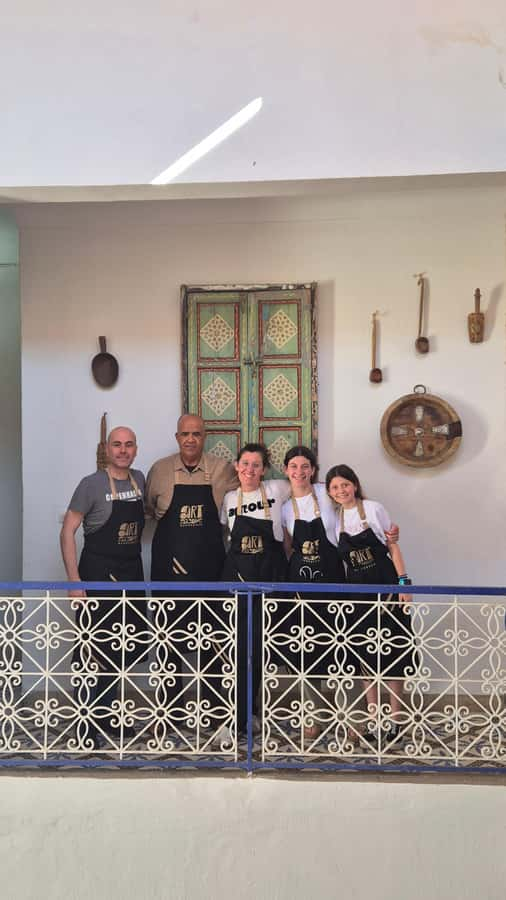
The class team can vary. Chafik, also written as Chafiq, has led several sessions, while Fatima, Laila Fatima, Chaima, and Mehdi have also been involved. The consistent feature is hands-on help. You are not expected to know how to handle Moroccan spices, fold bread, or arrange a tagine before you arrive.
Other cooking classes in Marrakesh people book:
- Marrakech: Moroccan Cooking Class with Pickup
★ 4.6 · 1,862 reviews - Marrakech: Traditional Moroccan Cooking Class & Market Visit
★ 4.8 · 1,861 reviews - Marrakesh: Moroccan Dishes Cooking Class with a Local Chef
★ 5.0 · 1,615 reviews
Two Moroccan Salads and the Logic of Fresh Ingredients
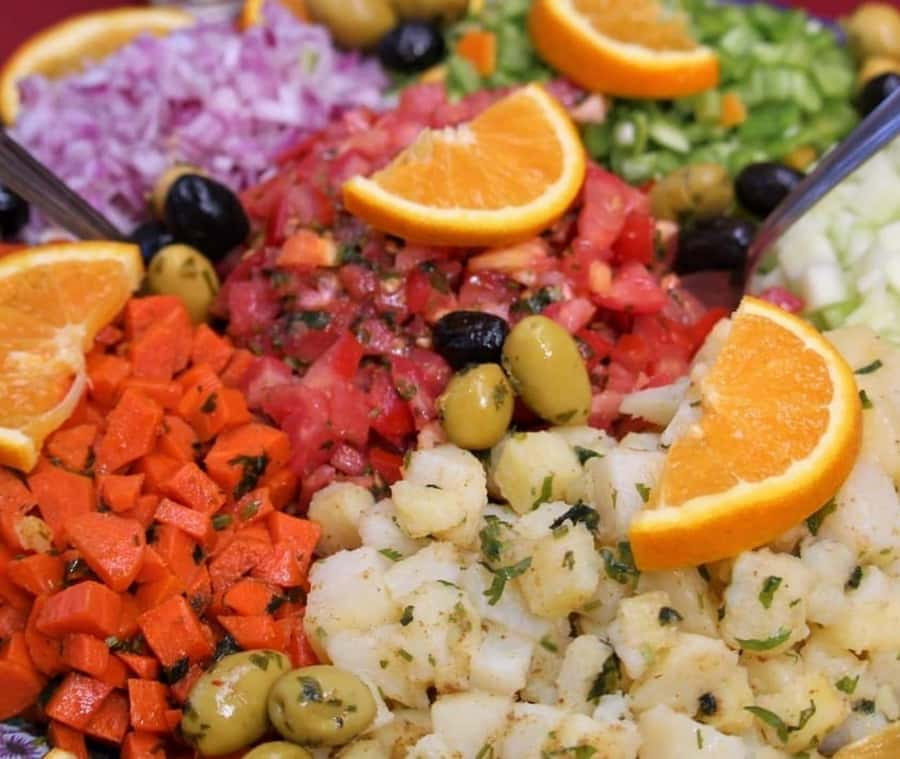
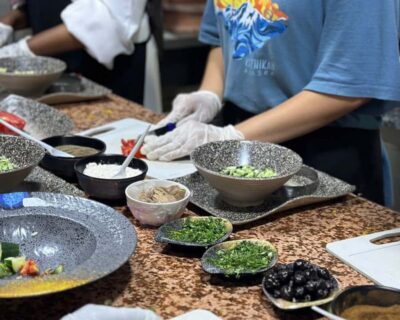
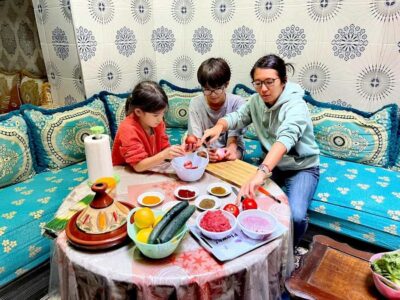
The first cooking work includes two Moroccan salads. This part gives you a useful lesson in how Moroccan food balances texture, colour, acidity, herbs, and spice without relying on heavy sauces.
You work with fresh seasonal ingredients supplied for the class. The exact salad choices can vary, but the experience may include vegetable salads and preparations such as beetroot. One session also included beetroot juice with orange, lemon, and mint as part of the meal’s sweet finish.
The value here is practical. You are not simply eating a polished plate in a restaurant. You see how vegetables are prepared, seasoned, and served alongside the main dish. That makes it easier to recreate the meal later, especially since recipe cards are provided at the end.
If you are a beginner, pay attention to the chef’s explanations of spice balance. Moroccan cooking can look complicated because several spices appear on the table, but the class presents the process step by step. You can ask questions throughout, and the multilingual instruction helps mixed-language groups stay involved.
Building the Tagine, Then Letting Time Do the Work
The tagine is the centre of the class. You choose from available options, with chicken and vegetable tagines specifically described in the experience. The class may therefore suit a mixed group, including people who prefer a vegetarian meal.
The chef shows you how to prepare the ingredients and arrange them in the clay cooking vessel. You learn an old Berber cooking method built around slow heat, layered ingredients, and a covered pot that helps retain moisture. The goal is not speed. The tagine needs time to develop its aroma and tender texture while you work on the bread.
That waiting period is part of the lesson. Moroccan food is not always about adding more seasoning. It is about giving the pot time to bring together meat, vegetables, spices, and sauce. You learn the difference between throwing ingredients into a pan and building a dish with care.
The tagine portion also gives you a clear idea of the class’s level. You take part in the preparation, but the chef remains nearby to guide the process. This suits you if you want to cook rather than sit back, but you do not want a technical professional course.
Making M’semen, the Flaky Moroccan Flatbread
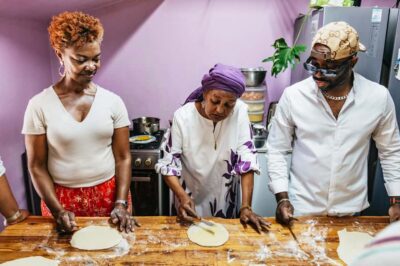
M’semen is one of the most memorable parts of the experience. This Moroccan flatbread is made with semolina flour and shaped by hand, then cooked until it develops a flaky texture.
The dough technique can feel less familiar than making a simple loaf. Fatima and Chafik have shown participants how to stretch, fold, and cook individual breads, with everyone making one of their own. The class keeps the process friendly and manageable, even for people trying it for the first time.
You eat the warm m’semen with dips such as nut butter, honey, and sunflower oil while the tagines continue cooking. This is a smart part of the schedule because it gives you something to enjoy during the slow-cooking stage, and it lets you taste the bread while its texture is at its best.
I would pay close attention here if you want to cook Moroccan food at home. Tagine recipes are easy to find, but shaping m’semen is the sort of technique that is much clearer when someone demonstrates it in front of you.
More cooking in Marrakesh:
- Marrakech: Moroccan Cooking Class with a Local Family
★ 4.9 · 668 reviews - Marrakech: Moroccan Cuisine Cooking Class in Local Home
★ 4.8 · 508 reviews - Marrakech: Moroccan Cooking Workshop at La Maison Arabe
★ 5.0 · 446 reviews - Marrakech: Tajine Cooking Class in a Traditional Riad
★ 4.8 · 424 reviews
The Shared Meal Is Part of the Lesson
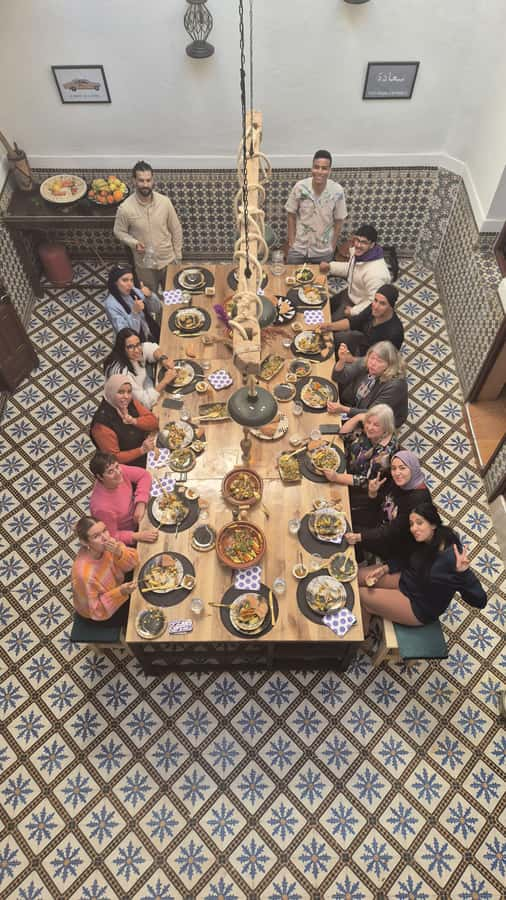
Once the tagines are ready, everyone sits down together. You eat the food prepared during the class, including the salads, tagine, bread, and sweet course, with Moroccan mint tea.
The meal is served in a decorated setting rather than rushed at a workbench. That change matters. You move from preparing food to sharing it, and the table becomes the social centre of the experience.
The class attracts people from different countries, and the small-group format encourages cooperation. You may be working beside a couple, a family, or solo participants, so the mood depends partly on the group. Still, the structure gives everyone a job and a reason to talk.
The dessert deserves a practical note. The advertised format includes a dessert, and examples include Moroccan pastries and a blended beetroot, orange, lemon, and mint juice. One participant expected something more elaborate and found the juice less satisfying as a dessert. If a substantial sweet course is important to you, ask what is planned on your date.
What the Food Teaches You About Moroccan Culture
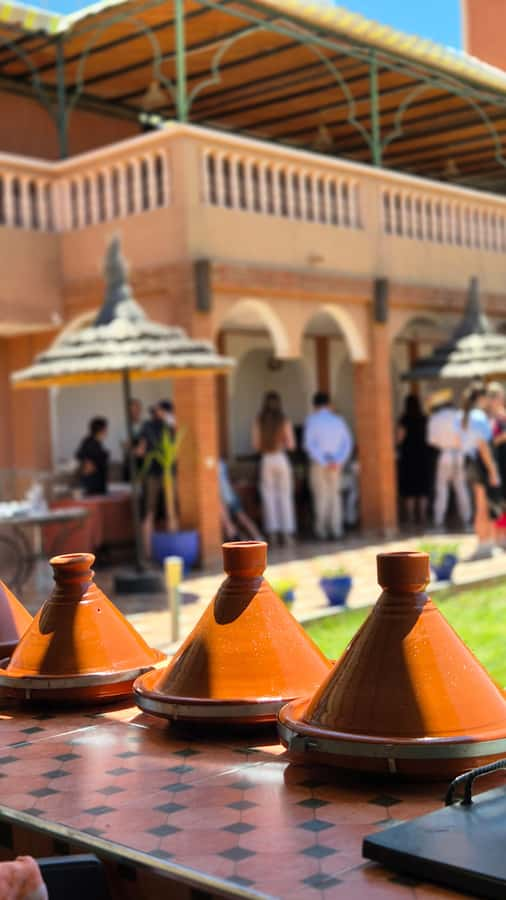
The class is useful because it connects recipes with everyday customs. The chef explains family traditions, the role of tea, and the ways Moroccan food has been shaped by North African and Mediterranean influences.
You also hear about Berber cooking techniques passed down through generations. The tagine and m’semen are not presented as isolated dishes. They show how Moroccan cooking uses simple equipment, local ingredients, slow cooking, and shared meals to create food with plenty of character.
The cultural side stays connected to the cooking. You are not sitting through a long lecture before touching the ingredients. Stories come while you chop vegetables, arrange the tagine, or wait for the bread to cook. That makes the information easier to remember.
The multilingual approach is another strength. Instruction is available in English, French, and Arabic. If your group includes people with different first languages, the chefs can explain the method in more than one language and demonstrate each step directly.
Is $45 a Fair Price?
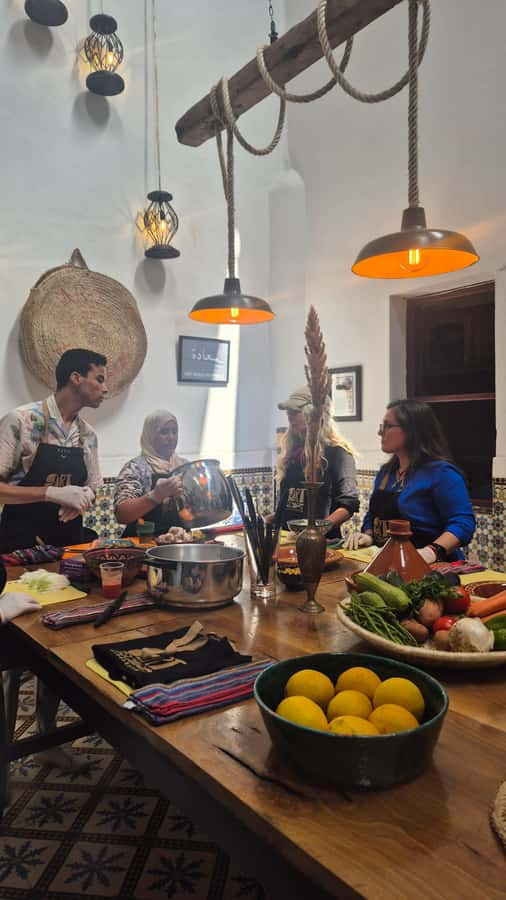
At $45 per person, this is a solid value for a four-hour activity. You receive the welcome tea, ingredients, utensils, instruction, the meal you prepare, mint tea at the table, and recipe cards to take home.
The price makes more sense when you compare it with the time involved. This is not a quick market tasting. You spend half a day learning several dishes, eating a full meal, and taking away methods you can use again. The recipe cards add lasting value, especially if you want to recreate the food after returning home.
You should still check the exact arrangements before booking. Pick-up and drop-off were helpful for some participants, but the stated arrival instructions also say you can reach the venue by Uber or InDrive. Contact details are used to confirm the pick-up time and location when relevant, so provide accurate information during booking.
The class has free cancellation up to 24 hours before the start, and you can reserve now and pay later. That is helpful if your Marrakech plans are still changing.
Getting There Without a Stressful Start
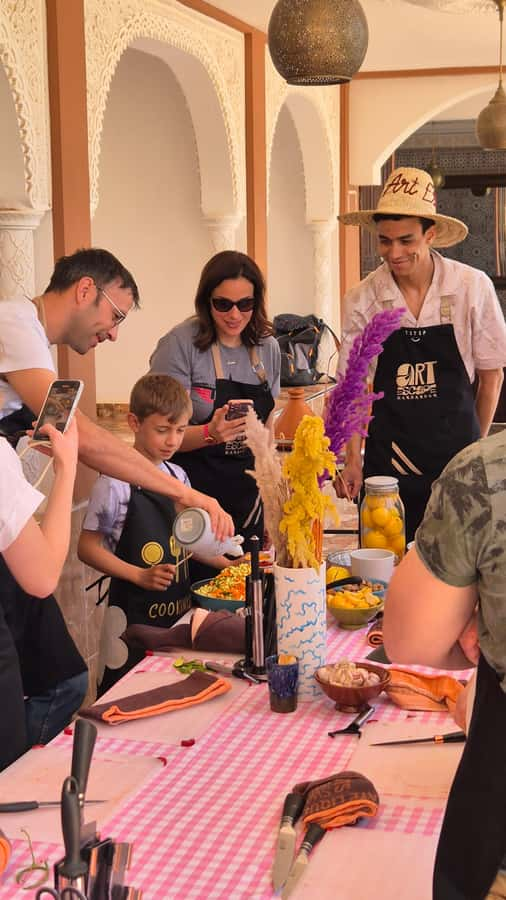
Use Google Maps and type in ArtEscape Marrakech for the exact pin. Aim to arrive 15 minutes early, especially if you are unfamiliar with Marrakech’s streets and ride-hailing services.
Uber or InDrive are suggested as easier options than regular taxis. The door number is 312. The building may not currently have an obvious outside sign, so look for the correct door and ring the bell instead of abandoning the search.
The venue is wheelchair accessible. If you have mobility needs, mention them during booking so the team has the right information. Comfortable shoes are sensible because the session lasts four hours and includes standing, food preparation, and movement around the cooking area.
Do not bring pets, alcohol, or drugs. Babies under one year are not considered suitable for the activity.
Who Will Enjoy This Cooking Class Most?
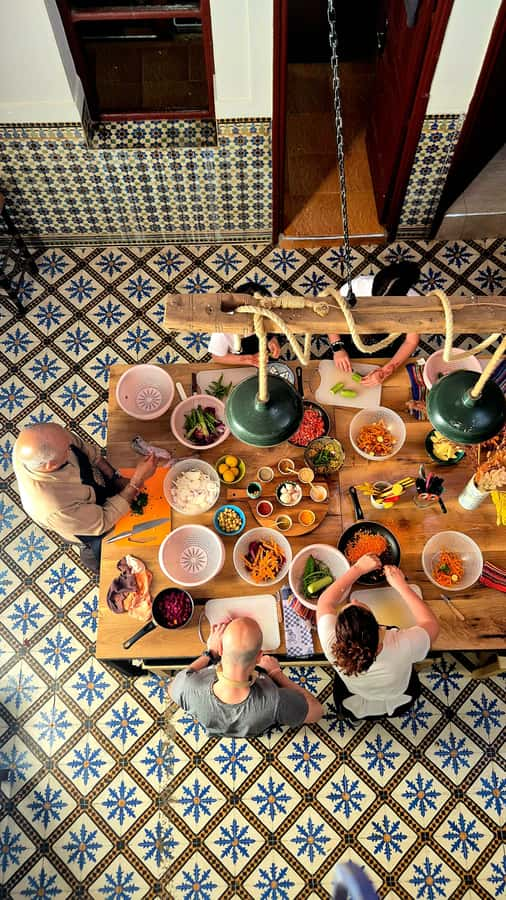
This class works best for you if food is one of the main ways you like to understand a place. You do not need professional cooking experience. The instructions are clear, the chefs demonstrate the techniques, and help is available as you work.
Families with older children and teenagers can get a lot from it. One family used the session as a shared activity with two teenagers, and the format gave everyone something useful to do. The class is less suitable for a baby under one year, and very young children may struggle with the four-hour length.
It also suits couples, solo visitors, and friends who want an activity with a social side. You may meet people from several countries, but the focus remains on cooking rather than forced group entertainment.
Vegetarians should mention their needs while booking. Vegetarian tagine options are available. You should also report allergies, dietary restrictions, or special requests in advance.
This is not the best choice if you want a short demonstration, a market tour, or a restaurant meal with no participation. You will be chopping, preparing, shaping bread, and taking part. That is the point, but it does require some energy and attention.
Small Details That Make the Experience Better
The strongest part of the class is the human guidance. Chafik has been praised for explaining each step clearly while keeping the mood light, and Fatima has helped participants with both the food and the cultural background. Other sessions have been led by Mehdi, Chaima, and Laila Fatima.
The atmosphere can feel like cooking with friends, particularly when the group is small. That is not guaranteed on every date, but the structure encourages it. Everyone contributes to the meal, and the final table gives the group a natural place to talk.
The class is also well organised from a practical point of view. The cooking stages move in a sensible order: tea, preparation, tagine, bread, shared meal. The tagine cooks while you make m’semen, so little of the four-hour session feels wasted.
Transportation is the one area to confirm carefully. Some bookings included helpful pick-up and drop-off, while another participant had trouble with transport arrangements. I would ask for clear instructions before the day and rely on the ArtEscape Marrakech map pin rather than only a written address.
Should You Book This Marrakech Cooking Class?
Book it if you want to do more than taste Moroccan food. For $45, you get a half-day activity, several dishes, direct help from local chefs, a shared meal, and recipes you can use at home. The strongest reasons to choose it are the friendly instruction, the hands-on m’semen lesson, the slow-cooked tagine, and the chance to learn through family food traditions.
Think twice if you dislike group activities, standing in a cooking space, or a dessert that may sometimes be a juice-based preparation. Also confirm transport and the exact meeting instructions before you go.
For most food-curious visitors, this is one of the better uses of a morning in Marrakech. Bring comfortable shoes, arrive early, and come ready to work. You will leave with a full meal, a few new techniques, and a better sense of why Moroccan food is built for patience and sharing.
FAQ
How long does the Marrakech cooking class last?
The class lasts four hours. The morning session runs from 10:30 a.m. to 2:30 p.m.
What dishes will I prepare?
The class includes two Moroccan salads, a tagine of your choice, Moroccan m’semen bread, and dessert. Chicken and vegetable tagines are among the dishes described for the experience.
Is the cooking class available in English?
Yes. The guide or chef can conduct the activity in English, French, or Arabic.
Is a vegetarian option available?
Yes. Vegetarian options are available. Tell the provider about dietary requirements, allergies, or special requests during booking.
Where do I meet the cooking team?
Use Google Maps and search for ArtEscape Marrakech to find the exact pin. The door number is 312. Arrive 15 minutes early and ring the bell if the building has no visible sign.
Can I cancel the booking?
Yes. You can cancel up to 24 hours before the activity for a full refund. Reserve now and pay later is also available.
Just added in Marrakesh
- Marrakech: Tailor-Made City Tour With Your Own Private Guide★ 4.9 · 236 reviews
- Marrakech palm grove: Sunset camel ride★ 4.8 · 194 reviews
- Sparkling Marrakech through the eyes of your local Guide★ 4.7 · 247 reviews
- Small-Group Day Trip from Marrakech to Essaouira Mogador★ 4.8 · 211 reviews
- Quad biking in Agafay Desert with lunch & Camel Ride & pool★ 4.5 · 186 reviews
- Marrakech: Historical Discovery Tour★ 4.1 · 87 reviews
- Marrakech: Palm Grove Horseback Riding Tour★ 4.6 · 163 reviews
- From Marrakesh: Ouarzazate & Ait Ben Haddou Day Tour★ 4.5 · 198 reviews
Cooking Classes, compared.
Traditional Moroccan Cooking Class & Market Visit
Read our review →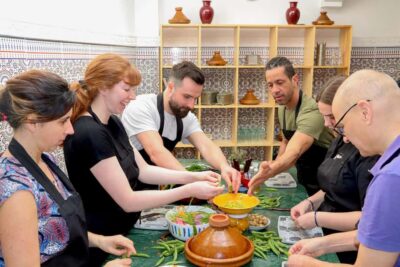
Moroccan Dishes Cooking Class with a Local Chef
Read our review →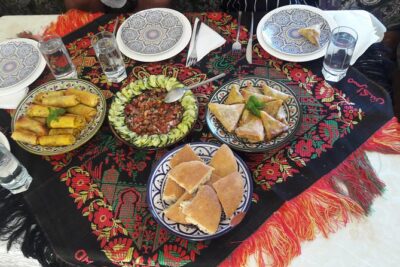
Moroccan Cooking Class & Marrakech Market Visit with Chef Khmisa
Read our review →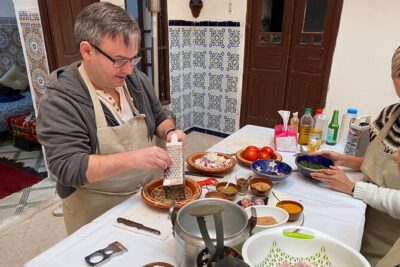
Half-Day Cooking Class with Local Chef Laila in Marrakech
Read our review →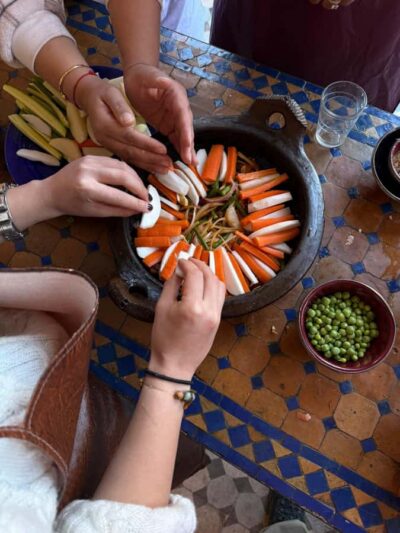
Browse the lists this tour appears in