
Reviewed · MOROCCO · TOURS IN MARRAKECH
Marrakech: Traditional Moroccan Crepes & Bread Cooking Class
The best part of this Marrakech class is that you do not just eat Moroccan bread, you learn the tricks behind it. You will shape msemen, a layered pan-fried crepe, make harcha, a semolina pancake, and cook batbout, a soft Moroccan flatbread. I like the small groups, limited to 10, and the chance to sit down with your own food and mint tea at the end.
I also like the useful, take-home value. You receive the ingredients and tools during class, plus electronic recipes for later. The main thing to consider is communication: English, French, and Arabic are offered, but one session had a teacher who spoke no English, so demonstrations and gestures did much of the work.
Key points to know before booking
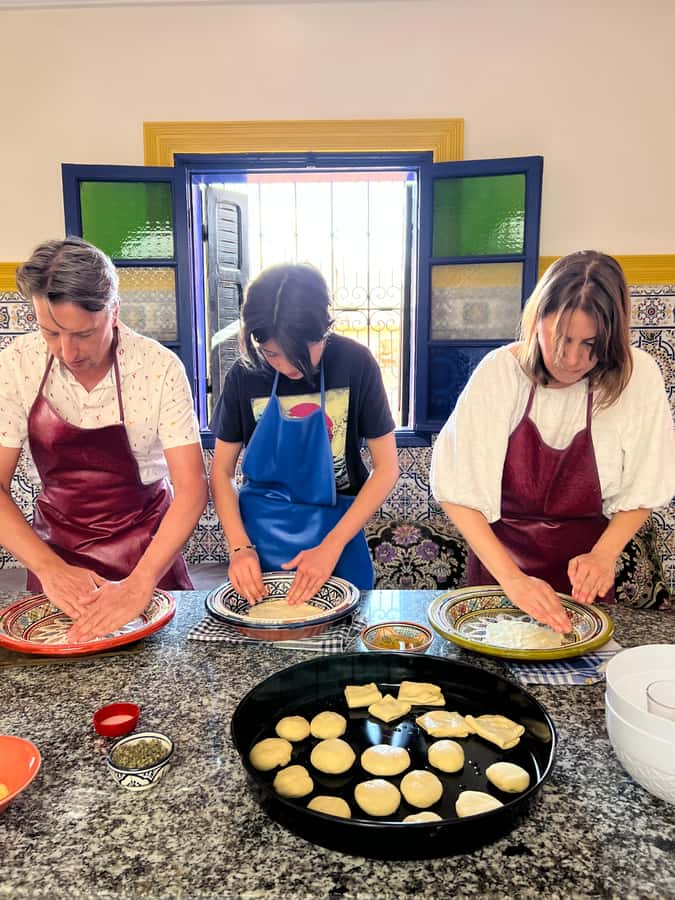
- Three breads in two hours: Make msemen, harcha, and batbout, each with a different texture and cooking method.
- A proper mint tea ritual: Prepare and pour Moroccan mint tea to serve with the breads.
- Small-group teaching: The class accepts no more than 10 people, with some sessions becoming nearly private.
- A local address: The workshop is at 44 Der Hajra near Bab Doukkala, reached without included transportation.
- Plenty to eat: Taste the finished breads with items such as olives, honey, or jam, depending on what is served.
- Recipes for home: Electronic recipes are included, though you may need to follow up if they do not arrive.
Three Moroccan breads, three different lessons
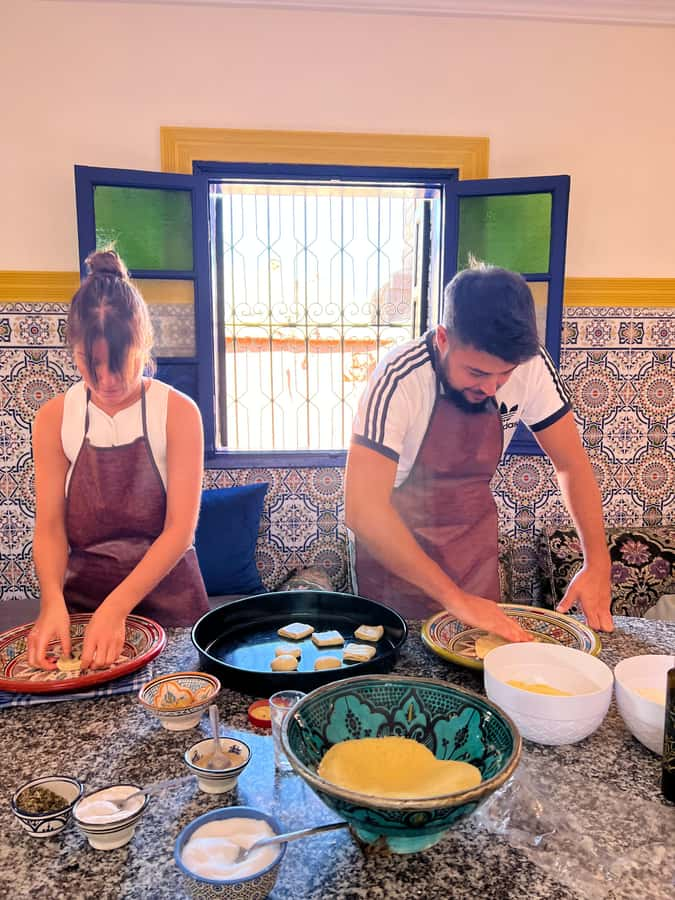
This is a cooking class built around texture. Msemen, harcha, and batbout may all look like simple breads, but they ask for different hands-on skills.
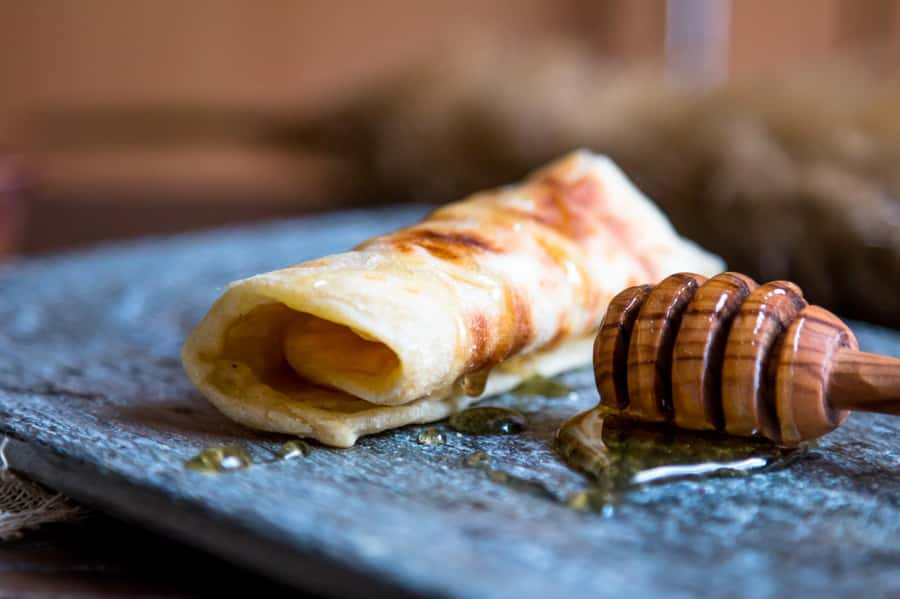
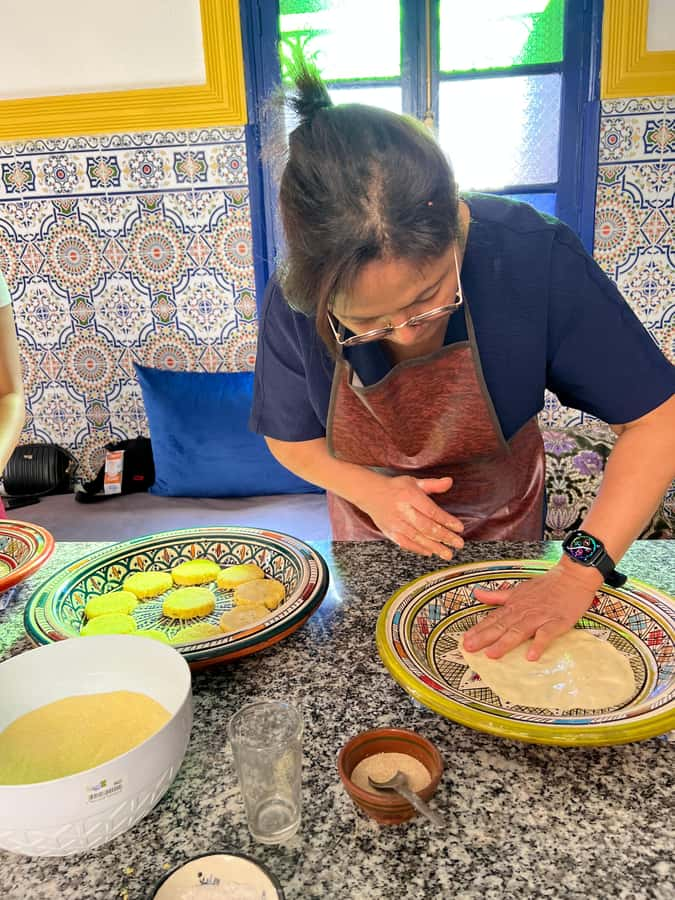
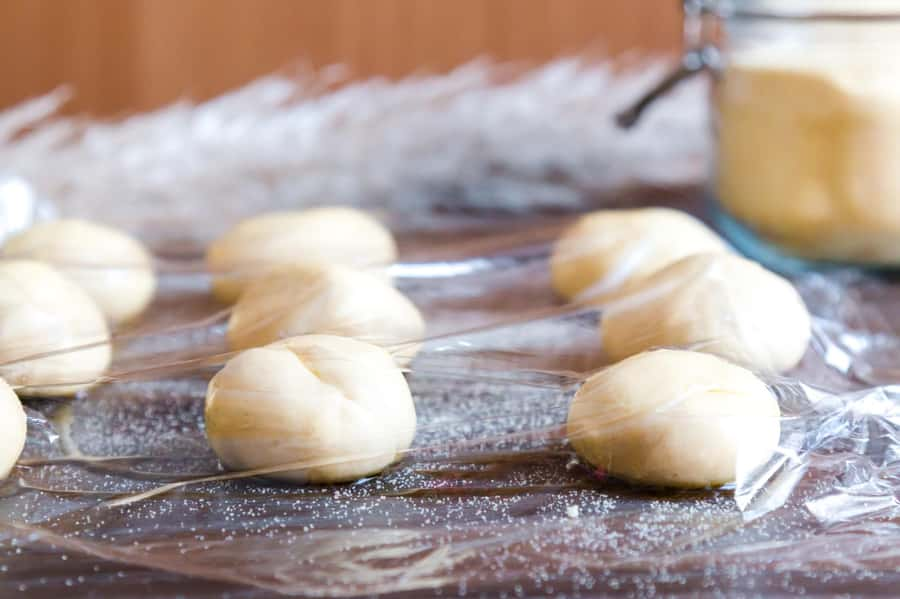
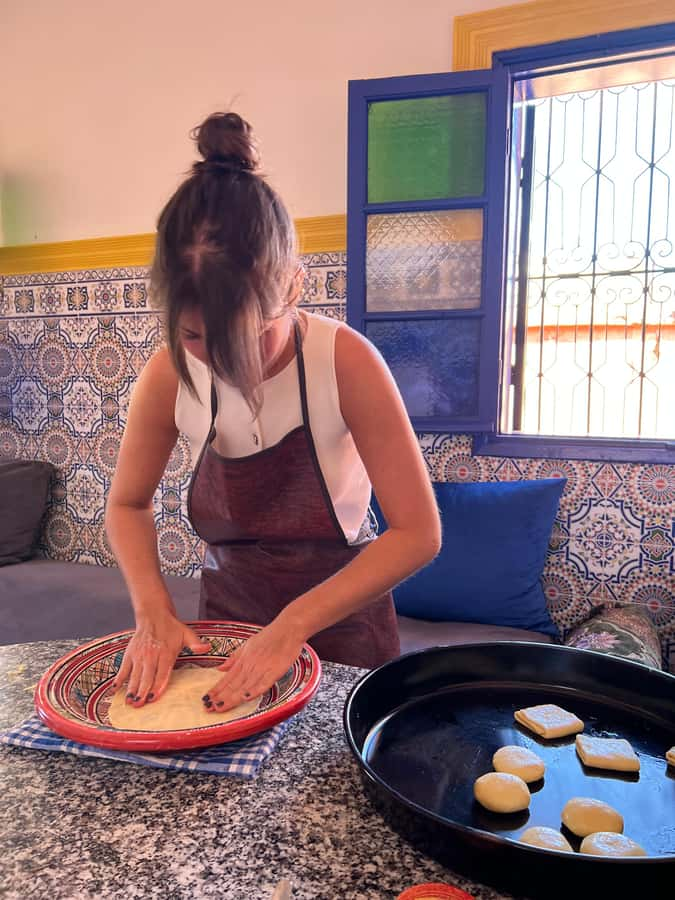
Msemen is the showpiece. The dough is stretched, folded, and layered before it hits the pan. The result is a square Moroccan crepe with a crisp surface and soft layers inside. If you have been eating msemen at breakfast in Morocco, this is your chance to see why it takes more than simply rolling out dough.
Harcha is quite different. It is a semolina pancake or galette with a crumbly, tender texture. You will learn how it is formed and cooked rather than treated like a standard flour pancake.
Batbout is the soft, rounded flatbread. It is often compared to Moroccan pita bread, and its method gives you another useful skill for home cooking. Making all three in one sitting lets you compare the doughs, shaping, and cooking methods while the details are still fresh.
The class is not designed as a formal chef course. It is practical and social. You receive an apron and the necessary ingredients and utensils, then work through the process with guidance from the host. That matters if you are new to Moroccan cooking. You are not expected to arrive with baking experience.
Other cooking classes in Marrakesh people book:
- Marrakech: Moroccan Cooking Class with Pickup
★ 4.6 · 1,862 reviews - Marrakech: Traditional Moroccan Cooking Class & Market Visit
★ 4.8 · 1,861 reviews - Marrakesh: Moroccan Dishes Cooking Class with a Local Chef
★ 5.0 · 1,615 reviews
What the two-hour schedule feels like
The class begins at the workshop near Bab Doukkala. You should allow time to find 44 Der Hajra, since transportation is not included. A WhatsApp message with directions has helped people locate the class, but it is still wise to arrive with the address ready on your phone.
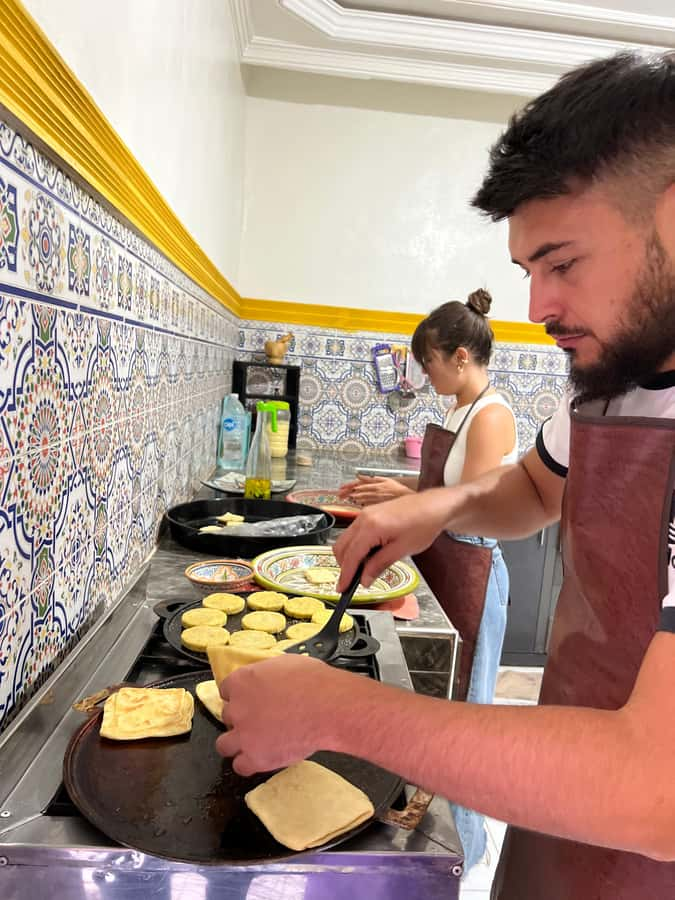
Once inside, you get set up with an apron and the equipment needed for the lesson. The host demonstrates the techniques, then you take over. The useful part is the repeated hand work: mixing, shaping, stretching, folding, and cooking. You are involved from the first stage to the finished bread rather than watching a chef do everything.
The order may vary, but the class moves through the three recipes and their different cooking methods. Because the group is capped at 10, you have a better chance of asking for help than in a large food tour. Some sessions have had only two or three people, which allows very direct instruction. A full group will feel more social, but the small maximum keeps it manageable.
The breads are cooked during the session, then cooled enough to eat. This timing gives you a clear payoff. You see the dough change, handle the finished food, and taste it while the method is still fresh in your mind.
Learning from Fatima, Jamila, and the teaching team
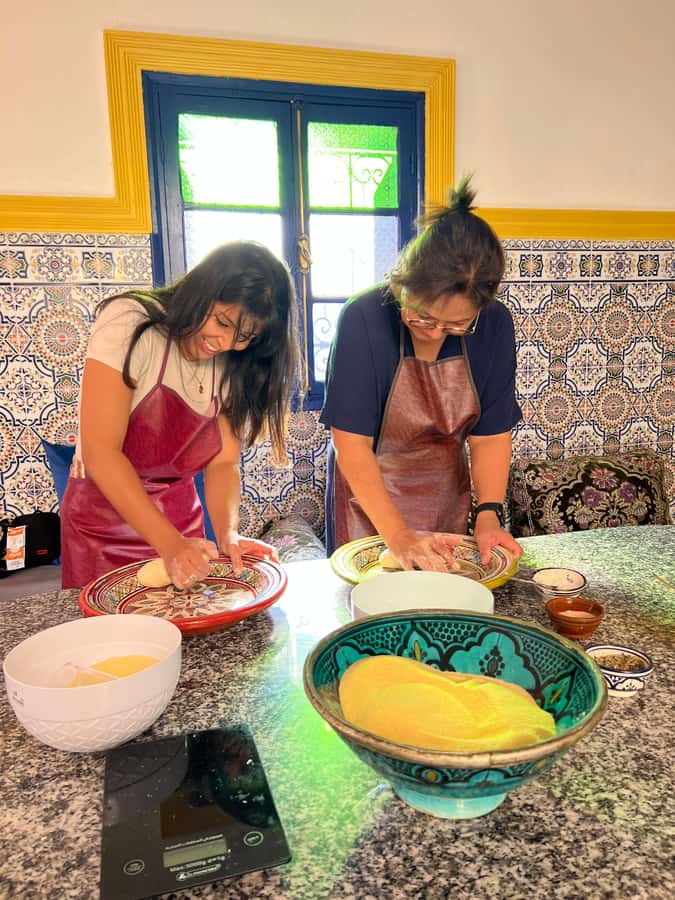
The teaching style is hands-on. Fatima has led sessions praised for clear demonstrations and active help at the worktable. Jamila has also taught the class, using close guidance and demonstrations when spoken communication was limited.
That last point is worth taking seriously. The advertised languages are Arabic, French, and English, but the level of English may vary by instructor. One class had an English-speaking translator available, while another relied more on demonstration because the teacher did not speak English. This need not ruin the experience, since bread making is visual, but it may limit detailed questions about substitutions or technique.
I would book this class for the practical teaching rather than for long culinary explanations. Watch closely, copy the movements, and ask questions early. If you speak French or Arabic, communication may be easier. If not, the small group and physical demonstrations should still help, but the lesson may feel less precise than an English-only cooking class.
The mint tea ritual is part of the lesson
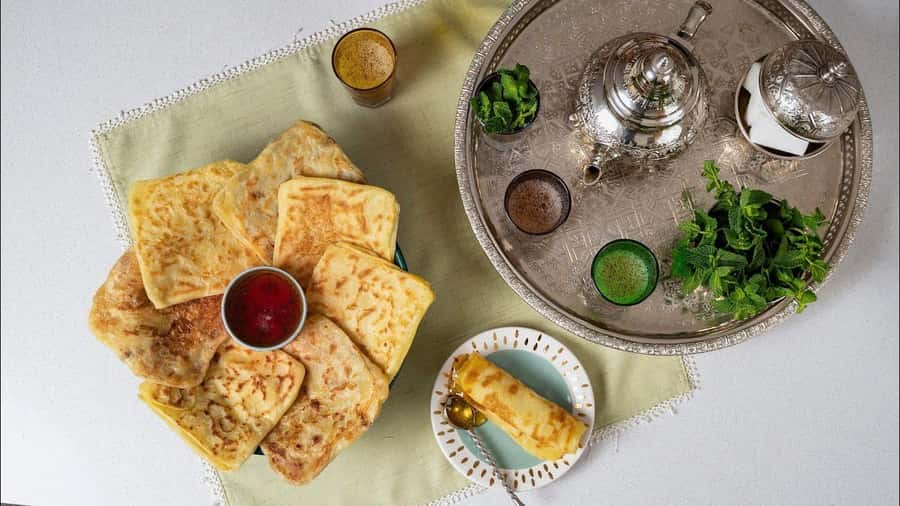
Moroccan mint tea is not just a drink placed beside your plate. Preparing it is part of the hospitality of the class. After the dough is prepared and cooked, you help make the tea and learn the basic ritual of preparing and pouring it.
This gives the class a pleasant change of pace. Bread making can be floury and active. Tea preparation slows the room down and turns the meal into a shared moment. You then sit with the finished breads and drink the tea together.
The accompaniments can include olives, honey, or jam. These simple pairings help you understand how the breads work at the table. Msemen can be enjoyed as a sweet or savory bite, harcha gives you a different semolina texture, and batbout is useful for soaking up or carrying other foods.
Do not expect a large restaurant meal. The point is to eat what you have made. Still, the portions have been described as generous, and some people have had enough bread to take leftovers away. Bring your appetite, but also be ready for a flour-heavy two hours.
More cooking in Marrakesh:
- Marrakech: Moroccan Cooking Class with a Local Family
★ 4.9 · 668 reviews - Marrakech: Moroccan Cuisine Cooking Class in Local Home
★ 4.8 · 508 reviews - Marrakech: Moroccan Cooking Workshop at La Maison Arabe
★ 5.0 · 446 reviews - Marrakech: Tajine Cooking Class in a Traditional Riad
★ 4.8 · 424 reviews
Why the small group makes a difference
A cooking class with 10 people is not intimate in the same way as a private lesson, but it is small enough to keep the work moving. You can usually see the demonstration and ask for help without waiting behind a long line of participants.
When only two or three people book, the experience can become almost private. That can be especially useful if you want extra help stretching msemen or shaping batbout. Larger groups create more conversation, which suits people who enjoy meeting others while cooking.
The setting also gives the activity a home-style feel. It is described as a beautiful Moroccan home and workshop rather than a large commercial kitchen. That makes the experience feel closer to being invited into a local cooking space than attending a polished restaurant demonstration.
There are limits. Home-style spaces may not have the streamlined layout of a professional cooking school. You may spend some time waiting for a pan or sharing a work surface. The trade-off is a more personal class and a closer look at everyday Moroccan food.
Finding the workshop in Bab Doukkala
The address is 44 Der Hajra, Bab Doukkala, Marrakech. This is a useful area for pairing the class with time in the medina, but you must arrange your own way there. Transportation to and from the workshop is not included.
The walk to the workshop can take you through food markets used more by local residents than by tourists. That adds context to the class, since you are seeing the kind of neighborhood food culture that gives Moroccan bread its place in daily life. Give yourself extra time if you are unfamiliar with the streets.
Wear comfortable clothes suitable for baking. Loose, practical clothing is better than anything delicate, and you should bring water. An apron is provided, but flour and dough still make this an activity for clothes you do not mind using in a kitchen.
The meeting point is not a hotel pickup. That keeps the price lower, but it also means you are responsible for reaching the address on time. Check the starting time when booking, since class times can vary.
Is $37 good value?
At $37 per person, this is good value if you want to take part rather than simply taste food. The price includes a two-hour interactive class, an apron, all ingredients and utensils, host instruction, tasting, mint tea preparation, and electronic recipes.
The value is strongest for couples, families with older children, and small groups of friends. You get an activity, a meal-sized tasting, and recipes that can be used after your trip. The class also avoids the extra cost of buying several separate Moroccan breads to compare.
The price is less compelling if you mainly want a quick snack or a polished culinary lecture. You will spend much of the class handling dough, waiting for breads to cook, and eating your results. That is the appeal for some people and the wrong format for others.
The take-home recipes add practical value, but keep an eye on your email. One person had not received them and needed to chase them up. Save any messages from the workshop and check your inbox after the class.
Who should book this class?
I would choose this for anyone who has been eating Moroccan bread and wants to understand how it is made. It is especially good for people who learn by doing. You will get more from it if you are happy to copy a hand movement, try again, and ask for help.
Families can enjoy it too. Children under 4 are not accepted, and younger children may need close supervision around hot pans and dough. The activity suits older children who can follow instructions and take part at the worktable.
It is also a good choice for a rainy morning, a break from sightseeing, or an easy way to meet people in a small group. The class offers a calmer contrast to the noise and movement of central Marrakech.
You should skip it if you have food allergies or gluten intolerance. The class centers on wheat and semolina breads, and the provided information specifically says it is not suitable for people with food allergies or gluten intolerance.
A few practical drawbacks
The class is short enough to fit into a busy itinerary, but two hours passes quickly. You will learn the basic methods, not every variation of Moroccan bread or a full menu of Moroccan cooking.
Language may be the biggest variable. Arabic, French, and English are listed, yet the individual teacher’s spoken English may differ. If asking detailed questions is important to you, confirm the language arrangement before booking.
You may also finish with more bread than you can eat. That is a pleasant problem, and boxes have been provided for leftovers, but do not assume you will have an easy way to carry everything around Marrakech afterward.
Finally, the experience is focused on bread. If you want tagine, salads, or a full Moroccan meal, you need a different class. Khmisa Workshops also offers other cooking sessions, but this booking is specifically about msemen, harcha, batbout, and mint tea.
Should you book it?
Book this class if you want a hands-on Moroccan food experience with a clear result at the end. The strongest reasons are the three different breads, the small group, the tea ritual, and the recipes you can use at home.
I would be more cautious if you need fluent English instruction, have dietary restrictions, or prefer to watch rather than cook. For everyone else, $37 buys a useful two hours, a generous tasting, and a better understanding of the breads you will see across Morocco. Bring water, wear practical clothes, and arrive ready to work with your hands.
FAQ
How long does the Moroccan bread class last?
The class lasts two hours.
How much does the class cost?
The listed price is $37 per person.
Where does the class take place?
The workshop is at 44 Der Hajra, Bab Doukkala, Marrakech.
Which breads will I make?
You will make msemen, harcha, and batbout.
Is mint tea included?
Yes. You will help prepare traditional Moroccan mint tea and taste it with the breads.
Are ingredients and cooking equipment provided?
Yes. The class provides the ingredients, utensils, apron, and other equipment needed for the lesson.
What languages are available?
Instruction is offered in Arabic, French, and English.
How many people can join the class?
The group is limited to 10 participants.
Is the class suitable for children or people with dietary restrictions?
Children under 4 are not accepted. The class is not suitable for people with food allergies or gluten intolerance.
Just added in Marrakesh
- Marrakech: Tailor-Made City Tour With Your Own Private Guide★ 4.9 · 236 reviews
- Marrakech palm grove: Sunset camel ride★ 4.8 · 194 reviews
- Sparkling Marrakech through the eyes of your local Guide★ 4.7 · 247 reviews
- Small-Group Day Trip from Marrakech to Essaouira Mogador★ 4.8 · 211 reviews
- Quad biking in Agafay Desert with lunch & Camel Ride & pool★ 4.5 · 186 reviews
- Marrakech: Historical Discovery Tour★ 4.1 · 87 reviews
- Marrakech: Palm Grove Horseback Riding Tour★ 4.6 · 163 reviews
- From Marrakesh: Ouarzazate & Ait Ben Haddou Day Tour★ 4.5 · 198 reviews
Cooking Classes, compared.
Traditional Moroccan Cooking Class & Market Visit
Read our review →
Moroccan Dishes Cooking Class with a Local Chef
Read our review →
Moroccan Cooking Class & Marrakech Market Visit with Chef Khmisa
Read our review →
Half-Day Cooking Class with Local Chef Laila in Marrakech
Read our review →
Browse the lists this tour appears in