
Reviewed · TOURS IN SOUTH AFRICA
Stellenbosch: Guided Historical Walking Tour
Stellenbosch’s story is written along its streets: oak trees shade the old lanes, water runs through the town’s furrows, and Cape Dutch buildings gather around the village green. This 90-minute walk connects those details to four centuries of local life, from Simon van der Stel’s first camp by the Eerste River to the fires that nearly erased the early settlement.
I like the way the tour mixes grand landmarks with odd little stories, including the Angel Factory and the ghostly tales linked to the Moederkerk graveyard. I also like the guides’ personal style: Johan, Marlene, Juliana, and others are praised for making history clear, funny, and easy to follow. The main drawback is simple: it is an outdoor walking tour, so hot weather, rain, or uncomfortable shoes can make the experience less pleasant.
Key points
- A gentle route through old Stellenbosch: The tour covers the historic center at an easy pace rather than rushing from sight to sight.
- The Braak brings the town’s past into view: Historic buildings surround three sides of this village green.
- Dorp Street adds everyday history: You walk along South Africa’s oldest residential street.
- Local guides shape the experience: Johan, Marlene, Juliana, and Maureen are noted for humor, clear storytelling, and flexible conversation.
- The $18 price is strong value: You get a professional English-speaking guide and 90 minutes of context before exploring on your own.
- Practical access is good: The tour is wheelchair accessible, but you should still wear comfortable shoes and arrive 15 minutes early.
Why Stellenbosch makes such a good walking tour
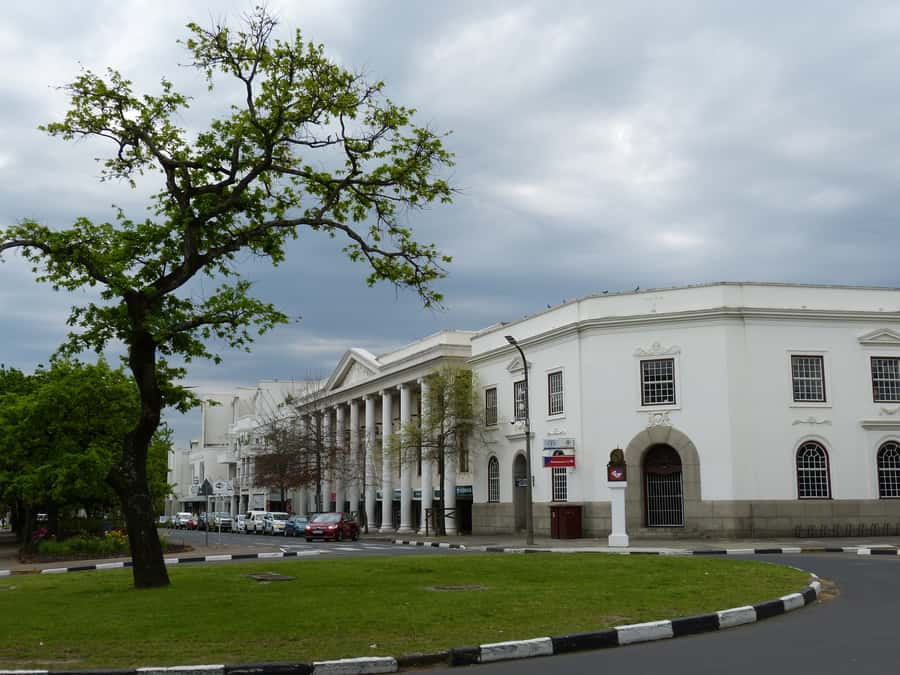
Stellenbosch is easy to admire on your own. You can stroll through the center, photograph whitewashed buildings, and stop for a coffee or meal. But the town’s appearance only tells part of the story. A guide explains why the streets follow their old pattern, how water shaped settlement, and why fire repeatedly changed the town.
That extra context is what makes this tour useful early in your stay. After 90 minutes, you have a clearer map in your head and a better sense of which streets deserve a second look. You also get stories that are hard to find on a casual walk, including tales about the town’s founders, former residents, university life, and local beliefs.
The pace suits visitors who want substance without giving up half a day. This is not a long excursion through the surrounding wine country. It stays in central Stellenbosch, making it easy to pair with lunch, shopping, a museum visit, or a separate vineyard outing.
Other walking tours in South Africa people book:
- Soweto: Walking Tour with a Local Guide and Lunch
★ 4.9 · 648 reviews - Cape Town: Nathi Langa Township Walking Tour
★ 4.9 · 493 reviews - Cape Town: Art, Culture & History Walking Tour
★ 4.9 · 392 reviews
Meeting your guide on Church Street
The tour begins at 47 Church Street in Stellenbosch Central. Arrive 15 minutes before the start time so you can check in without beginning the walk in a rush. Transportation is not included, so you need to make your own way to the meeting point.
The guide speaks English, and the experience is led in person rather than through an audio device. That matters in a town where the best questions often arise from small details. You can ask about a building, a street name, modern Stellenbosch, or the wider history of South Africa as the walk unfolds.
Guide names appearing repeatedly in the experience include Johan, Marlene, Juliana, and Maureen. Their approach is not identical, which is a good thing. Johan is often described as humorous and clear, while Marlene is praised for a relaxed, well-paced style. Juliana is noted for adjusting her explanations to questions and taking time with less obvious places.
Group size can vary. Some departures have a small group, and quieter periods may even produce a near-private walk. Do not book on the assumption that you will receive a private tour, but a small group can make it easier to ask questions and shape the conversation.
Following the Mill Stream beneath the oaks
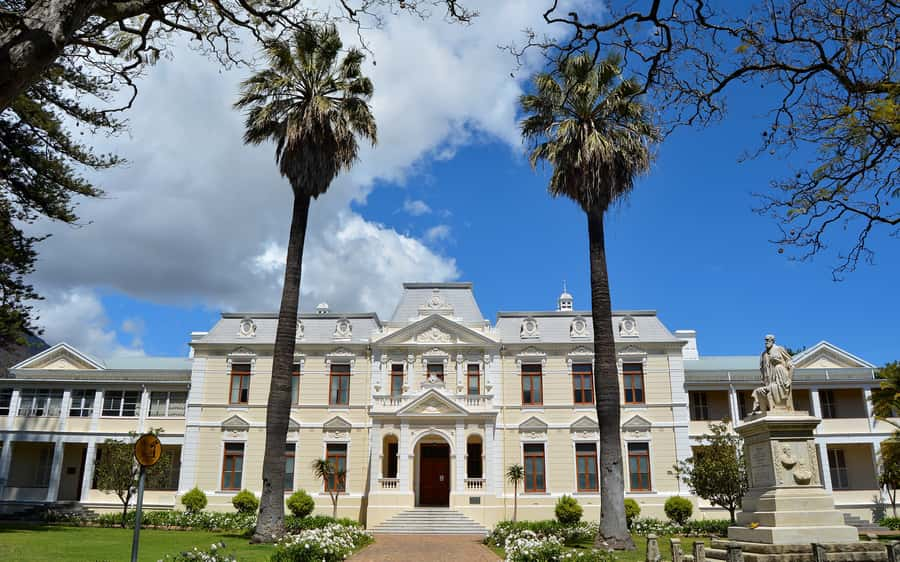
One of the most appealing features of Stellenbosch is its greenery. The town is often called the village of the oaks, and the shaded avenues soften the formal appearance of the historic center. Along the streets, water furrows linked to the Mill Stream add another layer to the town’s design.
These channels are more than decoration. They help you see how early settlement depended on water management and how the town developed around practical needs. A good guide turns that physical evidence into a story about daily life rather than treating the furrows as a quick photo stop.
I would pay attention here to the relationship between the trees, the water, and the buildings. The charm of Stellenbosch does not come from one grand monument. It comes from the way these parts work together over several streets.
The shade is welcome, but it should not be mistaken for full protection from the sun. Bring water, especially during warmer months, and use sun protection if you need it. The route is described as an easy city walk, but comfortable shoes remain essential.
Reading the Cape Dutch buildings
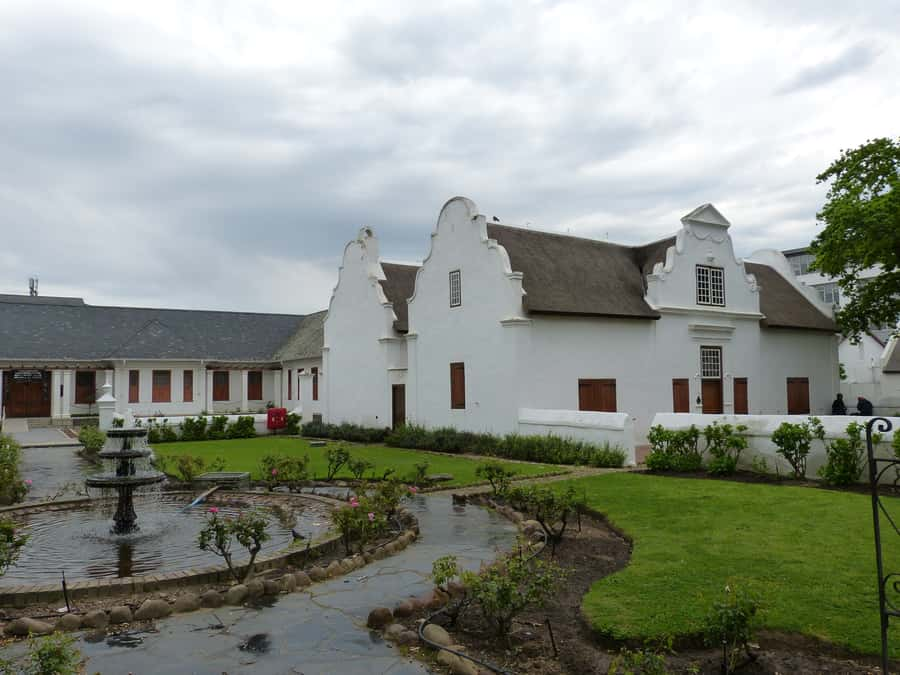
The tour gives you time to look at the Cape Dutch architecture that defines much of old Stellenbosch. The white facades, curved gables, and orderly street fronts create a visual harmony that can make the town seem untouched. The guide helps you move beyond that first impression.
You learn how the town changed over time and how repeated fires damaged large parts of the early settlement. Those fires are a key part of the story. They explain why the old center contains both surviving historic forms and buildings shaped by later rebuilding.
This is one of the tour’s strongest features for first-time visitors. Instead of simply collecting photographs, you begin to understand why the buildings look as they do and how vulnerable early towns were to fire. The subject also prevents the walk from becoming too sentimental. Stellenbosch is attractive, but its past includes disruption, loss, and constant rebuilding.
The tour does not promise entry into every building, so treat it primarily as an exterior walking experience. You are there to read the town’s streets and hear the stories attached to them, not to spend the morning inside a series of museums.
Other wine days out of South Africa:
- Wine Tour: Paarl, Franschhoek & Stellenbosch incl 3 wineries
★ 5.0 · 3,940 reviews - From Cape Town: 3 Regions Wine Tour with 3 Estates, 15 Wines
★ 4.7 · 2,136 reviews - From Cape Town: Franschhoek Wine Tram Hop-on Hop-off
★ 4.7 · 1,972 reviews - Cape Town: Full-Day Winelands Tour with Wine Tastings & Food
★ 4.9 · 1,288 reviews
The Braak and the town’s public face
The Braak, or village green, is one of the clearest places to understand historic Stellenbosch. Buildings surround three sides of this open space, giving you a compact view of the town’s public and architectural character.
A guide can show you how the green fits into the settlement rather than leaving it as a pleasant lawn surrounded by old facades. Look at the scale of the space, the position of the buildings, and the way the area differs from the narrower residential streets.
This stop is especially useful if you want a quick orientation to the center. The Braak helps organize the town in your mind, and it gives you a natural reference point for later exploring. It is also one of the places where the contrast between old architecture and present-day town life becomes clear.
The setting may look calm, but the tour keeps the story moving. You will hear about people who shaped Stellenbosch and about the town’s changing role over four centuries. The guide may also connect local events to the wider political and social history of South Africa.
Dorp Street and the oldest residential route
Dorp Street is another major part of the walk. It is identified as the oldest residential street in South Africa, and it offers a different experience from the open Braak. Here, the pleasure comes from walking through a long-established neighborhood rather than viewing a single landmark.
The street gives you a chance to notice how homes, gardens, walls, and road patterns work together. Some details are easy to miss when you pass through by car. On foot, you have time to look at doorways, facades, shade, and the changing scale of the street.
This is also where a guide’s local awareness earns its keep. The tour is designed to point out places an independent walk might overlook. The explanations connect architecture to the people who lived there, so the street feels less like a collection of preserved fronts and more like a place shaped by ordinary routines.
If you have limited time in Stellenbosch, Dorp Street is one reason to choose a walking tour instead of a general sightseeing drive. You experience the town at street level, at a pace that lets you notice its texture.
Founders, university life, and local characters
Simon van der Stel, the colonial founder associated with Stellenbosch, is central to the early story. The tour points out where he camped on the Eerste River and explains how the river received its name.
That kind of detail gives you a starting point for understanding the town’s name and location. It also shows how much of Stellenbosch’s story begins with the river, not just with the grand buildings that came later.
The guide also brings the human side of the town forward. You may hear about colorful inhabitants, unusual local characters, and the famous graduates of Stellenbosch University. Those graduates include prime ministers and sportsmen, linking the town’s academic identity to national public life.
I appreciate this broader approach. A tour focused only on colonial buildings would leave out too much. The university, its former students, and modern Stellenbosch all help explain why the town remains important today. The best guides keep the past connected to the present rather than treating history as something sealed behind a facade.
The political and social context can be substantial, but the experience is still designed as a pleasant walk. Guides are praised for using humor and clear explanations, which helps keep the material accessible even when the subject becomes more serious.
The Angel Factory and Moederkerk stories
The route includes some of Stellenbosch’s more unusual tales. You might hear about meeting an angel at the Angel Factory or encountering a ghost near the graveyard of the Moederkerk.
These stories give the walk character. They also provide a welcome change of pace after architectural and political discussion. You get the formal history of founders, buildings, and institutions, then a more local style of storytelling shaped by rumor, belief, and memory.
The ghost story is not the reason to book the tour, but it may be the detail you remember later. One guide is specifically praised for explaining a local morgue in a humorous way, so expect the walk to include a few macabre or unexpected moments.
Families should use their judgment with children. The tour is not described as a horror experience, but references to ghosts, graveyards, and a morgue may not suit every young child. For adults and older children, these stories can make the historic center easier to remember.
How much history fits into 90 minutes
Ninety minutes is a useful length for this subject. It is long enough to cover the main historic center, yet short enough to fit into a busy day. Guides can explain the founding of the town, the fires, architecture, university connections, public spaces, and local stories without turning the outing into an all-day lecture.
The pace appears to be steady rather than strenuous. Several descriptions of the walk call it easy, and the route is considered accessible for wheelchair users. Still, accessibility on an old-town route can depend on the exact street conditions and the needs of each participant, so ask the operator if you require specific assistance.
The tour works best when you stay engaged. Ask questions. If you are interested in architecture, request more detail about the buildings. If you care about modern South Africa, ask how the town’s past affects life today. The guides are used to conversation, and several are praised for giving full answers instead of short replies.
Do not expect every historical detail to receive equal treatment. The time limit requires choices. You will get a well-rounded introduction rather than an exhaustive account of Stellenbosch.
Is $18 good value?
At $18 per person, the tour is inexpensive for a live, 90-minute introduction to one of the Western Cape’s best-known historic towns. You are paying for a professional guide and the chance to ask questions, not for transport, food, entrance tickets, or a wine tasting.
That distinction matters. If you want a full-day regional outing, this is not it. You will need to arrange transport to and from the meeting point, and personal expenses are your responsibility. But if you already plan to be in central Stellenbosch, the price is easy to justify.
I see the best value in using the walk as a first activity. It helps you decide where to spend the rest of your day and gives meaning to the streets you pass afterward. You can return to Dorp Street, revisit the Braak, or seek out buildings and details that the guide introduced.
Free cancellation up to 24 hours before the start provides some flexibility, and the reserve-now, pay-later option can help if your plans are still moving. Starting times vary, so check availability when booking.
Who should book this walk?
I would choose this tour if you are visiting Stellenbosch for the first time, enjoy architecture, or want a clearer sense of the town beyond its wine reputation. It is also a good fit if you have only a morning or afternoon and want a useful introduction without committing to a long excursion.
History fans will appreciate the mix of colonial beginnings, fires, public institutions, and local personalities. Casual sightseers should enjoy the oak avenues, old buildings, and stories about the Angel Factory and Moederkerk.
The tour is less suited to anyone who dislikes walking, outdoor heat, or historical storytelling. It is not a wine-tasting tour, a countryside trip, or a transport-based overview. Wear comfortable shoes, arrive early, and be ready to walk at a relaxed city pace.
Should you book the Stellenbosch walking tour?
Yes, if you want the town to make sense before you explore it independently. The strongest part is not one landmark. It is the way the guide links the Eerste River, water furrows, oak avenues, Cape Dutch buildings, The Braak, Dorp Street, university life, and local legends into one readable story.
Book it early in your stay if possible. Johan, Marlene, Juliana, and the other guides are praised for warmth, humor, and clear explanations, but the exact guide and group size can vary. At $18, this is a sensible way to spend 90 minutes in central Stellenbosch, especially if you value local context more than a quick photo stop.
FAQ
How long does the Stellenbosch walking tour last?
The tour lasts 90 minutes.
What language is the tour conducted in?
The live tour guide speaks English.
Where does the walking tour meet?
The meeting point is 47 Church Street, Stellenbosch Central, Stellenbosch, 7599. You should arrive 15 minutes before the activity starts.
Is transportation included?
No. Transportation to and from the starting location is not included.
Is the tour wheelchair accessible?
Yes, the activity is listed as wheelchair accessible.
What should I bring to the tour?
Bring comfortable shoes. Pets, alcohol, and drugs are not allowed.
More history and heritage in South Africa
- Stellenbosch: Historical Bike Tour & Wine Tasting
★ 4.9 · 248 reviews - Marrakech Historical and Cultural Tour – Half Day City Tour
★ 4.5 · 1,180 reviews - From Cairo: Private Full-Day Tour of Historical Alexandria
★ 4.1 · 1,155 reviews - Nairobi: Historic and Modern Highlights Walking Tour
★ 4.8 · 703 reviews
More walking tours elsewhere in Africa
- Cape Town: Street Art Walking Tour in Woodstock
★ 4.8 · 293 reviews - Cape Town: Langa Township Walking Tour
★ 4.8 · 272 reviews - Cape Town: Private Walking Tour with a Local
★ 4.6 · 243 reviews - Cape Town Walking Tour: Bo-Kaap & City Highlights
★ 4.8 · 161 reviews
Just added in South Africa
- Cape Town: The Cape Wheel Ticket★ 4.6 · 350 reviews
- Cape Town: The Cape Point Instagram Small Group Tour★ 4.4 · 122 reviews
- Cape Town: Tandem Paragliding Flight with the Experts★ 4.7 · 280 reviews
- Stellenbosch: Historical Bike Tour & Wine Tasting★ 4.9 · 248 reviews
- From Cape Town: Stellenbosch Four Estate Full-Day Wine Tour★ 4.8 · 266 reviews
- Stellenbosch: Half-Day Wine Tour★ 4.7 · 601 reviews
- Stellenbosch: Wine Farm E-Bike Guided Tour★ 4.6 · 88 reviews
- Soweto: Bike Tour with a Local Tour Guide★ 4.7 · 114 reviews
Winelands & Wine Tasting, compared.

Wine Tour: Paarl, Franschhoek & Stellenbosch incl 3 wineries
Read our review →

Full-Day Winelands Tour with Wine Tastings & Food
Read our review →
African Story Wine Tours in the Cape Winelands
Read our review →
Wine Tour to Stellenbosch & Franschhoek with Tastings & Lunch
Read our review →
Private Wine Tour with Wine Expert to Stellenbosch-Franschhoek Wine Regions
Read our review →
Browse the lists this tour appears in