
Reviewed · TOURS IN SOUTH AFRICA
Whale, Dolphin & Penguin Island Cruise
Algoa Bay gives you a rare chance to see humpback whales, dolphins, and African penguins in one morning. This four-hour cruise uses a twin-engine catamaran, keeps the group to 20 people, and runs at a slower pace than a quick sightseeing trip.
I like the personal feel, with plenty of room to ask questions, and I like the conservation focus, including a tree-planting campaign to balance the cruise’s carbon footprint. The main catch is simple: wildlife is wild, and no crew can promise every species on every departure.
The strongest reason to book is the crew. Jake and the other guides explain animal behavior, local threats, and the wider ecosystem while the skipper works to give everyone a clear view. Still, rough water and changing weather can affect comfort and sightings, so bring a sensible attitude along with your camera.
What makes this Algoa Bay cruise special
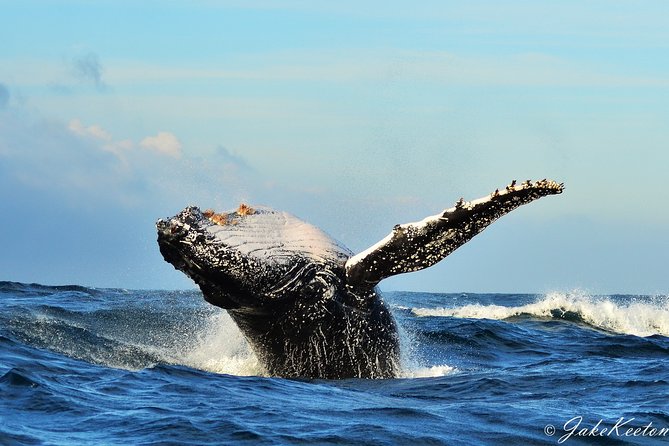
- Humpback whales from June to early December: You may see whales traveling along the coast, with females and calves more likely on the return journey from October.
- African penguins at St. Croix Island: The island supports one of Africa’s largest breeding colonies, though its penguin population has suffered a serious decline.
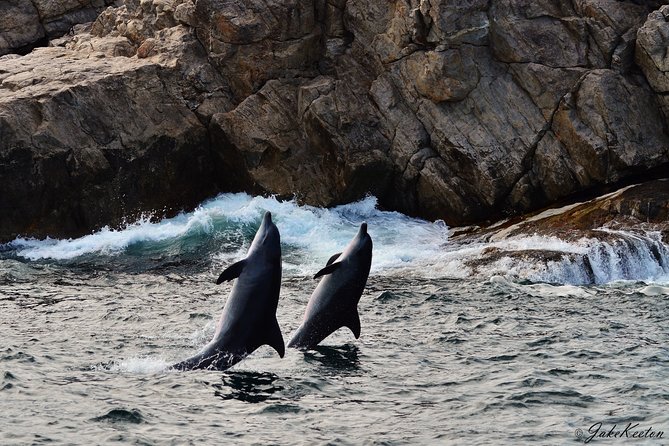
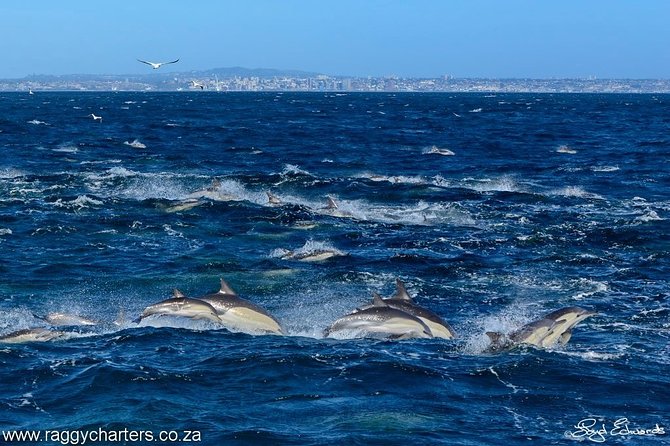
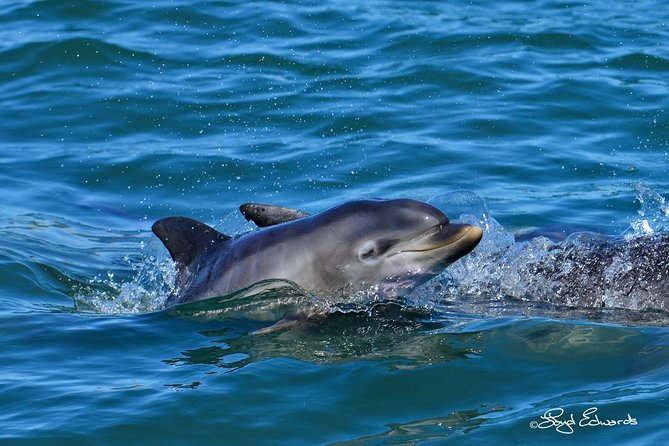
- Dolphins at two very different scales: Indo-Pacific bottlenose dolphins may approach the boat, while common dolphins can gather in groups of 1,000 to 2,000 farther offshore.
- A maximum of 20 people: The small group makes it easier to hear the guide, move for a better view, and ask questions.
- A conservation-led crew: The focus is not just on finding animals, but on explaining the pressures facing Algoa Bay.
- A four-hour morning on the water: The 8am start leaves much of the day free for Port Elizabeth, now commonly called Gqeberha, or nearby Addo plans.
Setting out from Port Elizabeth at 8am
You meet the crew at Nelson Mandela Bay Yacht Club, at Dom Pedro Jetty in Port Elizabeth Harbour. The start time is 8am, followed by a short briefing before the twin-engine catamaran heads into Algoa Bay.
That early departure makes sense. Wildlife activity and sea conditions can change through the day, and the morning gives you a full four hours on the water without taking an entire day from your South African itinerary. The trip returns to the same jetty, so you do not need to arrange a second pickup point.
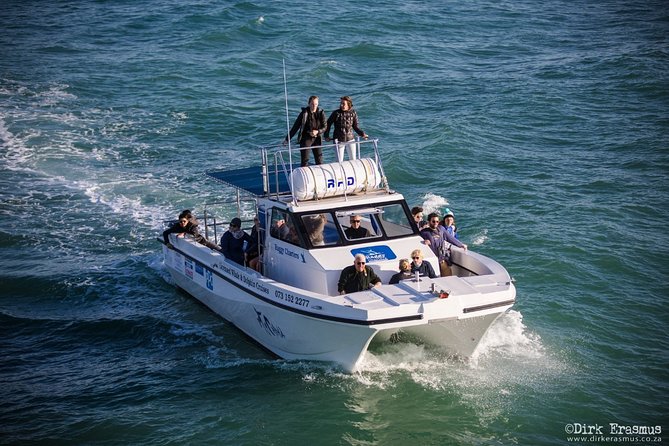
The catamaran is a practical choice for this kind of outing. It provides a stable platform for watching the bay, while the twin engines give the skipper flexibility as the boat moves between coastal and offshore areas. The experience is still a boat trip, not a glass-bottom viewing platform, so you should expect to spend much of the time outside and exposed to wind and spray.
A short briefing is more than a formality. It gives the crew a chance to explain safety rules, the day’s plan, and how to behave around wildlife. Life jackets are available for all ages. Anyone who can board with help from family and crew is welcome, and there is no stated age restriction, though you should make your own call based on health and fitness.
Other city landmarks to book in South Africa:
- Cape Town: Cape of Good Hope & Penguins Day Tour with Pickup
★ 4.7 · 3,362 reviews - Zipline Cape Town – From Foot of Table Mountain Reserve
★ 5.0 · 3,179 reviews - Cape Town: Table Mountain Cable Car, Hop-On Hop-Off Bus Tour
★ 4.6 · 3,157 reviews
Whales in Algoa Bay: best seasons and realistic expectations
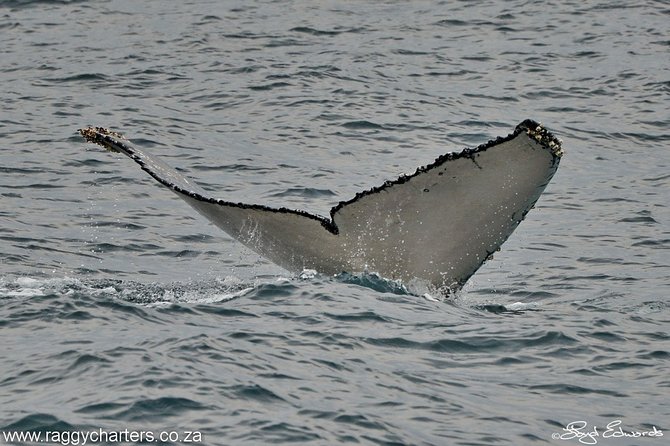
Whale sightings are seasonal, so timing matters. Humpback whales begin appearing in Algoa Bay from June, as they travel up the east coast of Africa toward breeding grounds. They can remain in the bay until early December.
From October, the return journey becomes especially interesting because females may be traveling with calves. A mother and young whale can make a memorable sighting, but you should not expect the boat to find whales on demand. The crew can search likely areas, yet the animals decide where they go.
Southern right whales are generally seen closer to shore from July through September. Their timing differs from the humpbacks, which means a winter or early spring trip may offer a different mix of whale possibilities than a late spring departure.
You might also encounter Bryde’s whales or minke whales. These species are less predictable, but they add to the sense that Algoa Bay is a working marine ecosystem rather than a staged wildlife show.
The guides explain what you are looking at and how the animals move. That matters when a whale surfaces briefly. A good explanation helps you understand the difference between a blow, a back, a fin, and a full breach, even if the action lasts only a few seconds.
Dolphins beside the bow
Dolphins are the most dependable part of the wildlife picture, with Indo-Pacific bottlenose dolphins seen throughout the year. They often stay in shallow water near beaches or around St. Croix Island, and they may approach the catamaran to ride the bow waves.
This is one of the more engaging parts of the cruise because you are not simply scanning the horizon. A pod can appear close to the boat, then move alongside it. The slow pace gives the skipper time to stay with the animals without turning the encounter into a hurried chase.
The numbers can vary dramatically. Bottlenose dolphins may travel in groups of 10 to 400. Common dolphins tend to be found farther offshore, especially around bird islands, and can gather in groups of 1,000 to 2,000 while following large shoals of baitfish.
Algoa Bay also has humpback dolphins. They are less commonly seen, but their presence adds another possibility to the morning. You may also spot Cape fur seals, and one particularly lucky outing could include a shark such as a hammerhead.
I like that the crew treats these sightings as opportunities to explain animal behavior, not just as items to tick off. You learn why some dolphins stay near the shore, why others travel offshore, and how baitfish affect the movement of larger animals.
St. Croix Island and its endangered penguins
St. Croix Island is the emotional center of the cruise. It is home to African penguins, and the island once supported around 12,000 birds, described as Africa’s largest breeding colony. The population has lost 70 percent in a decade, so seeing the penguins comes with an important lesson about the fragility of marine life.
You view the birds from the water rather than walking among them. That keeps the encounter low-impact and gives you a clear sense of the island as a protected breeding site. The penguins may be on land, near the shoreline, or swimming out to feed. Their famously upright posture and quick movements make them easy to pick out, even when you are not right beside the rocks.
Breeding activity reaches its peak between March and May. During that period, you might see chicks from the boat. The timing does not guarantee chicks, but it gives you a useful reason to consider a late summer or autumn departure if penguins are your main goal.
You should also keep expectations grounded. Penguin numbers have fallen sharply, with overfishing cited as one pressure on the colony. Some mornings may offer only a small number of visible birds. That does not make the stop pointless. In fact, the reduced population is part of why the conservation story matters.
St. Croix and nearby Brenton Island also support African black oystercatchers, white-breasted cormorants, and Cape cormorants. The island group, along with the Bird Island group, forms part of Addo Elephant National Park, allowing rangers to patrol the area.
Other wildlife boat trips out of South Africa:
- Hermanus: Boat Based Whale Watching Experience
★ 4.4 · 1,180 reviews - Hermanus: Whale and Dolphin Watching Boat Trip
★ 4.6 · 807 reviews - From Cape Town: Hermanus Whale Watching Boat Trip
★ 4.4 · 378 reviews - Plettenberg Bay: Whale Watching Boat Cruise
★ 4.4 · 362 reviews
Seabirds, seals, and the wider marine ecosystem
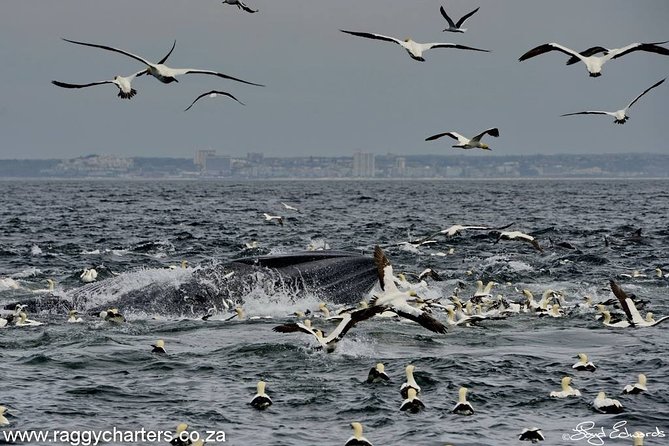
Algoa Bay is not only about the headline animals. The crew may help you identify Cape gannets and several kinds of pelagic birds, including terns, petrels, skuas, shearwaters, and albatrosses.
These birds can be easy to overlook if you arrive focused only on whales and dolphins. I find they add depth to the trip. Their presence helps you see how baitfish, seabirds, seals, and whales are linked within the same food system.
Cape fur seals may appear resting on rocks or moving through the water. Sharks are also possible, though they are not guaranteed. The range of potential sightings means every trip has a slightly different character.
The crew’s role is especially useful here. A black-and-white bird passing at a distance is hard to identify without help. With an explanation of shape, flight pattern, or habitat, you begin to notice more than the largest animal in front of you.
The boat does not turn the bay into a theme park. You may have a morning packed with dolphins and whales, or you may spend longer searching and watching smaller birds. That uncertainty is part of the bargain with a genuine wildlife cruise.
Why the small group matters
The boat carries no more than 20 people. That is a useful limit for a wildlife outing, where the quality of the view depends on being able to hear the guide and shift position without a crowd blocking the rail.
A smaller group also changes the tone. You have more time to ask about a whale’s behavior, the penguin decline, or the conservation work around the islands. The crew can respond to what you are seeing instead of delivering one fixed speech and moving on.
The trip only runs once a day, which keeps the experience less hurried but reduces your scheduling flexibility. If the 8am start does not fit your plans, this is not a tour you can simply move to an afternoon departure.
The slower pace suits people who want to watch wildlife rather than rush from one sighting to the next. It also helps photographers, since the boat can spend time near dolphins or position itself so more people can see the animals.
The tradeoff is that four hours on a small boat can feel long in poor conditions. One outing was enjoyable despite rain, while another required careful handling in choppy water. The crew’s seamanship and safety focus help, but you should still prepare for wind, spray, and motion.
The crew and conservation message
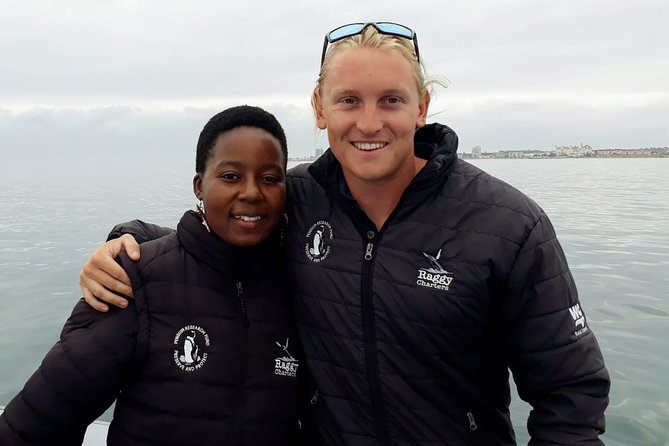
The crew receives the strongest praise for being helpful, attentive, and clear when explaining the animals. Jake is specifically named as one of the people who shares detailed information about local marine life. Other crew members also help with spotting, safety, and boat handling.
That combination matters. A wildlife guide must know the animals, but the skipper also needs to place the boat carefully without crowding them. On rougher days, competent handling becomes just as important as the commentary.
The conservation side is not decorative. The crew discusses threats facing the bay, including the decline in African penguins and the effects of overfishing. The company also supports a tree-planting campaign intended to balance the cruise’s carbon footprint.
You should not mistake this for a guarantee that the cruise has no environmental impact. Any motorboat uses fuel, and wildlife viewing requires careful limits. Still, a slower trip with a conservation-minded crew gives you a better framework for understanding the cost of seeing these animals in the wild.
Is $185.19 a fair price?
At $185.19 per person, this is not a cheap harbor ride. The value comes from the four-hour duration, the small maximum group, the specialist crew, and the chance to see several types of marine life in a protected bay.
The price makes more sense if you care about the quality of the outing rather than simply getting on the water. You are paying for time, space, guiding, and careful searching. A large boat with many passengers might cost less, but it would likely feel less personal and make it harder to hear explanations or get a clear view.
The cruise can also be good value for a short Port Elizabeth stay. You get a concentrated morning wildlife experience and return to the same meeting point, leaving time for other plans. It is less suitable if you are looking for a guaranteed whale encounter or a budget activity.
Book early if your schedule is fixed. The experience is booked on average 64 days ahead, and with only one departure per day, a popular date may not remain open close to arrival.
Practical details before you go
The ticket is mobile, and confirmation is provided when you book. You meet at Nelson Mandela Bay Yacht Club, Dom Pedro Jetty, Port Elizabeth Harbour, Gqeberha Central, at 8am.
Public transportation is nearby. The cruise ends back at the starting point, which simplifies planning if you are staying in the city or arranging another activity afterward.
Wear clothing suited to changing conditions. The information provided does not specify a required clothing list, but rain, wind, and choppy water have all been part of past outings. Bring protection for your camera and expect some spray.
The tour is open to all ages, with life jackets available for children and adults. People who can board with assistance from family and crew may join, but you should decide for yourself if the boat and sea conditions fit your health and fitness.
Free cancellation is available until 24 hours before departure. If bad weather cancels the cruise, you are offered another date or a full refund. The same applies if the minimum number needed to operate is not reached.
Who should book this cruise?
I would choose this cruise if you want a focused wildlife morning with strong guiding and a smaller group. It suits families, photographers, bird lovers, and anyone who prefers learning about conservation while watching animals rather than simply taking a boat ride.
It is especially appealing during the whale seasons from June to early December, during the October return migration, or from March to May if African penguin chicks are a priority. Dolphins remain a possibility all year.
I would think twice if you need a guaranteed sighting, dislike rough water, or want a flexible afternoon departure. The wildlife may be spectacular, but the sea sets the schedule.
For most people who can accept that uncertainty, the combination of dolphins near the bow, penguins around St. Croix Island, seasonal whales, seabirds, and a caring crew makes this one of the stronger marine experiences in the Port Elizabeth area. Book it for the chance to see a living bay at work, not for a checklist.
FAQ
Where does the cruise start?
The cruise starts at Nelson Mandela Bay Yacht Club, Dom Pedro Jetty, Port Elizabeth Harbour, Gqeberha Central, South Africa.
What time does the cruise depart?
The meeting and departure time is 8am.
How long does the experience last?
The cruise lasts approximately four hours and ends back at the original meeting point.
How many people can join the boat?
The activity has a maximum of 20 people.
Can I see whales all year?
No. Humpback whales are seen in Algoa Bay from June to early December, while southern right whales are generally seen close to shore from July to September. Sightings are not guaranteed.
What happens if bad weather cancels the cruise?
You are offered a different date or a full refund if poor weather causes cancellation. Free cancellation is also available if you cancel at least 24 hours before the start time.
Just added in South Africa
- Cape Town: The Cape Wheel Ticket★ 4.6 · 350 reviews
- Cape Town: The Cape Point Instagram Small Group Tour★ 4.4 · 122 reviews
- Cape Town: Tandem Paragliding Flight with the Experts★ 4.7 · 280 reviews
- Stellenbosch: Historical Bike Tour & Wine Tasting★ 4.9 · 248 reviews
- From Cape Town: Stellenbosch Four Estate Full-Day Wine Tour★ 4.8 · 266 reviews
- Stellenbosch: Half-Day Wine Tour★ 4.7 · 601 reviews
- Stellenbosch: Wine Farm E-Bike Guided Tour★ 4.6 · 88 reviews
- Stellenbosch: Guided Historical Walking Tour★ 4.7 · 283 reviews
Table Mountain & Cape Town Highlights, compared.
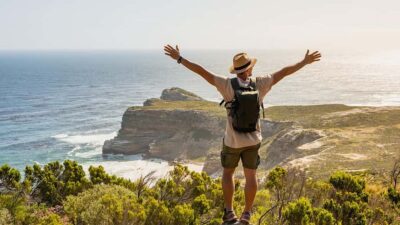
Cape of Good Hope & Penguins Day Tour with Pickup
Read our review →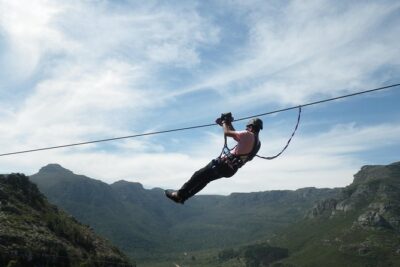
Zipline Cape Town – From Foot of Table Mountain Reserve
Read our review →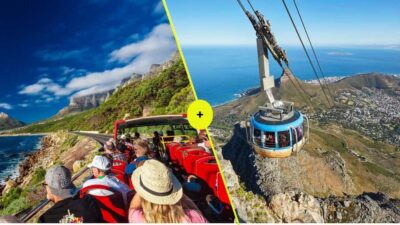
Table Mountain Cable Car, Hop-On Hop-Off Bus Tour
Read our review →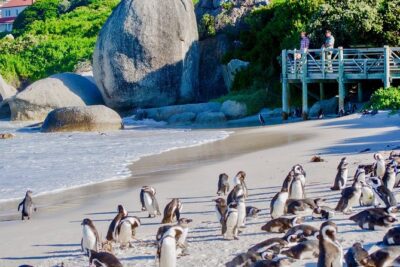
Cape Point and Boulder’s Penguins Full Day Tour
Read our review →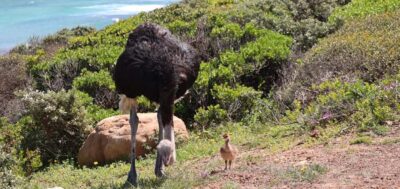
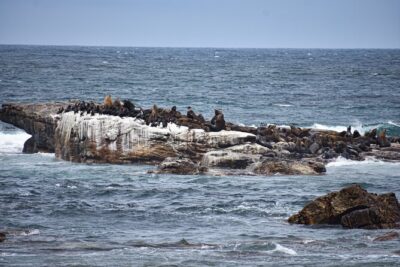
Cape of Good Hope & Boulder Penguins Full-Day Tour from Cape Town
Read our review →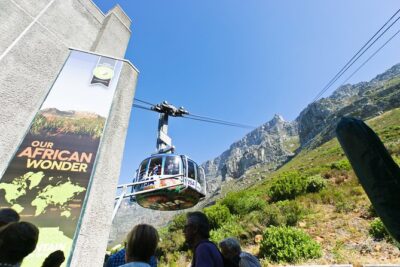
Table Mountain, Penguins & Cape Point Small Group Tour Cape Town
Read our review →
Robben Island Ferry Ticket and Guided Prison Tour
Read our review →Browse the lists this tour appears in