
Reviewed · MOROCCO · TOURS IN MARRAKECH
From Marrakech: 3-Day Desert with luxury camp, camel & meals
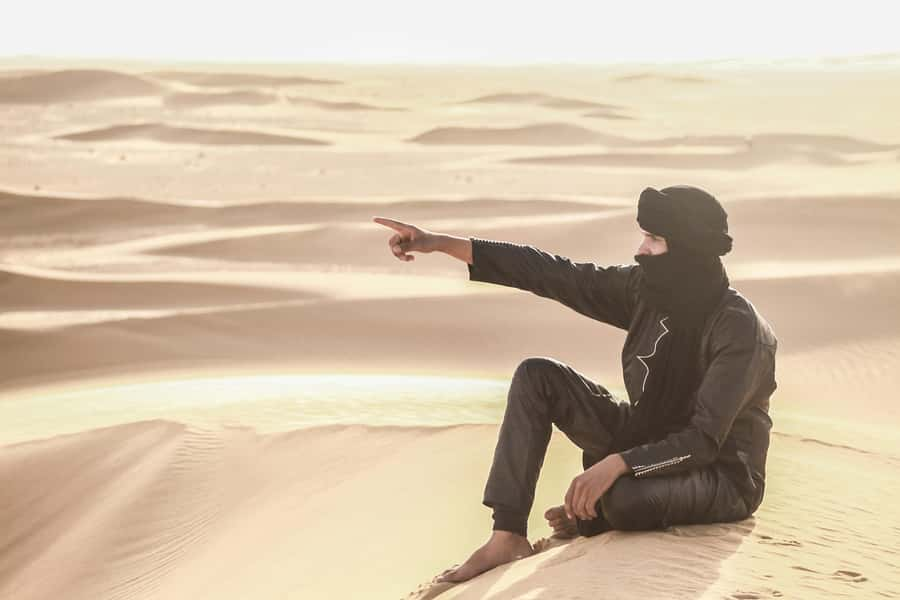
The best part of this three-day journey is the sharp change in scenery: red mountain roads give way to kasbahs, narrow gorges, rose country, and finally the golden dunes of Erg Chebbi. You cross the High Atlas at Tizi n’Tichka, then reach the Sahara by camel as the sun drops behind the sand.
I like the thoughtful stops and the strong value: you see Aït Ben Haddou, Ouarzazate, Dades, Todra Gorge, and the Valley of Roses in one compact trip, with two nights of lodging and most breakfasts and dinners included. I also like how drivers such as Alae, Abdul, Chafik, Idriss, and Aymen are praised for making long drives easier with regular breaks, music, local advice, and help with photos. The drawback is simple: this is a lot of Morocco in only three days, so expect roughly six to eight hours on the road on some days, and lunches can feel expensive and limited.
Key points to know before booking
- Atlas crossing: The route reaches 2,260 meters at Tizi n’Tichka, with impressive mountain views and winding roads.
- Culture beyond the dunes: Aït Ben Haddou, Ouarzazate’s film studios, local craft stops, and Berber music give the trip more depth than a simple desert transfer.
- Two different nights: You spend one night in the Dades Valley and one at a desert camp near Erg Chebbi.
- Camel ride at the right hour: The trek is timed for sunset, with a sunrise option the next morning.
- Luxury means comfortable camping: Tents may include private bathrooms and showers, but facilities can still be basic by city-hotel standards.
- Flexible finish: You can return to Marrakech or continue to Fez, making this useful for a wider Morocco route.
From Marrakech to the High Atlas at 2,260 meters
This tour begins with pickup at your hotel or the nearest point a minibus can reach. You travel in an air-conditioned vehicle with a professional driver, though the quality of the air conditioning can vary. Bring water, wear light clothing, and do not assume the car will feel equally cool throughout the journey.
The first major stretch crosses the High Atlas Mountains by way of Tizi n’Tichka. At 2,260 meters, this is one of the trip’s most memorable road sections. The route twists through dry mountain scenery, with changing colors and broad views at the higher points. You should have chances to stop, stretch your legs, and take photos, but this remains a road trip, not a hiking outing.
The mountain crossing is also where you begin to understand the scale of Morocco. Marrakech feels far removed from the Sahara, and the journey between them is not a quick transfer. The reward is seeing the country change in front of you instead of flying over it.
A guide on the first day is available for an additional 2.5 EUR. Ask what that covers when you book, since the main driver handles the road journey and the included service is built around transportation and scheduled stops.
Other camel rides in Marrakesh people book:
- Marrakech: Agafay Desert Sunset, Camel Ride, and Dinner Show
★ 4.6 · 35,119 reviews - Marrakech: Agafay Desert Quad & Camel Rides with Dinner Show
★ 4.8 · 27,382 reviews - Marrakech: Agafay Desert Quad & Camel Rides with Dinner Show
★ 4.9 · 10,771 reviews
Aït Ben Haddou and Ouarzazate’s movie-set history
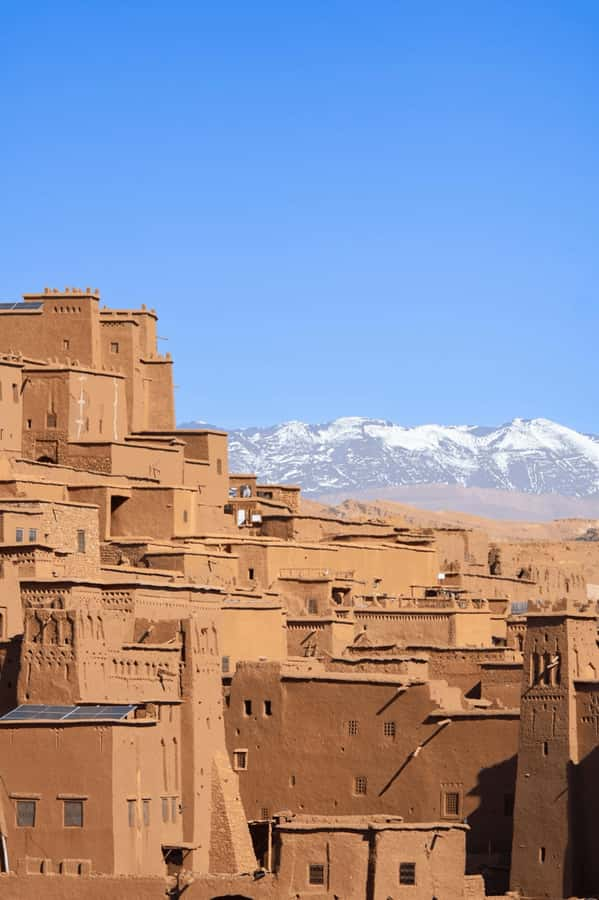
Aït Ben Haddou is one of the strongest cultural stops on the route. This UNESCO-listed fortified village is built from earth-colored structures that rise above the surrounding area. Its compact walls, towers, and narrow passages make it easy to see why filmmakers have used the site as a backdrop.
Give yourself time to look beyond the main photo points. The value here is not only the famous view. You can notice how the buildings fit together, how the earthen walls catch the light, and how different the setting feels from the modern streets of Marrakech.
Ouarzazate follows as another major stop. The town is closely tied to Morocco’s film industry, and the tour includes a visit to the film studios. This adds an unusual angle to the trip. You are not just seeing old architecture and desert scenery, you are also seeing how Morocco has been presented as ancient Egypt, Tibet, Jerusalem, and other faraway places on screen.
The precise amount of time at each stop can vary, so keep your expectations practical. This is a guided road journey with several sights, not a private day tour where you control every minute. Drivers including Alae and Abdul are praised for explaining local culture and making extra photo stops, which can make a real difference on a route with so much ground to cover.
The Dades Valley and your first night
After the historic sites, the road heads toward the Dades Valley. Red cliffs and unusual rock formations give this part of the journey a different mood from the open desert. The valley is especially appealing if you enjoy geology and changing scenery, since the route passes from mountain country into dry, folded rock country.
You spend the first night in a hotel in the Dades area. The included plan covers accommodation, dinner, and breakfast, while lunch and drinks are your responsibility. The hotel is not presented as a fixed named property, so standards may vary. Several accounts describe the accommodation as clean and comfortable, but you should not assume that paying extra for a luxury desert tent also upgrades this first hotel night.
This night breaks up the long transfer in a sensible way. Instead of driving straight from Marrakech to the dunes, you stop in a region worth seeing on its own. It also means the next day has a clear rhythm: gorges and valley scenery first, then the Sahara.
Todra Gorge and the Valley of Roses
The Todra Gorge is one of the trip’s most dramatic natural stops. Its rock walls close in around the road and walking areas, creating a sharp contrast with the open spaces elsewhere in southern Morocco. The usual visit involves getting out of the minibus and walking through part of the gorge, so comfortable shoes matter.
Do not treat this as a long mountain hike. The supplied information promises exploration of the gorge, not a dedicated trek, and the available time depends on the road schedule. Still, even a short walk gives you a better feel for the scale of the cliffs than a quick roadside photograph.
The Valley of Roses adds a softer note to the route. The name refers to the rose-growing area and the local products associated with it. Stops connected with handcrafts or local production may appear along the way. You might find these visits interesting if you enjoy meeting makers and seeing regional work, but you should also expect opportunities to buy goods. There is no need to purchase anything, and a stop can still be worthwhile for the cultural context.
The tour’s drivers are repeatedly praised for taking breaks at sensible intervals. The longest road sections are commonly broken into stretches of no more than about 90 minutes, though the overall driving time remains substantial. That pattern helps, especially if you want to stretch, buy a drink, or find a bathroom.
Same base, a different sort of day:
- From Marrakech: Ouzoud Waterfalls Guided Hike and Boat Trip
★ 4.7 · 33,630 reviews - Marrakech: Agafay Desert Quad Biking Tour with Dinner-Show
★ 4.8 · 16,569 reviews - Marrakech: Atlas Mountains, Ourika Valley, Waterfall & Lunch
★ 4.8 · 15,834 reviews - From Marrakech: 3-Day Merzouga and Sahara Desert Tour
★ 4.9 · 15,308 reviews
Arriving at Erg Chebbi by camel
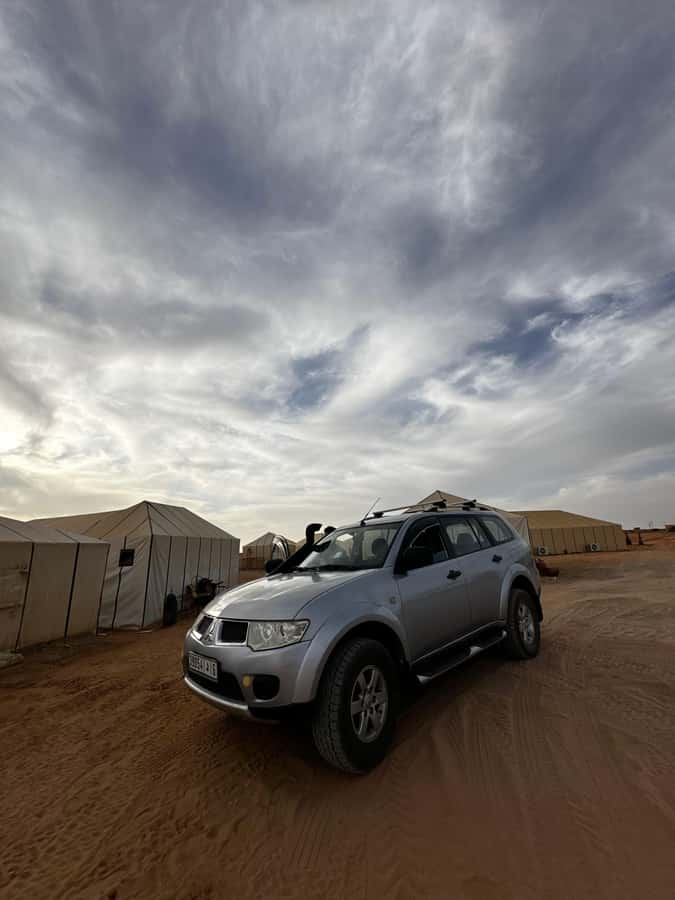
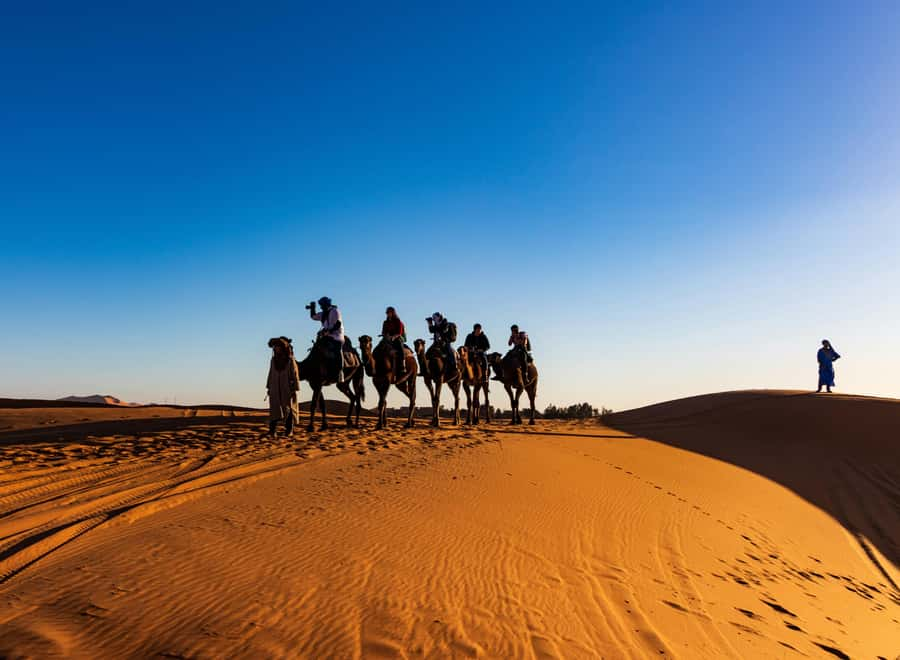
The change from road travel to camel trek is the emotional center of the trip. Near Merzouga, you leave the minibus and ride into the Erg Chebbi dunes. The sand is broad, smooth, and golden, and the timing is designed to give you sunset views.
Camel riding is not difficult in a technical sense, but it can be uncomfortable. The saddle places pressure in unfamiliar places, and the ride may feel long if you are not used to it. Wear trousers or other comfortable clothing, and consider a headscarf for sun and wind. Sunglasses and sunscreen are essential, not optional extras.
The sunset stop gives you time to see the dunes change color. This is also when the scale of Erg Chebbi becomes clear. From the ground, the dunes rise and fall in long curves, with none of the city noise you left behind in Marrakech.
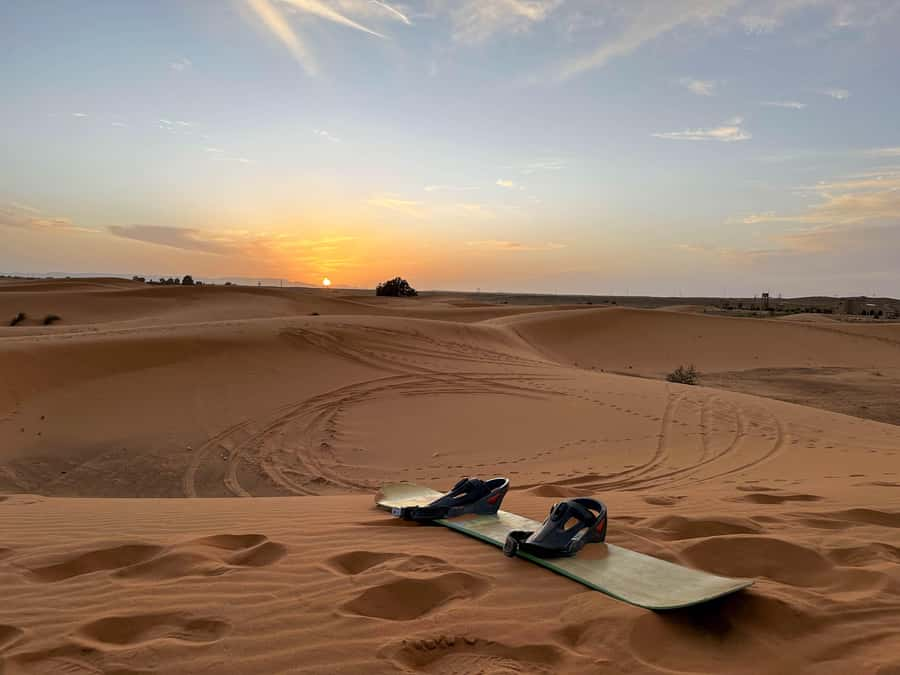
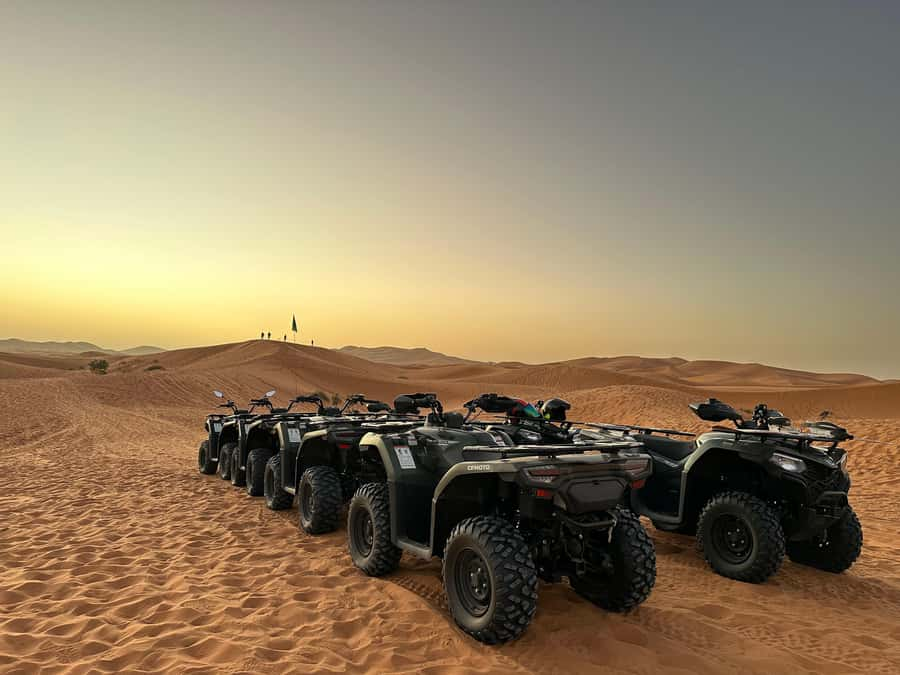
Optional activities include a 4×4 dune tour and sandboarding. Quad biking is also praised as a particularly fun way to cover more sand, though it is not listed among the standard inclusions, so confirm the extra cost before committing. Sandboarding is available at an additional charge, but it may not offer the same value for everyone. If you want more time on the dunes, a 4×4 or quad option makes more sense than paying for a brief novelty ride.
A luxury Berber camp under the stars
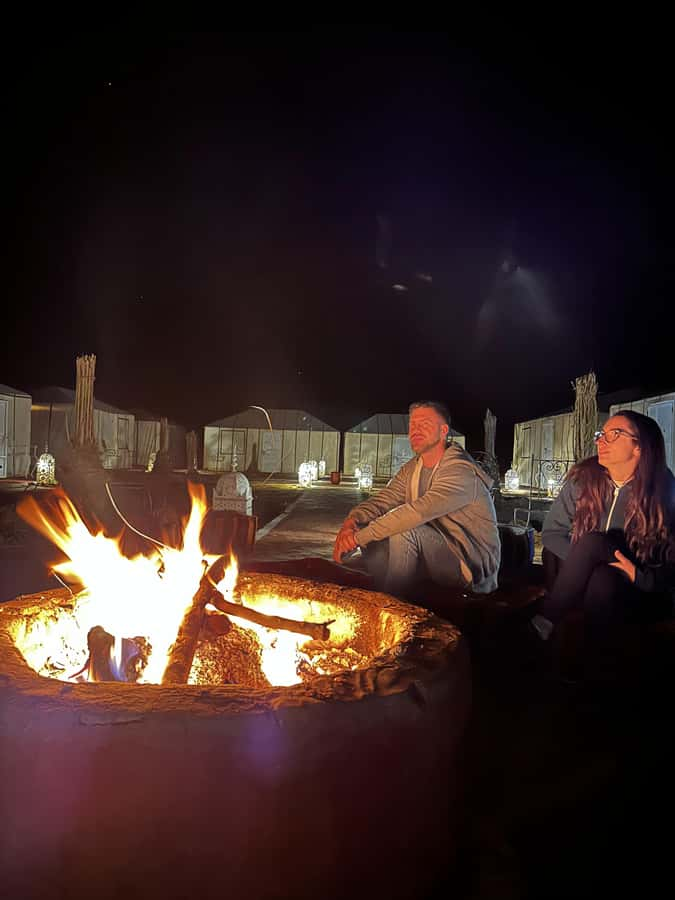
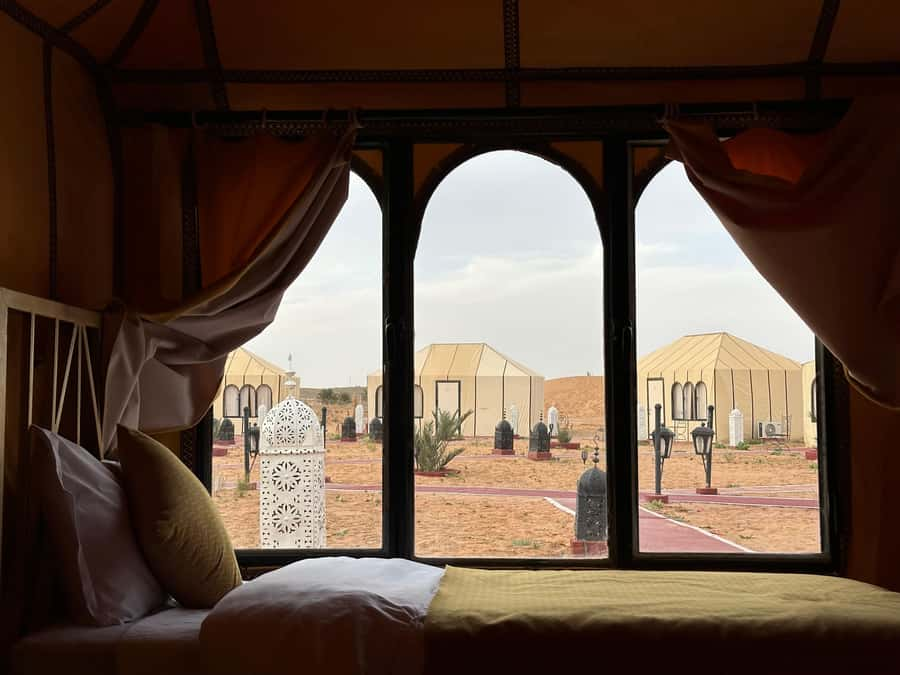
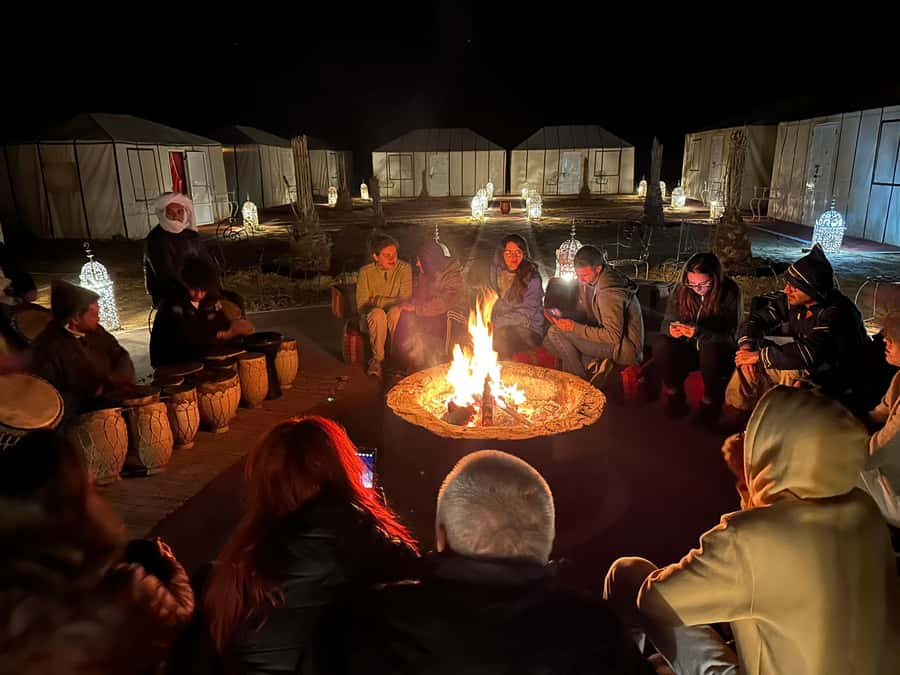
The desert camp is the second night’s accommodation and the part that most clearly separates this tour from a basic transfer. You have a traditional-style Berber camp, dinner, live music, and time around the campfire. The camp staff play tamtam-style percussion and may include Berber dancing, giving the evening a social feel rather than leaving you alone in a tent.
The word luxury needs a little interpretation. Some tents include air conditioning, a private shower, and a private toilet, which is far more comfortable than basic desert camping. At the same time, you are still in the Sahara. Signal or Wi-Fi may be limited, sometimes available only near the restaurant, and plumbing can be modest. One tent description noted a bathroom without a proper door and a weak flush.
That does not make the stay poor. It simply means you should compare it with glamping, not with a high-end city hotel. The best reason to pay for the luxury option is privacy and comfort after a long day, not flawless hotel-style facilities.
Dinner and breakfast are included at the camp. The food is generally described as fresh and enjoyable, though meals on a fixed group tour are not fully customizable. Music and conversation around the fire are part of the appeal. You are paying for the setting as much as the room.
Try to step outside after dinner if the sky is clear. The camp’s distance from city lights gives you a good chance to see stars, although conditions and visibility can change.
Sunrise, breakfast, and the long road onward
The next morning offers a sunrise over the dunes, usually followed by breakfast and departure. This is worth getting up for, even if you are tired. Sunset shows the dunes in warm evening light, while sunrise gives you cooler colors and longer shadows across the sand.
After leaving the camp, the group returns to the road. The tour can finish back in Marrakech or continue to Fez. The Fez option is especially useful if you are building a one-way route through Morocco instead of returning to your starting point.
The road to Fez is long, but the journey can include a stop to see monkeys. That extra sight adds variety to an otherwise lengthy transfer. If you choose Fez, think of the tour as both a desert experience and a way to move between major Moroccan destinations.
The return to Marrakech is also not a quick ride. You should plan your next hotel night with the possibility of a late arrival in mind, although the exact timing is not provided. Your driver will be balancing road conditions, group needs, and scheduled stops.
Food, costs, and what the value really means
The package includes two nights of accommodation, breakfast and dinner on both days, camel trekking, transportation, driver service, and Berber entertainment. Lunches and drinks are excluded. That makes the headline price more useful than it first appears because the main expensive pieces of a desert trip are bundled together.
Still, carry enough Moroccan dirhams for midday meals, water, snacks, bathrooms, tips, and optional activities. Several accounts point to fixed lunch stops where the minimum spend can be about 150 dirhams per person. You may have limited choice at these stops, so budget for them rather than assuming lunch will be cheap.
Tips are not included. Bring small cash for drivers, camp staff, and local guides if you feel they helped you. A headscarf is also useful, and you will want sturdy but comfortable shoes rather than fashion footwear.
The strongest value comes from the range of places covered in three days. You are not only buying a camel ride. You are paying for the Atlas crossing, Aït Ben Haddou, film studios, Dades, Todra, the Valley of Roses, a hotel night, a camp night, and a practical drop-off choice.
The tradeoff is pace. If you want long walks, quiet time at each kasbah, or several nights in the desert, this schedule will feel rushed. If you have limited time and want a broad taste of southern Morocco, the compact format works well.
Who will enjoy this three-day desert trip
I would recommend it to couples, solo visitors, families with children, and small groups that want a ready-made route. One family with four children under ten found the camp and camel ride manageable, and the drivers are often praised for helping with breaks, photos, and small needs along the way.
It also suits first-time visitors who want cultural stops built into the desert trip. You get old architecture, local craft, film history, dramatic rock formations, and traditional music instead of a single-purpose excursion.
You should think twice if you dislike long drives, group schedules, or basic facilities. The vehicle is comfortable in general, but air conditioning may not always be strong. The tour is not suitable for wheelchair users, and the camel ride may not suit anyone with back, hip, or knee problems.
Driver quality matters on a route like this. Names praised for kindness, safe driving, clear explanations, and good group spirit include Alae, Abdul, Chafik, Idriss, Aymen, Moncef, Hakim, and Abderrahman. Drivers can change, so you cannot book the tour on the assumption that one particular person will be assigned.
Should you book it?
Book this tour if you want the Sahara but also want to see the road that leads there. The camel ride and camp are the headline moments, yet Aït Ben Haddou, Todra Gorge, and the Atlas crossing are what make the trip feel like a proper southern Morocco route.
I would skip it if you have only a low tolerance for driving or if your idea of luxury requires hotel-level plumbing and reliable internet. For everyone else, the combination of scenery, culture, included meals, two different overnight settings, and the choice of Fez or Marrakech drop-off gives this tour strong value.
Pack light, bring water, wear comfortable shoes, keep cash handy, and accept that the road is part of the experience. Done with those expectations, this is an efficient and memorable way to reach Erg Chebbi.
FAQ
Where does the desert tour start?
Pickup is available from your hotel or the nearest accessible meeting point in Marrakech. The experience can also begin from Ouarzazate according to the supplied tour information.
Can I finish the tour in Fez instead of Marrakech?
Yes. You can choose to return to Marrakech or continue to Fez, which makes the trip useful for a one-way Morocco route.
How many nights are included?
The tour includes two nights: one hotel night in the Dades Valley area and one night in a desert camp near Erg Chebbi.
Are meals included?
Breakfast and dinner are included on both days. Lunches and drinks are not included, so bring extra money for midday meals, water, and snacks.
Is the desert camp truly luxurious?
The luxury tents may include features such as air conditioning, private showers, and private toilets. Facilities can still be basic, Wi-Fi or phone signal may be limited, and the camp should be viewed as comfortable desert glamping rather than a city hotel.
Are camel riding and desert activities included?
Camel trekking is included. A 4×4 dune tour and sandboarding are listed as optional activities, and quad biking may also be available at an extra cost.
What should I bring?
Bring comfortable shoes, sunglasses, sunscreen, water, and clothing suitable for sun and sand. A headscarf and longer trousers are also useful for the desert and camel ride.
More camel rides elsewhere in Africa
- Marrakech: Agafay Desert Quad, Camel Ride & Dinner Show
★ 4.7 · 10,209 reviews - Marrakesh: Desert & Mountain Tour with Camel Ride & Lunch
★ 4.8 · 7,513 reviews - Marrakech: 3-Day Merzouga Desert Experience Camel & Meals
★ 4.6 · 6,252 reviews - Marrakech: Agafay Desert Dinner Show with Quad Bike & Camel
★ 4.9 · 5,058 reviews
More desert camps near Marrakesh
- Marrakech: 3-Day Desert Trip to Merzouga with Luxury Camp
★ 4.7 · 887 reviews - Marrakech: Agafay Desert Camp Lunch with Camel Ride and Pool
★ 4.4 · 860 reviews - Hurghada: Quad Bike, Buggy, and Camel Ride & Bedouin Village
★ 4.8 · 1,738 reviews - Hurghada: ATV Quad Safari, Camel Ride & Bedouin Village Tour
★ 4.5 · 419 reviews
Just added in Marrakesh
- Marrakech: Tailor-Made City Tour With Your Own Private Guide★ 4.9 · 236 reviews
- Marrakech palm grove: Sunset camel ride★ 4.8 · 194 reviews
- Sparkling Marrakech through the eyes of your local Guide★ 4.7 · 247 reviews
- Small-Group Day Trip from Marrakech to Essaouira Mogador★ 4.8 · 211 reviews
- Quad biking in Agafay Desert with lunch & Camel Ride & pool★ 4.5 · 186 reviews
- Marrakech: Historical Discovery Tour★ 4.1 · 87 reviews
- Marrakech: Palm Grove Horseback Riding Tour★ 4.6 · 163 reviews
- From Marrakesh: Ouarzazate & Ait Ben Haddou Day Tour★ 4.5 · 198 reviews
Desert Camps & Bedouin Nights, compared.
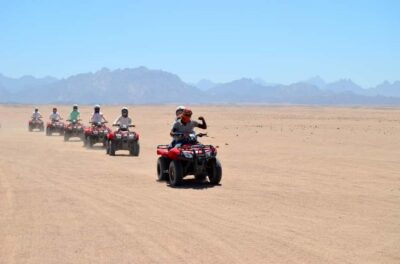
Quad Bike, Buggy, and Camel Ride & Bedouin Village
Read our review →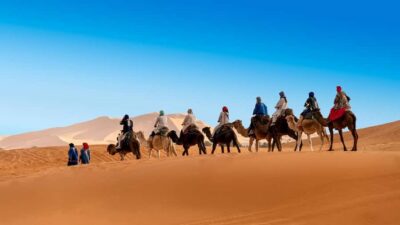
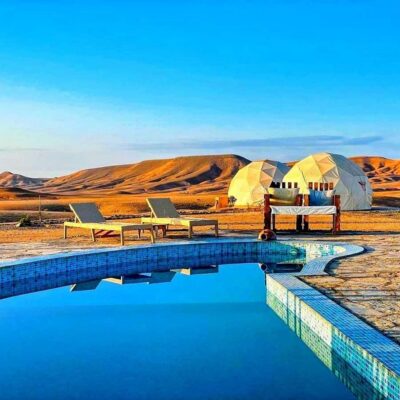
Agafay Desert Camp Lunch with Camel Ride and Pool
Read our review →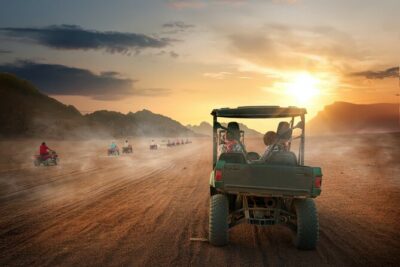
ATV Quad Safari, Camel Ride & Bedouin Village Tour
Read our review →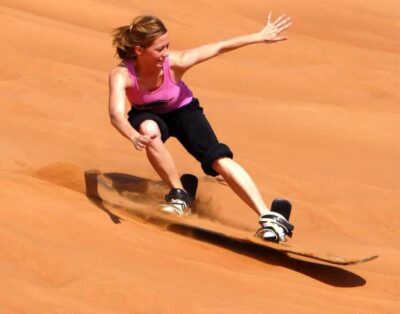
1-Night in Desert Camp With Dinner & camel ride
Read our review →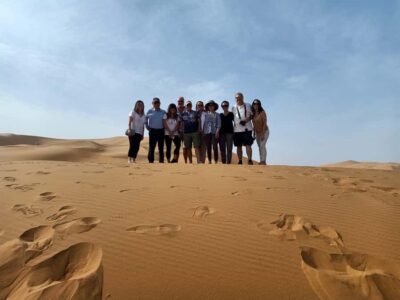
2Days Desert Tour From Fez: Round-Trip with Luxury Camp stay
Read our review →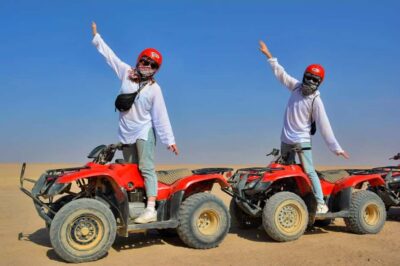
Desert Quad, Bedouin Village, and Camel Ride Tour
Read our review →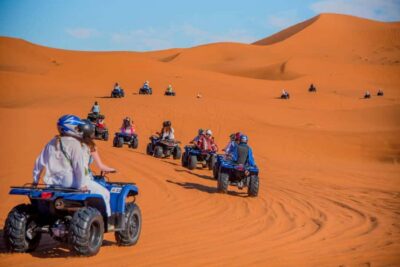
From Fes To Marrakech: 2-Days with Luxury Camp, Desert Tour
Read our review →Browse the lists this tour appears in