
Reviewed · MOROCCO · TOURS IN CASABLANCA
Casablanca Cultural Tour: Medina, Views & Local Delights
Casablanca makes the most sense when you see its old medina, French-era avenues, markets, and oceanfront sights together. This four-hour tour does just that, mixing walking with short taxi rides and ending with a fine view of the Hassan II Mosque. I especially like the small-group format and the way guides such as Mohammed, Aafif, and Hicham adjust the pace for the people in front of them.
I also like the food stops: Moroccan olives, pastries from Pâtisserie Bennis, and mint tea or coffee in a local café. One point to watch is the meeting point at Rick’s Café, which can be awkward for cruise passengers arriving at United Nations Square. Allow extra time, or contact the operator ahead of time.
Casablanca in four hours: the key points

- Rick’s Café sets the scene: Start with the Casablanca film connection and hear the story behind this famous location.
- Walking and taxis work well together: You cover more of the city without spending the full four hours on foot.
- The old and new city meet: See the medina, Mohammed V Square, Sacred Heart Cathedral, Arab League Park, and Habous Quarter.
- Pastries are part of the lesson: Sample treats such as gazelle horns and Fekkas while learning about Moroccan baking.
- The final view is memorable: Al Aank Observation Deck looks toward the Hassan II Mosque and Atlantic coast.
- A strong guide makes the difference: Mohammed, Aafif, Hicham, and other local guides are praised for warmth, flexibility, and practical help.
Starting at Rick’s Café and sorting out the film connection
Meet your guide in front of Rick’s Café on Place du Jardin public, at 248 Boulevard Sour Jadid. It is an easy place to recognize, but it is not close to every cruise arrival point. If your ship’s shuttle drops you at United Nations Square, plan how you will reach the start before tour day.
Rick’s Café is linked to the famous 1942 film Casablanca, though the movie was not filmed in Morocco. The café gives your guide a useful opening: you can separate Hollywood’s version of Casablanca from the real city outside the door.
That contrast is worthwhile. The film presents a smoky wartime romance, while modern Casablanca is Morocco’s commercial center, with broad avenues, busy taxis, old market lanes, French colonial buildings, and neighborhoods shaped by several periods of rule. A good guide makes this more than a photo stop by explaining how the city’s image was built.
The experience is guided in English. The group can be private, and the advertised shared group is limited to 12 people. In practice, some departures may be much smaller. One person described having what was effectively a private tour, while another group had only four participants before two people left because of cold rain.
Other walks through the old town in Casablanca:
- Marrakech: Bahia Palace, Saadian Tombs, Souk and Medina Tour
★ 4.7 · 4,974 reviews - Marrakech: Ben Youssef, Secret Garden, & Souks Walking Tour
★ 4.6 · 2,802 reviews - Marrakech: Colorful Medina Souks Guided Walking Tour
★ 4.7 · 2,470 reviews
The Sqala area and the Atlantic edge
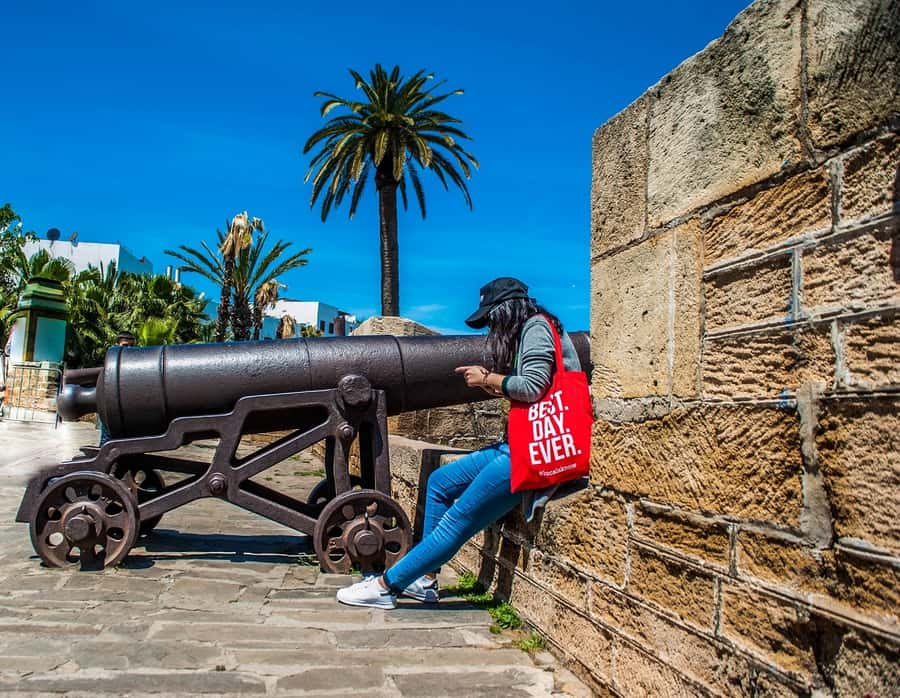
From the starting area, the tour moves toward the old city and the historic Sqala Tower. The fortification is associated with the Portuguese period, and its old cannons point toward Casablanca’s seaward defenses.
This is one of the places where a guide adds real value. The stonework and cannons are easy to photograph, but the larger story is how Casablanca grew around its port and coastline. From here, you get broad views toward the Atlantic, a welcome change after the tighter lanes of the medina.
Do not expect a long fortress visit or a major museum stop. The appeal is the combination of old defenses, coastal air, and a quick explanation of Casablanca’s past. Bring comfortable shoes, since the tour shifts between pavement, market lanes, and standing stops.
Walking through the old medina
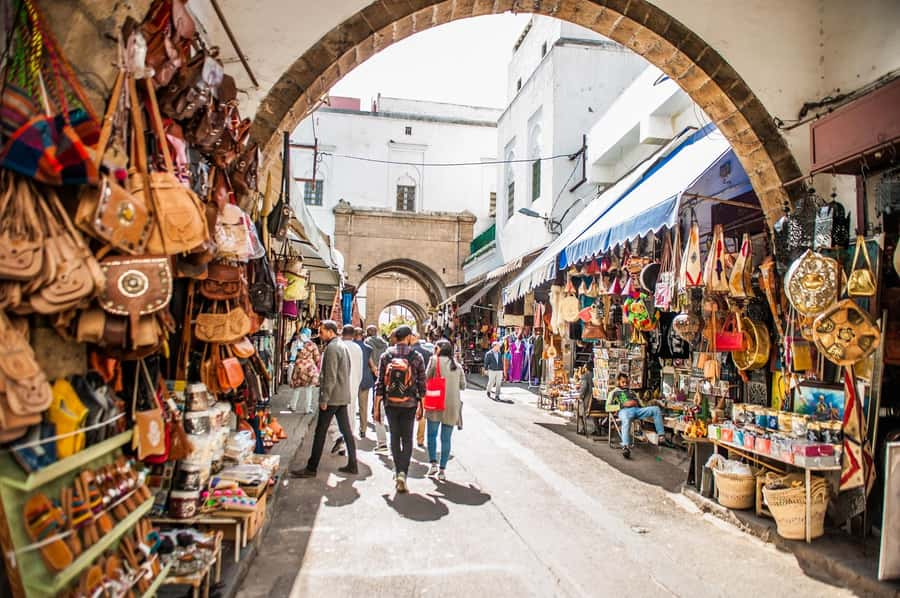
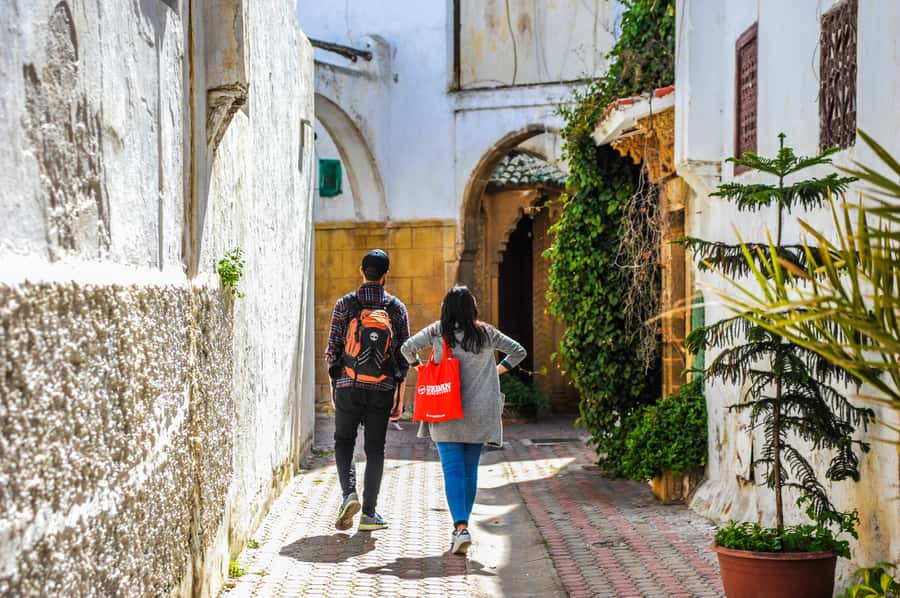
The medina is the most useful part of the tour for getting a feel for everyday Casablanca. You walk through narrow streets lined with shops and workshops, looking at local goods and traditional market life rather than simply ticking off monuments.
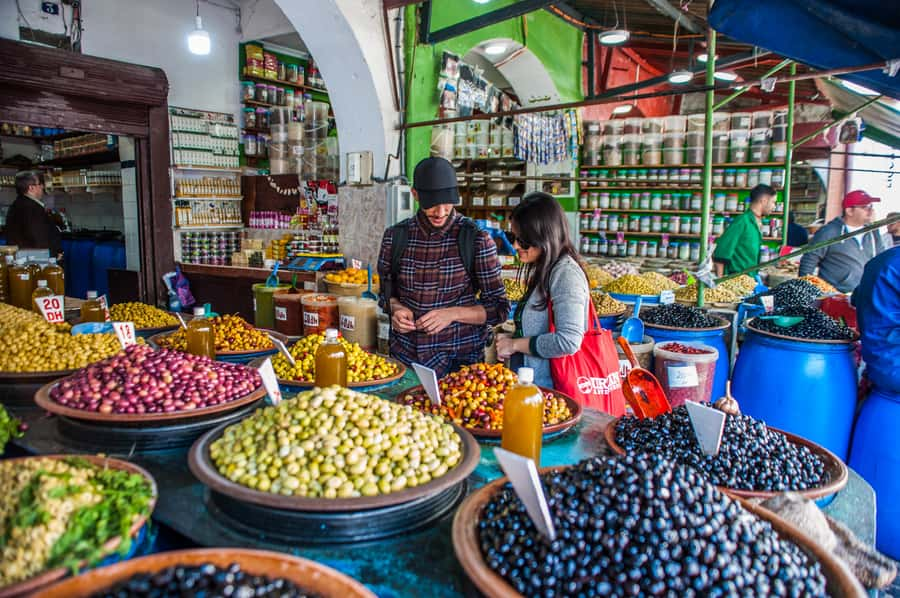
Your guide helps you read the scene. You might learn how the old city functions, what kinds of crafts are sold, and how Moroccan shopping works. The olive tasting is a small but pleasing detail. It turns a market walk into a chance to taste something ordinary and local, rather than waiting for a formal meal.
The medina is also where the tour can feel least polished. Streets are narrow, the pace of local life is not arranged for sightseeing, and you may need to stay close to the group. That is part of the value, but it means you should not expect a quiet, staged attraction.
This section suits you if you want orientation before exploring on your own. Guides have also helped people after the scheduled tour by arranging taxis, pointing out restaurants, or explaining how to get back to a central meeting point. That practical help matters in a city where taxi journeys can feel confusing at first.
Mohammed V Square and the French-Moroccan city
The tour then shifts from old market lanes to the grander civic spaces around Mohammed V Square, also known as Pigeon Square. This part shows the French and Moroccan sides of Casablanca together.
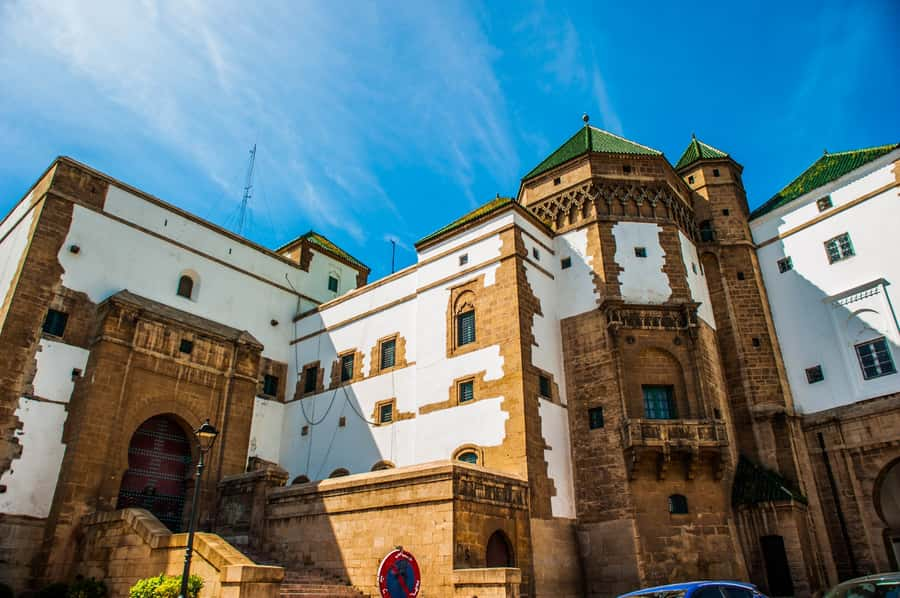
The architecture here is one of the tour’s strongest subjects. You see broad public buildings, decorative details, and the formal layout of the city center. Rather than treating Casablanca as only an old Moroccan city, the guide explains how the modern center developed and how local design traditions were combined with European planning.
That mixture is what makes Casablanca different from a purely medieval destination. It is a city of transitions: old and new, Moroccan and French, religious and civic, local and international. I would pay attention to the façades and ask questions here, since the buildings can look similar if you do not know what to notice.
The stop is also useful for photos and orientation. You are not confined to one neighborhood, and the taxi rides between major points show you more of the city than a walking-only tour could manage.
A few more things to do in Casablanca worth a look
- Casablanca to Fez: Scenic & Historical Day Trip with Lunch
★ 4.7 · 111 reviews - Marrakech Historical and Cultural Tour – Half Day City Tour
★ 4.5 · 1,180 reviews - From Cairo: Private Full-Day Tour of Historical Alexandria
★ 4.1 · 1,155 reviews - Nairobi: Historic and Modern Highlights Walking Tour
★ 4.8 · 703 reviews
Sacred Heart Cathedral and Arab League Park
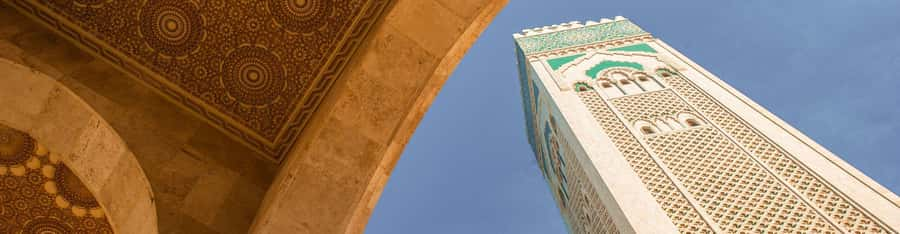
The Sacred Heart Cathedral offers another view of Casablanca’s layered past. Its appearance is unmistakably European, yet it now belongs to the city’s wider cultural story rather than functioning only as a religious building.
The stop is generally a guided exterior visit rather than a promise of a long interior tour. Your guide may explain the building’s role, the period in which it was built, and the relationship between Casablanca’s religious and civic spaces. The tour information also includes Arab League Park, a calmer green space beside the city’s central architecture.
These stops help break up the market walking. You get a chance to slow down, look around, and understand that Casablanca is not defined by one architectural style. The guide’s explanation is especially helpful here because the meaning of a building may not be obvious from its façade.
Timing can affect the exact rhythm. Four hours is enough to see the main areas, but not enough to linger everywhere. If you are fascinated by architecture, tell your guide early. Guides such as Aafif and Mohammed have been praised for tailoring the route and adding a stop when time and conditions allow.
Habous Quarter: shopping with a calmer pace
The Habous Quarter is one of the tour’s best stops for buying traditional goods. It combines Moroccan forms, arcades, lanes, and market shops with a more planned French-era layout.
I like this part because it gives you room to browse without making shopping the whole purpose of the tour. You can look for ceramics, leather goods, textiles, and other traditional products, while your guide explains what you are seeing and helps you understand the difference between browsing and buying.
Do not feel pressured to purchase something simply because the group has stopped. The value here is seeing how the quarter works and comparing it with the older medina. The two areas both sell local goods, but they feel different in design and pace.
If you do want to shop, ask your guide for help with prices and quality. The tour is not advertised as a dedicated shopping excursion, so the time available will depend on the group and the number of questions. I would choose one or two items rather than trying to conduct a full shopping expedition in the middle of a four-hour city tour.
Pâtisserie Bennis and Moroccan tea
Food is handled in a simple, memorable way. At Pâtisserie Bennis, you taste traditional Moroccan pastries, including gazelle horns and Fekkas, with mint tea or coffee.
Gazelle horns are crescent-shaped pastries often filled with almond paste. Fekkas is a crisp, twice-baked biscuit, somewhat closer to a dry tea cookie than a creamy pastry. The point is not a large meal. It is a chance to understand how sweets fit into Moroccan hospitality and daily life.
The pastry stop has been a highlight for many people, and I can see why. It is specific, local, and tied to a real bakery rather than a generic restaurant chosen for tour groups. One guide, Afif, was praised for buying treats to share with mint tea, which captures the generous spirit this stop aims for.
The food arrangements need a little care. The listed inclusions cover the tasting, olives, and one coffee or mint tea, but additional pastries, food, and drinks are not included. Vegetarian diets and other dietary restrictions can be accommodated if you give notice in advance.
The tour also includes a local café stop, described in the schedule as a tea stop. It may be a good moment to ask your guide about Casablanca life, football clubs, food customs, or the places you plan to visit next. Several guides have been praised for turning these pauses into relaxed conversations rather than hurried refueling stops.
Al Aank Observation Deck and the Hassan II Mosque view
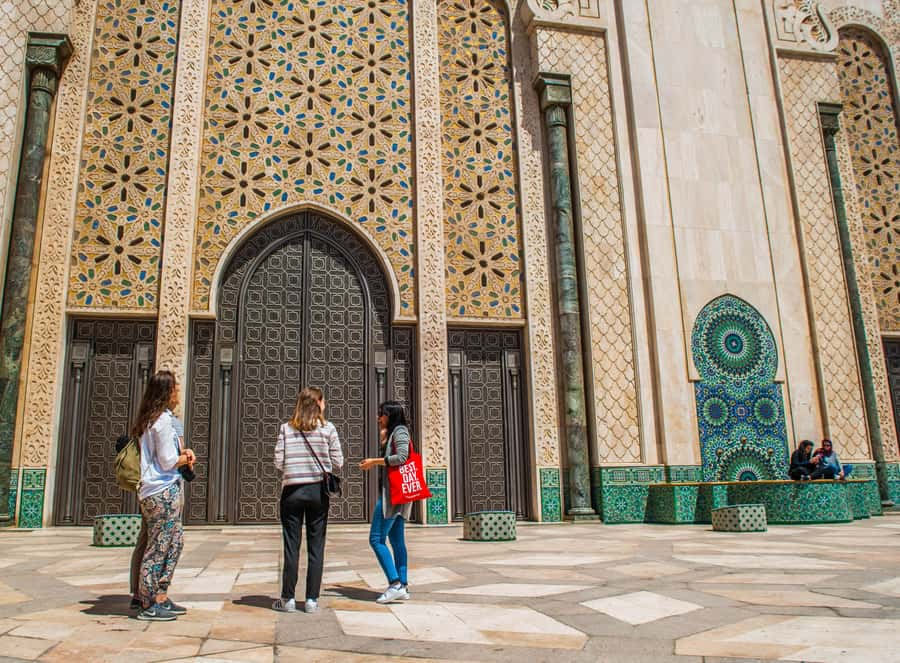
The final major stop is Al Aank Observation Deck, where you look across toward the Hassan II Mosque and the Atlantic Ocean. This is a strong way to finish because it pulls the city together from above.
You get the mosque view without assuming that mosque admission is part of this tour. Some guides have helped people arrange a separate Hassan II Mosque visit when schedules allowed, including during Ramadan, but that should not be treated as a guaranteed feature. If entering the mosque is important to you, ask about timing before booking or arrange it separately.
The observation deck is primarily a viewpoint, not a long attraction. Weather matters, and cloudy or rainy conditions can reduce the impact. Still, even a short stop gives you a useful sense of the mosque’s position beside the sea and the scale of Casablanca’s coast.
This is also where you can take the tour’s best closing photos. If you are visiting Casablanca for only one day, that combination of city architecture, ocean, and the mosque provides a more complete picture than a single monument visit would.
What the taxi rides add
Taxi transport between key sites is included, and it is an important part of the design. Casablanca’s main sights are spread out. Walking the entire route would take much longer and leave less time for the medina, food stops, and explanations.
The taxi rides also give you a brief look at ordinary city movement. They are not sightseeing drives with a scripted commentary, but they help connect the old city, central squares, Habous Quarter, and coastal viewpoints.
The exact vehicle arrangement can vary. Some people have described a private driver, while others refer simply to taxis. Either way, you should expect a mixture of walking and short rides, not a private car waiting at every stop.
If you have limited mobility, ask about the amount of walking before you book. The tour requires comfortable shoes, and the medina includes uneven or crowded stretches. The operator may be able to adapt the route, but the supplied information does not promise a fully accessible experience.
Is $53 good value?
At $53 per person, this is good value if you want a city orientation with a local guide, taxi connections, tastings, and a small group. You are paying for more than four hours of walking. The route links several districts that would be difficult to combine efficiently on your own, especially on a first visit.
The food stops are modest, not a full culinary tour. The price also does not cover every extra pastry, meal, or drink. Think of the tastings as accents to the cultural tour, not the main product.
The strongest value comes from the human side. Guides including Mohammed, Aafif, Hicham, and Bennis Mohammed have been praised for explaining both old and modern Casablanca, answering questions, helping with taxis, and adjusting the route. That kind of local help is particularly useful if you arrive by cruise ship or have only one day in the city.
The tour is less useful if you want a slow architectural study, extensive shopping time, or a full mosque visit. In those cases, a private tour or a separate specialist visit may suit you better.
Who should book this Casablanca tour?
I would choose this experience for a first visit, a short stopover, or a cruise day when you need an efficient introduction to the city. It works well for couples, families, and solo visitors who want company without joining a very large group.
It is also a good fit if you care about food and daily life but do not want a formal cooking class. The olives, bakery visit, tea, market walk, and café stop give you small, useful windows into local habits.
Solo visitors may get especially good value if the group is small. Several guides have provided extra help after the official route, including directions to restaurants, taxi arrangements, and assistance getting back to a hotel or cruise connection. That support is not a formal guarantee, but it is worth asking for politely if you need it.
I would be more cautious if you dislike changing locations, walking on uneven streets, or riding taxis. The tour covers a lot in four hours, and the pace is designed for variety rather than long contemplation at each site.
Free cancellation is available up to 24 hours before the start, and you can reserve now and pay later. Those terms are useful if your Casablanca plans depend on a ship schedule or changing travel arrangements.
Should you book it?
Book this tour if you want Casablanca explained by a local guide rather than reduced to a few postcard stops. The combination of medina lanes, French-Moroccan architecture, Habous shopping, pastries, tea, and the Hassan II Mosque view gives you a well-rounded first look.
I would contact the operator before booking if you are arriving by cruise ship, need dietary adjustments, or want to enter Hassan II Mosque. For most first-time visitors with four hours to spare, the $53 price is sensible, especially when the group is small and the guide is as helpful as Mohammed, Aafif, Hicham, or Bennis Mohammed.
FAQ
How long does the Casablanca Cultural Tour last?
The tour lasts four hours. It combines walking with taxi transportation between key sites.
Where does the tour begin?
It begins in front of Rick’s Café at Place du Jardin public, 248 Boulevard Sour Jadid, Casablanca 20250, Morocco.
Is the tour conducted in English?
Yes. A live English-speaking guide leads the experience.
Are food and drinks included?
The tour includes a tasting of traditional Moroccan olives, a pastry tasting at a local spot, and coffee or Moroccan mint tea at a local café. Additional pastries, food, and drinks are not included.
Does the tour include a visit inside Hassan II Mosque?
The tour includes a view of Hassan II Mosque from Al Aank Observation Deck. A mosque visit is not listed as a standard inclusion, though some guides have helped arrange one when schedules allowed.
What should I bring?
Wear comfortable walking shoes and dress appropriately for the weather. Notify the operator in advance about vegetarian needs or other dietary restrictions.
Just added in Casablanca
- Rabat: Full-Day Trip from Casablanca★ 4.5 · 252 reviews
- From Casablanca: Rabat Guided Day Trip with Hotel Transfers★ 4.7 · 334 reviews
- From Casablanca: Marrakech Guided Day Trip with Camel Ride★ 4.0 · 161 reviews
- From Casablanca: Day Trip to Marrakech with Camel Ride★ 4.5 · 317 reviews
- From Casablanca: Rabat Imperial City Day Trip★ 4.6 · 145 reviews
- Casablanca: Spa and Private Hammam Package with Car Transfer★ 4.7 · 86 reviews
- Casablanca: Tangier Day Tour by High-Speed Train★ 4.3 · 131 reviews
- Casablanca to Fez: Scenic & Historical Day Trip with Lunch★ 4.7 · 111 reviews
Medina & Souk Tours, compared.
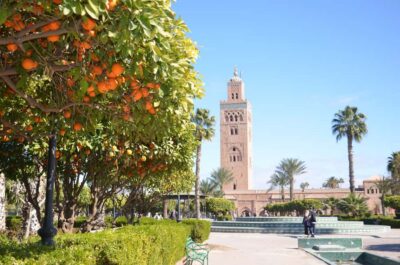
Bahia Palace, Saadian Tombs, Souk and Medina Tour
Read our review →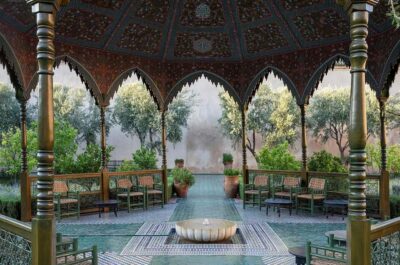
Ben Youssef, Secret Garden, & Souks Walking Tour
Read our review →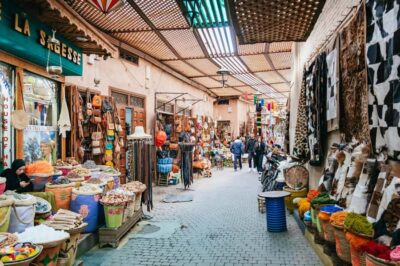
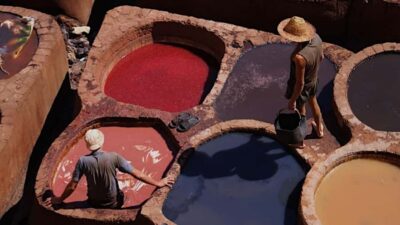
Museum, Al Attarine Madrasa & Tannery and Medina Tour
Read our review →
Bahia Palace, Madrasa Ben Youssef and Medina Tour
Read our review →
Explore Fes: Unforgettable Guided Walking Tour of the Medina
Read our review →Browse the lists this tour appears in