Reviewed · MOROCCO · TOURS IN MARRAKECH
Marrakech: Cultural Bicycle Tour with Pastry and Tea
The most revealing part of this Marrakech bicycle tour is not a grand monument. It is the stop at a local bakery, where bread goes into a clay oven and comes out as part of daily Moroccan life. Add a tile workshop, a public hammam, and a ride from the old medina to modern Gueliz, and you get a useful look at how the city actually works.
I like the way Pikala connects ordinary life with major sights. I also like the youth-training program, which gives your guide a personal stake in explaining Moroccan customs. The drawback is clear: Marrakech traffic takes nerve, especially in narrow lanes shared with mopeds, donkeys, carts, pedestrians, and other bikes.
Key points at a glance
- Bread baked in a clay oven: See how a community bakery serves daily life, then taste fresh Moroccan bread.
- Zellige tile craftsmanship: Watch artisans create the small geometric tiles found in Moroccan palaces and mosques.
- A sharp old-new contrast: Cycle from the medina and souks to the broad streets, cafés, and hotels of Gueliz and Hivernage.
- A look inside hammam culture: Learn why the public bathhouse is a social institution, not simply a place to wash.
- Young local guides: Pikala trains Moroccan youth, with guides such as Ayoub, Rabab, Hamid, Yassir, and Kenza leading recent tours.
- Good value at $34: Water, fruit, suncream, local stops, pastries, tea, and juice are included in the three-hour outing.
Why this bicycle tour reveals more than the medina
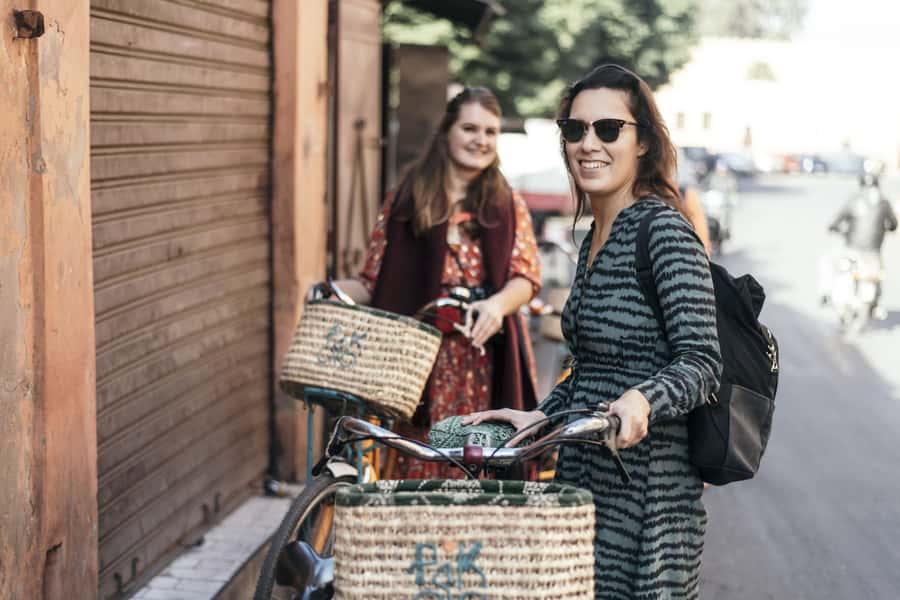
Marrakech is easy to reduce to red walls, souks, snake charmers, and the Koutoubia Mosque. This ride gives you a broader picture. You see the old city as a place where people bake bread, make tiles, wash at the hammam, move goods by donkey cart, and weave around one another on foot.
The bicycle matters because it lets you cover ground without spending the whole morning in a taxi. You move slowly enough to notice details, yet quickly enough to connect parts of the city that feel far apart when walking. The route begins at Pikala Bikes and returns there after about three hours.
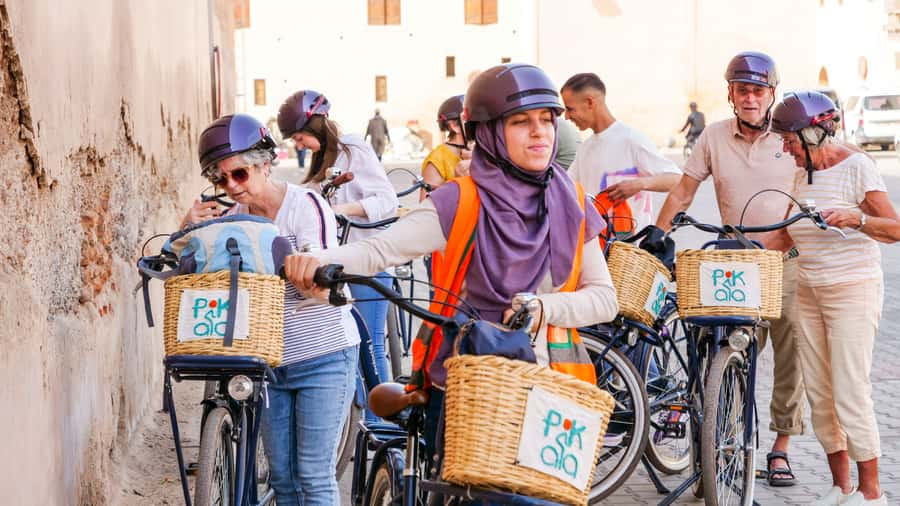
The tour is also personal. Pikala trains Moroccan young people as guides, so the emphasis is not only on dates and buildings. Guides explain daily routines, Muslim customs, neighborhood life, and the changes taking place in modern Marrakech. Recent guides have included Ayoub, Rabab, Hamid, Yassir, Kenza, Sayid, Yasmin, and others. The exact guide depends on the day, but the format is in English or French.
Other trips people book in Marrakesh:
- Marrakech: Agafay Desert Sunset, Camel Ride, and Dinner Show
★ 4.6 · 35,119 reviews - From Marrakech: Ouzoud Waterfalls Guided Hike and Boat Trip
★ 4.7 · 33,630 reviews - Marrakech: Agafay Desert Quad & Camel Rides with Dinner Show
★ 4.8 · 27,382 reviews
Starting at Pikala Bikes
You meet at Pikala Bikes headquarters. This is both the practical starting point and the place where the tone of the outing is set. You receive a bicycle, water, and basic guidance before heading into the city.
The bikes are described as solid Dutch-style bicycles with comfortable saddles, though several riders found them a little heavy or harder to handle than expected. That matters in the medina, where you may need to slow suddenly, steer around a pedestrian, or stop for a donkey cart.
This is not a racing tour. The pace is gentle, the route is generally flat, and there are regular stops. Still, you should be comfortable riding a bicycle and paying close attention. A confident cyclist can adjust quickly. A nervous or occasional cyclist may find the first hour tiring, especially in the souks.
Long dresses and skirts are awkward on a bicycle, so wear casual clothes that let you move freely. A light layer is also sensible. One rider found a jumper useful when the sun disappeared.
Sidi Bel Abbas and the first look at local Marrakech
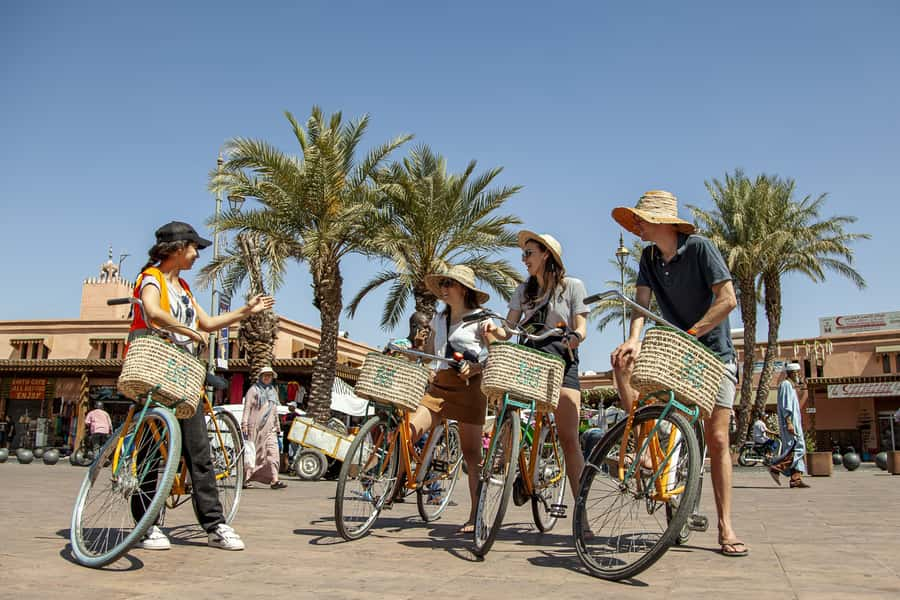
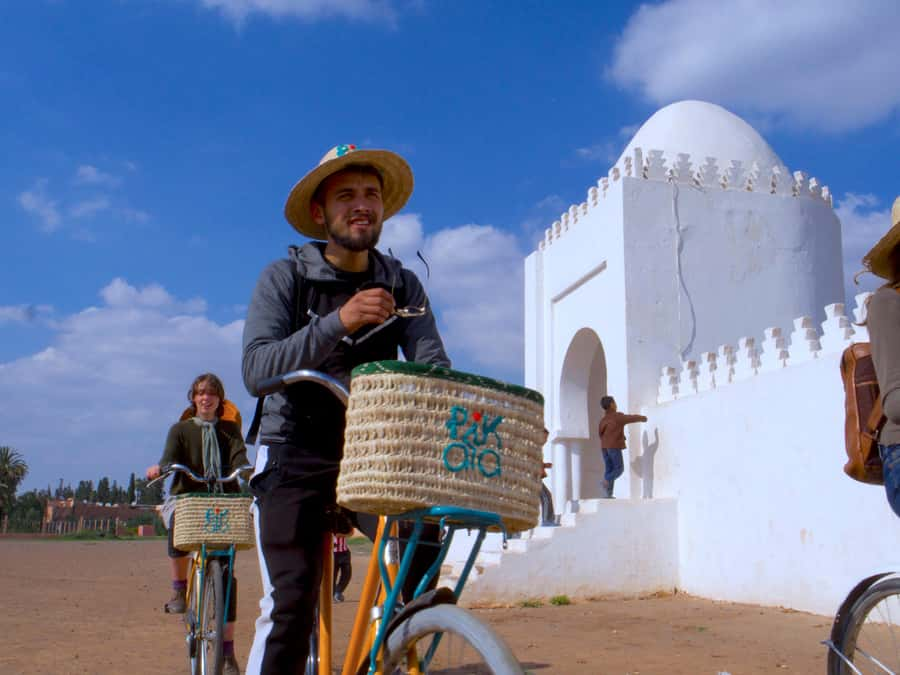
One early stop is the Zawiya of Sidi Bel Abbas. You pause for photographs and an explanation of the site before continuing through the medina.
The value here is not simply the building. A zawiya is tied to religious and community life, and it gives your guide a chance to explain how Marrakech’s neighborhoods developed around places of worship, learning, and local identity. This is the kind of context that can be missed when you walk through the old city alone, focused only on shopping.
The route then slips through narrow streets and lesser-known corners. You may find yourself sharing the lane with pedestrians, mopeds, carts, and other cyclists. Your guide will usually lead the way, check behind for the group, and bring everyone across busier sections together. Sayid was praised for making careful crossings, while Hamid was noted for watching the group closely on the road.
Bread, clay ovens, and an everyday Moroccan ritual
The bakery stop is one of the tour’s strongest moments. You step into a local bakery, watch bread being baked in a clay oven, and taste it fresh.
Bread has a central place in Moroccan daily life. It is not just something placed beside a meal. The community bakery offers a practical service for households that may prepare dough at home and bring it to a shared oven. Seeing that process helps you understand the rhythm of a neighborhood better than another photo stop would.
You spend about ten minutes here, so this is an introduction rather than a long cooking class. That is enough time to watch the work, hear why bread matters, and try it while it is fresh. The stop is especially useful early in your visit because it gives you a simple cultural reference point for later meals.
Same base, a different sort of day:
- Marrakech: Agafay Desert Quad Biking Tour with Dinner-Show
★ 4.8 · 16,569 reviews - Marrakech: Atlas Mountains, Ourika Valley, Waterfall & Lunch
★ 4.8 · 15,834 reviews - From Marrakech: 3-Day Merzouga and Sahara Desert Tour
★ 4.9 · 15,308 reviews - From Marrakech: Merzouga 3-Day Desert Safari with Food
★ 4.7 · 12,232 reviews
Place des Ferblantiers and the craft side of the city
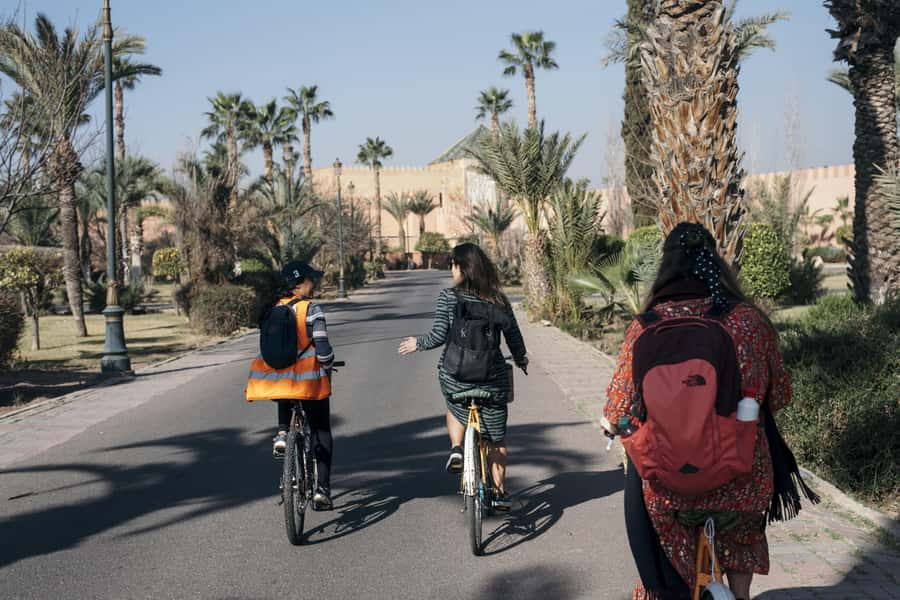
The ride continues through several lesser-known corners before reaching Place des Ferblantiers. You have time for photographs, a short break, and views along the way.
The square is associated with metalwork and craft activity, and it helps connect the street scene with the wider artisan economy of Marrakech. This is a good place to pause and let the group catch up. The tour is not a nonstop pedal, and those pauses make the three-hour schedule manageable.
You will also pass through other small stops that are not fully explained in advance. That is part of the appeal. You do not need to plan every turn or search for a landmark on a map. Your guide leads you through the lanes and adds the local meaning as you go. If you prefer a tour with every stop announced beforehand, this approach may feel less structured.
Zellige tiles, patience, and geometric design
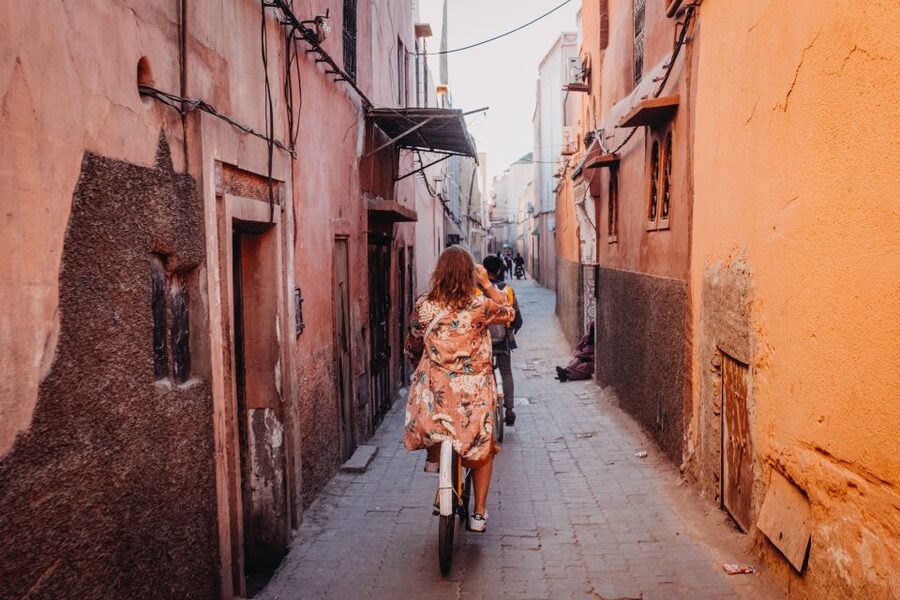
The tile workshop offers a close look at Moroccan zellige, the small hand-cut tiles used in palaces, mosques, fountains, courtyards, and private houses.
Zellige is easy to admire from a finished wall. It is harder to understand until you see the making process. The craft depends on shaping and arranging many small pieces into precise geometric patterns. The workshop shows the labor behind the decoration and explains why this style remains such a strong part of Moroccan architecture.
This is not simply a shopping stop. The main point is to watch artisans work and understand the tradition. You may have time to look around, but the experience is centered on craft and explanation rather than a formal class.
The bakery and tile workshop work well together. One shows a daily necessity made in a neighborhood oven. The other shows a skilled craft linked to grand buildings and religious spaces. Together, they present Marrakech as a working city, not just a backdrop for sightseeing.
The Royal Palace gardens and the old city’s grand edge
The route passes the public gardens around the Royal Palace, Dar El-Makhzen. You admire the palace from the outside and learn about its place in Morocco’s monarchy and political story.
You do not enter the palace itself. That is important to understand before booking. The stop is about the exterior setting, the gardens, and the view of a royal complex from a public space.
This makes a useful change of pace after the tight lanes. The palace area offers more room to look around, take photographs, and consider how Marrakech’s old walls contain both ordinary neighborhood life and royal power.
The hammam as a social place
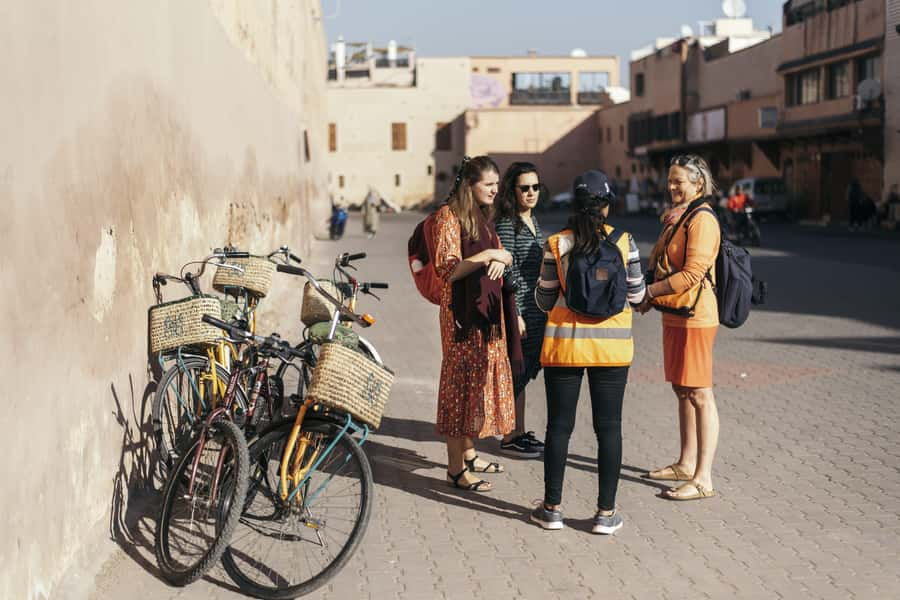
The hammam stop explains a tradition that many first-time visitors misunderstand. A Moroccan public bathhouse is not simply a spa for tourists. It is part of everyday life, with routines tied to washing, relaxation, family customs, and social contact.
The tour introduces the rituals and social role of the hammam. Depending on the stop and the day, you should expect an explanation and a look at the setting rather than a full bathing treatment. The supplied details do not promise a hammam session, so bring the right expectations.
I find this one of the most useful cultural stops because it explains a place you might otherwise pass without understanding. It also gives your guide room to discuss daily life rather than reciting dates. The visit is educational, but it is still respectful: you are learning about the tradition, not treating a working public bathhouse as a stage set.
Koutoubia, a church, and Marrakech’s many identities
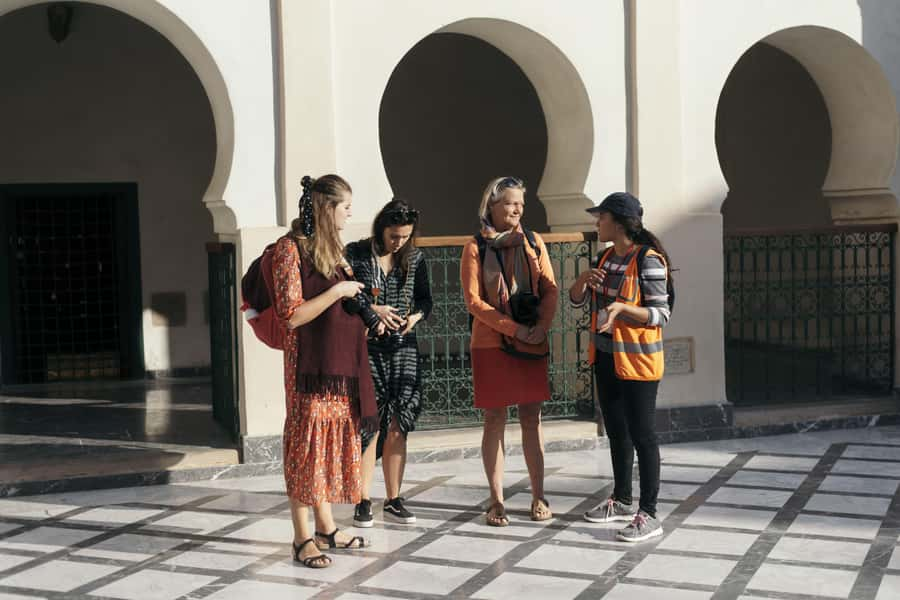
The route passes the Koutoubia Mosque, one of Marrakech’s best-known landmarks. You see it as part of the city route rather than as an isolated monument, which helps put it in relation to the medina and the streets around it.
The tour also includes a photo stop at the Church of the Holy Martyrs. This adds another layer to the city’s religious and social story. The contrast between mosque, church, royal space, craft workshops, and neighborhood businesses shows that Marrakech cannot be reduced to one tradition or one period.
You should not expect long interior visits at each landmark. The bicycle format works best when the guide uses buildings as prompts for a wider discussion, then keeps the route moving.
Gueliz and Hivernage: modern Marrakech in broad strokes
The ride eventually reaches modern Marrakech, including Gueliz and Hivernage. Here the narrow lanes give way to broad boulevards, cafés, luxury hotels, and a more open street pattern.
This section is valuable because it prevents a common mistake. The medina is not the whole city. Modern Marrakech has its own pace, architecture, businesses, and social life. The contrast is immediate after the close quarters of the souks.
The traffic can feel intimidating at first, especially if you are used to orderly cycling lanes. Several riders said they settled into it after a while, and guides took care to keep groups together. Still, you should not treat the road sections as carefree sightseeing. Keep both hands ready, watch your surroundings, and follow your guide’s movements.
A 9:30 morning departure may be worth considering if that time is available. One rider found the roads quieter then. Traffic conditions can change, but an earlier start generally gives you a cooler and less crowded beginning.
Mint tea, pastries, and the Pikala Cafe finish
The tour ends with a stop at Pikala Cafe for tea, juice, local snacks, and Moroccan pastries. Water and fruit are provided during the ride, and suncream is included.
The cafe stop is more than a sweet finish. It gives you a place to sit, ask follow-up questions, and continue the conversation after the bicycles are parked. Mint tea and spiced cookies were especially welcome after the road sections.
The cafe is also useful for understanding Pikala’s work. The organization is a social enterprise that trains Moroccan youth and supports local businesses and social causes. Your $34 therefore pays for more than transport between sights. It supports a local program while giving you access to places and explanations you would be unlikely to arrange alone.
What $34 buys you
At $34 per person, this is a strong-value half-day activity. The price includes the bicycle, guide, water, fruit, suncream, local entry stops, and the final cafe refreshments. Hotel pickup and drop-off are not included, so you need to reach Pikala Bikes headquarters yourself.
The value is strongest if you want context, not just a ride. A taxi can move you across Marrakech faster, and walking costs less. Neither option is likely to connect the bakery, tile workshop, hammam tradition, palace gardens, old medina, and modern districts in one organized route.
Small groups are common, though the exact size can vary. One person who booked alone received a private tour, while a family group of five and a group of six also had positive experiences. Do not assume you will receive a private ride, but the format can work well for both solo visitors and families.
Free cancellation up to 24 hours before the activity and the option to reserve now and pay later make the booking fairly flexible. The tour lasts three hours, with starting times subject to availability.
Who should book, and who should think twice
I would choose this ride for a first or second day in Marrakech. It gives you a city-wide framework, points out customs you can notice later, and helps you see where the medina ends and modern Marrakech begins.
It suits:
- Confident cyclists who can steer and stop in crowded streets.
- Curious visitors who prefer daily life and local businesses to a checklist of monuments.
- Families with older children who can manage traffic and narrow lanes.
- Solo visitors who want a friendly introduction to the city.
- People interested in social enterprise and local youth programs.
- Anyone who wants a flat, gentle ride rather than a strenuous cycling workout.
I would think twice if you are not comfortable on a bicycle, dislike traffic, or want a quiet sightseeing tour. The ride is not physically extreme, but the surroundings demand attention. Long skirts, fear of mopeds, and a dislike of sudden stops can make the experience stressful.
The bikes can feel heavy, and the first hour may be the hardest. Still, the route is not fast, and guides generally stop often and watch the group. A tandem was also used successfully for a 72-year-old mother, but you should discuss any special needs with Pikala before booking rather than assume a particular bike will be available.
Should you book the Pikala cultural bike tour?
Book it if you want to understand Marrakech through its working neighborhoods, not only its famous sights. The bakery, zellige workshop, hammam explanation, and sharp contrast between the medina and Gueliz give the ride real substance.
Skip it if you are an uncertain cyclist or want a fully sheltered, traffic-free outing. For everyone else, $34 buys a well-rounded introduction, friendly local guidance, refreshments, and support for a youth-training program. Choose an early start if possible, wear practical clothes, and expect the traffic to be part of the story.
FAQ
How long is the Marrakech cultural bicycle tour?
The tour lasts three hours, including the cycling route, cultural stops, and refreshments at Pikala Cafe.
Where does the tour start and finish?
You meet at Pikala Bikes headquarters, and the ride returns to Pikala Bikes at the end.
What languages are available?
The live tour is available in English and French.
Is hotel pickup included?
No. Hotel pickup and drop-off are not included, so you must make your own way to Pikala Bikes.
What food and drinks are included?
The tour includes water and fruit during the ride, plus juice, Moroccan pastries, tea, and local snacks at Pikala Cafe.
Do I need to be an experienced cyclist?
You should be a confident cyclist who can manage narrow streets and changing traffic. The route is generally flat and not fast, but you may need to avoid mopeds, donkeys, carts, pedestrians, and other cyclists.
Just added in Marrakesh
- Marrakech: Tailor-Made City Tour With Your Own Private Guide★ 4.9 · 236 reviews
- Marrakech palm grove: Sunset camel ride★ 4.8 · 194 reviews
- Sparkling Marrakech through the eyes of your local Guide★ 4.7 · 247 reviews
- Small-Group Day Trip from Marrakech to Essaouira Mogador★ 4.8 · 211 reviews
- Quad biking in Agafay Desert with lunch & Camel Ride & pool★ 4.5 · 186 reviews
- Marrakech: Historical Discovery Tour★ 4.1 · 87 reviews
- Marrakech: Palm Grove Horseback Riding Tour★ 4.6 · 163 reviews
- From Marrakesh: Ouarzazate & Ait Ben Haddou Day Tour★ 4.5 · 198 reviews
Tours in Marrakech, compared.
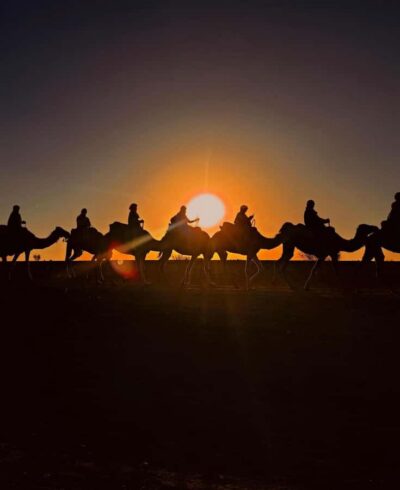
Agafay Desert Sunset, Camel Ride, and Dinner Show
Read our review →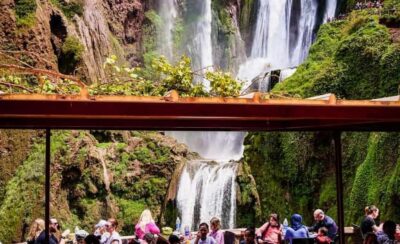
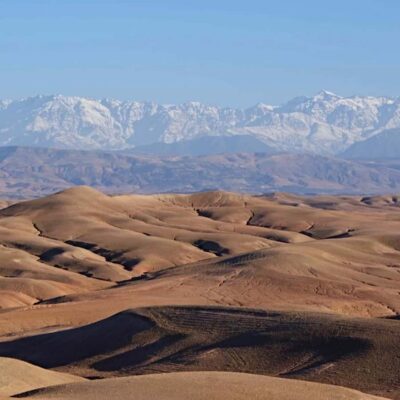
Agafay Desert Quad & Camel Rides with Dinner Show
Read our review →
Agafay Desert Quad Biking Tour with Dinner-Show
Read our review →
Atlas Mountains, Ourika Valley, Waterfall & Lunch
Read our review →
Berber villages : Atlas Mountains Day Hike from Marrakech
Read our review →