
Reviewed · TOURS IN MOROCCO
Rabat: Guided City Tour with Mausoleum Mohammed V Visit
Rabat’s appeal comes into focus when you connect its grand royal monuments with its quieter old quarters. This four-hour private tour moves between the Mausoleum of Mohammed V, Hassan Tower, Chellah, the Kasbah of the Udayas, and the Medina, so you see both the official capital and the lived-in city around it.
I like the air-conditioned vehicle with Wi-Fi, especially when Rabat’s sites are spread across town. I also like the human side of the tour: guides such as Hamid, Mohamed, Youssef, Osman, and Rachid have been praised for clear explanations, local stories, and a friendly pace.
The main consideration is value. At $104 per person, plus the $7 Chellah entrance fee, this is not the cheapest way to see Rabat. You are paying for private transport, a guide, hotel pickup from selected central hotels, and historical context, not simply admission to monuments.
Key points to know before booking
- The Mausoleum of Mohammed V and Hassan Tower anchor the tour, giving you a clear introduction to Morocco’s modern royal history and Rabat’s older ambitions.
- Chellah costs an extra $7 per person, so add that to the advertised price when working out your budget.
- The Kasbah of the Udayas is often the most personal stop, with blue-and-white lanes, ocean views, and time for mint tea and Moroccan cookies.
- Your guide makes the biggest difference, with past guide names including Hamid, Mohamed, Youssef, Osman, Rachid, Abdo, and Redouane.
- Bring your passport, since it is required for access connected with the Rabat Royal Palace.
- The tour suits solo visitors and first-time visitors, but independent walkers may find a cheaper option if they already know the city.
Starting with Rabat’s royal monuments
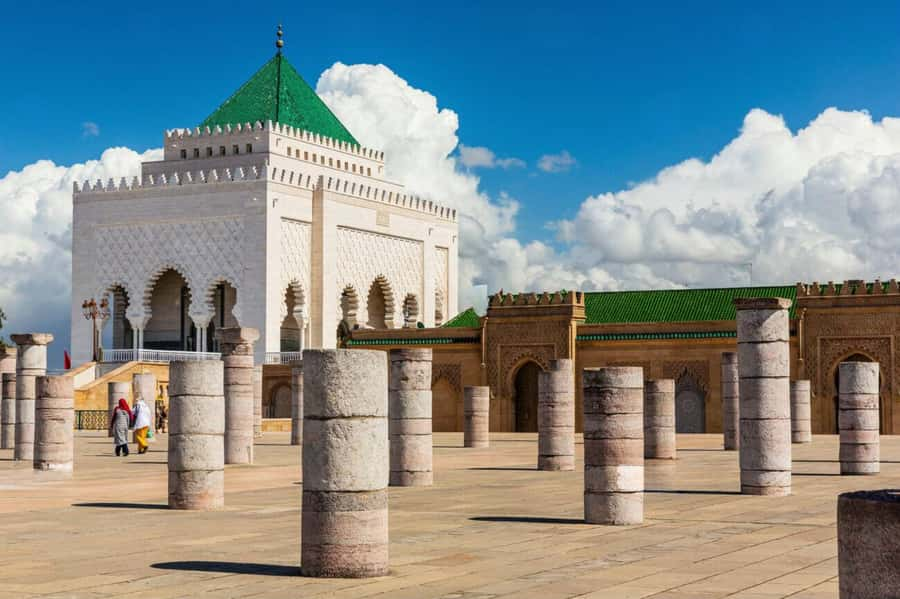
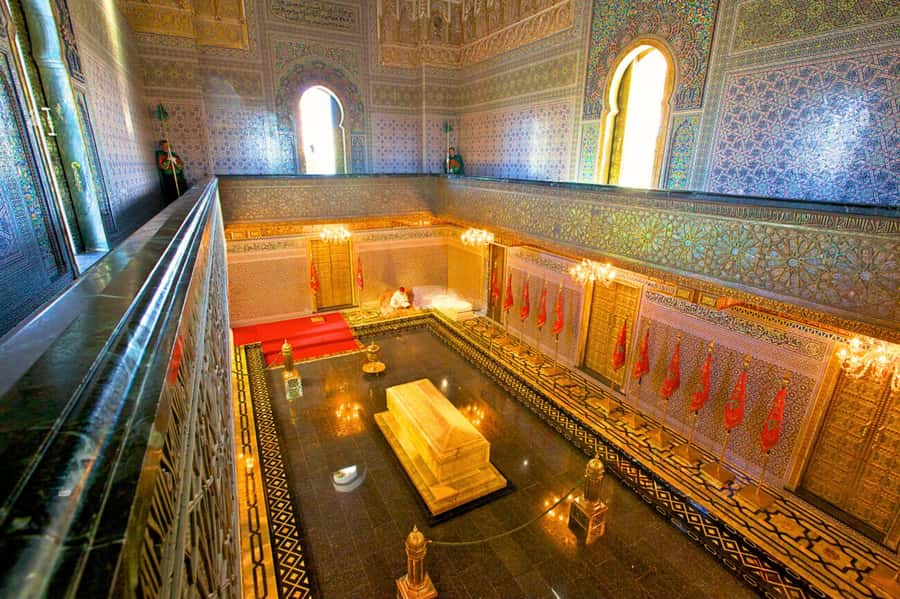
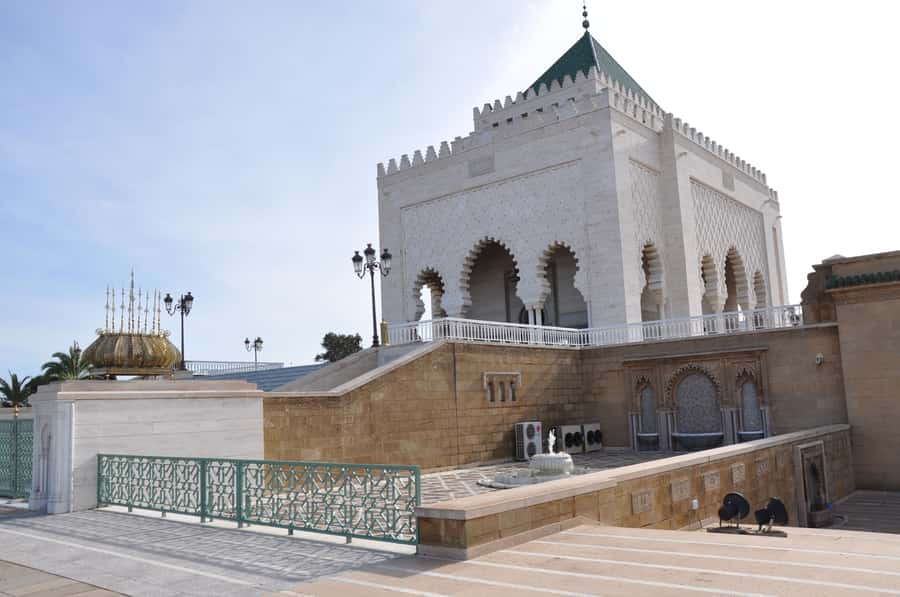
The tour begins with one of Rabat’s most important sights, the Mausoleum of Mohammed V. This polished white structure honors Morocco’s former kings and gives you an immediate sense of the country’s royal tradition. The setting is formal and carefully maintained, with the nearby Hassan Tower providing a strong visual contrast.
The mausoleum is especially useful as a first stop because it gives your guide a natural place to explain Morocco’s monarchy, national identity, and the role of Rabat as the capital. You will want to slow down here rather than treat it as a quick photo stop. Look at the carved details and the ceremonial feel of the site.
The mausoleum itself does not carry the listed extra fee. Still, access conditions can vary, and the tour description specifically asks you to bring your passport for access connected with the Royal Palace. Keep it with you rather than leaving it in your hotel safe.
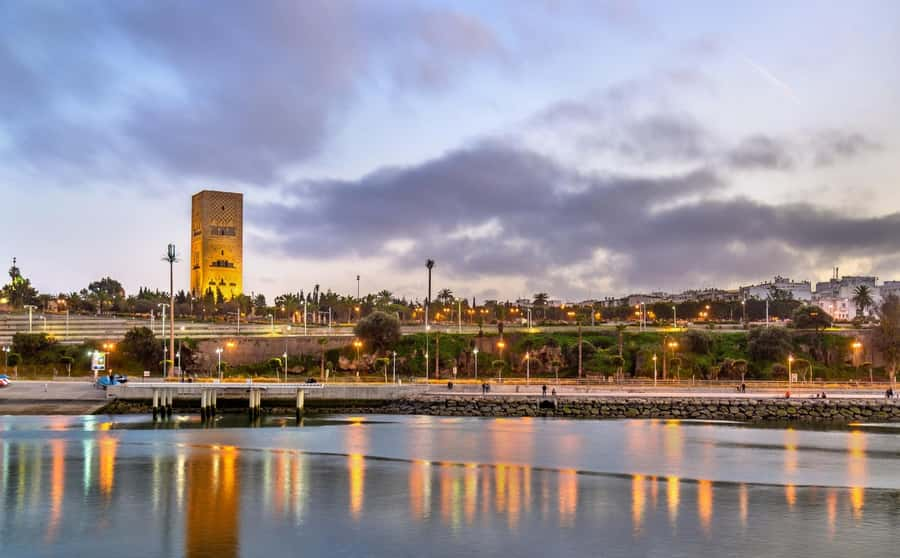
Hassan Tower is close by and is one of Rabat’s most recognizable landmarks. The project was intended to create the world’s largest minaret, but construction stopped before it was finished. What remains is still impressive: a tall, reddish structure surrounded by columns and open space.
I find Hassan Tower most interesting when the guide explains what was planned, what was completed, and why the site matters beyond its appearance. Without that background, you may simply see a striking tower and a collection of stone columns. With context, the unfinished project becomes a story about ambition, changing power, and medieval construction.
Other city tours in Morocco people book:
- Casablanca City Tour with Hassan II mosque ticket
★ 5.0 · 2,480 reviews - Marrakech: Private Guided Half-Day City Tour
★ 5.0 · 1,249 reviews - Marrakech Historical and Cultural Tour – Half Day City Tour
★ 4.5 · 1,180 reviews
Seeing the Royal Palace from the outside
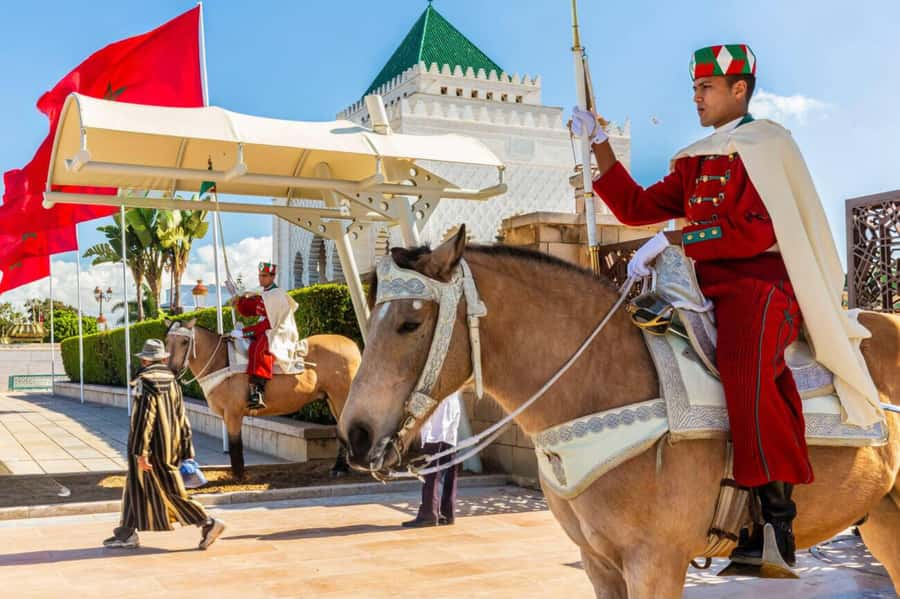
The Royal Palace offers a different view of Rabat. This is an official residence of Morocco’s monarchy, so the atmosphere is more controlled than at an open public monument. You can admire the exterior architecture and the formal approach, but entry is not something you should assume.
The information for this experience says that palace access may not be permitted, while also stating that your passport is needed for access to the Royal Palace. The practical reading is simple: bring your passport, follow your guide’s instructions, and understand that the visit may focus on the outside if interior entry is restricted.
This stop is valuable mainly for the setting and the explanation. You are not booking a palace tour with guaranteed rooms and interiors. You are seeing an important part of the capital’s official face, then moving on to sites where you can walk more freely.
Walking through Chellah’s Roman and Islamic past
Chellah is the stop that adds the most age and contrast to the day. This ancient fortress and necropolis combines Roman and Islamic remains, giving you layers of Rabat’s past in one compact site. It is not just another old wall. The interest comes from seeing different periods occupy the same place.
The $7 entrance fee is not included. That extra charge is modest, but it matters when the tour already costs $104 per person. Check that the fee is included in your plans, especially if you are comparing this outing with a driver-only service.
Allow yourself time to walk carefully and listen. Chellah rewards attention to details that are easy to miss, and a good guide can help you understand how the Roman and later Islamic elements fit together. Redouane, Hamid, Mohamed, and the other guides named in the experience have been praised for explaining sites in a way that connects the past with present-day Rabat.
One practical point: the tour lasts four hours, so the time at each monument will be limited. If Chellah is your main interest, you may want to ask at the start how long the stop will last. The published schedule does not give a precise breakdown for each location.
A quiet pause in the Andalusian Gardens
The Andalusian Gardens provide a change of pace. After the formal monuments and ancient ruins, you get a calmer setting with planted paths and Andalusian-style design. This is a good place to let the city’s visual details settle before heading into the Kasbah.
I like this part because it prevents the tour from becoming a string of monuments. You get a few quieter minutes, and the guide can explain how Andalusian influence shaped parts of Moroccan architecture and garden design.
Do not expect a long garden visit. Four hours is enough for a useful introduction, not for an unhurried study of every corner. Your guide may adjust the pace depending on traffic, access, and how much time the group spends at earlier sites.
Other ways to see Morocco in a day:
- Casablanca: City Tour with Hassan II Mosque Entry Ticket
★ 4.6 · 1,137 reviews - Tangier: Hop-On Hop-Off Sightseeing Bus
★ 4.1 · 769 reviews - Casablanca: Hassan II Mosque & City Highlights Tour
★ 4.5 · 573 reviews - Casablanca: Hassan II Mosque & City Highlights Tour
★ 5.0 · 526 reviews
The Kasbah of the Udayas, the day’s most atmospheric stop
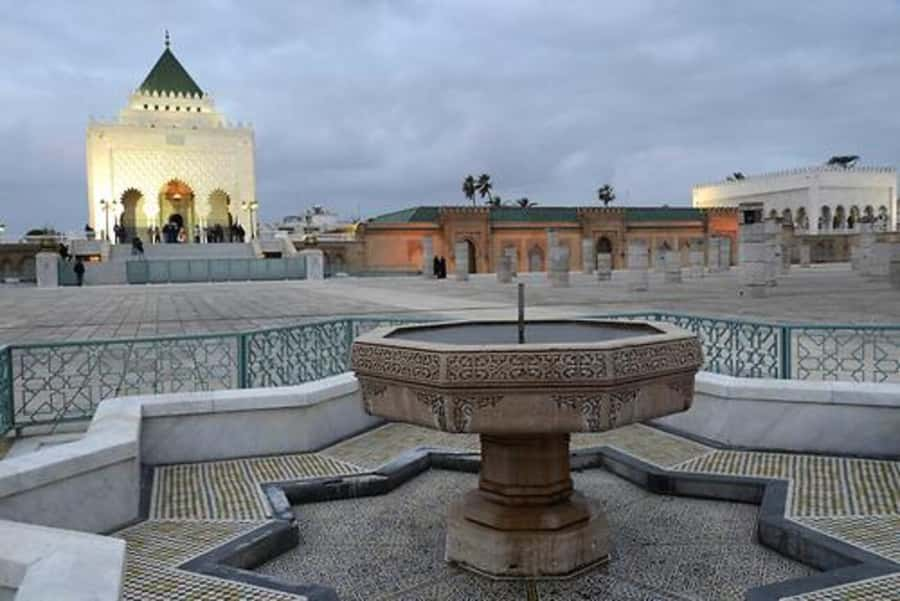
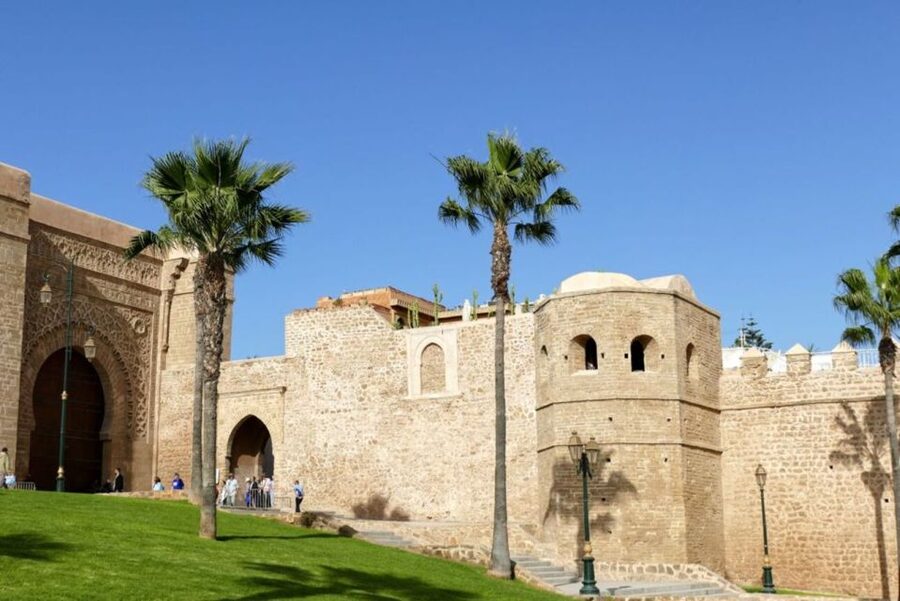
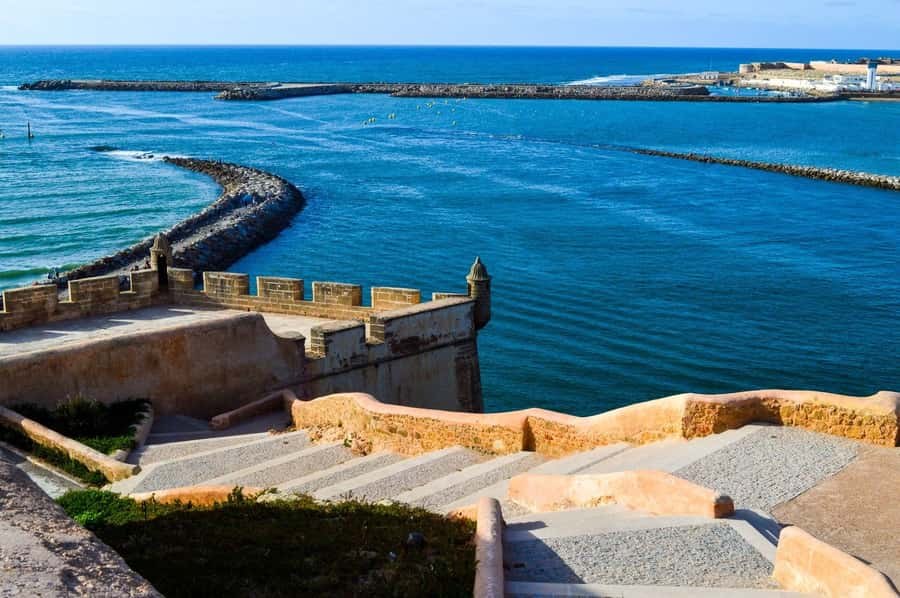
The Kasbah of the Udayas is likely to be the most memorable part of the tour. This old fortress quarter sits on a hill above the Atlantic, with narrow lanes, blue-and-white homes, flowers, and broad views. It feels more intimate than the grand royal sites.
The lanes are best experienced on foot. Your vehicle gets you close, but the real pleasure comes from walking through the compact streets. You will want comfortable shoes, since the tour includes several stops where you leave the vehicle and explore on foot.
One particularly useful feature is the local connection some guides bring to the visit. Osman, for example, was praised for sharing memories of growing up near the Kasbah. Rachid was described as having grown up inside the old Medina, which can give ordinary streets and local customs more meaning than a standard monument speech.
A stop for mint tea and Moroccan cookies may be part of the experience, as one detailed account described. Treat this as a pleasant possibility rather than a guaranteed menu item. The value is not just the drink. It is the chance to sit, talk, and take in the atmosphere instead of rushing from one photo stop to the next.
The Kasbah is also a strong reason for solo visitors to consider a guide. The lanes are easy to enjoy independently, but a good guide helps you understand what you are seeing and keeps the walk relaxed. Nicola, one solo participant, found the pace and conversation especially useful, and that matches how this part of Rabat works best.
Finishing in the Medina
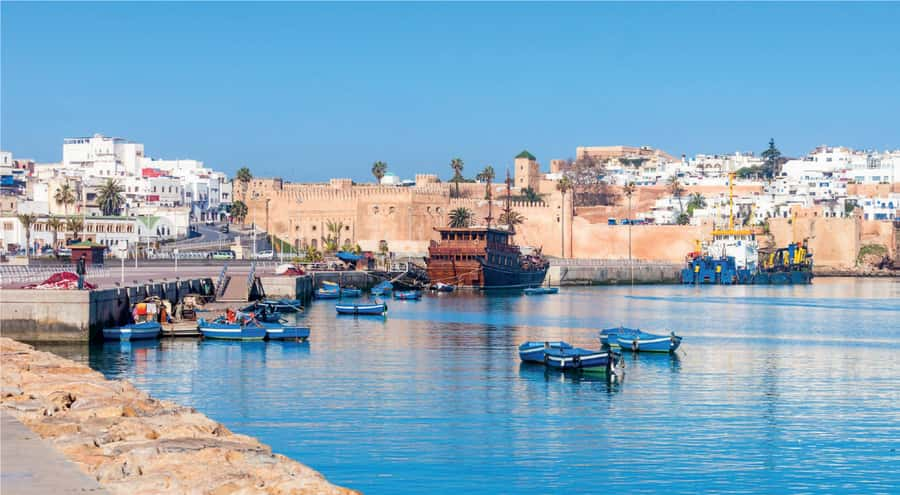
The final stop takes you to Rabat’s old Medina and its ancient walls. This is the city at street level, with shops, markets, local movement, colors, smells, and sounds. It is less polished than the royal district and more revealing of everyday Rabat.
The Medina is not best treated as a checklist. Give yourself time to notice doorways, shop displays, food stalls, and the way streets narrow and open again. Your guide can help you stay oriented and explain what belongs to the old city’s past and what is part of life today.
This stop also shows why a private guide can add value. You can certainly walk through a Medina alone, but it is harder to connect what you see with the city’s development. Rachid’s experience growing up inside the old Medina is the kind of local background that can turn a simple walk into a more grounded look at Rabat.
The drawback is time. If you love shopping, food, or photography, four hours may leave you wanting more time in the Medina and Kasbah. The tour gives you a broad introduction rather than a long, slow exploration of either quarter.
How the vehicle and guide shape the experience
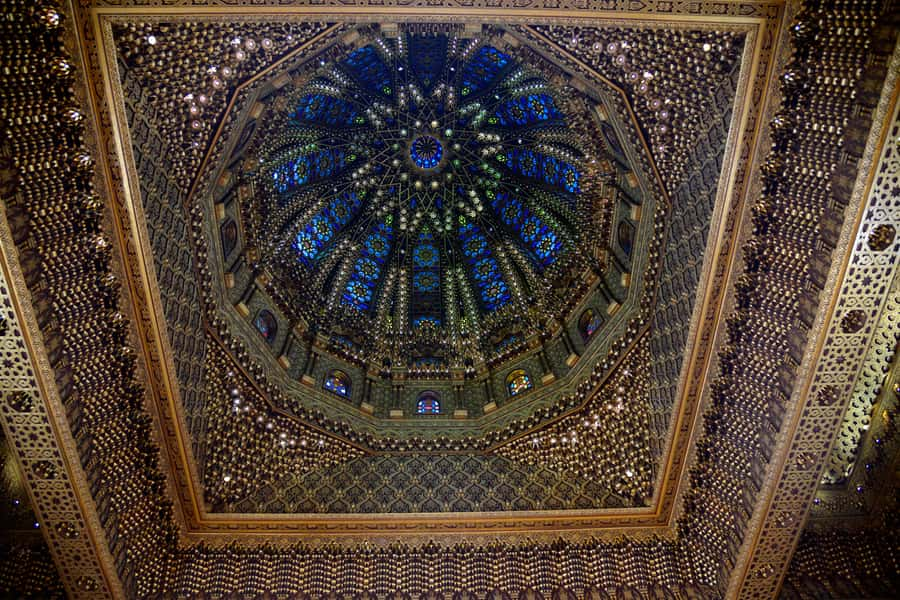
The tour uses air-conditioned transportation with Wi-Fi, bottled mineral water, and hotel pickup and drop-off from selected hotels in Rabat’s city center. That makes the day easier, particularly when you want to cover several districts without arranging taxis between each stop.
The driver and guide arrangement can vary. The experience describes a multilingual chauffeur or guide, and past bookings include separate driver and guide roles. Nicola, for example, was picked up by Abdo before meeting Hamad, the guide. That setup can work well because one person handles the road while the other focuses on the sites.
The guide is the most important part of the service. The strongest praise goes to people who explain clearly, answer questions, and make the history feel connected to the city you are looking at. Names that received especially warm attention include Hamid, Mohamed, Youssef, Osman, Redouane, Rachid, and Abdo.
The feedback is not uniformly glowing. One four-star account found the guide informative but distracted by phone calls and less willing to discuss subjects outside the planned narration. That is useful to keep in mind. A private tour gives you a chance to ask questions, but the quality of the conversation depends on the individual guide assigned that day.
Is $104 per person a fair price?
At $104 per person, this tour makes the most sense for people who value convenience and explanation. You get four hours, private transport, air conditioning, Wi-Fi, bottled water, a multilingual guide or chauffeur, and central hotel pickup and drop-off where available. The Chellah ticket costs another $7.
For one person or a small group, the price may be reasonable if you want to cover widely spaced sites without arranging transport. It is also useful on a short stay when you want to see Rabat’s main highlights in half a day.
The value is weaker if you are traveling with a partner or family and are comfortable using taxis, walking, and reading up before you arrive. One participant considered the price high compared with a less expensive four-hour Casablanca experience. That comparison is fair, though the exact service and transport arrangements may differ.
I would judge the price by your priorities. Pay for this tour if you want a ready-made route, a vehicle, and a person who can explain the monuments. Skip it if your main goal is to linger in the Medina, shop, or spend a long time at Chellah, since the four-hour schedule keeps things moving.
Who should book this Rabat tour?
I would recommend it to first-time visitors who want a clear introduction to Rabat without spending a full day planning transport. It also fits solo visitors who prefer company and local explanation, especially for the Kasbah and Medina.
It suits visitors staying in central Rabat hotels, since included pickup is limited to selected city-center properties. Before booking, confirm that your hotel qualifies and be ready in the lobby 15 minutes before pickup.
Families and older visitors may appreciate the air-conditioned vehicle between stops, though the Kasbah and Medina still involve walking. Anyone interested in Morocco’s monarchy, architecture, and layered past will get more from the tour than someone seeking only free time in the markets.
The rating is 4.4 from 86 reviews, with repeated praise for guide expertise, warmth, punctual pickup, and clear English. The occasional concern about price and guide focus means you should book with realistic expectations, not assume a fully private palace visit or unlimited time at each stop.
Should you book it?
Book this tour if you want to see Rabat’s main sights in one organized half-day and understand what you are looking at. The best reasons are the comfortable transport, the strong record of friendly guides, and the mix of royal monuments, ancient ruins, gardens, a hilltop kasbah, and the Medina.
Think twice if $104 per person feels high, if you want guaranteed palace entry, or if you prefer to explore slowly. For most first-time visitors with limited time, the tour offers a useful introduction. Just bring your passport, budget $7 for Chellah, and ask your guide early about the timing of each stop.
FAQ
How long does the Rabat city tour last?
The tour lasts four hours.
What languages are available?
The live guide service is available in Arabic, English, and French.
What sites are included?
The route includes the Mausoleum of Mohammed V, Rabat’s Royal Palace area, Hassan Tower, Chellah, the Andalusian Gardens, the Kasbah of the Udayas, and the ancient walls of the Medina.
Is the Chellah entrance fee included?
No. The Chellah entrance fee is listed as $7 per person.
Is hotel pickup included?
Pickup and drop-off are included at selected hotels in Rabat city center. You should wait in the hotel lobby 15 minutes before the scheduled pickup.
Do I need to bring my passport?
Yes. You must have your passport during the tour for access connected with the Rabat Royal Palace.
Is transportation air-conditioned?
Yes. Transportation is provided in an air-conditioned vehicle with Wi-Fi on board.
Is bottled water provided?
Yes. Bottled mineral water is included.
Can I cancel the tour for a full refund?
You can cancel up to 24 hours in advance for a full refund. You can also reserve now and pay later.
Just added in Morocco
- Sunset Camel Ride in Agadir or Taghazout With Transfers★ 4.5 · 134 reviews
- Agadir City Tour – Half Day – Guided By Couscous★ 4.5 · 422 reviews
- Seafront Promenade★ 4.5 · 100 reviews
- Sandboarding guided experience from Agadir★ 5.0 · 168 reviews
- Agadir Desert Quad Bike Safari with Hotel Pickup★ 4.5 · 191 reviews
- Agadir Traditional Moroccan Spa★ 5.0 · 201 reviews
- Agadir: Desert Quad Bike Safari with Hotel Pickup & Drop-off★ 5.0 · 371 reviews
- Sandboarding ( Sand Surfing ) in Agadir★ 5.0 · 147 reviews
City Tours, compared.
Casablanca City Tour with Hassan II mosque ticket
Read our review →
Cape Town Hop-On Hop-Off City Tour with Optional Cruise
Read our review →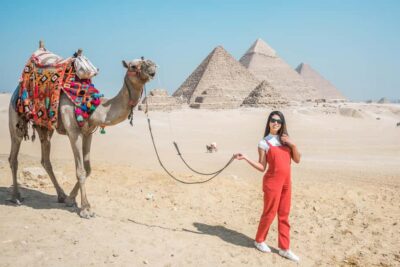
Female-Guided Pyramids, Sphinx & Museum City Tour
Read our review →
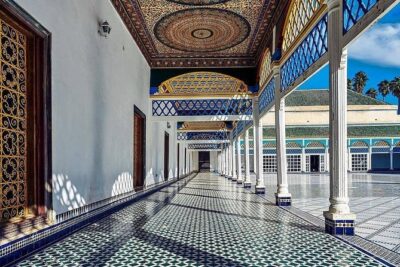
Marrakech Historical and Cultural Tour – Half Day City Tour
Read our review →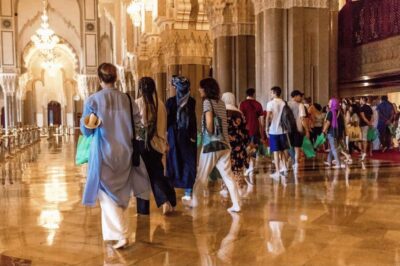

Browse the lists this tour appears in