
Reviewed · EGYPT · TOURS IN CAIRO
Private Day Tour to Giza Pyramids, Memphis, Sakkara and Dahshur
Giza is only the opening act here. In one long day, you move from the Great Pyramid and Sphinx to the quieter Bent and Red Pyramids at Dahshur, then on to Saqqara tombs and the old capital of Memphis. That range gives you a better feel for how Egyptian pyramid building changed over time.
I like the private vehicle and hotel pickup, especially because these sites spread far across Cairo’s western desert edge. I also like the chance to shape the day with your guide. Guides such as Mohammed, Wafe, Mario, Yousouf, and Christine have been praised for clear explanations, photos, and thoughtful adjustments to the schedule.
The main catch is the tour’s crowded timetable and unclear pricing structure. The advertised $16 price is strikingly low, but entry fees, an expert guide, lunch, and pyramid interiors may depend on the option you choose. Confirm exactly what is covered before you pay.
Key points for planning your ancient Cairo day
- Four major ancient areas in one outing: Giza, Dahshur, Saqqara, and Memphis give you more than the standard pyramid visit.
- Private transport from Cairo or Giza: You travel in a private air-conditioned vehicle with fuel, parking, and bottled water included.
- Dahshur is the quieter highlight: The Bent and Red Pyramids offer a less crowded setting and an important look at early pyramid design.
- Saqqara rewards extra attention: The Pyramid of Teti, Pyramid of Unas, and Mastaba of Ti add tombs, inscriptions, and daily-life scenes to the day.
- Shopping stops are part of the plan: Allow time for perfume, cotton, papyrus, and handmade carpet shops, and tell your guide early if you prefer to skip them.
- The $16 starting price needs checking: Basic access may be included, while added admission, a guide, lunch, and pyramid interiors can cost more.
Why this route gives you more than Giza
Many Cairo day trips stop at Giza and call it ancient Egypt. This one keeps going. You see the famous monuments, then compare them with royal sites farther south and with the remains of Memphis, Egypt’s first capital.
That wider route matters because the monuments do not all tell the same story. Giza presents the polished power of the Fourth Dynasty. Dahshur shows experimentation in pyramid shape and construction. Saqqara brings you close to tomb decoration and the early pyramid tradition. Memphis adds colossal sculpture and the remains of a city that once directed the kingdom.
You should expect an ambitious day rather than a slow archaeological visit. The advertised duration is about eight hours, with an 8:00 am pickup. Traffic, entry lines, photo stops, lunch, and shopping visits can affect the pace. If you want time inside several monuments, you may need to sacrifice some other stops.
Other ways to see the pyramids from Cairo:
- Cairo: Pyramids & Great Sphinx Private Tour with Camel Ride
★ 4.9 · 6,335 reviews - Tour to Giza Pyramids and The Egyptian Museum
★ 5.0 · 6,016 reviews - VIP All inclusive Best of the best Giza Pyramids,Sakkara,Memphis
★ 5.0 · 3,164 reviews
Giza Plateau: the essential first look
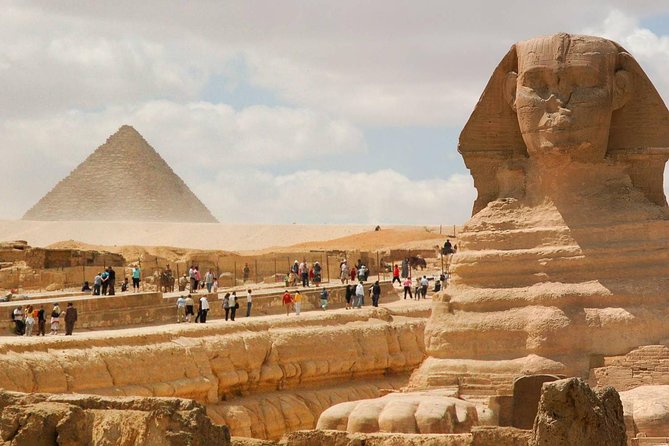
The day begins at the Giza Plateau, usually with about two and a half hours allotted to the main area. You see the three royal pyramids associated with Khufu, Khafre, and Menkaure, then visit the Valley Temple and the Sphinx area.
The first sight of the pyramids is still powerful, even if you have seen a hundred photographs. The scale is difficult to judge from a screen. Your guide can help connect the separate structures into one funerary complex, rather than leaving you with a collection of famous stones.
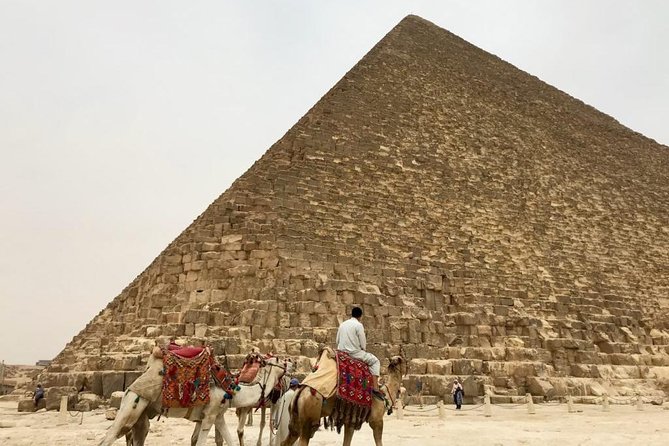
The Great Pyramid of Khufu receives the most attention. It was the largest of the three and remains the central landmark of the plateau. The tour information also refers to its valley temple, though that structure is largely buried beneath the modern settlement of Nazlet el-Samman. Do not expect a fully open temple visit there.
Khafre’s Pyramid is easy to recognize because it appears slightly taller from some viewpoints and retains a small amount of casing stone near its top. Its complex includes a valley temple, causeway, mortuary temple, and the Sphinx temple. Menkaure’s smaller pyramid gives you a useful contrast in scale and design.
The Valley Temple of Khafre is especially useful for understanding how the dead king’s body was prepared and moved through the funerary complex. It is also the place associated with the closest look at the Sphinx. This helps you see the monument not as an isolated statue, but as part of a larger sacred setting.
Allow time for photographs, but listen before rushing from one viewpoint to the next. Guides who do this well can explain the basic layout, point out details you might miss, and help with the familiar pyramid and Sphinx poses. Mohammed has been singled out for taking creative photos, while other guides have been praised for adjusting the visit to match personal interests.
Inside the pyramids: an important extra cost
The standard visit gives you the exterior areas and basic archaeological access. Going inside a pyramid is not automatically part of the base experience. Entry to pyramid interiors is listed as optional, so confirm the supplement and which pyramid it covers.
Interior visits are not simply another viewpoint. You climb or walk through narrow, enclosed passages and chambers, so the experience can feel very different from standing outside. If you have limited time, a guide can help you decide if entering one pyramid is worth giving up time elsewhere.
The tour description also says entry fees depend on the selected option. That wording matters. Before booking, ask for a clear breakdown of the $16 price, site tickets, guide service, lunch, and interior access. A low headline price can be good value, but only if you know what you will actually pay on the day.
Dahshur: the day’s best change of pace
After Giza, the route continues to Dahshur, about 40 kilometers south of Cairo on the western side of the Nile. You visit the Bent Pyramid and the Red Pyramid, two of Egypt’s oldest large pyramids and among the best-preserved examples from the early pyramid age.
The Bent Pyramid is famous for its sudden change in angle. The lower section rises steeply, then the upper section becomes shallower. This unusual shape gives you a clear look at ancient builders solving structural problems in real time.
The Red Pyramid has a more consistent shape and is often linked to the successful development of the smooth-sided pyramid form. Together, the two monuments make Dahshur especially valuable. Giza shows the finished idea at its grandest, while Dahshur lets you see the process that led there.
I would treat the one-hour Dahshur stop as a highlight, not a filler visit. The setting feels more open and less compressed than Giza, and the pyramids have a strong sense of age without the same level of visual clutter. One well-regarded guide, Yousouf, was praised for making Dahshur one of the best parts of the day and for offering useful practical advice along the route.
If you want to enter a pyramid, Dahshur may be part of your decision, but the exact entry arrangement must be confirmed. The advertised basic admission does not necessarily cover every interior.
Other older-pyramid days out of Cairo:
- From Cairo: Pyramids of Giza, Sphinx, Saqqara & Memphis Tour
★ 4.7 · 3,110 reviews - Cairo: Pyramids, Sakkara & Memphis Tour with Lunch
★ 4.6 · 2,493 reviews - Private Day Tour Giza Pyramids, Sphinx, Memphis, and Saqqara
★ 4.5 · 904 reviews - Private tour: GIza Pyramids, Memphis City & Sakkara Pyramid
★ 5.0 · 637 reviews
Saqqara: tombs, inscriptions, and daily life
Saqqara is the part of the route I would protect if time becomes tight. The site is not one single monument. It is a large burial area with pyramids, tombs, temples, and decorated chambers spread across the desert.
The itinerary includes the Pyramid of Teti, the Pyramid of Unas, and the Mastaba of Ti. These stops shift the focus from giant exterior monuments to the details carved and painted inside tombs.
Teti’s pyramid is tied to the Old Kingdom pharaoh Teti, and its chambers and corridors offer a more enclosed, personal encounter with royal burial practice. The Pyramid of Unas is also important for its interior decoration and funerary texts. Your guide’s explanation makes a real difference here, since the meaning of the inscriptions is not always obvious when you are standing in a dim chamber.
The Mastaba of Ti gives you another kind of evidence. Its walls show scenes from ordinary work and daily activity, not just royal ceremony. Farming, craft, food production, and household life appear in the decoration, helping you picture the society that supported the rulers and built the monuments.
Saqqara can feel rushed if the guide treats it as a quick stop between Giza and Memphis. Tell your guide which tombs matter most to you. The itinerary allows about 30 minutes at several Saqqara locations, but the actual timing can shift. A guide who is willing to adjust the program can make this portion much more rewarding.
Memphis: colossal sculpture at Egypt’s old capital
The final ancient area is Memphis, a city dating back to about 3100 BC and once the capital of ancient Egypt. The open-air museum is known for the colossal statue of Ramses II and the large alabaster Sphinx.
Memphis is different from Giza and Saqqara. You do not come here for a giant pyramid skyline. You come to see sculpture and to understand the importance of a city that once controlled administration, religion, and royal power.
The fallen colossus of Ramses II is a memorable piece. Its size is easier to appreciate when you notice how carefully the body and face were carved. The alabaster Sphinx offers a smaller but elegant contrast.
The planned visit takes about an hour. That should be enough for the principal monuments, though you may want more time if sculpture interests you. The city itself has not survived in the same complete way as the pyramids, so your guide’s explanation is useful in giving the scattered remains a clear purpose.
The shopping stops and how to handle them
The route includes short stops at places described as Paradise Perfumes, Flower Cotton, Key of Life Papyrus, and a handmade carpet school. These visits are presented as government-associated shopping stops offering oils, Egyptian cotton, papyrus artwork, and rugs.
Some people enjoy seeing traditional production and buying a useful souvenir. Others find the sales approach tiring, particularly when traveling alone. One solo visitor specifically advised avoiding the papyrus stop if you do not want to buy, because the sales pressure felt uncomfortable.
You are not required to purchase anything, but the stops use time. Three shopping visits can add a noticeable amount to an already full day. Tell your guide at pickup that you prefer more archaeological time and fewer shops. Do this before the route gets underway, not after you are already inside a showroom.
Vehicle, guide, and the practical side of a private day
The tour includes a private air-conditioned vehicle, parking, fuel, hotel pickup, hotel return, and bottled water. That is a strong practical package for sites spread across the Cairo area. Hiring separate transport and arranging each stop yourself can be harder, especially at Saqqara and Dahshur, where the sites are not close together.
The private format means only your group participates. That gives you more control than a large coach tour. You can ask for more explanation at a tomb, request a photo stop, or shorten a shopping visit.
Guide quality can vary, so the guide option deserves attention. The strongest guide experiences described for this tour involved clear historical explanations, good English, friendly manners, and flexibility. Mohammed was praised for asking what the group wanted and taking memorable photos. Wafe was praised for linking ancient history with modern Egyptian life. Mario even stopped for fresh figs during a Saqqara visit. Christine was praised for explaining details and context with care.
There have also been weaker experiences. Some guides gave only basic information or had poor English. One driver-only booking arrived 35 minutes late, had a different company logo, and could not communicate in English. If you choose the driver-only option, understand that you may get transport without historical interpretation, and confirm the pickup details carefully.
Food, timing, and what to bring
Lunch at a local restaurant, including koshari, is optional. Koshari is a filling Egyptian dish made with ingredients such as rice, pasta, lentils, and tomato sauce, but the supplied tour details do not promise a fixed restaurant or meal arrangement. Ask whether lunch is included in your chosen package.
Wear shoes suited to uneven ground and bring sun protection. The route crosses open desert areas and includes walking around large complexes. Bottled water is included, but you may still want extra water for a full day.
The 8:00 am start is sensible. Early pickup gives you a better chance of reaching Giza before the heaviest crowds, though Cairo traffic can still disrupt the schedule. One delayed pickup led to a much busier Giza visit, so contact the operator promptly if the vehicle is late.
The tour is listed as suitable for most people and near public transportation, but the day involves walking, heat, and pyramid access points that may be steep or confined. Ask the operator about your needs before booking if mobility is a concern.
Is the $16 price good value?
At $16 per person, this is unusually inexpensive for private transport covering Giza, Dahshur, Saqqara, and Memphis. The value is excellent if your selected package truly includes the vehicle, fuel, parking, bottled water, and the admissions you need.
But the pricing needs careful reading. The inclusions and exclusions say that entry fees, an expert guide, lunch, and entry inside pyramids may be optional. The itinerary also labels some admission as included. That inconsistency means you should request the exact final cost in writing.
For a group, the private vehicle can make the price even more attractive because you are sharing the transport with your own party. Group discounts may also be available. For a solo visitor, the low starting fare is appealing, but extra guide and admission charges may change the total.
Free cancellation is available up to 24 hours before the 8:00 am start. Changes or cancellations made inside that window are not accepted for a refund.
Who should book this tour?
I would choose this trip if you want to see the major pyramid areas in one day and prefer a private car over arranging several taxis. It suits first-time Cairo visitors who want a broad introduction, families who need a flexible vehicle, and history-minded visitors who do not want to stop at Giza alone.
I would be cautious if you prefer slow museum-style visits, dislike shopping stops, or want every admission and meal bundled into one simple price. You may also prefer a shorter outing if heat and long periods in a vehicle are difficult.
Before booking, confirm four points: the guide option, all admission fees, interior pyramid access, and whether shopping stops can be skipped. Those answers will tell you far more about the real value than the $16 headline price.
Should you book it?
Book it if your priority is maximum ancient-site coverage in one private day. Giza is the famous draw, but Dahshur and Saqqara give the experience its real range, while Memphis adds a useful final chapter.
Skip it if you want a leisurely visit with no commercial stops or if the lowest price must include every ticket and a full-time expert guide. With the costs clarified and the shopping plan adjusted, this can be a very efficient way to see the pyramid country south and west of Cairo.
FAQ
What time does the tour start?
Pickup starts at 8:00 am from a hotel in Cairo or Giza.
How long does the tour last?
The experience lasts about eight hours, although traffic, site timing, lunch, and shopping stops can affect the schedule.
Is transportation private?
Yes. The tour includes transfers in a private air-conditioned vehicle, along with parking, fuel charges, and bottled water. Only your group participates.
Are entrance fees included?
Basic admission may be included depending on the selected option, but the tour information also says entry fees depend on the option chosen. Confirm the exact admissions included before booking.
Is entering the pyramids included?
No. Entry inside the pyramids is listed as optional and may require an additional fee.
Can I cancel for a full refund?
Yes, if you cancel at least 24 hours before the experience start time. Cancellations or changes made less than 24 hours before the start are not accepted for a refund.
Just added in Cairo
- Cairo Private Day Tours: Discover Islamic and Coptic Cairo★ 4.5 · 231 reviews
- Islamic Cairo Walking Tour: Khan el Khalili, Al-Azhar Mosque★ 5.0 · 96 reviews
- Grand Egyptian Museum, Grand staircase, New Galleries & lunch★ 5.0 · 174 reviews
- Cairo Food Tours & adventures +30 Tastings★ 5.0 · 146 reviews
- Visiting Egyptian Museum Citadel and Old market of Khan Khalili★ 4.5 · 141 reviews
- Hurghada: Full-Day Diving Tour with Lunch & Two Dive Sites★ 5.0 · 82 reviews
- Allinclusive Half DayPrivateTour Giza PyramidsSphinx Ticke Lunch★ 5.0 · 195 reviews
- Private Guided tour to Giza Pyramids,Sphinx Camel Ride and Lunch★ 5.0 · 79 reviews
Giza Pyramids & Sphinx Tours, compared.
Pyramids & Great Sphinx Private Tour with Camel Ride
Read our review →
Tour to Giza Pyramids and The Egyptian Museum
Read our review →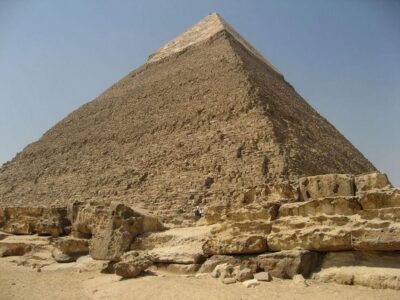
VIP All inclusive Best of the best Giza Pyramids,Sakkara,Memphis
Read our review →
Pyramids of Giza, Sphinx, Saqqara & Memphis Tour
Read our review →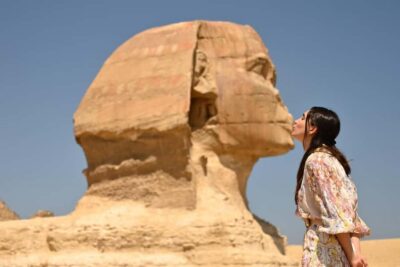
Half-Day Tour to Pyramids of Giza and the Sphinx
Read our review →
Private ViP all-inclusive Giza Pyramids,Sphinx,Inside Pyramid
Read our review →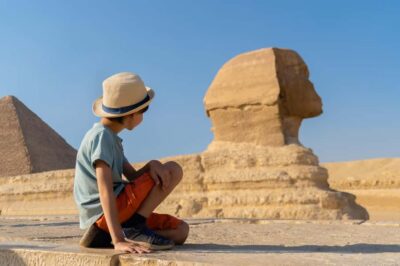
Grand Egyptian Museum, Pyramids, Sphinx Tour & Lunch
Read our review →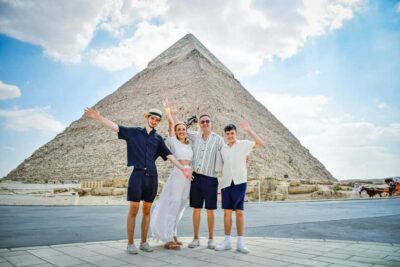
Cairo Pyramids, Sphinx & Egyptian Museum Day Trip
Read our review →Browse the lists this tour appears in