
Reviewed · EGYPT · TOURS IN LUXOR
Luxor: Private Full-Day Luxor Highlights Tour with Pickup
Luxor packs an astonishing amount of ancient Egypt into one day. This private 8-hour tour covers the major sights on both banks of the Nile, from royal tombs and Hatshepsut’s temple to the giant courts of Karnak and the evening-friendly Luxor Temple. It is a useful way to see the essentials without joining a large coach group.
I like the one-car format, since you can set the pace, ask questions, and spend longer at a site that grabs you. I also like that the package includes a guide, entrance fees, lunch, bottled water, and transfers from a Luxor hotel, Nile cruise, or Luxor Airport. The main drawback is the amount of ground covered. You may also be taken to artisan or souvenir stops, which some people enjoy and others find tiring.
Key points to know before booking
- Six major sights in one day: Visit the Valley of the Kings, Hatshepsut Temple, Colossi of Memnon, Karnak Temple, and Luxor Temple, with the East and West Banks linked by private transport.
- Private means flexible: Guides such as Mahmoud, Salwa, Carlos, and Ahmed have adjusted timing, answered extra questions, and allowed people to explore at their own pace.
- The guide makes the difference: English, Spanish, Arabic, and German are available, and several guides are praised for clear storytelling and strong language skills.
- Lunch is included: The meal has been a highlight for many people, including vegetarian diners, though the exact restaurant and menu are not specified.
- Expect a full day: The advertised duration is eight hours, with some outings running roughly seven to eight hours depending on pickup and timing.
- Allow for shopping stops: Demonstrations involving alabaster, essential oils, and Egyptian paper may appear between monuments, and buying is not required.
Why this private Luxor day works well
The best reason to book this outing is simple: Luxor’s main monuments are spread across two sides of the Nile, and organizing them alone takes time. A private vehicle removes much of the friction. You are collected in Luxor, driven first to the West Bank, then taken across to the East Bank before returning to your hotel or continuing to Luxor Airport.
You are not sharing the day with a large group, so the experience can feel more like a guided visit than a procession. Guides have adjusted the schedule for late starts, walking concerns, family needs, and personal interests. That flexibility matters when the heat rises or when you want another few minutes inside a tomb.
The standard price is $105 per person. That is not the cheapest way to see Luxor, but it covers private transport, a guide, entry fees, lunch, and water. For two people, the cost buys privacy and time control rather than just transportation. A large group may cost less, but you are more likely to follow a fixed schedule and wait for others.
The value is strongest if you have only one day in Luxor, are arriving from the Red Sea area, or want the major sites explained in a clear order. If you are staying several days and prefer slow museum visits or lesser-known sites, this packed schedule may feel too brisk.
A few more things to do in Luxor worth a look
- Luxor: Shared Full-Day Tour to Luxor West and East Banks
★ 4.5 · 1,812 reviews - Full Day Tour to East and West Banks of Luxor
★ 5.0 · 1,449 reviews - Luxor : Full Day Tour to Luxor West and East Banks & Lunch
★ 5.0 · 870 reviews
Starting on the West Bank at the Valley of the Kings
The day begins with a drive to the Valley of the Kings, one of Egypt’s most striking ancient burial areas. Rather than building pyramids, New Kingdom rulers placed their tombs in a concealed desert valley. The tour description identifies tombs linked with Thutmosis I, Thutmosis III, Tutankhamun, Ramses VI, Merenptah, and Amenhotep II.
Your entry allows access to the included sites, but the exact tombs open on the day can vary. Tutankhamun’s tomb may involve an additional charge in many ticket arrangements, so ask your guide what is covered before entering. The guide can provide the wider story, while you focus on the painted chambers, narrow passages, and scale of the royal burial complex.
This is one place where good pacing helps. The valley is exposed and the ground can be uneven. Wear walking shoes, carry water, and bring a hat. One past booking specifically advised bringing comfortable footwear, and that is sound advice for the entire day.
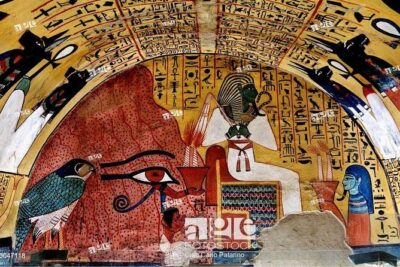
A guide such as Ash, Mostafa, Esaam, or Ahmed can make the tombs easier to understand. The decoration is not simply ornamental. It relates to the ruler’s journey after death, religious figures, and royal power. If your guide explains the images before you enter, you will notice more than you would by looking at the walls alone.
The tradeoff is that the Valley of the Kings can be crowded, especially when day coaches arrive from Hurghada. An early start is worth requesting. One guide and driver team began ahead of the main rush and timed several stops to reduce crowd pressure. No schedule can promise empty tombs, but private transport gives you a better chance to adjust the order.
Hatshepsut’s temple and a powerful royal story
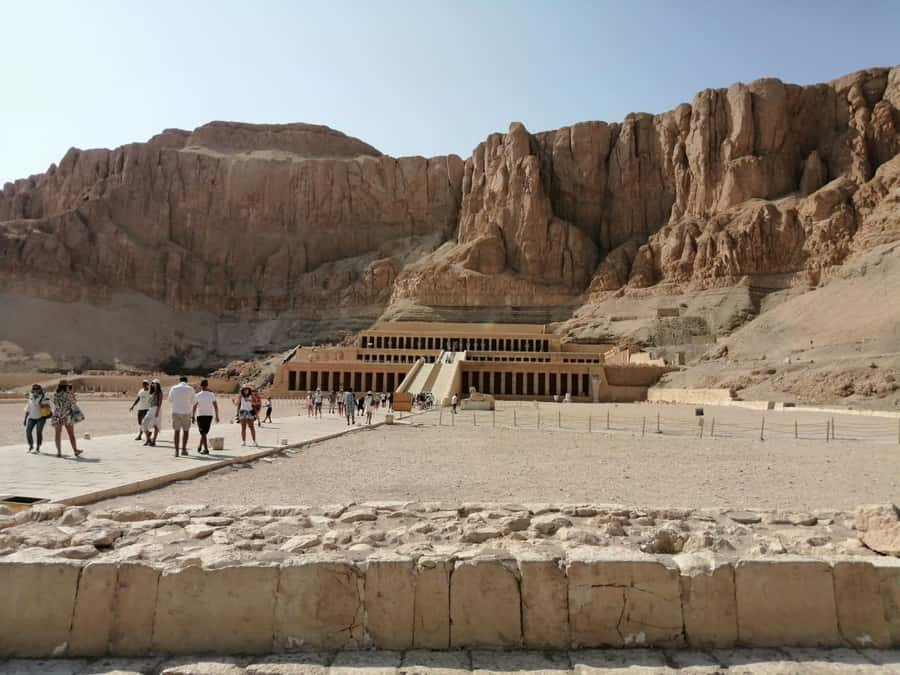
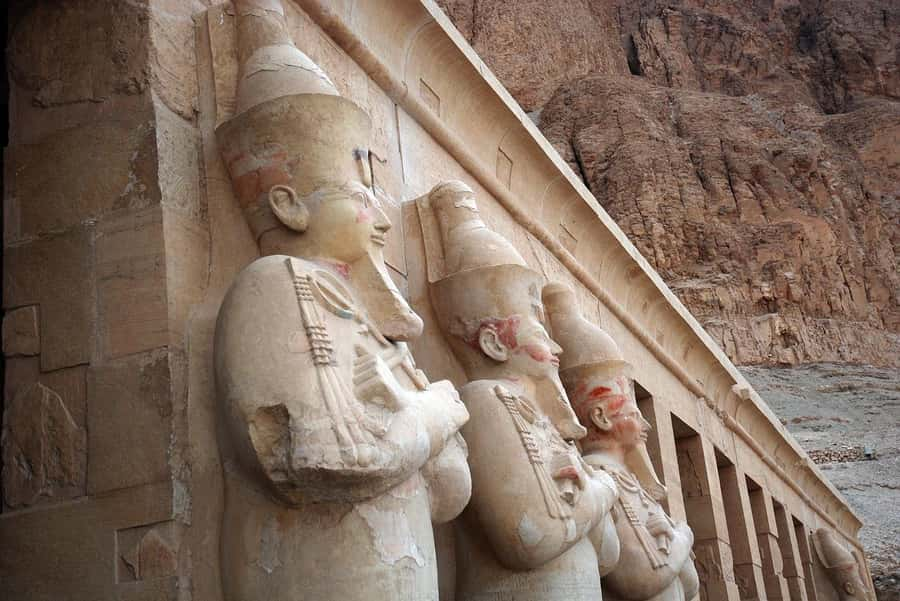
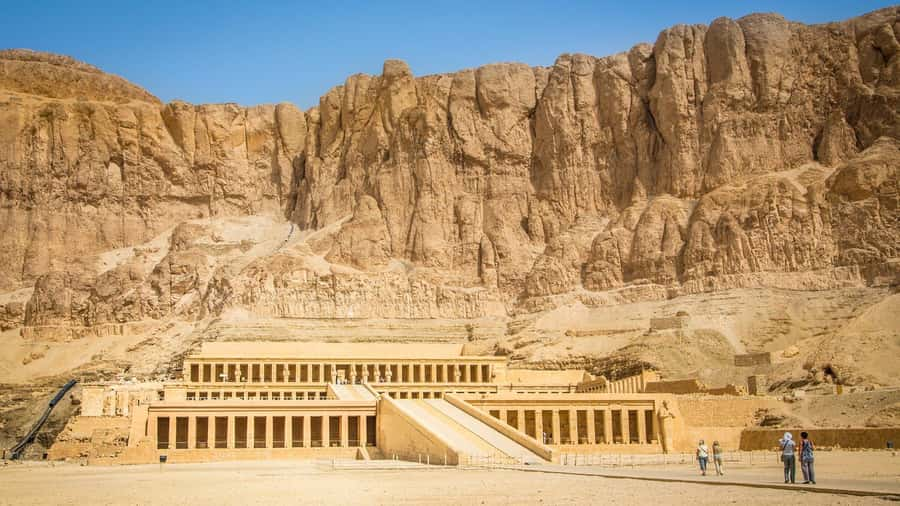
From the valley, you continue to the Temple of Queen Hatshepsut, also called El Deir El Bahari. The temple rises against a dramatic cliff, with broad terraces leading toward the rock face. Its setting gives it a different feel from the enclosed tombs you have just visited.
Hatshepsut ruled Egypt for about 20 years during the 18th Dynasty. She was the daughter of Thutmosis I and the only woman identified in the supplied tour information as having reigned as an ancient Egyptian pharaoh. Your guide will explain how the temple presents her authority through architecture, reliefs, and religious imagery.
This is a good stop for travelers who want more than a list of dates. Guides including Salwa, Saloua, Merit, and Sawsan are praised for giving clear explanations and setting expectations before each site. That approach is useful here because the large terraces can look simple from a distance, while the details become more meaningful once you know what to look for.
The site involves outdoor walking, stairs, and sun exposure. If anyone in your party has difficulty walking, tell the company in advance and tell the guide at the start. A guide named Khalid was particularly helpful to a visitor with walking problems, including carrying a bag and offering practical assistance. That does not mean every accessibility need is guaranteed, so ask direct questions before booking.
A short stop at the Colossi of Memnon
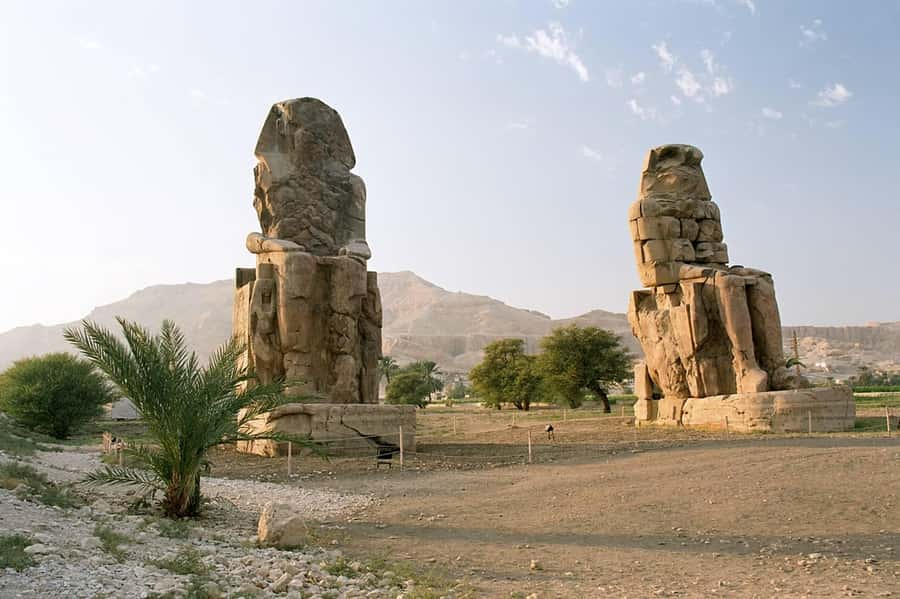
The Colossi of Memnon usually works as a brief photo and orientation stop. These enormous seated statues are the remains of the mortuary temple of Amenhotep III. The temple itself is largely gone, making the statues more important as surviving markers of the original complex.
Do not expect a long indoor visit here. The value is in seeing the scale of the figures and understanding that they once guarded a much larger royal memorial. Your guide can place the statues within the day’s story before you move on to the East Bank.
This stop also offers a change of rhythm. After the tombs and terraces, you can take photographs, stretch your legs, and prepare for the transfer across the Nile. Bring a hat and be ready for direct sun.
Same base, a different sort of day:
- Hurghada: Luxor Valley of the Kings & Tutankhamun Tomb Trip
★ 4.7 · 13,208 reviews - Luxor Day Trip from Hurghada Small Group & Tutankhamun Tomb
★ 4.8 · 5,366 reviews - Hot Air Balloon Ride in Luxor Egypt with Transfers Included
★ 5.0 · 4,319 reviews - Luxor: Hot Air Balloon Ride over Luxor Relics
★ 4.8 · 1,681 reviews
Crossing to the East Bank for Karnak Temple
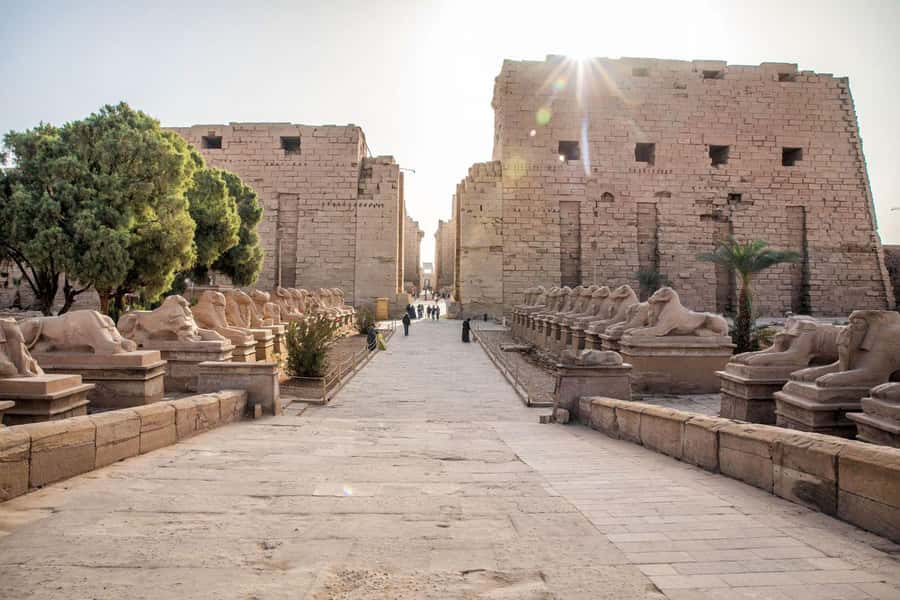
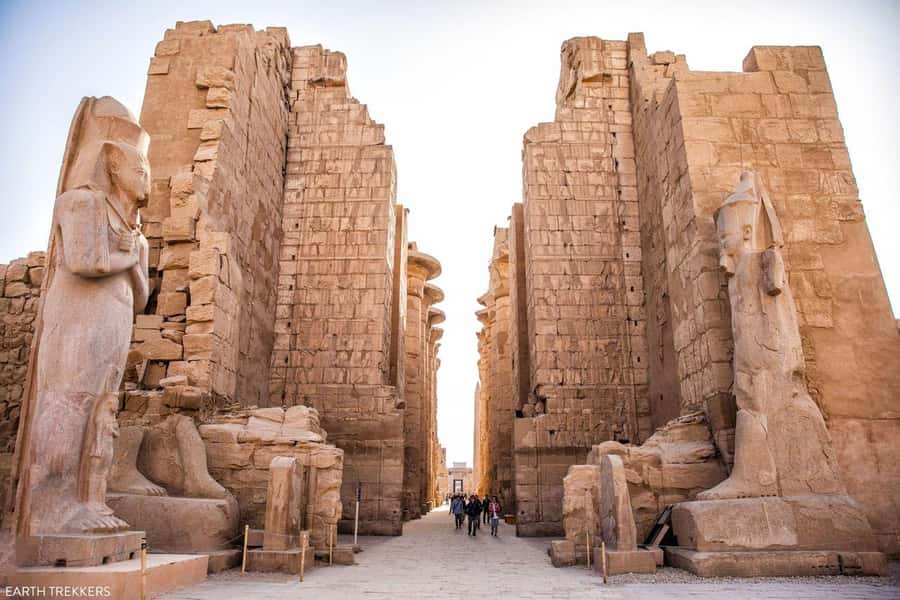
Karnak Temple is the largest and most demanding stop of the day. It was dedicated to Amon, his wife Mut, and their son Khonsu, and the complex served as a major religious center for roughly 2,000 years. The site is not one single building. It is a large collection of sanctuaries, pylons, columns, courts, and carved surfaces added over many generations.
This is where a strong guide earns the fee. Without context, the site can feel like a vast stone maze. With someone such as Ayman, Moustaffa, Ayad, or Bahgat explaining the gods, rulers, and purpose of each area, you can see how the complex developed over time.
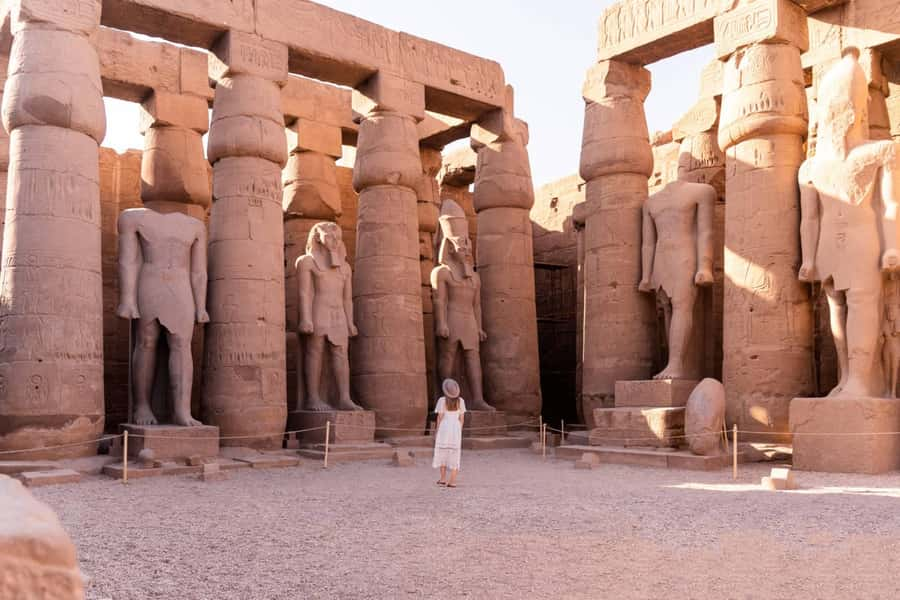
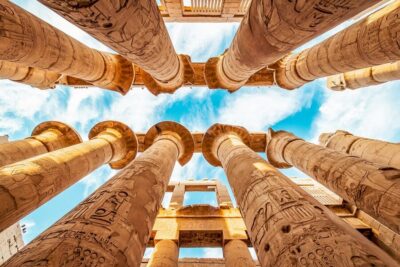
The Great Hypostyle Hall is likely to be a focal point, though the precise route and time at each area can vary. Its columns make the space feel overwhelming in the best sense, but you will need time to look upward, study the reliefs, and take photographs. Do not let the guide rush you through the first explanation. The opening story often helps the rest of the complex make sense.
Several people have singled out Karnak as the day’s essential visit. I agree with that priority. The Valley of the Kings is more intimate and the tomb paintings are remarkable, but Karnak gives you the clearest sense of ancient Egypt’s religious scale and long development.
The drawback is fatigue. By the time you reach Karnak, you may already have completed several hours of walking in the sun. Ask for a short pause if needed. A private tour is much better suited to this than a fixed group schedule.
Ending at Luxor Temple
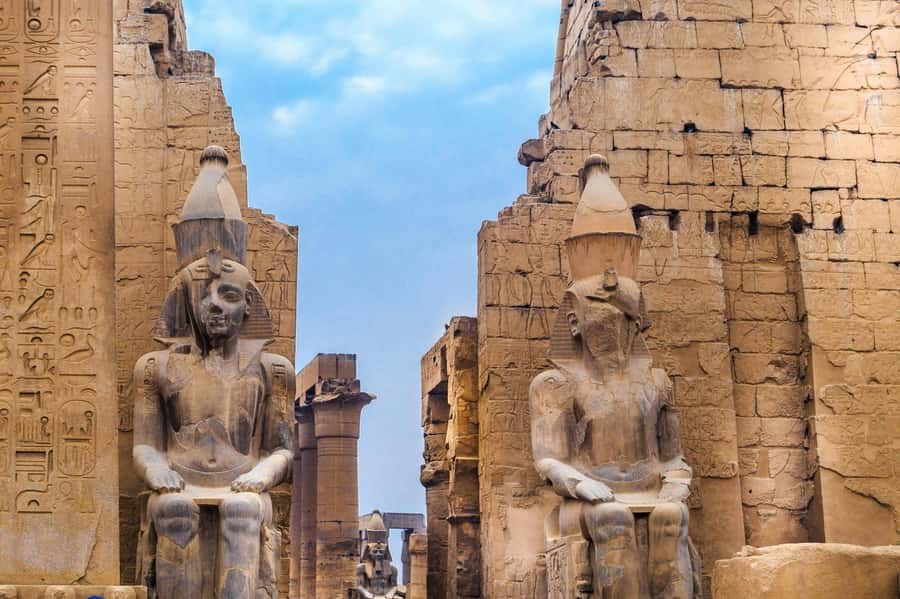
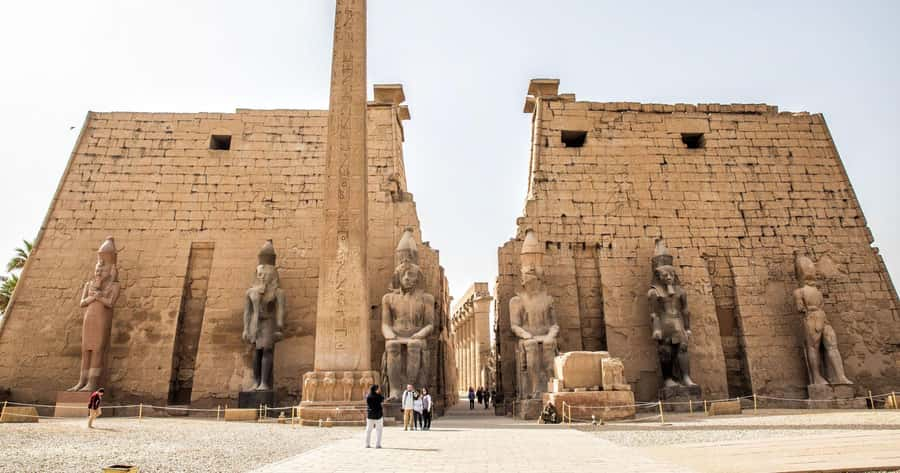
The final major monument is Luxor Temple, built by Amenhotep III during the 18th Dynasty and completed by Ramses II during the 19th Dynasty. Its location in modern Luxor makes it an easy final stop before the drive back.
The temple feels different from Karnak. It is more compact and easier to read as a sequence of gateways, courts, and columns. Your guide can connect the building to the wider religious story of Amon and to the rulers who expanded it.
The timing here matters. If the schedule allows a later visit, the changing light can make the stonework more atmospheric, though the exact starting time is based on availability and your pickup arrangement. Do not count on a specific sunset or lighting condition unless the company confirms it.
This is also a good place to ask final questions. Guides such as Shereen, Sam, and Omar have been praised for giving broad explanations during the drives and then letting people explore independently at the monuments. That balance suits Luxor Temple, where you may want a short explanation followed by quiet time among the columns.
Guides, drivers, and the private-car advantage
The guide is the heart of this experience. The available languages are English, Spanish, Arabic, and German. Names praised for clear explanations, warmth, or strong language skills include Ash, Salwa, Carlos, Khaled, Ayman, Ahmed K., Khaled in Spanish, and Esaam, among many others.
The descriptions of the guides vary in style, which is normal for a large operation. Some use drawings or photographs. Esaam was noted for using pen and paper while explaining the ancient world and for reading hieroglyphs. Others focus on humor, family-friendly pacing, photography help, or practical warnings about sellers and scams.
That variety can work in your favor, but you cannot choose a specific guide unless the company confirms it. If language ability or a particular learning style matters, state it clearly when you book.
The driver handles the long transfers and waits near the sites. Reports of clean, air-conditioned cars, punctual pickups, careful driving, and polite service are common. A few drivers were praised for staying off the phone, opening doors, and being ready when the group finished. Those small habits matter after a hot walk.
Pickup is offered from a Luxor hotel or Nile cruise, and the tour can also begin at Luxor Airport. One booking involved a hotel outside the stated pickup area and was still collected, but communication was slow through the booking platform. Use WhatsApp if the company provides it, and confirm the exact pickup point the day before.
Lunch, shopping stops, and the parts to manage
Lunch is included, and the food has been a strong part of the day for several people. One meal was described as a welcome change from resort food, while a vegetarian request was handled well. The specific restaurant is not fixed in the supplied details, so ask about dietary needs before departure.
You may also stop at places connected with local crafts. Demonstrations can include alabaster, essential oils, and Egyptian paper. These stops can add practical context and give you a chance to buy a souvenir, but sales pitches may make the day feel longer.
You are not required to buy anything. One guide made that clear at an artisan house, which is exactly the attitude you should expect. If you are tired or uninterested, politely say so and ask how much time remains before the next monument.
This is the main area where the tour loses some of its polish. A packed eight-hour schedule leaves limited room for extended shopping, long lunches, or slow photography. Tell the guide at the beginning if your priority is monuments rather than purchases.
Who should book this Luxor tour?
I would choose this tour if you want to see the headline sites in one day and prefer a private setting. It suits couples, families, first-time visitors, Nile cruise passengers, and people based in the Red Sea Governorate who want a structured trip to Luxor.
Families may appreciate the private pace, especially when a young child needs breaks. One guide was patient with a two-year-old and kept the day moving without making the family feel uncomfortable. Private transport also makes it easier to adjust the order of stops.
It is a good fit for people who want history explained in plain language. You do not need to be a specialist. Guides have been praised for explaining complicated subjects in an easy way, using humor, photos, drawings, and clear links between the monuments.
I would think twice if you dislike early starts, outdoor walking, souvenir stops, or a tightly packed schedule. You should also avoid treating this as a quiet archaeological study day. It is a highlights tour, designed to give you the major sights rather than every chamber and side monument.
Is the $105 price fair?
At $105 per person, the tour offers solid value if you use the included service. You receive private transportation, a private guide, entry fees, lunch, water, and pickup and return within Luxor. The airport ending adds useful flexibility if you are leaving the city afterward.
The price is harder to justify for a solo traveler who only wants transport. In that case, a shared option may cost less. But if you want expert explanations, a clean air-conditioned vehicle, and the ability to slow down or skip a shopping stop, the private format earns its premium.
Free cancellation up to 24 hours before departure and reserve-now, pay-later booking also reduce the risk when your Egypt schedule is still changing. Check the available starting times before you commit, since the day’s heat and crowd levels make timing important.
Should you book it?
Book this tour if you have one day and want the major Luxor sights handled in a logical route. The private vehicle, lunch, guide, and flexible pacing make it a practical choice, especially for a couple or family.
Go in with realistic expectations: it is a full day, the monuments require walking, and shopping demonstrations may appear. Confirm your pickup location, preferred language, dietary needs, and interest in avoiding sales stops. Do that, and the tour gives you a strong first look at both banks of the Nile without the strain of arranging every transfer yourself.
FAQ
How long does the Luxor highlights tour last?
The advertised duration is eight hours. Some outings have run for roughly seven to eight hours, depending on pickup, timing, and the pace of the private group.
Where can the tour pick me up?
Pickup is available from a hotel or Nile cruise in Luxor. The tour information also allows pickup from Luxor Airport.
Can the tour end at Luxor Airport?
Yes. The experience can finish at Luxor Airport instead of returning you to your hotel.
Which sites are included?
The route includes the Valley of the Kings, Queen Hatshepsut Temple, the Colossi of Memnon, Karnak Temple, and Luxor Temple.
Is lunch included?
Yes. Lunch and a bottle of water are included. Vegetarian meals have been accommodated, but you should state dietary needs when booking.
Is the transportation private?
Yes. Transfers use a private air-conditioned vehicle, and the booking is for a private group.
Which languages are available?
Live guides are available in English, Spanish, Arabic, and German.
Are entrance fees included?
Yes. Entry fees for the included visits are part of the tour price.
Can I cancel the booking?
You can cancel up to 24 hours in advance for a full refund. The reserve-now, pay-later option lets you hold a place without paying immediately.
Just added in Luxor
- From Luxor: 3-Day Nile Cruise to Aswan with Private Guide★ 4.2 · 147 reviews
- Marsa Alam: Valley of the Kings & Karnak Temples Luxor Tour★ 4.6 · 177 reviews
- Luxor: West Bank Kings and Queens All-Inclusive Tour & Lunch★ 4.5 · 298 reviews
- Luxor: West and East Banks All-Inclusive Tour & Balloon Ride★ 4.5 · 415 reviews
- Luxor: Hot Air Balloon Ride Over Temple of Hatshepsut★ 4.8 · 185 reviews
- Luxor: West & East Banks & Tut’s Tomb Private Full-Day Tour★ 4.8 · 173 reviews
- Luxor: Quad Bike Safari Experience★ 4.0 · 110 reviews
- Luxor: Valley of the Kings and Queens Guided Tour with Lunch★ 4.5 · 337 reviews
Tours in Luxor, compared.
Luxor Valley of the Kings & Tutankhamun Tomb Trip
Read our review →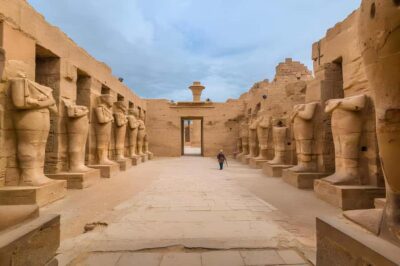
Luxor Day Trip from Hurghada Small Group & Tutankhamun Tomb
Read our review →
Hot Air Balloon Ride in Luxor Egypt with Transfers Included
Read our review →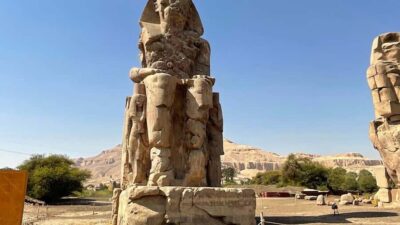
Shared Full-Day Tour to Luxor West and East Banks
Read our review →
Luxor Day Tour: Valley of Kings & Queens & Hatchepsut Temples
Read our review →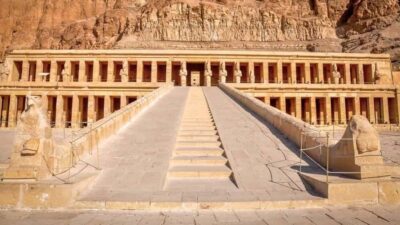
Valley of the Kings and Hatshepsut Temple Day Tour
Read our review →
2-Day Luxor Tour with Hotel, Balloon, & Boat Ride
Read our review →Browse the lists this tour appears in