
Reviewed · MOROCCO · TOURS IN ESSAOUIRA
Essaouira: HOW TO BE A REAL MOROCCAN CHEF
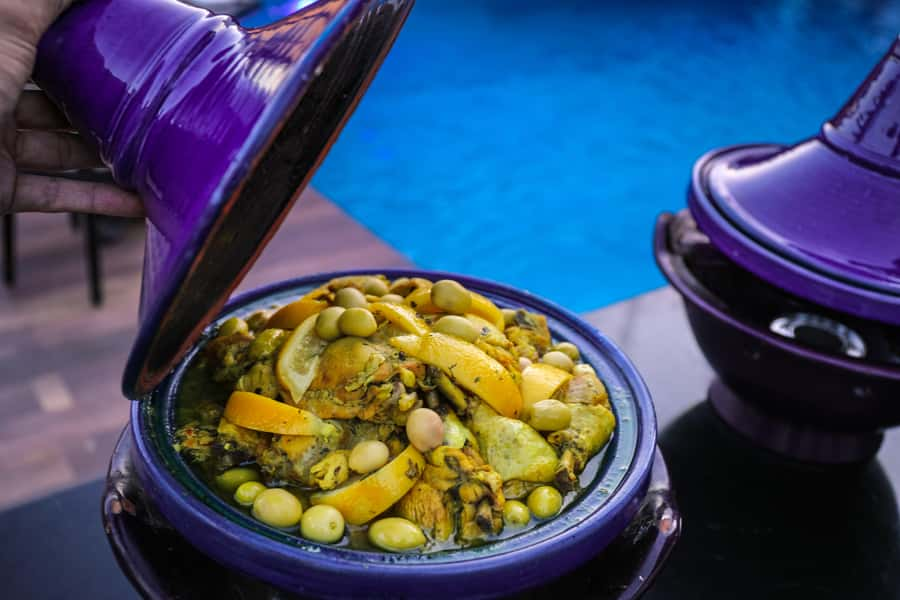
The best part of this Essaouira cooking class is its setting: you are not watching a polished kitchen demonstration, but preparing tagine in Abdou’s home, with a local chef who treats the group like visiting friends. You may shop for ingredients, learn the purpose of each spice, and then sit down to eat what you cooked.
I like the real hands-on work, from chopping and seasoning to layering the tagine. I also like the cultural extras, especially mint tea, homemade pastries, Arabic words, music, and practical help buying spices or a tagine pot. The main consideration is that the cooking itself is fairly simple, and a chicken option may involve seeing the bird freshly slaughtered at the market.
Key points at a glance
- Choose your tagine: Options may include chicken, lamb, fish, or vegetable preparations, with choices often made before the class.
- Cook in a local home: Abdou welcomes you into his apartment, about 15 minutes from the Medina on foot.
- Learn by doing: You chop ingredients, mix marinades, season, layer, and place the tagine on the stove yourself.
- Tea and sweets fill the cooking time: Moroccan mint tea and homemade pastries are served while your meal simmers.
- Expect a social evening: Small groups of up to 10 may share stories, Arabic phrases, music, instruments, and a communal meal.
- Take the lesson home: Recipes are provided, and Abdou may help you find spices or a cooking pot at local prices.
Cooking Moroccan food in Abdou’s home
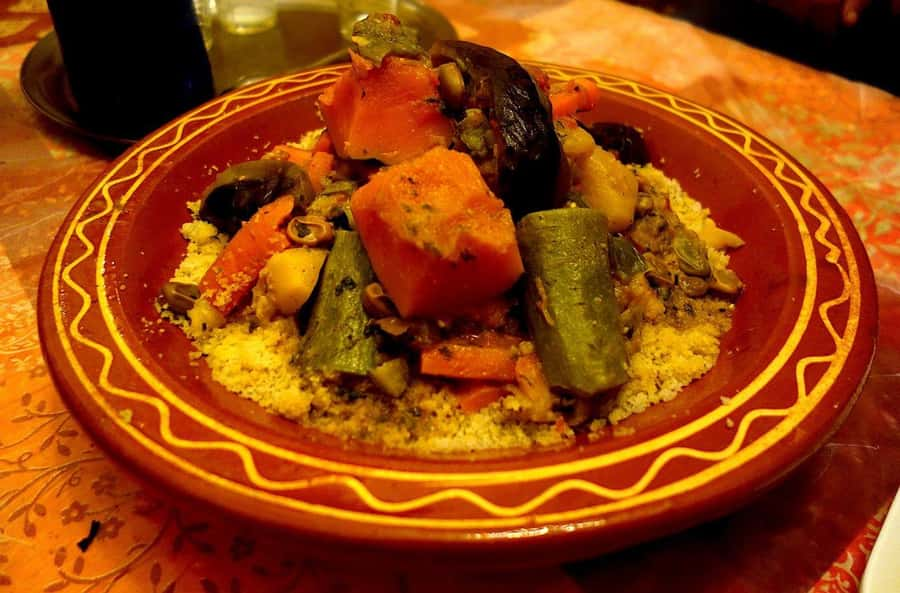
This is a three-hour experience in Essaouira, priced at $45 per person. For that fee, you get the chef, ingredients, utensils, spice instruction, hands-on preparation, mint tea, sweets, and the meal itself.
The price makes sense if you want more than dinner. A restaurant can feed you for less, but it will not show you how Moroccan cooks build flavor or give you recipes to try at home. The class also includes the social side of Moroccan hospitality, which is hard to buy as a separate sightseeing stop.
Abdou is the host most often named by participants. He speaks English and French, and his English is described as especially strong. Isaac may also help with the session. The teaching style is friendly and patient, which matters if you are new to cooking or are bringing children.
The class is limited to 10 people. That is large enough to meet other visitors, but small enough for the chef to guide you at the chopping board. A private lesson is not promised, so expect to share the space and the meal.
Other coast days out of Essaouira:
- From Marrakech: Essaouira & Atlantic Coast Full-Day Trip
★ 4.4 · 1,100 reviews - Essaouira: Surf Lessons
★ 4.9 · 412 reviews - Essaouira Sand Dunes: Half Day Quad Bike Tour
★ 5.0 · 313 reviews
The welcome begins with mint tea
The class generally starts around a table with Moroccan mint tea. This is more than a quick drink before the lesson. Tea gives Abdou time to explain local customs, introduce the group, and talk about the food you are about to prepare.
You may also receive Moroccan pastries or sweets while the tagines cook. These details help the class feel like a visit to someone’s home rather than a cooking-school production. Some sessions include music, singing, traditional instruments, and a little Arabic practice.
The tone is informal. You can ask about spices, cooking methods, Essaouira, restaurants, and local customs. If you take this class early in your stay, Abdou can also offer practical advice for the rest of your visit.
Choosing a tagine and learning the spice cabinet
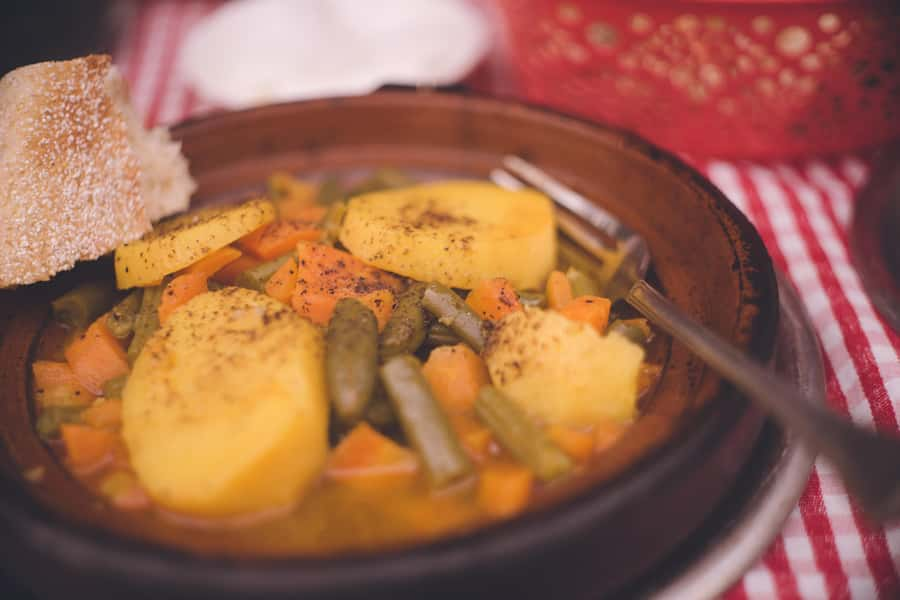
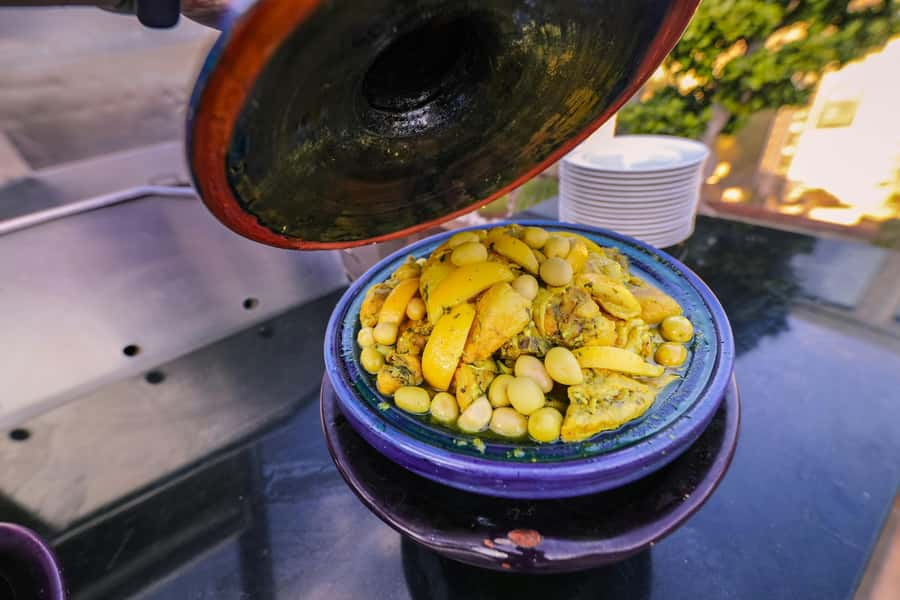
A useful feature is the chance to choose your tagine. Options reported during the sessions include chicken, lamb, fish, and other combinations. Some groups have prepared several different tagines, while individuals have selected their own dish.
The choice matters because Moroccan tagine is not one fixed recipe. The protein, vegetables, marinade, spice mix, and finishing ingredients all change the result. Abdou explains what goes into each dish and why, rather than simply handing you a printed list.
You learn about ingredients such as cumin, paprika, saffron, and ras el hanout. The lesson focuses on how spices are used in combination, not just on memorizing names. You may also learn how personal taste affects the marinade and seasoning.
This is a good point to ask questions. If you prefer less spice, have dietary restrictions, or do not eat a certain ingredient, tell Abdou in advance. One group of five received separate personal tagines so dietary needs could be handled properly.
From chopping board to stove
The practical work is simple enough for beginners. You help prepare the vegetables, cut the ingredients, mix the marinade, and assemble the dish. Abdou then shows you how to layer the food in the traditional manner.
The hands-on element is important. You are not standing at the back of a room while a chef does everything. You take part in the preparation and see how the uncooked ingredients become a complete meal.
The class also teaches patience. Tagine cooking takes time, so once your pot is on the stove, the group moves back to tea, conversation, sweets, and music. You learn that a good Moroccan meal is not rushed from pan to plate.
The cooking technique is not technically difficult, which may disappoint someone looking for advanced chef training. The value is in learning a practical Moroccan method that you can repeat at home, along with the flavor combinations and cultural background.
Same base, a different sort of day:
- Big dunes and atlantic coast tour 2 HOURS
★ 5.0 · 439 reviews - 3 hours ride on camel at sunset
★ 5.0 · 326 reviews - From Essaouira: 1-Hour Horse Ride
★ 4.9 · 243 reviews - Essaouira: Sqala du Port, Medina Ramparts & Fish Market Tour
★ 4.7 · 212 reviews
What you may cook beyond tagine
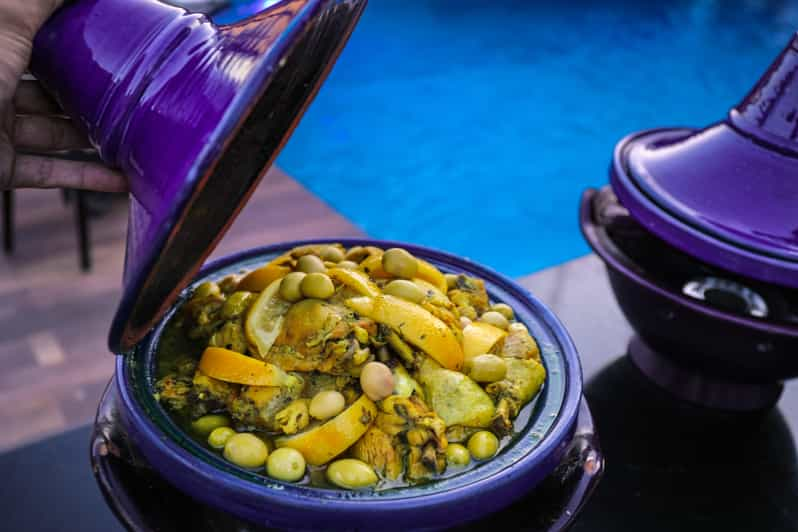
Tagine is the central dish, but the session can cover more. The advertised possibilities include pastilla, a pastry with chicken, almonds, and a sweet note, or couscous. The exact menu depends on the session and the group, so do not book expecting a guaranteed three-course syllabus.
Most of the detailed experiences focus on tagine. Some people prepare one large dish together, while others make separate pots with different flavors. If you have a strong preference, contact the provider or Abdou ahead of time and ask what choices are available that day.
You may also learn how to pour Moroccan tea from a height. It is a small but enjoyable skill, and it gives the meal a proper local rhythm. Abdou sometimes shares Arabic words and explains food traditions as he works.
The social side is part of the meal
The class works best if you enjoy conversation. You may arrive with strangers and leave having shared food, stories, music, and cooking tips. Groups of friends, couples, solo visitors, and families with children have all taken part.
Children can help with the preparation under supervision. A two-year-old joined briefly in one session, and a family with two children found Abdou patient and encouraging. Still, this is a real home kitchen, not a children’s play program, so adults should stay responsible for younger children.
The entertainment is not a fixed stage show. Music, singing, and instruments may appear during the cooking period, but the exact atmosphere depends on the group and the people hosting that day. That unpredictability is part of the home-based character, though anyone wanting a quiet technical lesson should know that conversation is central.
Eating what you prepared
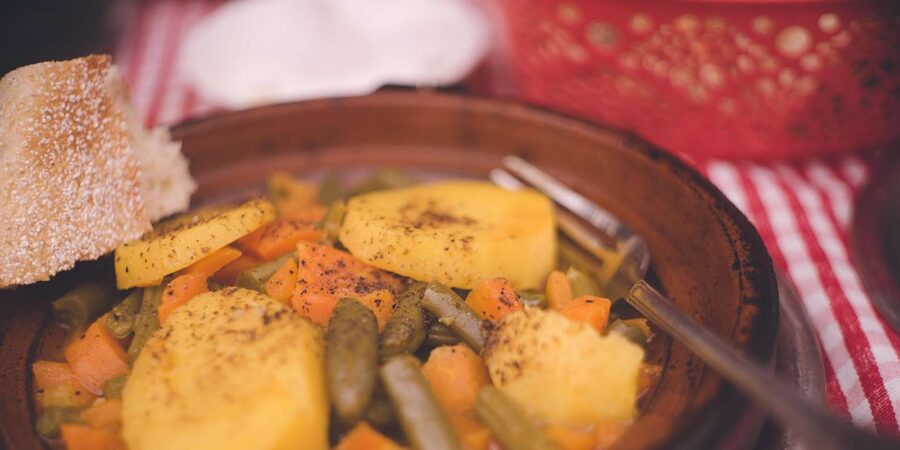
The final meal is served at a communal table. This is the payoff, but it is also a useful cooking lesson. You can taste how the spices came together and see the difference between a dish you assembled yourself and one ordered from a menu.
Portions are described as generous. Some people found the meal large enough to keep them full for much of the day, and takeaway containers may be available for leftovers. If your group has made several tagines, you may sample more than one style.
Mint tea and pastries help bridge the cooking and the meal. Homemade sweets, including pastries made by Abdou’s sister, may be served while the food cooks. These touches add to the sense that you have been invited into a household, not simply placed at a tourist table.
The food is also a practical reference point. After the class, you know what a fish, lamb, or chicken tagine should taste like and which ingredients you may want to buy for your own kitchen.
Market visits, spices, and buying a tagine pot
Some sessions include a trip to the local market for fresh ingredients before heading to Abdou’s home. Other participants have been taken to shops afterward to buy spices or a traditional tagine pot.
This help is valuable in Essaouira, where shop prices can vary. Abdou can point you toward places selling at local prices rather than leaving you to guess which shop is fair. In one case, he delivered a tagine pot to a hotel after nearby shops were closed. That is unusually generous, but it should be viewed as a personal favor, not a standard inclusion.
You may also receive a packet of ras el hanout to take home. Recipes are provided after the class, giving you a better chance of repeating the meal than a quick verbal explanation would.
There is one important market note. If you choose chicken, the bird may be freshly slaughtered at the market while you watch. That is normal in some Moroccan food settings, but it can be difficult for anyone uncomfortable with that process. Ask about alternatives before confirming your choice.
Getting there and planning your time
The home is described as about 15 minutes from the Medina on foot. Some groups have taken a taxi after shopping, so the exact start may vary. Check the meeting instructions and starting time when booking.
Allow the full three hours. The lesson includes preparation, cooking, tea, conversation, and the meal, so it is not a quick activity to squeeze between two fixed appointments. An evening session can work well because the tagine becomes dinner, while a daytime class gives you more time afterward for Essaouira’s streets and waterfront.
The activity offers free cancellation up to 24 hours before the start time. You can also reserve now and pay later, which helps if your Essaouira plans may change. Starting times depend on availability.
The class is offered in English and French. The language support is a real strength for English-speaking visitors, especially when discussing dietary needs or asking why a spice is used.
Who will enjoy this class most
I would recommend it to anyone who wants a personal introduction to Moroccan food and home life. It suits couples, small groups of friends, solo visitors who enjoy meeting people, and families with children old enough to take part safely.
It is especially useful early in an Essaouira stay. You can pick up restaurant suggestions, market advice, spice ideas, and a little local vocabulary before spending the rest of your time in town.
Food lovers will appreciate the choice of tagine and the chance to compare flavors. Beginners will like the patient instruction. You do not need professional knife skills or previous Moroccan cooking experience.
I would be more cautious if you want a formal culinary course with exact timing, advanced techniques, or a guaranteed menu. The cooking is approachable, and the social atmosphere may take as much space as the instruction.
Is $45 a fair price?
At $45, the class offers good value if you count the meal, ingredients, tea, sweets, instruction, recipes, and local contact. You also receive something harder to price: a direct connection with a resident of Essaouira and practical guidance for shopping.
It is not the cheapest way to eat Moroccan food. A simple restaurant meal costs less, and the tagine preparation itself is not complicated. You are paying for access to a home, time with Abdou, and the chance to prepare the dish rather than simply order it.
The small-group limit helps protect that value. With up to 10 people, you should get some personal guidance without losing the easy social feel. If the group is full, expect less one-to-one attention than in a private lesson.
Should you book the Essaouira cooking class?
Book it if you want a warm, personal activity built around food, conversation, and local customs. Abdou’s patient teaching, strong language skills, flexible approach to dietary needs, and help with spices or tagine shopping make this more useful than a standard demonstration.
The best reason to choose it is the mix of practical skill and hospitality. You leave with recipes, cooking confidence, and a better sense of how Moroccan meals fit into daily life.
Think twice if you dislike communal activities, want a highly technical class, or may be uncomfortable seeing poultry prepared at a market. For most visitors who have three free hours in Essaouira, this is a memorable and fairly priced way to eat well and learn something you can use after Morocco.
FAQ
How long does the cooking class last?
The experience lasts three hours, including cooking, tea, conversation, and eating the meal you prepare.
How much does the experience cost?
The listed price is $45 per person.
Where does the cooking class take place?
The class takes place in a charming local home in Essaouira. The home is described as about 15 minutes from the Medina on foot.
Who teaches the class?
The host and chef is Abdou. Isaac may also assist with hosting, music, and conversation.
What languages are available?
Instruction is available in English and French.
How many people can join?
The group is limited to 10 participants.
What food will I prepare?
Tagine is the main dish. Depending on the session, choices may include chicken, lamb, fish, or other tagine styles. Pastilla or couscous may also be included, but those dishes are not guaranteed.
Are ingredients and cooking equipment included?
Yes. The price includes ingredients, utensils, mint tea, spice exploration, cooking instruction, and the meal.
Can I cancel or pay later?
You can cancel up to 24 hours before the activity for a full refund. Reserve-now, pay-later booking is also available.
Just added in Essaouira
- From Marrakech: Essaouira Full-Day Trip with Activities★ 4.6 · 142 reviews
- Essaouira: Sqala du Port, Medina Ramparts & Fish Market Tour★ 4.7 · 212 reviews
- Essaouira Sand Dunes: Half Day Quad Bike Tour★ 5.0 · 313 reviews
- Essaouira: One Hour Dromedary Ride★ 4.7 · 117 reviews
- Essaouira: Private City Tour★ 4.5 · 125 reviews
- Essaouira: 2-Hour Surf Lesson★ 4.9 · 119 reviews
- From Essaouira: 1-Hour Horse Ride★ 4.9 · 243 reviews
- Essaouira: 2-Hour Camel Ride★ 4.7 · 87 reviews
Essaouira Day Trips, compared.


From Marrakech To Essaouira Mogador Full Day Trip | Small-group
Read our review →


Browse the lists this tour appears in