
Reviewed · TANZANIA · TOURS IN MOSHI
Kilimanjaro Climbing Lemosho Route 8 Days.
Kilimanjaro’s Lemosho Route gives you the mountain in chapters: rainforest, open moorland, alpine desert, glacier views, then a hard midnight push to Uhuru Peak. This private eight-day climb, plus arrival and departure arrangements, lets your group set the pace with a guide and support crew handling food, tents, and camp duties.
I like the thoughtful acclimatization plan, especially the high climb to Lava Tower at 4,600 meters followed by a lower night at Barranco Camp. I also like the practical safety setup, with pulse oximeters, first aid supplies, and emergency oxygen. The main drawback is summit day: you may hike for roughly 14 hours, often beginning around midnight, so this is a serious physical challenge rather than a scenic walk.
Key points to know before you book
- A private Lemosho climb: Only you and your own group take part, giving your guide room to adjust the pace.
- A strong acclimatization pattern: You climb high to Lava Tower, then sleep lower at Barranco Camp.
- Seven nights on the mountain: Camps include Mti Mkubwa, Shira I, Barranco, Karanga, Barafu, and Mweka.
- Safety equipment is provided: Pulse oximeters, a first aid kit, and emergency oxygen are included.
- A full service package: Airport pickup, two hotel nights, tents, meals, private transport, guides, and porters are covered.
- A demanding summit day: You climb from Barafu Camp around midnight, reach Uhuru Peak, then descend to Mweka Camp.
What the $2,300 price covers
At $2,300 per person, this is not simply a guided walk. The package covers the mountain fees and taxes, private transportation, two hotel nights, camping support, guides, porters, and meals. You receive eight breakfasts, eight lunches, and nine dinners as stated in the package details, though I would confirm the meal count when booking because the climb itself runs across several camping days.
The airport transfer is useful. You arrive at Kilimanjaro International Airport, travel to Moshi, and have a hotel base before the climb begins. That first night is not wasted time. Your guide gives a briefing, checks your equipment, and helps identify missing or unsuitable gear before you reach the mountain.
The value comes from removing many small worries. You do not need to arrange park access, carry all group supplies, plan camp meals, or organize the return from Mweka Gate. Your main extra costs are flights, an entry visa, laundry, and tips for the mountain crew.
Tipping deserves planning. It is not included, and the crew is a major part of the climb. Set aside money before arrival so you are not trying to solve this at the end.
The price looks especially fair for a private departure with hotel nights and safety equipment, but compare what other operators include. Check the exact group size, porter arrangement, accommodation names, rescue procedures, and tipping guidance before paying a deposit.
Other mountain treks from Tanzania:
- Kilimanjaro climb by Lemosho Route (7-day)
★ 5.0 · 651 reviews - Kilimanjaro climb, Machame Route (7-day)
★ 5.0 · 262 reviews - 8-Day Small-group Lemosho Kilimanjaro Summit Trekking
★ 5.0 · 186 reviews
Day 1: Moshi briefing and equipment check
Your trip begins with pickup at Kilimanjaro International Airport and a drive to Moshi, at about 910 meters above sea level. After settling into the hotel, your guide visits for a briefing and equipment check.
This is one of the most useful parts of the whole plan. A mountain operator can help you check warm layers, rain protection, hiking boots, gloves, headlamp, sleeping gear, and other essentials. The supplied information does not specify a rental list, so ask in advance what can be borrowed or rented and what you must bring.
You spend the night and have dinner at the hotel. Use this evening to rest, organize your daypack, and make sure you understand the morning departure time. Guides associated with Habari Adventure departures have included Yusuph, Abdi, Michael, Ema, and others, but your assigned guide will depend on the date and group.
Day 2: Rainforest from Londorossi Gate to Mti Mkubwa
The morning starts with breakfast and a roughly two-hour drive to Londorossi Park Gate. The gate sits at about 2,100 meters, already higher than Moshi, and your crew handles registration and the packing of supplies.
The first walk leads through rainforest for around seven hours. This is a long opening day, but the route gives you a gradual introduction to the mountain. Expect a damp, shaded setting, uneven ground, and a steady climb rather than a sudden test of strength.
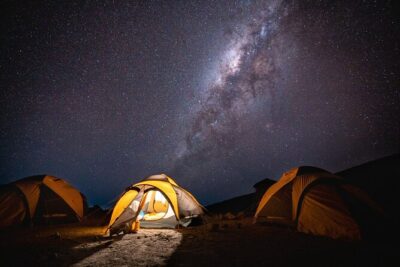
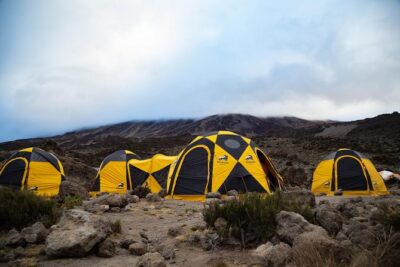
Your first camp is Mti Mkubwa at about 2,980 meters. Your tent is set up with your personal belongings inside, which means your support crew takes care of camp work while you eat, change, and rest.
You should keep rain gear handy. Forest weather can change, and your daypack needs to hold water, a warm layer, snacks, and anything you want during the walk. Do not put all important clothing in a bag that you will not see until camp.
Day 3: Moorland and the Shira Plateau
The route leaves the forest and enters moorland. The day covers about seven kilometers and takes roughly four hours, with camp at Shira I around 3,500 meters.
The surroundings open up. Grassy moorland, heather, and volcanic rock replace the dense trees, and you may get views toward Kibo and the Shira Plateau. This is a shorter day than the first, which helps your body adjust to increasing altitude.
Do not let the shorter walking time fool you. Altitude affects people differently, and a four-hour day at 3,500 meters can feel harder than a longer walk at low elevation. Move slowly, drink regularly, and tell your guide if you develop a headache, nausea, unusual fatigue, or breathing trouble.
The private format matters here. Your guide can keep your pace steady rather than forcing your group to match strangers. That can make the day more comfortable, especially if one person acclimatizes faster than another.
Same base, a different sort of day:
- Serengeti Balloon Safari and authentic bush breakfast
★ 5.0 · 2,480 reviews - Balloon Safari & Bush Breakfast in Serengeti – Miracle Experience
★ 5.0 · 1,646 reviews - From Zanzibar: Mikumi Safari Day Trip with Flights and Meal
★ 4.7 · 1,470 reviews - Zanzibar: Quad Bike Adventure departing from Kendwa or Nungwi
★ 4.9 · 1,233 reviews
Day 4: A shorter acclimatization day near Shira
You hike for about five hours and cover around eight kilometers across more moorland. The route is described as less steep than some other days, with views toward Kibo and the northern ice fields from the western side of the mountain.
A hot lunch is served at camp. Around 4 p.m., you take tea and go on an acclimatization walk before returning for dinner and the night at camp.
This extra walk is not filler. It helps you spend more time at altitude without immediately sleeping much higher. You gain valuable information about how your body is handling the climb, and your guide can use that information when planning the next days.
Keep the afternoon calm. You may feel good and want to push harder, but saving energy now matters. The toughest part of the climb is still ahead.
Day 5: Lava Tower and the descent to Barranco
This is one of the smartest days in the route plan. You leave the moorland and enter alpine desert, climbing toward Lava Tower at about 4,600 meters before descending to Barranco Camp at roughly 3,900 meters.
The day covers around 10 kilometers and takes about six hours. The climb to Lava Tower exposes you to thinner air, while the descent gives your body a chance to recover at a lower sleeping altitude. This is the classic climb-high, sleep-low pattern that makes a longer route useful.
The descent to Barranco takes about three hours. Along the way, you get views of the Western Breach and Barranco Wall. The camp sits in a valley below the wall, with a setting that can make sunset a memorable part of the day.
You may find this day tiring because altitude and terrain work together. Carry only what you need, walk slowly, and avoid treating Lava Tower as a race. The point is not to arrive first. The point is to prepare for summit night.
Day 6: Barranco Wall to Karanga Camp
After breakfast, you climb Barranco Wall, reaching about 4,200 meters before continuing to Karanga Camp at approximately 4,000 meters. The walk covers around six kilometers and is listed at about four to six hours, depending on conditions and pace.
The wall sounds intimidating, but the important point is that this is a guided mountain route, not a technical rock-climbing trip. You should still expect steep sections, uneven footing, and moments where you need to use your hands for balance.
Karanga is a useful staging camp. You are now in alpine desert, close to the upper mountain, but you still have time to rest before Barafu. The shorter distance lets you focus on steady movement and recovery.
Your private guide can also help separate genuine altitude problems from ordinary tiredness. That judgment is important. The supplied pulse oximeter gives the crew another tool, but it does not replace careful observation or honest communication.
Day 7: Barafu Camp and the wait for summit night
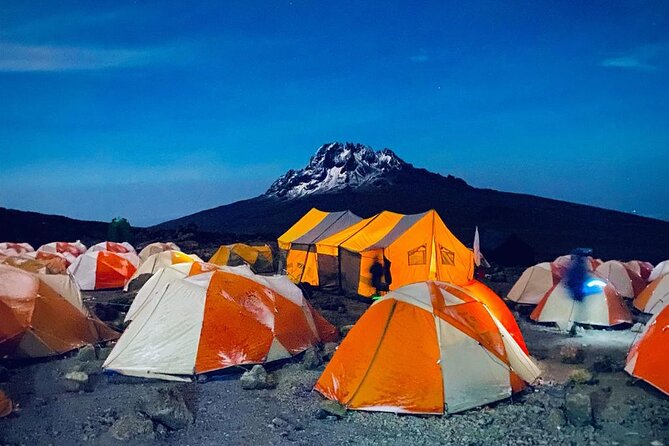
The walk to Barafu Camp takes about three hours and covers roughly four kilometers. At 4,640 meters, Barafu is the high camp for the summit attempt.
You get views toward Kibo and Mawenzi Peaks on the way. After reaching camp, you have lunch and a long rest. Dinner comes early, and the plan is to sleep before waking around midnight.
This day can feel strange. You have walked for several days, yet the main effort has not begun. Eat what you can, drink steadily, and prepare your summit clothing before lying down. Put your headlamp, gloves, warm layers, water, and snacks where you can reach them quickly.
Sleep may be broken or brief. That is normal for a midnight start, but your guide will decide how to respond if you are ill or too weak to continue. A safe summit attempt always includes the option of turning back.
Day 8: Stella Point, Uhuru Peak, and Mweka Camp
Summit day begins around midnight with light tea and cookies. You climb scree for four to five hours toward the crater rim and Stella Point at 5,756 meters.
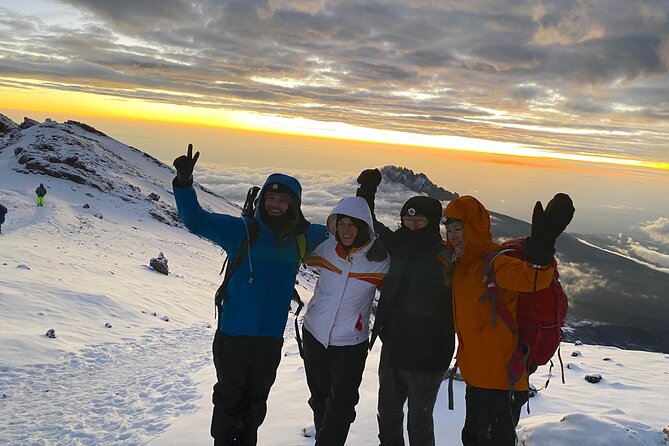
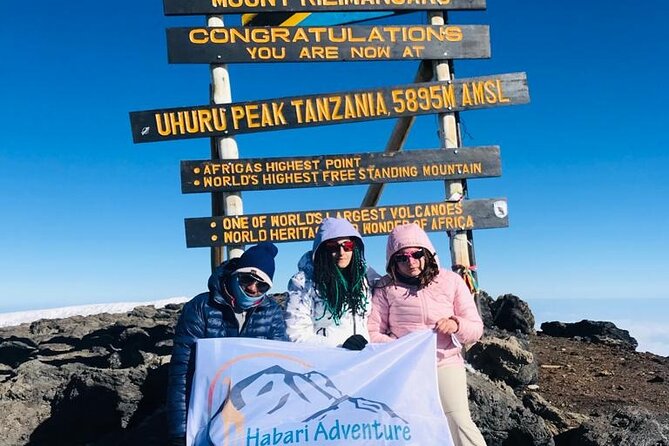
The route is steep, cold, and slow. The early start is designed to get you to the rim around sunrise, when the first light can reveal the upper mountain. From Stella Point, you continue for about an hour to Uhuru Peak at 5,895 meters.
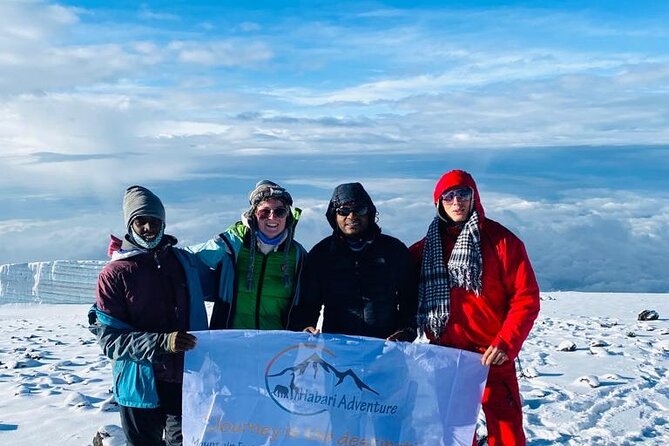
The summit stop is short. You take photographs, absorb the achievement, and then begin descending. The full day is listed at approximately 14 hours and 21 kilometers, although the detailed schedule gives about 12 hours of walking. Either way, this is the most demanding day by far.
You return to Barafu Camp for lunch and rest, then continue down to Mweka Camp at about 3,100 meters. The descent can be rough on tired knees, and the contrast between the slow uphill effort and the long downhill finish can surprise you.
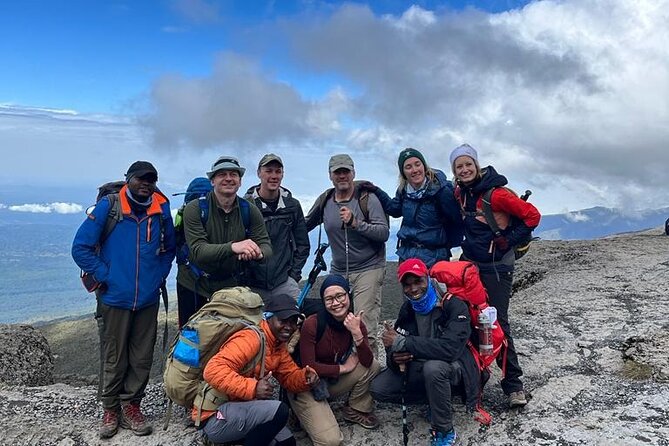
This is where the crew matters most. Guides such as Yusuph, Abdi, Michael, and Ema have been associated with supportive Habari teams, while porters and cooks handle the practical work that lets you concentrate on each step. You should expect encouragement, but also firm safety decisions if altitude symptoms become serious.
Day 9: Forest descent and the return to Moshi
The final walk leads through Mweka montane forest to Mweka Gate. The distance is about 10 kilometers, with roughly three hours of walking.
At the gate, you complete park formalities and receive a certificate. A vehicle then takes you back to the Moshi hotel for a hot shower and a chance to celebrate.
After summit day, this descent may feel easy, but tired legs can make it slow. Use trekking poles if you have them, watch your footing, and do not rush simply because the finish is close.
The schedule includes dinner on this final day, and the hotel arrangement gives you a more comfortable end than driving directly to the airport after leaving the mountain.
Safety, medical support, and responsibility
The package includes a pulse oximeter, first aid kit, and emergency oxygen. Those are useful safeguards, especially on the upper mountain, but they do not make Kilimanjaro risk-free.
You need moderate physical fitness and should be comfortable walking for several hours on uneven ground. Summit day requires much more than moderate effort. Training with long walks, hills, stair sessions, and a loaded daypack can help, though no training plan removes the effects of altitude.
Tell your guide about symptoms early. Headache, nausea, unusual weakness, dizziness, and breathing difficulty should not be hidden because you want the summit photograph. The guide controls the pace and can decide when a descent is the responsible choice.
The private structure also means you should choose companions carefully. A group that communicates well will make better decisions than one focused only on reaching the top.
Who should choose this Lemosho climb?
I would choose this trip if you want a private mountain experience with a longer approach, built-in acclimatization, and a company handling the major logistics. It suits a group of friends, a family with appropriate fitness, or a solo climber who wants a private crew rather than a shared departure.
It is also a good fit if you value support before the climb. The Moshi briefing and gear check can prevent small equipment problems from becoming large ones on the mountain.
I would not choose it if you want a relaxed holiday, dislike camping, or cannot commit to a long summit day. The word private does not mean easy. You still face high altitude, cold conditions, early starts, and a very long descent after reaching Uhuru Peak.
The tour allows service animals and is near public transportation, but the mountain itself demands a moderate fitness level. Ask the operator directly about your personal medical concerns and the exact equipment available before booking.
Cancellation and booking details
Confirmation is provided when you book. You can cancel up to 24 hours before the local start time for a full refund. Changes or cancellations inside that period are not accepted for a refund.
Weather can affect the climb. If poor weather forces cancellation, you are offered another date or a full refund. If the minimum number of participants is not met, the alternatives are another date, another experience, or a full refund.
The experience is booked well ahead on average, about 147 days in advance. That is a useful hint for planning flights and leave from work, especially if you need a particular season or private departure date.
Should you book the eight-day Lemosho Route?
I would book this climb if you want a serious but well-supported attempt at Kilimanjaro, and if you value scenery, private pacing, and a sensible acclimatization profile more than a quick ascent.
The strongest features are the climb-high, sleep-low day at Lava Tower, the full meal and camp support, the Moshi gear check, and the safety equipment. The main caution is simple: summit day is long and altitude can end the attempt even when you are fit.
Before paying, confirm the exact guide, hotel, rental gear, porter arrangements, meal schedule, and tipping plan. If those details suit you, this $2,300 package offers a practical route to Uhuru Peak without making you manage every piece of the climb yourself.
FAQ
How long does the experience last?
The full experience takes approximately nine days. It includes arrival and hotel time, seven nights on the mountain, the summit attempt, the descent to Mweka Gate, and the return to Moshi.
Where does the climb start?
Pickup begins at Kilimanjaro International Airport in Tanzania. You are transferred to a hotel in Moshi before the equipment check and mountain departure.
Is this a private tour?
Yes. Only you and your own group participate, so the guide can adjust the pace for your party.
What is the highest point reached?
The climb reaches Uhuru Peak at 5,895 meters. The route passes Stella Point at 5,756 meters before continuing to the summit.
Are meals included?
Yes. The package includes breakfast, lunch, and dinner during the experience. The supplied details list eight breakfasts, eight lunches, and nine dinners.
Is safety equipment provided?
Yes. A pulse oximeter, first aid kit, and emergency oxygen are included.
What is not included in the price?
Flights, an entry visa, laundry services, and tips for the mountain crew are not included.
Just added in Tanzania
- Tanzania Wildlife Encounters – 6 Days★ 5.0 · 277 reviews
- Maasai village visit, Materuni waterfalls & coffee experience★ 4.5 · 95 reviews
- Tanzania Enticing Explorations – 6 Days★ 5.0 · 106 reviews
- 3 Days Private Safari – manyara, Ngorongoro & Tarangire★ 5.0 · 94 reviews
- Tanzania Simba Safari – 5 Days★ 5.0 · 217 reviews
- Materuni Waterfalls & Coffee Tour from Moshi★ 5.0 · 92 reviews
- Tarangire Day Tour★ 5.0 · 95 reviews
- Materuni waterfalls coffee tour & Chemka hot springs Day trip★ 5.0 · 131 reviews
Kilimanjaro & Mountain Treks, compared.
8-Day Small-group Lemosho Kilimanjaro Summit Trekking
Read our review →
7-Day Machame Kilimanjaro Summit Tour from Arusha
Read our review →
Browse the lists this tour appears in