
Reviewed · EGYPT · TOURS IN CAIRO
Full Egypt, 8 days all inclusive
The real strength of this Egypt tour is its route. In eight days, you move from Cairo’s pyramids and medieval lanes to Luxor’s temples, then sail south through Edfu and Kom Ombo to Aswan. It packs the country’s major sights into one well-organized trip, with four nights on the Nile tying the journey together.
I like the practical coverage: domestic flights connect Cairo with Luxor and Aswan, while meals, entrance tickets, transport, and a Spanish-speaking guide are included. I also like the small maximum group size of 15, and the personal attention repeatedly associated with guides such as Mohamed Gaber, or Moha.
The tradeoff is pace. You will have early starts, long sightseeing blocks, several flights, and only three hotel nights in Cairo. Drinks are not included, and the mummy hall in Cairo and Tutankhamun’s tomb in the Valley of the Kings cost extra.
Key points to know before booking
- The route covers Egypt’s essential sights: Cairo, Giza, Saqqara, Luxor, Edfu, Kom Ombo, Aswan, and Abu Simbel all fit into eight days.
- The Nile cruise is the trip’s backbone: Four nights on board provide a calmer rhythm between major temple visits.
- Moha is a major part of the experience: Mohamed Gaber is repeatedly praised for his patience, warmth, clear explanations, and care with group members.
- The schedule is full: Some days run for eight hours, and the Abu Simbel day begins with a long bus outing.
- The price includes a lot: At $1,189.29 per person, the package covers hotels, cruise accommodation, flights, meals, tickets, guiding, taxes, and air-conditioned transport.
- Spanish-speaking support is built in: This is especially useful when ancient names, dynasties, and religious symbols begin to blur together.
Why this eight-day route works
Egypt is not a destination where the famous sights sit close together. Cairo is far north, Luxor lies much farther south, and Aswan is beyond Luxor. Covering all three areas independently can mean piecing together flights, hotels, guides, transfers, cruise arrangements, and entrance tickets.
This program removes much of that work. You arrive in Cairo, spend three nights there, fly to Luxor for the cruise, sail south for four nights, and fly from Aswan back to Cairo for your international departure. That basic structure is efficient and sensible.
You should still expect a fast trip. This is not a slow, neighborhood-by-neighborhood stay. It is a greatest-hits tour with enough context to make the monuments meaningful, but not enough free time to wander every city at length.
A maximum of 15 people gives the group a more manageable feel than a large coach tour. The guide can keep the group together at monuments, answer questions, and help with the day’s practical details. Mohamed Gaber, often called Moha, is the guide most closely associated with this experience. The praise directed toward him focuses on his ability to explain ancient Egypt in a clear, entertaining way, while also being attentive and helpful.
That matters here. Egypt’s monuments can be overwhelming. A good guide helps you understand why a temple was built, which ruler added which section, and how the gods represented in the reliefs fit together. Without that help, you may see impressive stone but miss the story.
Other trips people book in Cairo:
- Cairo: Pyramids & Great Sphinx Private Tour with Camel Ride
★ 4.9 · 6,335 reviews - Tour to Giza Pyramids and The Egyptian Museum
★ 5.0 · 6,016 reviews - VIP All inclusive Best of the best Giza Pyramids,Sakkara,Memphis
★ 5.0 · 3,164 reviews
Cairo begins with a soft landing
On arrival in Cairo, you are met at the airport, assisted with the visa and immigration process, and transferred to your hotel. That is a useful first service after a long flight, especially if this is your first visit to Egypt.
The first evening includes dinner at a local restaurant. It is a gentle start rather than a sightseeing marathon, giving you time to settle in before the demanding days ahead.
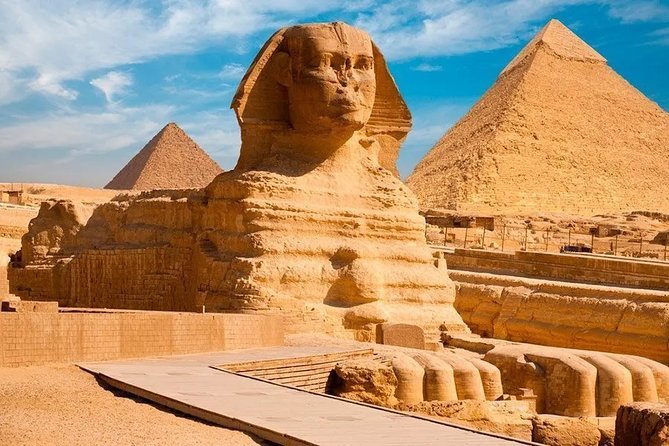
The next morning begins with the Giza pyramid complex. You see the three major pyramids, the Sphinx, and enter one of the pyramids. Entrance inside a pyramid is a separate experience from viewing it from the outside, though you should be ready for a confined interior and a less polished passage than the grand exterior suggests.
After the pyramids, the program includes a traditional meal before continuing toward Memphis and Saqqara. Memphis was the first capital of Egypt, while Saqqara served as its necropolis. The area includes the famous statue of Ramses II and a different kind of ancient setting from Giza.
Giza gives you Egypt’s most recognizable monuments. Saqqara helps you see how the country’s royal burial tradition developed across a wider area. I like having both in the same day, although four hours is a tight window for pyramids, Sphinx, a pyramid interior, lunch, Memphis, and Saqqara.
Khan el-Khalili after dark
After a rest at the hotel, you head into Old Cairo in the evening. The route includes a walk along one of the area’s oldest streets, time at Khan el-Khalili market, a stop at the famous Café de los Espejos, and a typical dinner.
This is a welcome change of mood after the monuments. The market lets you see Cairo as a living city rather than only as a gateway to ancient sites. You can haggle, browse, and watch daily street life unfold around old buildings and narrow lanes.
Keep your expectations practical. Market visits are not simply scenic walks. Sellers may approach you, and bargaining is part of the experience. The guide can help you understand the setting and keep the outing organized, but you should still watch your belongings and decide in advance how much shopping you really want to do.
The evening visit also helps spread Cairo’s attractions across the day. The pyramid morning is physically and mentally busy. A pause at the hotel before the market makes the schedule more manageable.
Cairo’s citadel, churches, and museum
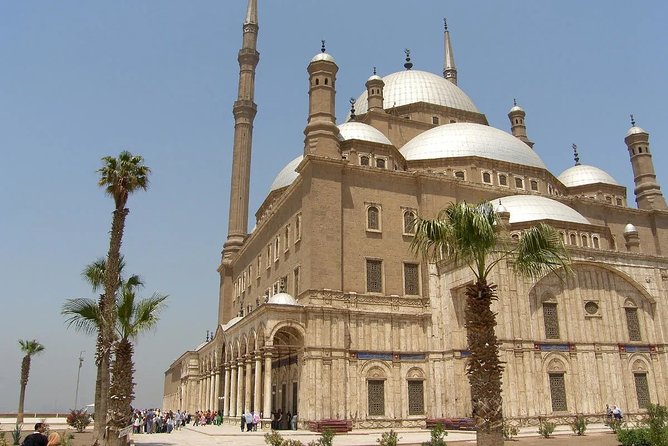
The third day is one of the fullest. You visit the Saladin Citadel, enter the Alabaster Mosque, return to Khan el-Khalili, walk through the Coptic Quarter, eat lunch, and spend time at the Egyptian Museum.
The Citadel provides a strong introduction to Cairo’s later history and offers a change from the pharaonic sites. The Alabaster Mosque is part of that visit, giving you a look at a major Islamic monument rather than another ancient temple.
Returning to Khan el-Khalili may feel repetitive if you spent a long time there the night before. On the other hand, a second visit with daylight and a different route can help you see more of the district. You can use the first evening for atmosphere and the second visit for shopping or a closer look at the surrounding streets.
The Coptic Quarter adds another layer to Cairo’s story. This part of the day is valuable because it prevents the trip from presenting Egypt as only pyramids and pharaohs. You see Islamic, Christian, and ancient Egyptian sites within the same city program.
The Egyptian Museum brings the pieces together. You will see major works from ancient Egypt, but access to the mummy hall is not included. That is one of the clearest extra-cost points in the Cairo portion, so check the price before you arrive if the royal mummies are a priority.
Eight hours is a long sightseeing day. Wear comfortable shoes, carry water, and keep some energy for the museum. The guide’s role is especially useful here, since a large collection can quickly become a blur of statues, coffins, jewelry, and inscriptions.
Same base, a different sort of day:
- From Cairo: Pyramids of Giza, Sphinx, Saqqara & Memphis Tour
★ 4.7 · 3,110 reviews - Cairo 8 Hour Private Tour of Pyramids, Egyptian Museum and Bazaar
★ 5.0 · 2,931 reviews - Cairo: Pyramids, Sakkara & Memphis Tour with Lunch
★ 4.6 · 2,493 reviews - Private ViP all-inclusive Giza Pyramids,Sphinx,Inside Pyramid
★ 5.0 · 2,448 reviews
Flying to Luxor and boarding the Nile cruise
On day four, you fly from Cairo to Luxor, the ancient city of Thebes and the starting point for the cruise. The flight saves considerable overland time and lets you begin the southern part of the trip without sacrificing another day.
That evening, you visit Luxor Temple after dark. Lighting changes the mood of the columns and statues, and this may be one of the most memorable stops on the entire route. You also ride through the city center in a horse-drawn buggy before returning to the ship.
The overnight location is the cruise boat, which becomes your base for the next four nights. This is one of the tour’s best practical choices. Instead of packing and checking out every day, you unpack once and wake up closer to the next group of temples.
Cruise standards can vary, and the information supplied does not specify a ship category or cabin details. If your comfort level depends on a particular cabin type, ask for those details before paying. The package does cover four nights with full board, but drinks are extra.
Karnak and the royal tombs of Luxor
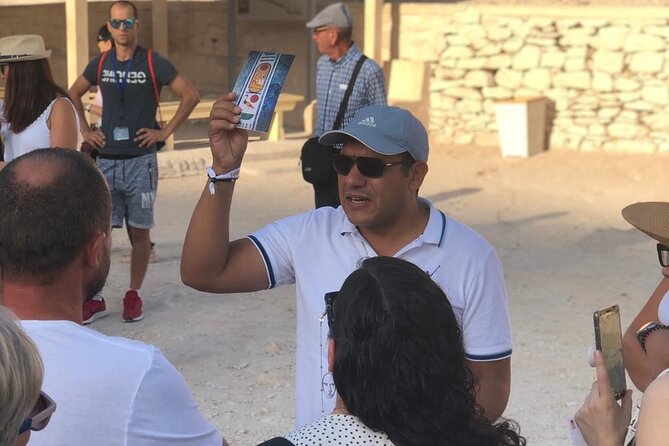
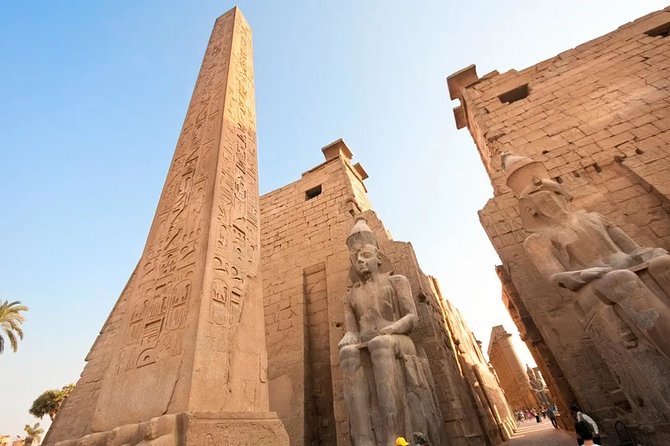
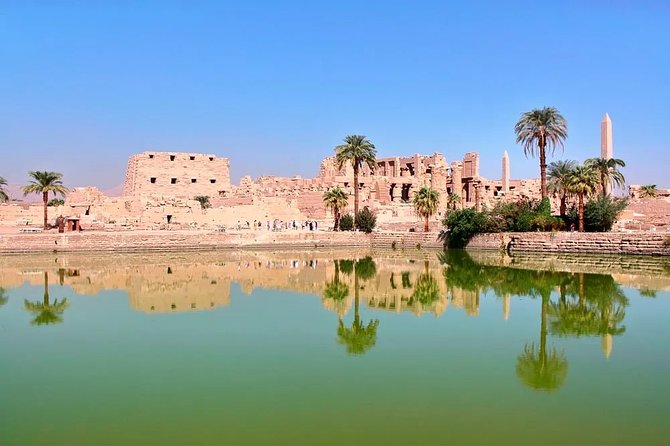
The next morning begins at Karnak, one of Egypt’s great temple complexes. The site is associated with the Avenue of the Sphinxes that connects it with Luxor Temple. Even with a guide, the scale can be hard to grasp at first. Give yourself time to look up at the columns and notice the carved details rather than rushing from one explanation to the next.
You then cross to the western bank of the Nile for the Valley of the Kings. The royal tombs are the main attraction, with painted chambers and burial spaces cut into the desert hills. The standard admission does not include Tutankhamun’s tomb, which costs about 16 euros extra.
Tutankhamun is famous, but the extra ticket should be a personal choice rather than an automatic purchase. The included tombs already offer a strong look at royal burial art, while Tutankhamun’s importance comes partly from the fame and condition of the discovery.
The day also includes the temple of Hatshepsut and the Colossi of Memnon. Hatshepsut’s monument has a very different design from the tombs, with broad terraces set against the western bank. The Colossi provide a short but striking stop and help you picture the scale of ancient Thebes.
After lunch, the ship sails toward Edfu. The passage through the Esna lock is an extra bit of river engineering in the middle of the journey. Sailing at dusk gives you a break from walking and lets the scenery pass at a slower pace.
Edfu and Kom Ombo by river
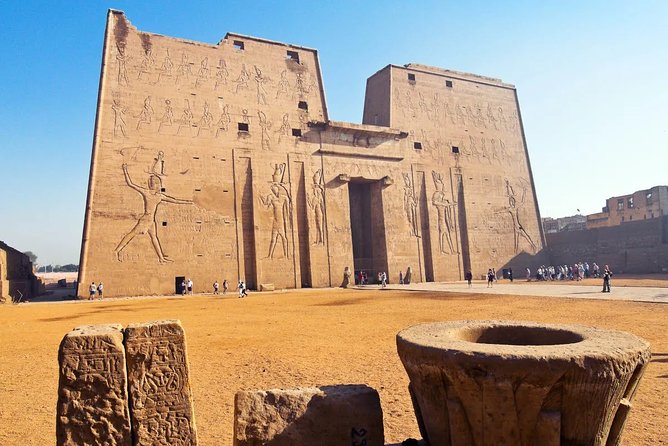
Day six brings two important temple stops. At Edfu, you visit the temple dedicated to Horus. It is described as the best-preserved temple in Egypt, and its condition makes it easier to picture how a complete ancient religious complex once looked.
The visit lasts about three hours before you return to the ship and continue toward Kom Ombo. That rhythm is appealing: temple, ship, lunch or rest, then another temple. You are still busy, but the river keeps the day from feeling like a string of road transfers.
Kom Ombo is dedicated to Sobek and Hareoris. Its riverside position gives it a strong visual setting, and the temple’s connection to two gods makes it a useful stop for understanding how Egyptian worship could work within one complex.
You continue sailing to Aswan after the visit. Since both excursions are included, you do not need to arrange separate transport or negotiate with local drivers at each port. That is a significant part of the package’s value.
Abu Simbel and Aswan’s major sights
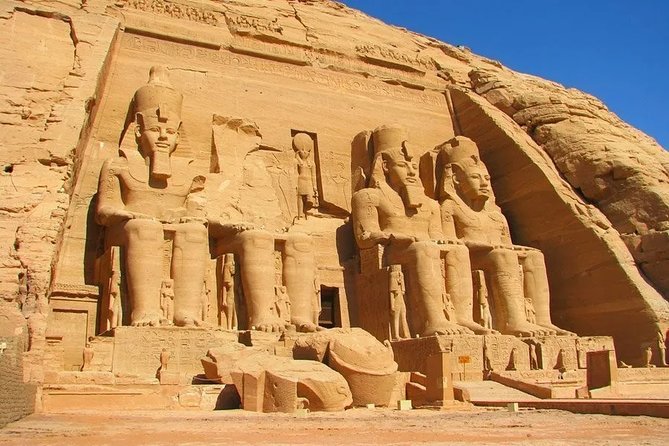
The longest day begins with a bus trip to Abu Simbel. The temples were saved from the rising waters created by the Aswan Dam through an international effort, which gives the site a modern engineering story alongside its ancient one.
Abu Simbel is a major reason to choose this route rather than a shorter Cairo and Luxor package. The journey takes time, but the temples are among Egypt’s most important sights. Because the day is listed at about eight hours, expect an early start and a long outing before returning to Aswan.
Back in the Aswan area, you visit the Aswan Dam and the Temple of Philae. Philae is located on an island and is known as the Jewel of the Nile. Its setting gives the visit a different feel from the inland temples at Edfu, Kom Ombo, and Luxor.
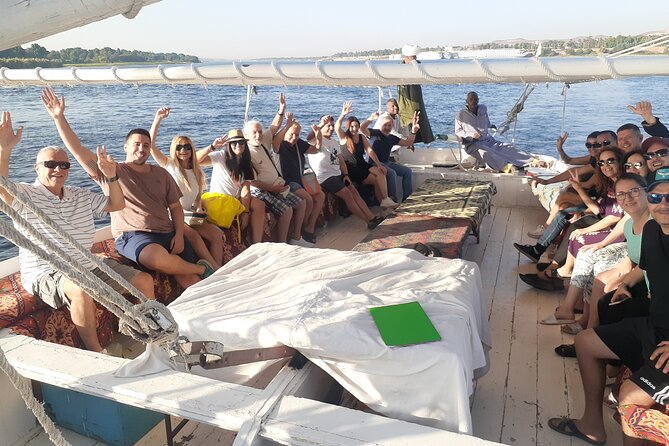
The day ends with a felucca ride, a trip in a traditional Egyptian sailboat. You return to the boat around 4 p.m., leaving the rest of the afternoon free. That free time is welcome after Abu Simbel and makes the final cruise evening less pressured.
What the $1,189.29 price really covers
At $1,189.29 per person, the package offers strong value if you intend to see all the major sites. You get three hotel nights in Cairo, four cruise nights, seven breakfasts, seven dinners, and six lunches.
The price also includes:
- Domestic flights from Cairo to Luxor and Aswan to Cairo
- Air-conditioned transport
- Spanish-speaking guiding for all visits
- Entrance tickets and listed excursions
- All fees and taxes
- Airport assistance and transfers described in the program
That is a lot to arrange independently in eight days. Flights, a Nile cruise, Abu Simbel transport, guides, hotel stays, meals, and tickets can quickly create a higher total, especially when you add the value of having one company coordinate the sequence.
The limits are clear. Drinks are not included. The Egyptian Museum mummy hall is extra, and Tutankhamun’s tomb costs about 16 euros more. The package also does not promise a particular cruise ship or hotel category in the information provided, so ask before booking if those details matter to you.
Who should book this Egypt trip
I would choose this tour if you want the main sights with minimal planning and prefer Spanish-speaking support. It suits first-time visitors who want Cairo, the Nile, Luxor, Aswan, and Abu Simbel in one trip.
It is also a good fit if you value a guide who does more than recite dates. Moha is repeatedly described as warm, patient, professional, and passionate about Egypt. That personal side matters on a trip with long days and a great deal of information.
I would hesitate if you want long stretches of free time, independent exploration, or a slow Cairo stay. The route is tightly packed, and the eight-day format leaves little room for missed flights, illness, or spontaneous changes.
Most people can participate, and the group size is capped at 15. Still, expect plenty of walking at monuments and early departures, especially for Abu Simbel. The listed start time is 7 a.m., though some days may require an earlier departure because of flights or long drives.
Free cancellation is available if you cancel at least 24 hours before the local start time. Changes or cancellations inside that window are not refunded.
FAQ
How long is the Egypt tour?
The experience lasts approximately eight days.
Which cities and sites are included?
The route includes Cairo, Giza, Memphis, Saqqara, Luxor, Edfu, Kom Ombo, Aswan, Abu Simbel, and the Temple of Philae.
Are flights included?
Yes. Domestic flights from Cairo to Luxor and from Aswan back to Cairo are included.
How many nights are spent on the Nile cruise?
You spend four nights on the Nile cruise.
Are meals included?
Yes. The package includes seven breakfasts, seven dinners, and six lunches. Drinks are not included.
Is a guide included?
Yes. A Spanish-speaking guide is provided for all visits. Mohamed Gaber, also called Moha, is one of the guides associated with the experience.
Is the Egyptian Museum mummy hall included?
No. Access to the mummy hall is not included in the stated package.
Does visiting Tutankhamun’s tomb cost extra?
Yes. The program states that entry costs approximately 16 euros extra.
What is the cancellation policy?
You can cancel for a full refund up to 24 hours before the experience start time. Cancellations or changes made less than 24 hours in advance are not accepted for a refund.
Should you book it?
Book this tour if you want Egypt’s major sights in one organized route and value a Spanish-speaking guide, included transport, and a Nile cruise. The combination of Giza, Cairo’s historic quarters, Luxor’s temples, Edfu, Kom Ombo, Aswan, and Abu Simbel gives you an unusually full introduction for eight days.
Skip it if you want a relaxed holiday with flexible mornings and plenty of time alone. This is a focused sightseeing trip, but for the price and coverage, it is a practical way to see the best-known parts of Egypt without handling every transfer yourself.
Just added in Cairo
- Cairo Private Day Tours: Discover Islamic and Coptic Cairo★ 4.5 · 231 reviews
- Islamic Cairo Walking Tour: Khan el Khalili, Al-Azhar Mosque★ 5.0 · 96 reviews
- Grand Egyptian Museum, Grand staircase, New Galleries & lunch★ 5.0 · 174 reviews
- Cairo Food Tours & adventures +30 Tastings★ 5.0 · 146 reviews
- Visiting Egyptian Museum Citadel and Old market of Khan Khalili★ 4.5 · 141 reviews
- Hurghada: Full-Day Diving Tour with Lunch & Two Dive Sites★ 5.0 · 82 reviews
- Allinclusive Half DayPrivateTour Giza PyramidsSphinx Ticke Lunch★ 5.0 · 195 reviews
- Private Guided tour to Giza Pyramids,Sphinx Camel Ride and Lunch★ 5.0 · 79 reviews
Tours in Cairo, compared.
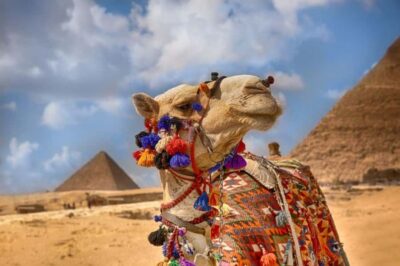
Pyramids & Great Sphinx Private Tour with Camel Ride
Read our review →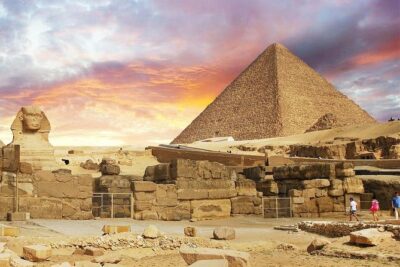
Tour to Giza Pyramids and The Egyptian Museum
Read our review →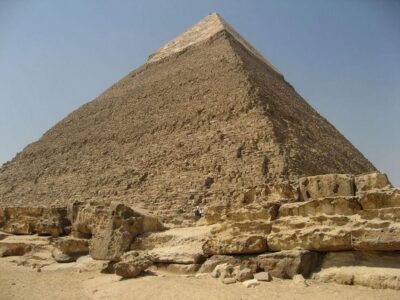
VIP All inclusive Best of the best Giza Pyramids,Sakkara,Memphis
Read our review →
Pyramids of Giza, Sphinx, Saqqara & Memphis Tour
Read our review →
Cairo 8 Hour Private Tour of Pyramids, Egyptian Museum and Bazaar
Read our review →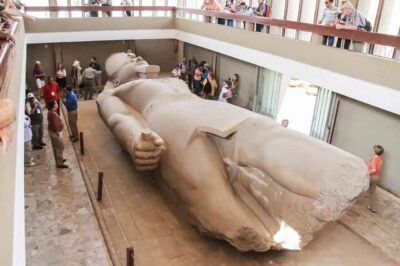
Private ViP all-inclusive Giza Pyramids,Sphinx,Inside Pyramid
Read our review →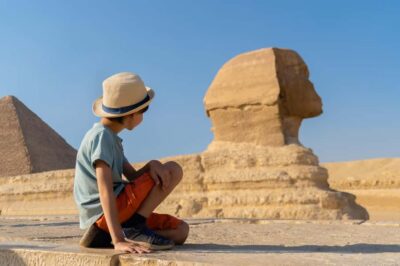
Grand Egyptian Museum, Pyramids, Sphinx Tour & Lunch
Read our review →Browse the lists this tour appears in