
Reviewed · EGYPT · TOURS IN ASWAN
Aswan to Luxor: 4-Day Private Nile Journey
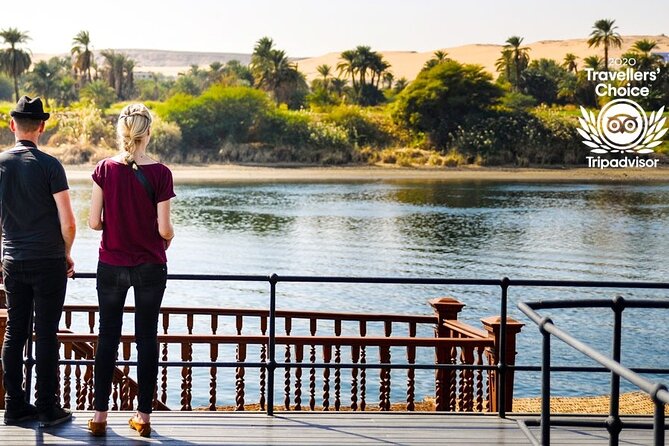
The best part of this four-day journey is its steady rhythm: ancient temples by day, a comfortable Nile boat by night. You move from Aswan to Luxor without packing and unpacking at every hotel, while an Egyptologist guide gives the carved walls some meaning.
I like the small group of up to 10 people, which should make transfers and questions easier. I also like the full-board cruise, with three breakfasts, lunches, and dinners included. The main drawback is the early schedule, especially if you add Abu Simbel, which requires about three and a half hours each way by road.
Key points to know before booking
- Three nights on the Nile: Your cruise carries you from Aswan toward Luxor while you visit major temple sites along the river.
- Philae requires a boat ride: The temple sits on Agilika Island, so your first major visit begins with a motorized boat crossing.
- Abu Simbel is optional: You can add the great temples of Ramses II and Queen Nefertari from Aswan, but the road journey takes roughly seven hours round trip.
- A strong Luxor finish: Karnak, Luxor Temple, Hatshepsut, the Colossi of Memnon, and the Valley of the Kings fill the final two days.
- Tutankhamun’s tomb costs extra: The Valley of the Kings visit is included, but the entrance to Tutankhamun’s tomb is paid on the spot.
- Guide quality matters: Tamer is specifically praised for excellent guiding, while the ship crew receives high marks for service and organization.
Why this Nile journey works so well
At $840 per person, this is not a bargain-basement Egypt trip, but it covers a great deal: airport assistance, a three-night five-star standard cruise, a private air-conditioned vehicle, an Egyptologist guide, site visits, and all meals on board. You are paying for a bundled experience that links Aswan and Luxor in one well-planned route.
The value becomes clearer when you consider the transport. Instead of arranging separate cars, hotels, entrance visits, and river transport, you have one operator handling the major pieces. The small maximum group size also gives this trip a more personal feel than a large coach tour.
There are limits. Drinks on board are extra, tipping is not included, domestic flights are not included, and optional activities such as Abu Simbel and a Luxor hot-air balloon ride cost more. Entrance fees are listed as included for the main sites, but the supplied details also mark admission tickets as not included at individual stops, so I would confirm exactly which entrance charges are covered before you pay.
Cruises run every Friday, Monday, or Wednesday. The four-day timing is best for someone who wants the classic Nile route without adding a longer land program. You will have enough time to see the major sites, but not much spare time for wandering on your own.
A few more things to do in Aswan worth a look
- 4-Day 3-Night Nile Cruise from Aswan to Luxor&Abu Simbel+Balloon
★ 5.0 · 2,023 reviews - 4-Day 3-Night Nile Cruise from Aswan to Luxor including Abu Simbel, Air Balloon
★ 4.5 · 612 reviews - From Aswan: 4-Day Nile Cruise from Aswan to Luxor with Guide
★ 4.1 · 593 reviews
Day 1: Philae and the unfinished obelisk in Aswan
Your arrival begins at Aswan Airport, where a guide meets you at the exit door holding a sign with your name. This is a useful service after a flight, particularly if you are not familiar with the airport or local transport.
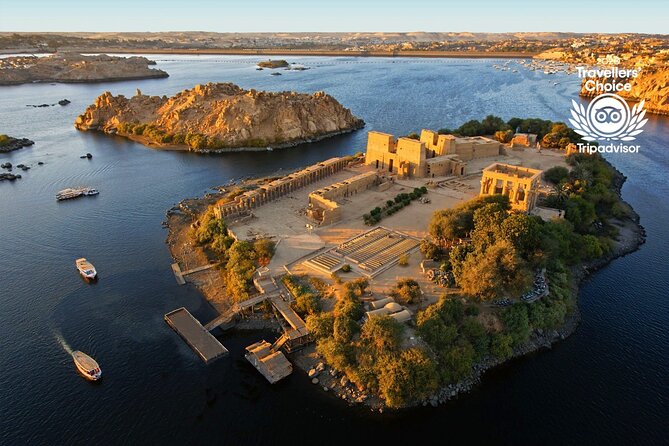
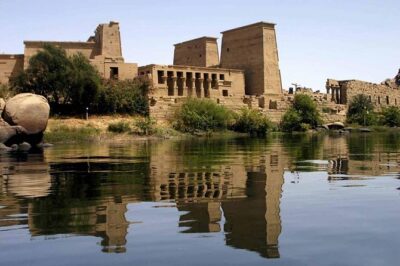
The first major stop is the Temple of Philae. You reach it by motorized boat on a short journey to Agilika Island. The setting matters here. This is not simply a temple beside a road. Water surrounds the island, and the approach gives the visit a sense of occasion before you even reach the entrance.
Philae was dedicated to Isis and contains Egyptian, Greek, and Roman elements. You can expect carved reliefs, columns, gateways, and evidence of the long period during which the site remained important. The temple was dismantled and rebuilt on higher ground after the Aswan High Dam threatened to flood it. That rescue effort is one of the most useful facts to hear from your guide because it explains why the temple now sits on Agilika rather than its original island.
Your next stop is the granite quarry and the Unfinished Obelisk. This enormous stone helps you understand how ancient builders worked. The partially carved monolith remains attached to the bedrock, showing cracks that caused the project to be abandoned. It is a practical lesson in stone cutting, rather than just another monument to photograph.
The first day is relatively focused, with about two hours listed for the main sightseeing. You then settle into the cruise. The boat becomes your base for the next three nights, and the full-board arrangement means you do not need to search for meals after each excursion.
Optional Abu Simbel: a remarkable but demanding add-on
If you have never seen Abu Simbel, the optional road trip from Aswan can be worth serious consideration. The two temples were commissioned by Ramses II and Queen Nefertari, with the larger temple fronted by four statues of Ramses II that rise about 70 feet.
The site was also moved when the Aswan High Dam created the risk of flooding. That shared story links Abu Simbel with Philae, although the two places feel very different. Philae is an island temple complex shaped by water and layered religious traditions. Abu Simbel is built around monumental royal power.
The cost is time and stamina. The journey takes about three and a half hours each way by car, so you should expect a very long day before returning to the ship. It is not included in the base price. If Abu Simbel is a top priority, ask for the exact price and departure arrangements before booking this cruise.
Day 2: Kom Ombo and the river between stops
The ship cruises toward Kom Ombo, where you go ashore to see a Greco-Roman temple dedicated to Haroeris, the sun god, and Sobek, the crocodile god. Sobek was linked with the Nile, fertility, and creation, while the temple’s unusual double design reflects worship of two deities in one complex.
Kom Ombo is especially enjoyable because it makes ancient religion feel less tidy and uniform. You see Egyptian traditions continuing under Greek and Roman rule, with familiar Egyptian gods presented within a later architectural style. The site also gives your guide room to explain how the Nile shaped both daily life and religious belief.
The temple is close to the river, so the visit fits naturally into the cruise schedule. You do not lose a full day to road transport. After exploring, you return to the boat and continue toward Luxor.
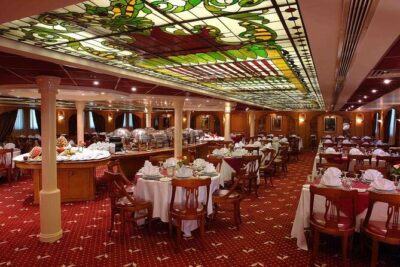
The cruise itself is part of the appeal. You glide past desert scenery and riverbank settlements while the ship handles the distance. The supplied details describe a five-star standard vessel with full-board service, and the food is served buffet style with plenty of choice according to the available feedback. You should still expect a structured ship schedule rather than the independence of an entirely private boat.
Same base, a different sort of day:
- 4-Days Nile Cruise From Aswan To Luxor including Abu Simbel and Hot Air Balloon
★ 5.0 · 3,142 reviews - From Aswan: Abu Simbel Temple Day Trip with Hotel Pickup
★ 4.4 · 2,807 reviews - From Aswan: 3-Day Cruise to Luxor with Hot Air Balloon
★ 4.3 · 598 reviews - 4-Days Nile Cruise From Aswan To Luxor including Abu Simbel and Hot Air Balloon
★ 4.5 · 509 reviews
Day 3: Edfu, Karnak, and the great temples of Luxor
The day includes a visit to the Temple of Horus at Edfu, a remarkably well-preserved Ptolemaic temple built in 230 BC by Ptolemy III. Horus appears here as a falcon-headed sky god. The preserved walls and colorful carvings help you picture how temple worship worked, with processions, offerings, divine figures, and royal scenes.
The supplied schedule places this visit before the final cruise to Luxor, although the day heading names Karnak first. Treat the route as a cruise stop at Edfu followed by Luxor sightseeing, and confirm the exact order with the operator before departure. River schedules can affect the timing.
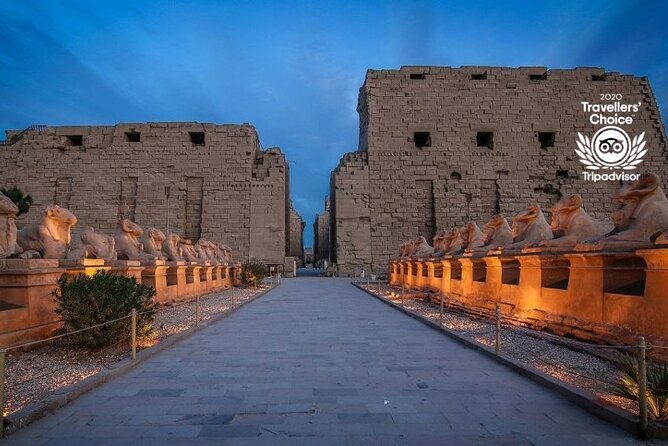
Once in Luxor, you cross to the east bank for Karnak. This is one of the largest temple complexes in Egypt, built and expanded by generations of pharaohs. Its scale can be hard to grasp from photographs. The Great Hypostyle Hall contains rows of columns reaching about 80 feet high, and walking among them gives you a clear sense of the power ancient rulers wanted to project.
Karnak rewards a guide who can point out what you are seeing. Without context, it can become a long procession of pylons, columns, reliefs, and broken statues. With Tamer, the guide specifically praised for this journey, you should have someone who can connect the names, symbols, and scenes rather than simply move you from one wall to the next.
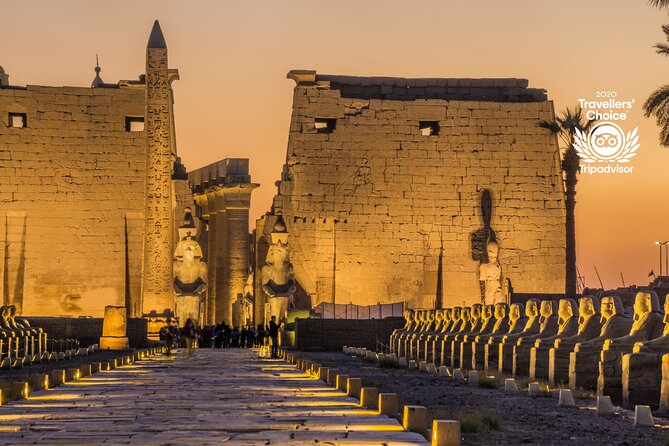
The Temple of Luxor offers a different experience. It is more compact and has a strong processional layout, with statues of Ramses II at the entrance, the Courtyard of Ramses II, and the Colonnade of Amenhotep III. It was linked to Karnak by an avenue of sphinxes, helping you understand that these were parts of a larger ceremonial center.
This is a full sightseeing day. You will see much, but the pace may feel demanding if you prefer long, unhurried visits. The advantage is that the major east-bank sites are covered together, leaving the last day for the west bank and the pharaohs’ tombs.
Day 4: Hatshepsut, the Valley of the Kings, and departure
Your final morning takes you to Luxor’s west bank and the Necropolis of Thebes. The Colossi of Memnon are the first listed stop, two huge seated figures of a pharaoh that once guarded a temple entrance. They are a quick but useful orientation point for the west-bank monuments.
The Temple of Hatshepsut is one of the day’s most memorable sites. Its terraces rise against the cliffs, creating a design unlike the traditional pylon-and-courtyard temples. Hatshepsut ruled as pharaoh and is remembered as one of ancient Egypt’s most successful female rulers. Your guide can help explain the images and inscriptions that present her authority in a royal form.
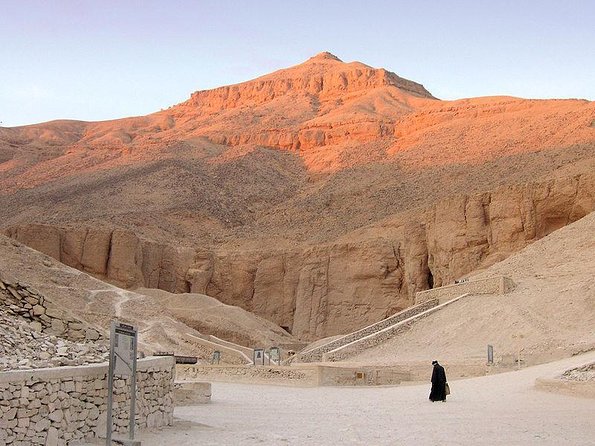
Then comes the Valley of the Kings, the burial ground used for pharaohs and nobles over roughly 500 years beginning in the 16th century BC. The valley is not about grand exterior buildings. Its treasures are underground, where painted corridors and burial chambers preserve scenes tied to the afterlife.
The standard visit includes the valley, but entering Tutankhamun’s tomb requires an extra ticket bought on site. The tomb was found in 1922 by Howard Carter, and its fame can create high expectations. It is important to know that the extra cost is for this specific chamber, not for the entire Valley of the Kings visit.
The last day allows about four hours for the west-bank sites before your transfer to Luxor Airport. Keep your departure time in mind. The schedule is not designed for a relaxed final afternoon in Luxor, and you should not plan an independent visit after the airport transfer unless the operator confirms you have time.
Food, crew, and the practical side of cruising
The package includes three breakfasts, three lunches, and three dinners on board. Buffet meals offer flexibility, which helps when sightseeing times shift. Drinks are not included, so budget separately for them.
The ship crew receives especially strong praise for polite, attentive service, and the activities are described as well organized. That matters on a short cruise. You want clear instructions for getting off the ship, meeting your vehicle, and returning before departure.
Your transfers use a modern air-conditioned deluxe vehicle. That is important in Egypt, where road travel can be tiring. The group limit of 10 people should also make it easier to load the vehicle and hear the guide, though the actual group size can vary up to that maximum.
The package includes meet-and-assist service on arrival and departure, plus support during excursions. Tipping for the cruise crew, guide, and drivers is not included. Plan for those costs in advance so you are not caught short at the end.
Who should book this four-day cruise?
I would recommend this journey to you if you want the classic Aswan-to-Luxor route with the main ancient sites arranged for you. It suits first-time visitors to Egypt who value a guide, included meals, and a small group more than free time.
It is also a good fit if you like changing scenery without changing hotels. The Nile boat gives you a fixed base, while the excursions cover temples, quarries, tombs, and royal monuments.
You may want a different plan if you dislike early starts, long sightseeing days, or fixed schedules. Abu Simbel is particularly demanding, and the final Luxor day ends with an airport transfer rather than open-ended time in town.
The 4.9 rating from 152 reviews and 99 percent recommendation figure suggest a strong record, with Tamer singled out for excellent guiding and the ship crew praised for service. Those points are meaningful because guide quality and ship organization can make or break a short Nile trip.
Should you book it?
Book this cruise if you want an efficient, guided introduction to ancient Egypt and appreciate having transport, meals, and river accommodation arranged together. At $840, the price is reasonable when you count the three-night cruise, guide, transfers, excursions, and full-board meals, but it is not the final cost once you add drinks, tips, Abu Simbel, and Tutankhamun’s tomb.
Before booking, confirm which entrance fees are included, ask for the exact Abu Simbel supplement, and check the cruise departure day that fits your flights. If those details work for you, this is a strong four-day route with an excellent concentration of Egypt’s essential sites.
FAQ
Where does the Nile journey begin?
The journey begins in Aswan, in Aswan Governorate, Egypt. Airport pickup is offered, with a guide meeting you at the exit door holding a sign with your name.
Where does the journey end?
The tour ends in Luxor, with a transfer to Luxor Airport after the west-bank sightseeing.
How long is the cruise?
The experience lasts approximately four days and includes three nights on a Nile cruise.
On which days does the cruise operate?
Cruises are scheduled every Friday, Monday, or Wednesday.
Is Abu Simbel included?
No. Abu Simbel is optional and is reached from Aswan by car. The drive takes about three and a half hours each way.
Is food included?
Yes. The package includes three breakfasts, three lunches, and three dinners on board the cruise.
Are drinks included?
No. Drinks on board are not included in the price.
Is Tutankhamun’s tomb included?
The Valley of the Kings visit is included, but entering Tutankhamun’s tomb requires an extra ticket purchased on the spot.
What is the maximum group size?
The activity has a maximum of 10 participants.
Just added in Aswan
- Full Day Tour to Abu Simbel Temples from Aswan★ 4.5 · 218 reviews
- Sailing Nile Cruise from Aswan to Luxor for 2 Nights★ 4.5 · 139 reviews
- Amazing 3-Nights Cruise From Aswan To Luxor including Abu Simbel&Hot Air Balloon★ 5.0 · 160 reviews
- Nubian Village by Motorboat In Aswan★ 5.0 · 97 reviews
- Abu Simbel Private Full-Day Tour from Aswan★ 5.0 · 114 reviews
- Private Day Tour to Abu Simbel Temples from Aswan★ 4.5 · 507 reviews
- Private Customizable Day Tour To Abu Simbel From Aswan By Private Car★ 4.5 · 83 reviews
- 2 Night Nile Cruise from Aswan to Luxor★ 5.0 · 311 reviews
Tours in Aswan, compared.
4-Days Nile Cruise From Aswan To Luxor including Abu Simbel and Hot Air Balloon
Read our review →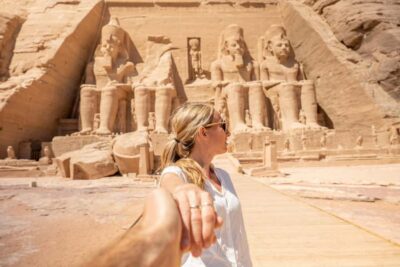
4-Day 3-Night Nile Cruise from Aswan to Luxor&Abu Simbel+Balloon
Read our review →
4-Day Nile Cruise from Aswan to Luxor with Guide
Read our review →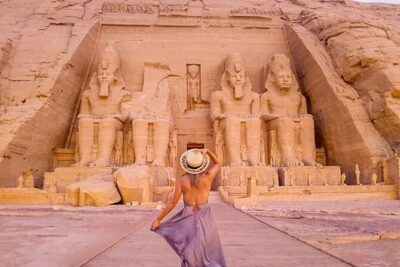
Private Day Tour to Abu Simbel Temples from Aswan
Read our review →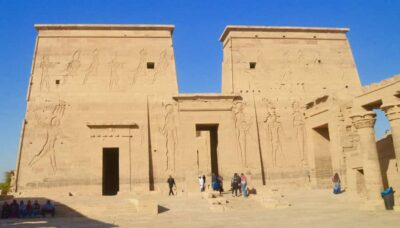
High Dam, Unfinished Obelisk, & Philae Private Tour
Read our review →
4-Day 3-Night Nile Cruise from Aswan to Luxor – Private Tour
Read our review →Browse the lists this tour appears in