
Reviewed · TANZANIA · TOURS IN ARUSHA
8-Day Small-group Lemosho Kilimanjaro Summit Trekking
The best part of this Kilimanjaro climb is the slow build toward summit night. Over eight days, you move from the rainforest at Mti Mkubwa to the stark volcanic slopes near Kosovo Camp, with time to adjust to thinner air before the final push to Uhuru Peak.
I like the Lemosho route’s variety and its extra acclimatization time. I also like the small-group format, with a maximum of 15 people and, on some departures, groups as small as four or five. The main caution is simple: this is a serious high-altitude trek, not a sightseeing walk. You need strong fitness, patience, and a willingness to spend seven nights camping.
Key points to know before booking
- Lemosho gives you eight days to adjust: The route uses gradual altitude gains, a high-point acclimatization walk to Lava Tower, and a slower approach to summit camp.
- You cross several climate zones: The trek runs from montane rainforest and heather to high volcanic desert, alpine terrain, and the arctic summit zone.
- Summit night is the hardest section: Expect a midnight start, six to seven hours up to Stella Point, another hour to Uhuru Peak, then a long descent to Mweka Camp.
- The price covers the major trek costs: At $2,895 per person, the package includes camping equipment, park fees, meals, hotel transfers, and the organized mountain operation.
- The group can be intimate: The advertised maximum is 15 people, though past departures included much smaller groups with several guides and crew members.
- The experience is highly supported: Guides regularly check pace, meals, breaks, health, comfort, and summit preparation, based on the operating style described by past climbers.
Why the Lemosho route is a strong eight-day choice
Kilimanjaro is 19,340 feet, or 5,895 meters, high enough for altitude to shape the entire trip. The challenge is not technical climbing. There are no ropes or specialized mountaineering sections described here. The test is walking for hours at high altitude, sleeping in tents, managing cold and fatigue, and making careful decisions when oxygen becomes scarce.
The eight-day schedule helps because it avoids rushing straight toward the summit. You spend time on the Shira Plateau, climb high to Lava Tower, descend to Barranco Camp, then continue upward at a measured pace. That old mountain rule, climb high and sleep lower, is built into the route on Day 4.
I especially like that the itinerary does not treat the mountain as a quick up-and-down challenge. You get a full day on the Shira Plateau, an acclimatization stop at Lava Tower, and a relatively short Day 5 before the final approach. The tradeoff is time and discomfort. Eight days means more nights in a tent, more meals outdoors, and more exposure to weather.
The route begins on Kilimanjaro’s western side and finishes at Mweka Gate. That gives you a gradual visual change as well as a physical one. The forest feels damp and alive. Higher up, trees thin out, volcanic rock takes over, and the mountain becomes broad, dry, and exposed.
Other mountain treks from Arusha:
- 7-Day Machame Kilimanjaro Summit Tour from Arusha
★ 5.0 · 125 reviews - Mountain Kilimanjaro Day Hike
★ 5.0 · 102 reviews - Kilimanjaro climb by Lemosho Route (7-day)
★ 5.0 · 651 reviews
What the $2,895 price includes
At $2,895 per person, this is not a cheap hike, but the price covers many of the costs that can surprise independent planners. Round-trip transfers from your Arusha hotel are included, along with camping equipment, park fees, and meals.
That matters on Kilimanjaro. You are not simply paying for a guide to point toward the summit. You are paying for an organized camp operation, food on the mountain, transport at both ends, permits, and a crew that handles the practical work of a multiday high-altitude trek.
The value is strongest if you want a planned expedition rather than a do-it-yourself arrangement. You still need to budget for personal clothing, boots, luggage, drinks or personal extras if required, and customary crew tips, since those items are not specified in the package details. Ask the operator for a current packing and tipping guide before you pay.
The food is part of the support system. Past climbers specifically praised the meal service and the way the crew kept people nourished. That may sound basic, but appetite and energy can become difficult at altitude. A well-run meal routine can make the difference between feeling prepared and merely surviving the day.
Day 1: Mti Mkubwa and the first rainforest miles
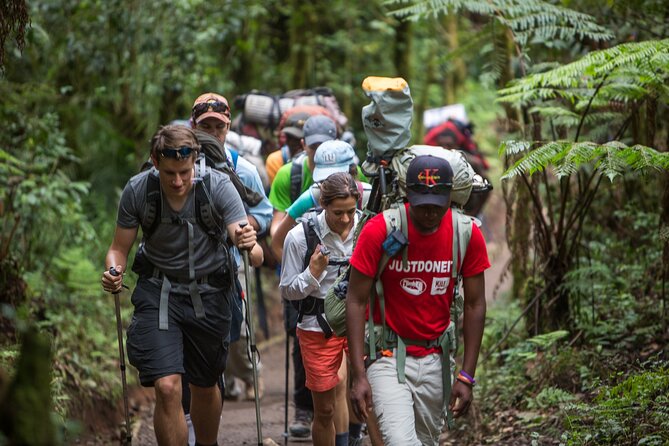
After an 8:00 a.m. start from Arusha, you transfer to the western approach and check in at Londorossi Gate. The trail then climbs gently through montane forest for about three to four hours, covering roughly 3 miles and reaching about 7,742 feet, or 2,360 meters.
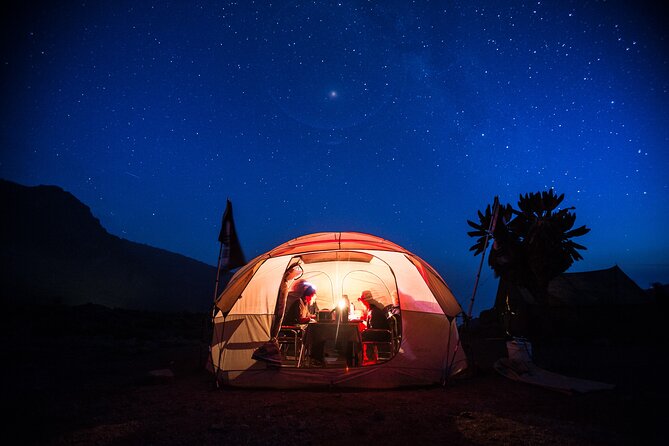
Your first camp is Mti Mkubwa, a Swahili name meaning Big Tree. The camp sits in the Kilimanjaro rainforest, and the setting gives you an easy introduction to the rhythm of the trek: walk, eat, rest, and get ready for the next morning.
This is a short day by Kilimanjaro standards, which is welcome after transport and park registration. Do not expect a grand summit view yet. Day 1 is about settling into your boots, checking your kit, and noticing how the mountain team works.
Day 2: Leaving the trees for the Shira Plateau
Day 2 covers about 4.9 miles and takes five to six hours, with the route reaching approximately 11,500 feet, or 3,505 meters. You leave the forest behind and enter a zone of tall grasses, heather, volcanic rock, and lichen.
This is one of the most rewarding transitions on the trek. The greenery thins, the air feels cooler, and Kilimanjaro begins to look like a high volcanic mountain rather than a forest hike. In the afternoon, you follow the Shira Ridge toward the wide Shira Plateau.
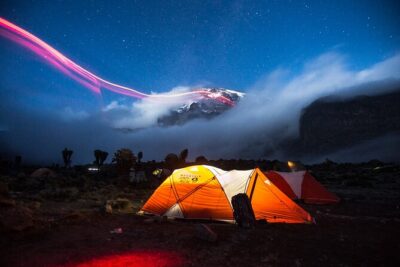
The first open views of Kibo, Kilimanjaro’s main summit cone, appear across the plateau. Shira is a good place to begin paying attention to your breathing and pace. You are already above many mountain passes, but the hardest sections are still ahead.
Same base, a different sort of day:
- Balloon Safari & Bush Breakfast in Serengeti – Miracle Experience
★ 5.0 · 1,646 reviews - Tanzania Classic – 7 Days
★ 5.0 · 1,151 reviews - 4 Days Group Camping Safari
★ 5.0 · 1,101 reviews - 5 Days Group Camping Safari
★ 5.0 · 730 reviews
Day 3: A full day around Shira and Moir Camp
Day 3 reaches about 13,800 feet, or 4,206 meters, and covers approximately 8.7 miles in five to seven hours. Instead of making a direct march toward the summit, you spend the day exploring the Shira Plateau.
The route heads east toward Kibo and may include the ancient collapsed Shira Cone, described as the oldest of Kilimanjaro’s three volcanic cones. You finish at Moir Camp, set in a large gorge at the end of a dormant lava flow.
This is useful altitude work, but it can also be a tiring day. The miles are not extreme on paper, yet the elevation changes how your body handles every slope. Walk slowly, drink as instructed, eat when food is offered, and tell your guide if you develop a headache, nausea, unusual fatigue, or other symptoms.
The appeal of Moir Camp is its sense of isolation. By now, the lush lower mountain has disappeared. You are walking through volcanic country where the scale of Kilimanjaro becomes easier to understand.
Day 4: Lava Tower, Senecio forest, and Barranco
Day 4 is the key acclimatization day. You climb toward Lava Tower, listed at about 15,000 feet, or 4,500 meters, then descend to Barranco Camp at roughly 13,000 feet, or 3,962 meters. The day covers about 4.3 miles and takes four to six hours.
The high point is the purpose. You briefly take your body higher than your sleeping altitude, rest at Lava Tower, then lose elevation for the night. The route also passes a junction toward Arrow Glacier before descending through the huge Senecio forest.
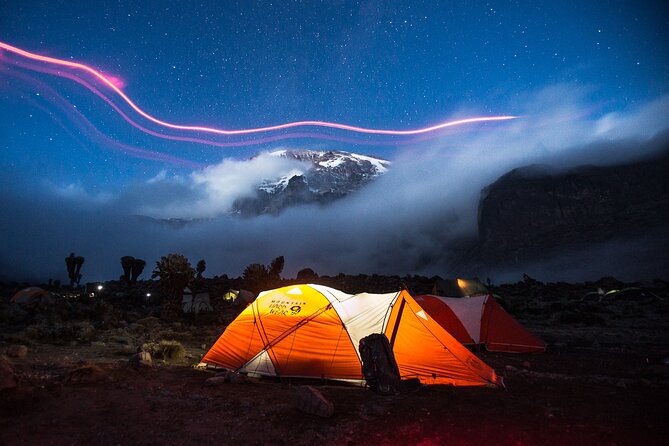
This day can feel strange because you may be tired at the high point, then feel better as you drop toward camp. Barranco Camp sits beneath the large Barranco Wall, with clouds often moving through the valley. It is a dramatic place to spend the night and a good reminder that scenery here is earned one slow step at a time.
The listed altitudes and distances are approximate, as they are on most mountain itineraries. Your exact walking time can change with weather, group pace, and how often the guides stop to check conditions.
Day 5: Climbing the Barranco Wall
Day 5 is short in distance, about 2.2 miles, and takes four to five hours. The main event is the climb up the Barranco Wall, followed by the route through Karanga Valley to Karanga Camp at around 13,100 feet, or 3,992 meters.
The wall can look intimidating from camp. It is an adventurous stretch, but the route is described as non-technical. You will use your hands at times and move carefully, with guides setting the pace. This is not a place for rushing or trying to pass other people.
After the wall, the route continues across the South Circuit toward Karanga. The short mileage is helpful after the previous day’s acclimatization climb. It also gives you time to rest, eat, and prepare for the higher camps still ahead.
I like this day because it feels active without being overloaded. You get a memorable physical feature, a change in views, and a manageable camp-to-camp distance.
Day 6: Kosovo Camp and the final preparation
Day 6 leads to Kosovo Camp at about 16,000 feet, or 4,876 meters. The walk is roughly 2.6 miles and takes five to six hours, although the slow pace and altitude make it feel like a full day.
You pass Barafu Camp and gain strong views of Kibo and Mawenzi, two of Kilimanjaro’s major volcanic peaks. Kosovo Camp sits on an exposed ridge, so the practical advice is important: learn your surroundings before dark.
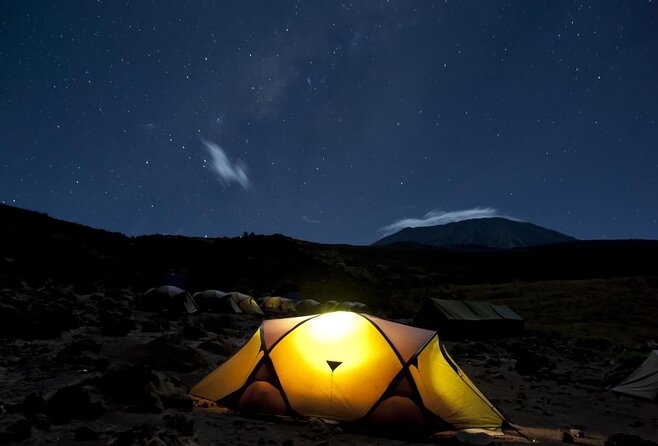
This is a preparation day more than a sightseeing day. You rest, relax, check your summit clothing, organize your daypack, and make sure you know where everything is. Since the summit attempt starts around midnight, you will need to eat and sleep at unusual times.
The exposed setting may not feel cozy. That is part of the point. You are now close to the summit and above much of the protection offered by lower slopes. Ask your guide about the timing of dinner, rest, wake-up, and the final gear check.
Day 7: Stella Point, Uhuru Peak, and the long descent
Summit day begins around midnight. The ascent to Stella Point takes about six to seven hours and covers heavy scree on one of the steepest non-technical parts of the mountain.
The goal is to reach the crater rim around sunrise. From Stella Point, you continue for roughly one more hour toward Uhuru Peak, the highest point in Africa, at 19,340 feet, or 5,895 meters. The route passes between the Rebmann and Ratzel glaciers before reaching the summit area.
This is the toughest part of the trek mentally and physically. Darkness hides the scale of the mountain, the air is thin, and progress can feel slow. You may be walking for hours before the summit appears close. Your guide’s pace and steady health checks matter here.
The itinerary lists about 13 miles for the full day, with approximately 5 miles of ascent and 12 kilometers of descent, followed by four to six hours down to Mweka Camp. The figures are approximate, but the message is not: reaching the summit is only half of a very long day.
After time at Uhuru Peak, you descend to Mweka Camp for dinner and a celebration. This descent is welcome, but it can be hard on tired legs. Trekking poles, careful foot placement, and keeping your water close are practical choices.
Day 8: Mweka Gate and a hot shower in Arusha
The final morning takes you from Mweka Camp to Mweka Gate, at about 5,400 feet, or 1,645 meters. The walk is approximately 6.4 miles and takes three to four hours.
This is an easier finish, but your legs may still be worn out from summit day. The trail brings you back into thicker vegetation, and the change from high volcanic terrain to lower forest can feel remarkably quick.
At Mweka Gate, the Climb Kili vehicle transfers you to your Arusha hotel. The promised shower is not a small detail. After a week of camping and a midnight summit attempt, clean clothes, a proper bed, and a long wash are part of the reward.
Guides, crew, and the small-group advantage
The operator caps the group at 15 people, and several past departures were much smaller. One group included four climbers with two guides, while another solo climber joined a group of four other hikers. That size can create a friendly camp atmosphere without the delays of a large party.
The guide names associated with past departures include Amani, Isaya, Emmanuel, Raymond, Steve, Herment Mosha, Manny, Cinga, Dastan, and Jackson. You should confirm your assigned guide before departure rather than assume one of these people will lead your climb.
The most useful guide service is not dramatic pep talk. It is regular attention to pace, breaks, meals, energy, and health. Several accounts describe guides such as Raymond asking when the group wanted to eat, start walking, take breaks, and explain how everyone felt. That is the right approach on a mountain where small problems can grow quickly.
Crew support also shapes the experience. Past departures included cooks and porters who handled meals, tents, and camp comfort. Details such as coffee wake-up calls, patient encouragement, and help with summit-night routines can make the operation feel much more manageable.
Who should book this trek?
This trek suits you if you want a structured Kilimanjaro climb with an extra acclimatization day and a scenic route through several climate zones. It is a good fit for a first-time high-altitude trekker who is fit, prepared, and willing to follow a slow pace.
It also suits experienced hikers who value organization. Several past climbers had significant mountain experience, including people familiar with high peaks in the United States, yet still appreciated the food, planning, guide attention, and crew support.
You should think twice if you dislike camping, struggle with long walking days, or want a flexible holiday with late starts. Summit night is especially demanding, and the package information clearly calls for strong physical fitness.
The high summit rate is encouraging, but it is not a promise that every person will reach Uhuru Peak. Altitude affects people differently. A responsible guide may slow you down, change the plan, or turn you around if your health is at risk.
Booking details and final advice
Pickup is offered from your Arusha hotel, and the scheduled start time is 8:00 a.m. Booking confirmation is sent within 48 hours, subject to availability. The group limit is 15 people, but ask how many people are actually booked for your date if group atmosphere matters to you.
Free cancellation applies if you cancel at least 24 hours before the experience start time. Cancellations or changes made inside that window are not accepted for a refund, and the cut-off follows local time.
Should you book the 8-day Lemosho route?
I would choose this trek if you want the Lemosho route’s changing scenery, a measured eight-day schedule, and a full support team rather than a stripped-down climb. The strongest reasons are the acclimatization design, the small-group limit, and the practical inclusions that make a mountain expedition easier to manage.
At $2,895, it offers solid value for a package that includes meals, camping equipment, park fees, and Arusha hotel transfers. Before booking, confirm the exact inclusions, your assigned guides, personal gear requirements, and tipping expectations.
Book it if you are ready for hard walking, cold nights, and a punishing summit day. Skip it if you want a gentle nature holiday. Kilimanjaro gives you spectacular scenery, but it asks for patience and preparation in return.
FAQ
How long is the Kilimanjaro trek?
The experience lasts approximately eight days, including the final walk to Mweka Gate and transfer back to your Arusha hotel.
What route does the trek use?
The trek uses the Lemosho route, beginning on the western side of Kilimanjaro and finishing at Mweka Gate.
What is included in the price?
The $2,895 price includes round-trip transfers from your Arusha hotel, camping equipment, park fees, and meals.
How large is the group?
The maximum group size is 15 people. Actual departures may be smaller.
What time does the trek begin?
The listed meeting time is 8:00 a.m. Summit night begins around midnight on Day 7.
How difficult is the trek?
You should have a strong physical fitness level. The summit day includes a six to seven hour ascent to Stella Point, about one more hour to Uhuru Peak, and a four to six hour descent to Mweka Camp.
Just added in Arusha
- Tanzania Wildlife Encounters – 6 Days★ 5.0 · 277 reviews
- Maasai village visit, Materuni waterfalls & coffee experience★ 4.5 · 95 reviews
- Tanzania Simba Safari – 5 Days★ 5.0 · 217 reviews
- Tanzania Enticing Explorations – 6 Days★ 5.0 · 106 reviews
- 3 Days Private Safari – manyara, Ngorongoro & Tarangire★ 5.0 · 94 reviews
- Materuni Waterfalls & Coffee Tour from Moshi★ 5.0 · 92 reviews
- Tarangire Day Tour★ 5.0 · 95 reviews
- Materuni waterfalls coffee tour & Chemka hot springs Day trip★ 5.0 · 131 reviews
Kilimanjaro & Mountain Treks, compared.
7-Day Machame Kilimanjaro Summit Tour from Arusha
Read our review →
Browse the lists this tour appears in