
Reviewed · TANZANIA · TOURS IN ARUSHA
4 Days safari Tour Tanzania
Tarangire’s elephant herds and giant baobabs are only the opening act. Over four days, this private safari moves from river-fed savanna to the broad Serengeti plains and then down into Ngorongoro Crater, where rhinos, flamingos, lions, and huge-tusked elephants may appear in one compact setting. The route packs Tanzania’s three most famous wildlife areas into a short trip.
I like the open-roof 4×4, which gives you a clear view for photography, and I like that meals, camping gear, and picnic lunches are already handled. The catch is the mileage: day two includes a long, bumpy four to five-hour drive, and the schedule leaves little room for a slow, leisurely pace.
Key points to know before booking
- Tarangire begins the trip with elephants and baobabs, plus a picnic site with a broad view.
- The Serengeti receives two game-drive periods, including an early sunrise outing when animals are often active.
- Ngorongoro Crater gives you five hours of wildlife viewing before the drive back to Arusha.
- A private group means your vehicle is reserved for your party, not mixed with strangers.
- The $1,650 price includes meals, camping equipment, wine, beer, and a driver-guide, but tips are extra.
- The pace is active, with early starts, long road sections, and three different overnight locations.
A compact route through northern Tanzania
This is a classic northern Tanzania safari compressed into four days. You leave Arusha after breakfast, visit Tarangire, continue to Serengeti, spend a second morning in the Serengeti, and finish at Ngorongoro Crater before returning to town.
That route makes sense if you want the major parks but do not have a full week. You get three distinct wildlife settings instead of spending all four days in one park. The tradeoff is road time. You will spend part of day two and day three moving between parks rather than watching animals.
The tour starts at about 7:30 a.m. with hotel pickup. Since this is a private activity, your group has the vehicle to itself. That gives you more say over questions, photo stops, and the general rhythm, although park conditions and the long distances still shape the day.
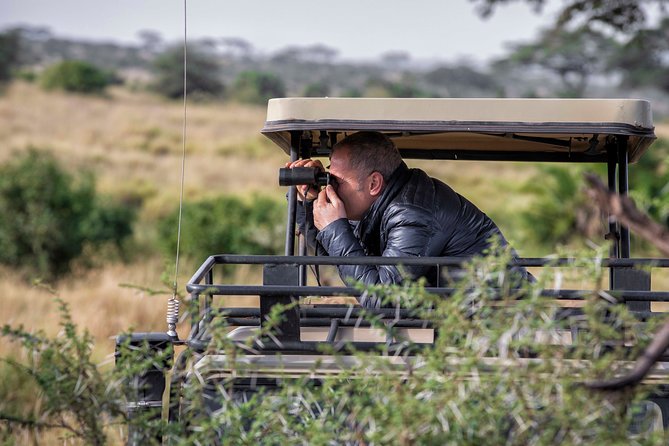
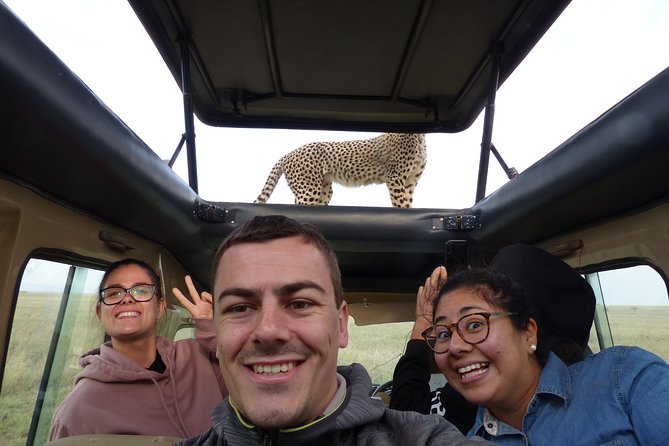
The supplied 4×4 has a pop-up roof. You can stand or sit beneath it while watching animals, rather than viewing the parks through fixed side windows. Binoculars are included, which is useful when a predator or rhino is far off.
Other safaris booked from Arusha:
- Balloon Safari & Bush Breakfast in Serengeti – Miracle Experience
★ 5.0 · 1,646 reviews - 4 Days Group Camping Safari
★ 5.0 · 1,101 reviews - 5 Days Group Camping Safari
★ 5.0 · 730 reviews
Day one: Tarangire’s elephants and baobabs
The first drive from Arusha to Tarangire takes about two hours. That is a manageable start, and you reach the park early enough for a substantial game drive.
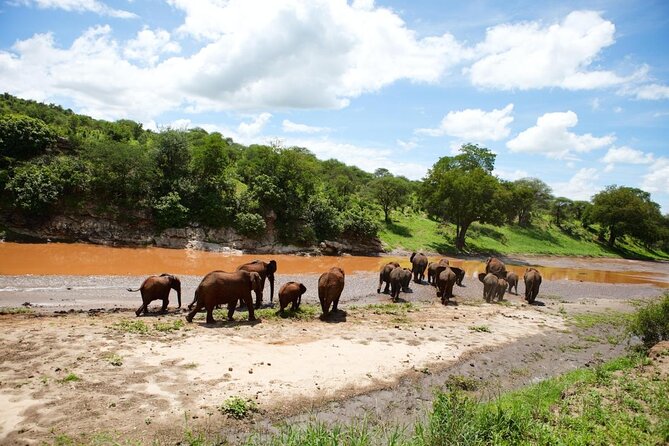
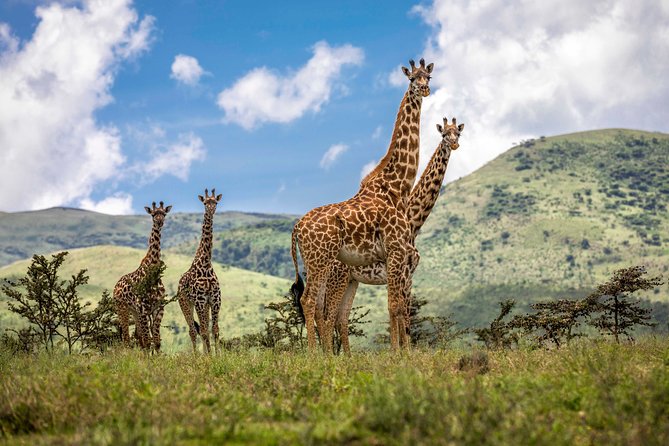
Tarangire is famous for its elephant herds and old baobab trees. These huge trees give the park a look you will not get in the Serengeti. Around the Tarangire River and seasonal swamps, you may see elephants, giraffes, zebras, impalas, elands, warthogs, lions, leopards, and many bird species.
The open roof matters here. It lets you look above the grass and trees, and it gives you a better angle for spotting birds or animals partly hidden behind brush. Your guide handles the driving and animal spotting, while you can use the binoculars for distant sightings.
Lunch is a picnic at a site with a broad view. That sounds simple, but it is one of the pleasures of a safari: you eat outdoors, with the park around you, then return to the vehicle for more viewing. The day includes about six hours of activity, so you should expect a full outing rather than a short afternoon excursion.
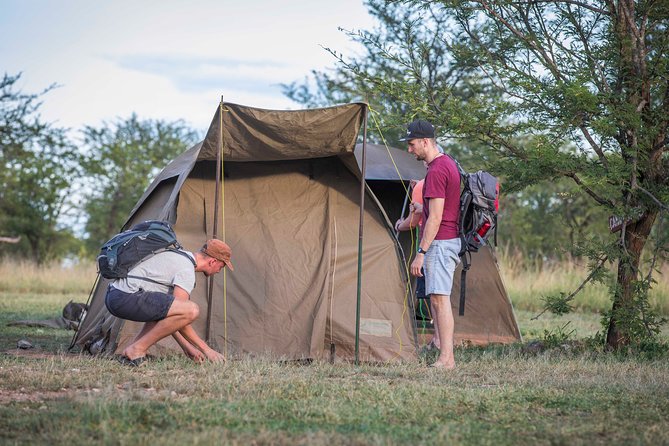
After the afternoon drive, you continue to Fig Tree Lodge for dinner and the night. The name of the accommodation is provided in the plan, but the exact room or camping setup should be confirmed before you pay if that matters to you. The package supplies camping equipment, which keeps you from carrying a tent and sleeping gear from home.
Day two: the long road to Serengeti
After breakfast, the route heads toward Serengeti through the crater highlands. The drive takes about four to five hours and is described as long and bumpy. That is the day to prepare for physically.
This road section is not dead time. The route itself gives you changing views as you move from the highlands toward the open plains, and the plan includes game viewing along the way. Still, you should not book this safari expecting four uninterrupted days of animal watching. Day two is partly a transfer day.
You stop for a picnic lunch before entering the park for an afternoon game drive. Serengeti is the main wildlife draw of the trip, and the afternoon light can be excellent for viewing and photographs. The plan continues through sunset before you head to Seronera campsite for dinner and the night.
Seronera is a central part of the Serengeti, making it a practical base for wildlife drives. The schedule gives you a chance to see the park in late afternoon and again the next morning. That two-part approach is more useful than racing through the park in a single block.
The plan says six hours for day two, but the road conditions and park entry timing can affect the exact rhythm. I would keep this day flexible and avoid scheduling an important evening commitment in Arusha.
Day three: sunrise in the Serengeti
The early start is one of the strongest parts of the schedule. You wake around 6 a.m. for a sunrise game drive, when many animals are active. Cooler morning air can also make the outing more comfortable than the hotter middle of the day.
Breakfast is served at a picnic site in the bush. You then continue the game drive before returning to camp around noon for a hot lunch. This is a useful arrangement: you get the best early hours outside, then return for a proper meal instead of relying on snacks all day.
After lunch, you load the vehicle and leave Serengeti for Ngorongoro. Dinner and the night are at Simba campsite. The drive means you lose part of the afternoon to the transfer, but it places you near the crater for the final morning.
This is also the day when your guide’s skill matters most. People who have traveled with this operator have singled out guides including Filex, Max, Edward, Mr. Andersson, Zepha, Maushir, Elikana, Benji, and Dulla. Filex is praised for spotting animals at great distances, while Max is noted for clear communication and a relaxed manner. Benji and Dulla are described as a strong driving and cooking team.
Those names do not mean you can assume a specific guide will lead your departure. Ask the company who is assigned and whether you can request someone. A good guide can make the difference between simply passing through a park and understanding what you are seeing.
A few more things to do in Arusha worth a look
- 4 Days Join Group tour Tarangire Serengeti and Ngorongoro crater
★ 5.0 · 219 reviews - 4-Day Safari from Arusha: Tarangire, Serengeti and Ngorongoro
★ 5.0 · 173 reviews - 4 Days Tarangire Serengeti Ngorongoro Crater
★ 5.0 · 117 reviews - 4 Days Tarangire, Serengeti and Ngorongoro Mid-Range Group Safari
★ 5.0 · 84 reviews
Day four: down into Ngorongoro Crater
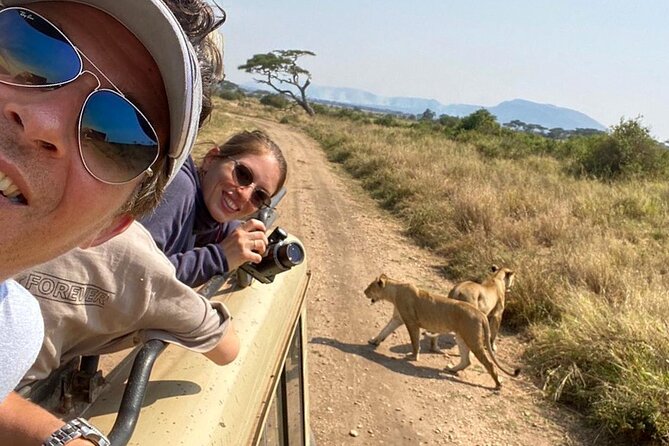
The final morning begins after breakfast with a game drive into Ngorongoro Crater. You have about five hours inside the crater before driving back to Arusha.
Ngorongoro is a dramatic setting because the crater walls hold a range of habitats close together. The route includes open plains, forest, swamps, a river, and a soda lake where flamingos may gather. The enclosed area supports many species found in East Africa, including the black rhino.
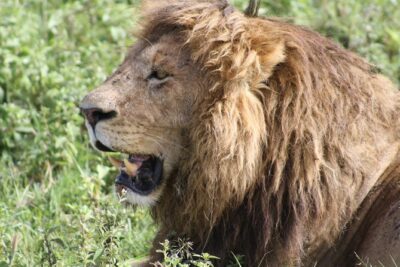
The crater is also known for large bull elephants with unusually big tusks. The volcanic soil and grasses provide minerals that help explain their size. You might also see lions and other predators, along with the same broad mix of grazing animals found elsewhere on the route.
This is the most concentrated wildlife day of the four, but it is not a private zoo. Animal sightings remain subject to nature, weather, season, and park conditions. The package promotes big-five sightings, and the route gives you a strong chance, but no responsible safari can promise every animal on every departure.
After about five hours, you drive to Arusha. The final transfer can be tiring, particularly after an early start, so plan your evening with some breathing room.
What the $1,650 price really covers
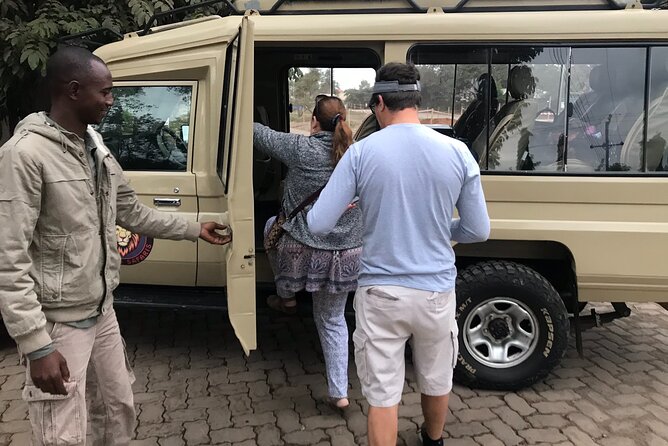
At $1,650 per person, this is not a bare transport service. The price includes a professional driver-guide, a private 4×4 with a pop-up roof, binoculars, camping equipment, breakfast four times, lunch four times, dinner three times, wine, and beer.
That meal coverage has real value. You do not need to search for food between remote parks, and dietary requirements can be accommodated if you communicate them in advance. The picnic lunches and bush breakfast also fit the safari schedule better than stopping at a town restaurant.
The package is best understood as a low-budget or midrange camping safari rather than a luxury lodge holiday. Some past departures have included Fig Tree Lodge, Seronera Camp, and Simba Camp. Confirm the exact accommodation category, sleeping arrangements, and facilities before booking, since the overall experience can feel very different depending on whether you receive a lodge room, a fixed camp, or supplied camping equipment.
Tips and gratuities are not included. Set aside money for that separately, and ask the company for its current guidance if you want to budget accurately.
Food, camping, and daily comfort
You receive breakfast, lunch, and dinner throughout the four days, with four breakfasts and lunches and three dinners listed. That matches the route, since the final day ends after the crater drive.
Meals are more than a small detail on safari. The days start early and include long road sections, so reliable food keeps the schedule moving. Dietary requests should be made before departure, not on the first morning.
Camping equipment is supplied. That reduces packing and avoids the headache of organizing a tent for a short trip. Still, bring practical personal items: warm layers for early morning, sun protection, comfortable shoes, and a way to protect your phone or camera from dust.
Wine and beer are included, but the plan does not spell out when or where they are served. If you have specific drink preferences, ask in advance rather than assuming a full bar is available.
The guide and vehicle shape the experience
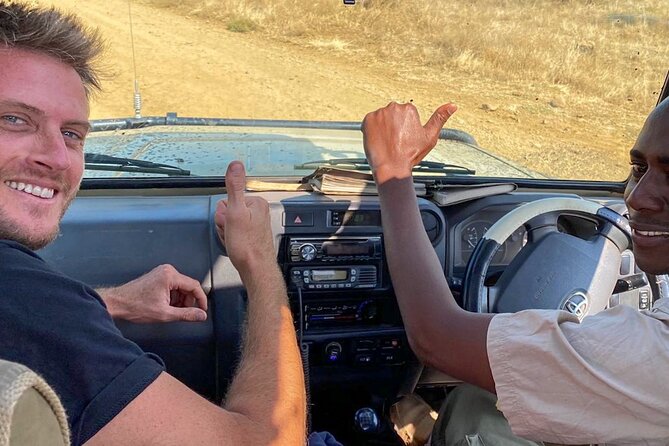
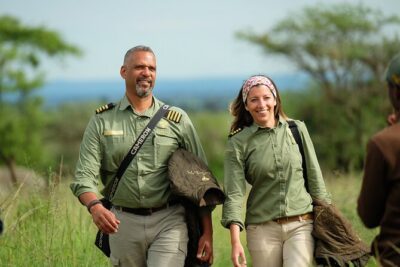
A safari guide is part driver, part naturalist, and part problem solver. The operator’s guides have been praised for safe driving, animal spotting, park knowledge, communication, and adapting to what each group hopes to see.
Guides named in accounts of this company include Tom, who is described as asking what people wanted from the safari, and Zepha, who was praised for knowing the park routes and managing travel time. Mr. Andersson is noted for making people feel welcome, while Maushir is praised for safe driving and clear explanations.
You should still explain your priorities at the start. If you care most about birds, elephants, big cats, or photography, say so. The guide cannot control animal behavior, but your interests can help shape the choices made during available game-drive time.
The private format is another plus. Only your group participates, so you do not have to negotiate every stop with strangers. That can be especially helpful for families, couples, or small groups with different stamina levels. It also means your own group carries the responsibility for being ready on time.
Who should choose this four-day safari
I would consider this trip a good fit for a first safari, a family that wants the major parks in a short window, or a couple combining northern Tanzania with a beach stay. The route has enough variety to feel substantial, and the private vehicle adds comfort and control.
It may also suit you if you want the classic big-five possibility without paying for a luxury fly-in program. The inclusion of food, gear, and vehicle costs makes the price easier to compare with other Tanzania packages.
I would hesitate if you dislike early mornings, rough roads, or changing accommodation every night. The Serengeti transfer is long, and the return from Ngorongoro to Arusha comes after a demanding morning.
Families can participate, and a departure with children aged eight and fourteen has been described as successful. Even so, parents should prepare children for long vehicle hours, dusty roads, and quiet stretches between sightings.
Booking details worth checking first
Pickup is offered from Arusha, and the stated start time is 7:30 a.m. Confirmation is provided at booking, and most people can participate. The exact pickup point should be confirmed with the operator if you are staying outside central Arusha.
The provider is Serengeti Wakanda Tours & Safaris. Free cancellation is available if you cancel at least 24 hours before the local start time. Cancellations or changes made inside that window are not accepted for a refund.
Before final payment, I would ask three direct questions: Which accommodation will I receive each night? Who is my guide? What personal items should I bring for the supplied camping setup? These answers will tell you much more about the comfort level than the word safari alone.
Should you book it?
Book this safari if you want a focused introduction to northern Tanzania with Tarangire, Serengeti, and Ngorongoro in one private trip. The strongest reasons are the varied route, open-roof vehicle, included meals and equipment, and the chance to work with a guide such as Filex, Max, Edward, or Mr. Andersson if available.
Skip it if you want a slow, lodge-based holiday or if long, bumpy transfers will spoil the experience. At $1,650, the value is strongest for someone who wants the headline parks, practical inclusions, and a private vehicle, while accepting camping-style comfort and a busy four-day schedule.
FAQ
Where does the safari begin?
The safari begins in Arusha, Tanzania, with pickup offered from your hotel. The stated start time is 7:30 a.m.
How long does the safari last?
The experience lasts approximately four days. It ends in Arusha after the Ngorongoro Crater game drive on day four.
Which parks are included?
The route includes Tarangire National Park, Serengeti National Park, and Ngorongoro Crater.
Is the tour private?
Yes. This is a private tour or activity, so only your group participates.
Is food included?
Yes. The package includes four breakfasts, four lunches, and three dinners. Dietary requirements can be catered to if communicated in advance.
Is camping equipment provided?
Yes. Camping equipment is supplied as part of the package.
Is transportation included?
Yes. The safari uses a modern 4×4 vehicle with a pop-up roof, and a professional driver-guide is included.
Are wine and beer included?
Yes. Wine and beer are listed among the inclusions.
Are tips included in the price?
No. Tips and gratuities are not included.
What is the cancellation policy?
You can cancel for a full refund if you cancel at least 24 hours before the experience start time. Cancellations or changes made less than 24 hours before the local start time are not accepted.
Just added in Arusha
- Tanzania Wildlife Encounters – 6 Days★ 5.0 · 277 reviews
- Maasai village visit, Materuni waterfalls & coffee experience★ 4.5 · 95 reviews
- Tanzania Enticing Explorations – 6 Days★ 5.0 · 106 reviews
- 3 Days Private Safari – manyara, Ngorongoro & Tarangire★ 5.0 · 94 reviews
- Tanzania Simba Safari – 5 Days★ 5.0 · 217 reviews
- Materuni Waterfalls & Coffee Tour from Moshi★ 5.0 · 92 reviews
- Tarangire Day Tour★ 5.0 · 95 reviews
- Materuni waterfalls coffee tour & Chemka hot springs Day trip★ 5.0 · 131 reviews
Tours in Arusha, compared.
Balloon Safari & Bush Breakfast in Serengeti – Miracle Experience
Read our review →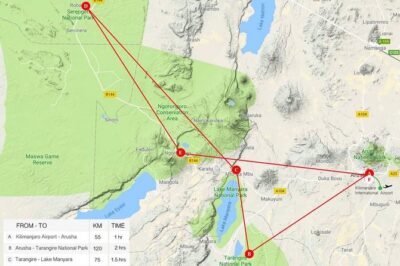
Materuni Waterfalls, coffee tour & Kikuletwa Hot Springs
Read our review →
3 Days Serengeti & Ngorongoro Group Camping Safari
Read our review →
7-Day Premium Luxury Tanzania Safari All-Inclusive
Read our review →
5-Day Highlights mid-Range Crater, Serengeti, Tarangire
Read our review →
Browse the lists this tour appears in