
Reviewed · TOURS IN SOUTH AFRICA
St Lucia: Hippo and Crocodile Cruise on a 15-Seat Vessel
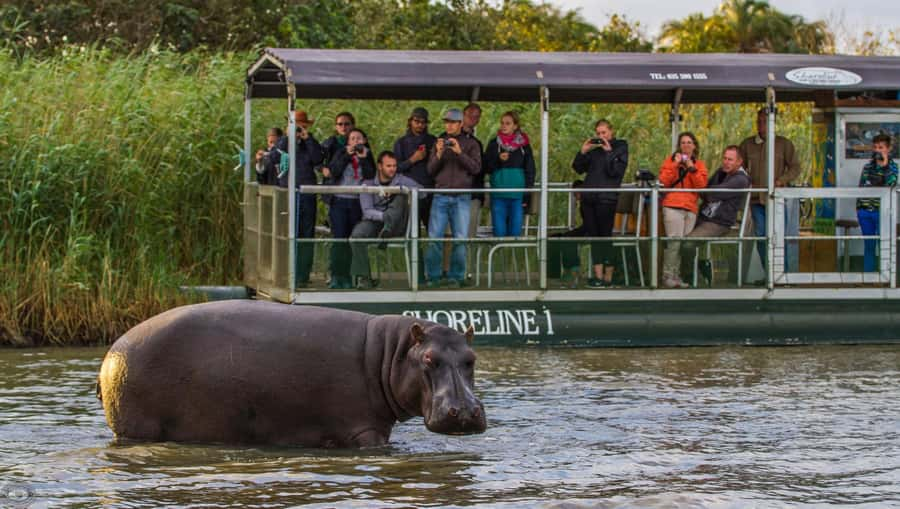
Lake St Lucia is one of Africa’s largest estuarine systems, and its main attraction is wonderfully simple: hippos gather in family groups close to the boat. On this two-hour cruise, you’ll glide through the iSimangaliso Wetland Park with a good chance of seeing several pods, plus Nile crocodiles and a long list of water birds.
I like the small 15-seat vessel, which keeps everyone near the water and gives each person room to look and take photos. I also like the guides, including Thobile, who explain hippo behavior, bird nesting habits, and the estuary itself without rushing your questions. The main consideration is that crocodiles are less certain than hippos, and the low boat cannot always see animals hidden behind reeds.
Key points to know before booking
- Three hippo groups are often seen: The boat can approach family groups at close range while keeping a safe distance.
- The 15-seat boat matters: Its low profile puts you near the water, and the open sides make viewing easy.
- Guiding is a major strength: Guides such as Thobile explain the wetland, animals, and birdlife in clear English.
- Late trips may be best: Hippos can become more active as the afternoon goes on.
- Crocodiles are possible, not promised: You may see several gathered near a carcass, or none at all.
- Bring warm layers: The boat has a roof, but drizzle and wind can make the ride cool.
Why Lake St Lucia is the right place for a hippo cruise
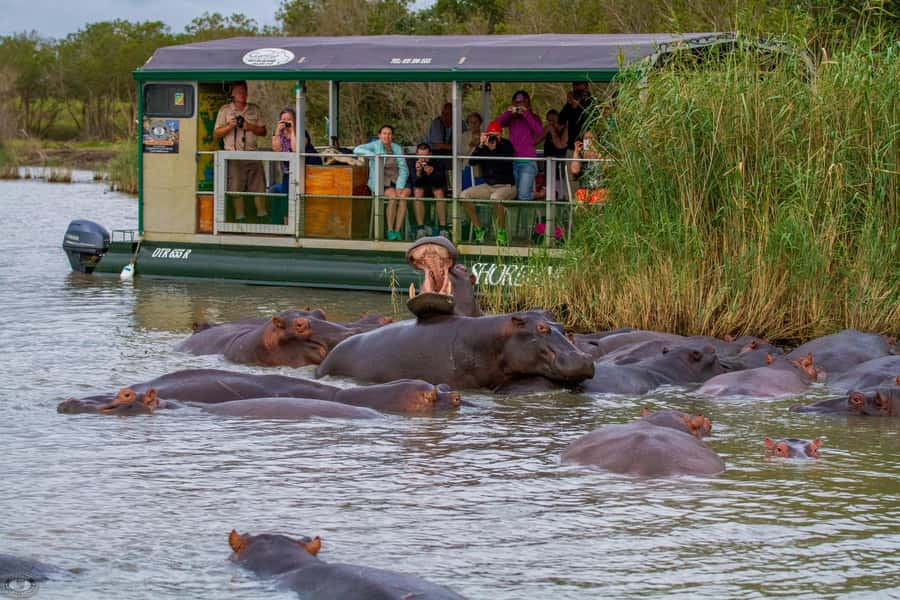
St Lucia Estuary is part of iSimangaliso Wetland Park, a protected area in KwaZulu-Natal known for its mix of fresh water, salt water, wetlands, and wildlife. You are not simply taking a boat across a lake. You are entering a large estuarine system where hippos, crocodiles, fish, and birds share the same water and reed-lined edges.
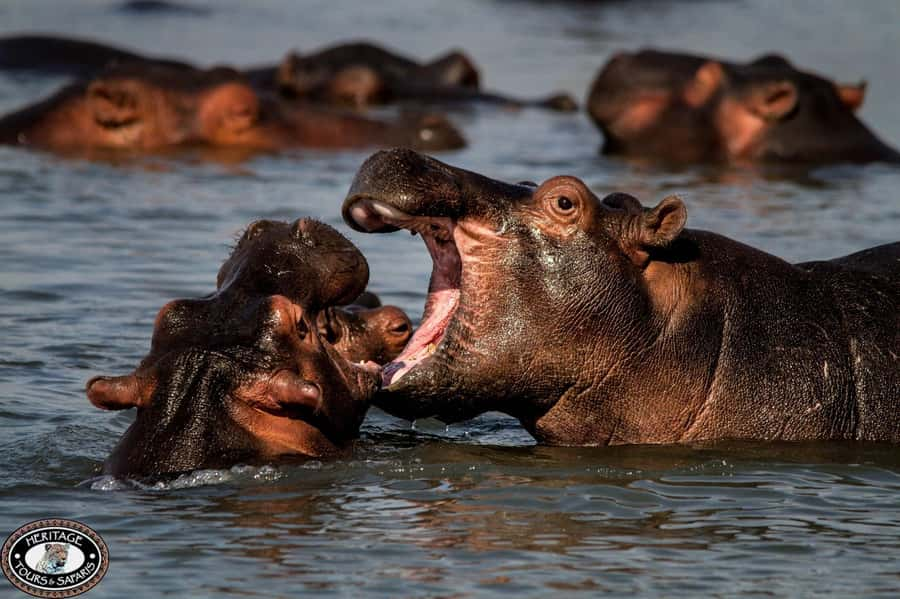
The cruise focuses on the section near the town of St Lucia. Hippos are the reliable stars here. They spend much of the day in the water, often gathering in groups with only their rounded backs, ears, eyes, and nostrils showing above the surface.
That makes this a different sort of wildlife outing from a land safari. You are not scanning distant grassland for a passing animal. Instead, the boat approaches resting hippos in the water, sometimes close enough to see their skin texture and hear their breathing.
You should still keep realistic expectations. Wildlife is never arranged on a schedule. Hippos are usually the safest bet, while crocodiles may remain hidden along the banks or among the grass. Birds can be plentiful, but dense plants may block your view of animals on land.
Other trips people book in South Africa:
- Wine Tour: Paarl, Franschhoek & Stellenbosch incl 3 wineries
★ 5.0 · 3,940 reviews - Cape Town: Hop-On Hop-Off Bus Tour with Optional Cruise
★ 4.8 · 3,929 reviews - Cape Town: Cape of Good Hope & Penguins Day Tour with Pickup
★ 4.7 · 3,362 reviews
Meeting at Siyabonga Jetty
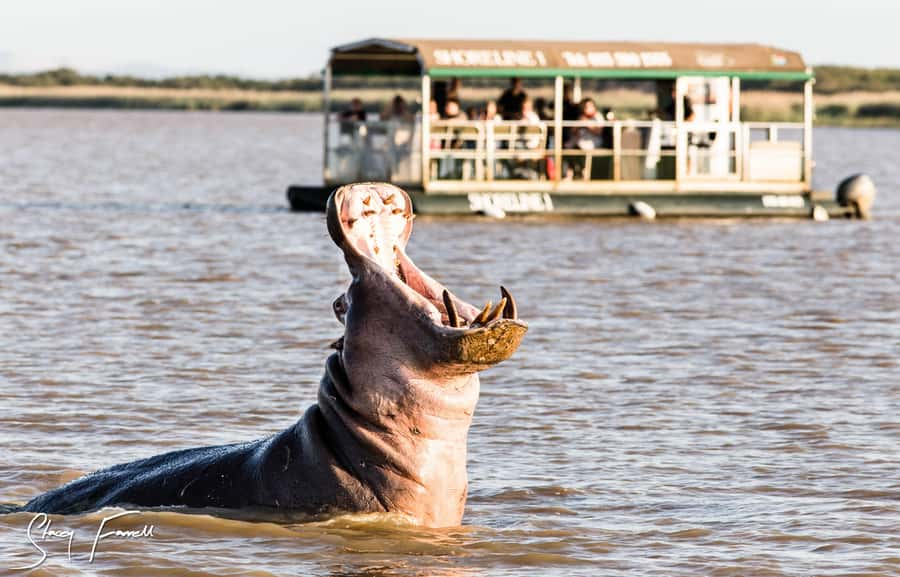
The departure point is Siyabonga Jetty, just before the bridge on the left as you enter St Lucia. Arrive 15 minutes before departure. Parking is available on both sides of the road, which makes this easy if you are driving yourself.
The jetty itself is practical rather than polished. The entrance area has been described as run-down, so do not expect a smart marina or a large visitor center. This does not affect the cruise, but it is useful to know so the setting does not surprise you.
The boat holds 15 people, making it more intimate than a large sightseeing vessel. There is no upper level, which is both a strength and a limitation. You stay close to the water and get a clear view of hippos beside the boat, but reeds can hide a hippo on shore from the people seated below.
There is a roof over the vessel, useful in strong sun and light rain. It is not a substitute for warm clothing, though. A jacket is worth bringing even if the weather looks pleasant at the jetty.
The first stretch: settling into the estuary
Once you leave the jetty, the boat moves into the broad water of the St Lucia Estuary. This opening stretch gives you time to settle in, look around, and begin spotting birds along the banks.
Your skipper and guide explain the area as you go. The talk covers the estuary, its plants, animal behavior, and the role of the wetland within iSimangaliso. A good guide helps you understand why the animals are gathered in particular places rather than simply pointing and naming them.
The boat’s size helps here. With only 15 seats, you can usually shift your attention from one side to the other without fighting through a crowd. The low sides also make photography easier, although you will want to protect your camera from splashes and keep your hands inside the boat around hippos.
Guides have been praised for answering many questions patiently. Thobile, in particular, has led trips covering the park, the ecosystem, and hippo behavior. Other guides have been described as funny, friendly, and good at spotting camouflaged animals from a distance.
Meeting the hippo families
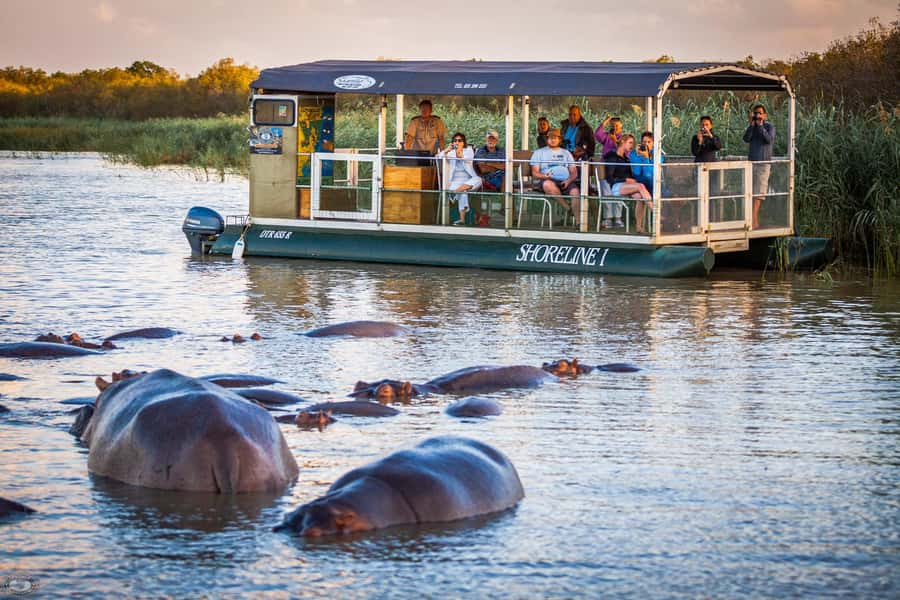
The main part of the cruise is the search for hippo groups. The boat typically works through areas where several families gather, sometimes seeing two or three groups during the two hours.
This is where the experience earns its price. At $23 per person, you are paying for a focused wildlife outing rather than a full-day safari. The boat gets you into the animals’ environment, and the guide adds useful context while you watch.
A hippo encounter can be quiet. You may first see a ripple, then a pair of ears, then the back of a large animal rising from the water. The group may remain still, or several animals may surface together. Babies and mothers are sometimes seen along the banks, which adds a gentler side to an animal better known for its size and danger.
The boat is designed for viewing rather than speed. It can position you near the pods and give people on both sides a chance to see. You may find that the guide pauses while everyone takes photographs, then moves slowly to another group.
There is no need for a dramatic chase. The close distance, the still water, and the sound of the animals are enough. I would bring binoculars if you have them, but you may not need them for the hippos. They are most useful for birds and animals farther along the shore.
Same base, a different sort of day:
- Zipline Cape Town – From Foot of Table Mountain Reserve
★ 5.0 · 3,179 reviews - Cape Town: Table Mountain Cable Car, Hop-On Hop-Off Bus Tour
★ 4.6 · 3,157 reviews - Cape Point and Boulder’s Penguins Full Day Tour
★ 5.0 · 3,118 reviews - From Cape Town: Cape Point & Boulders Beach Full-Day Tour
★ 4.8 · 3,032 reviews
Crocodiles, birds, and the less predictable moments
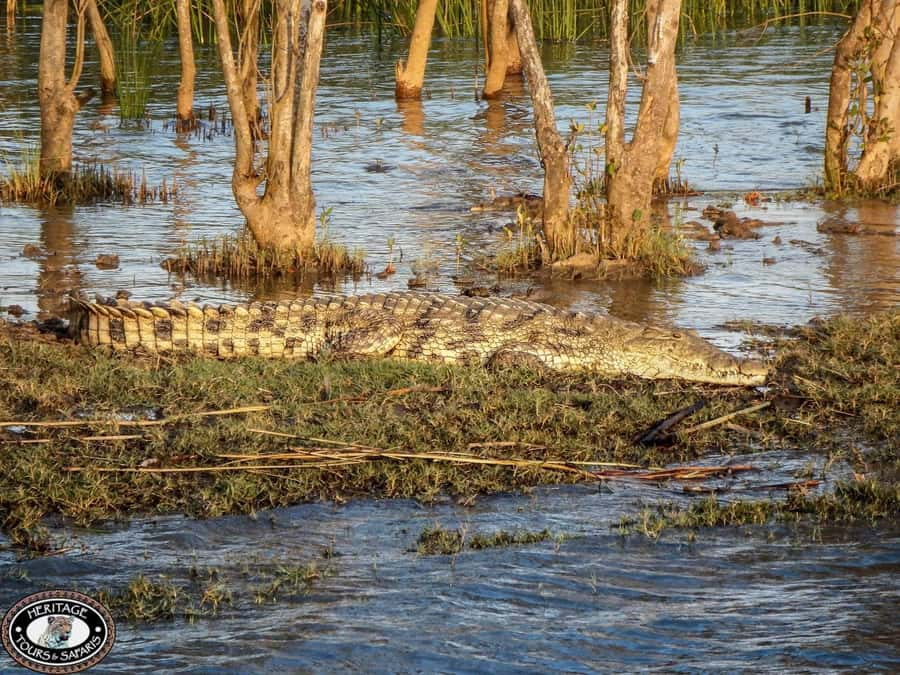
Nile crocodiles are part of the experience, but you should treat them as a bonus rather than a promise. Some trips see one or two small crocodiles. Others find a group gathered around a carcass. On poor-weather days, or when the animals stay in the grass, you may see none.
This unevenness is normal for a wildlife cruise. The guides can know where crocodiles often rest, but they cannot make a hidden animal appear. If crocodiles are your main reason for booking, consider a land-based wildlife outing as well.
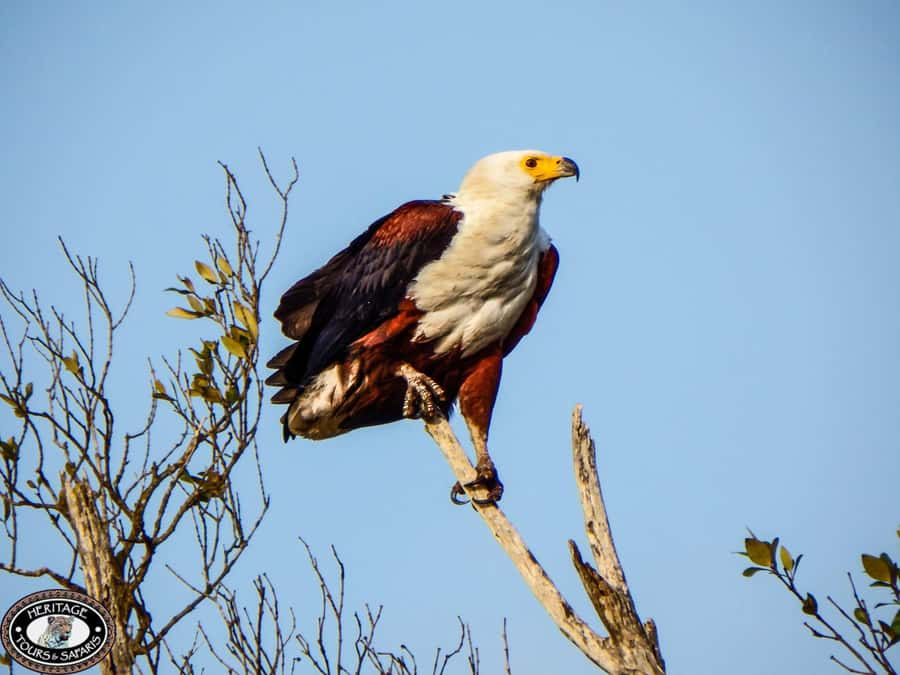
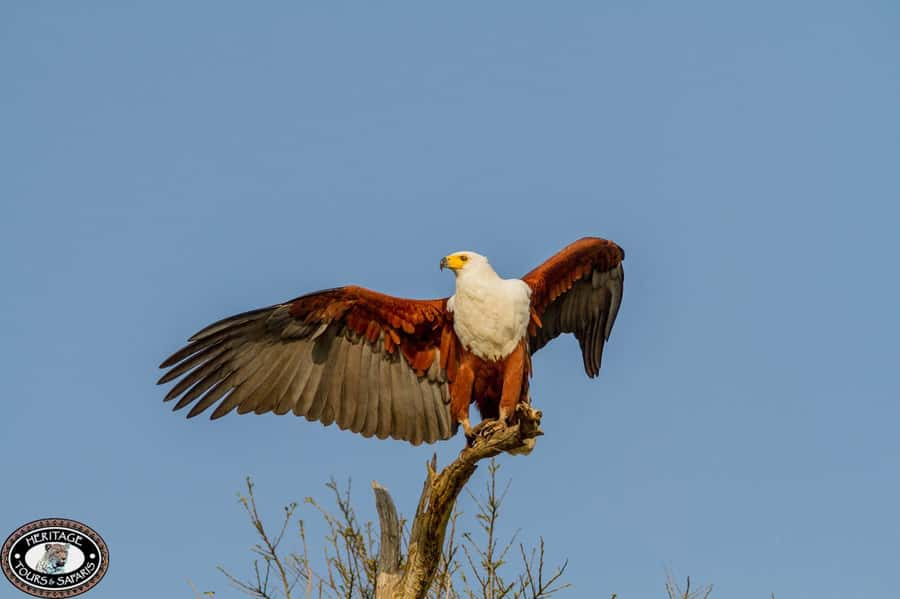
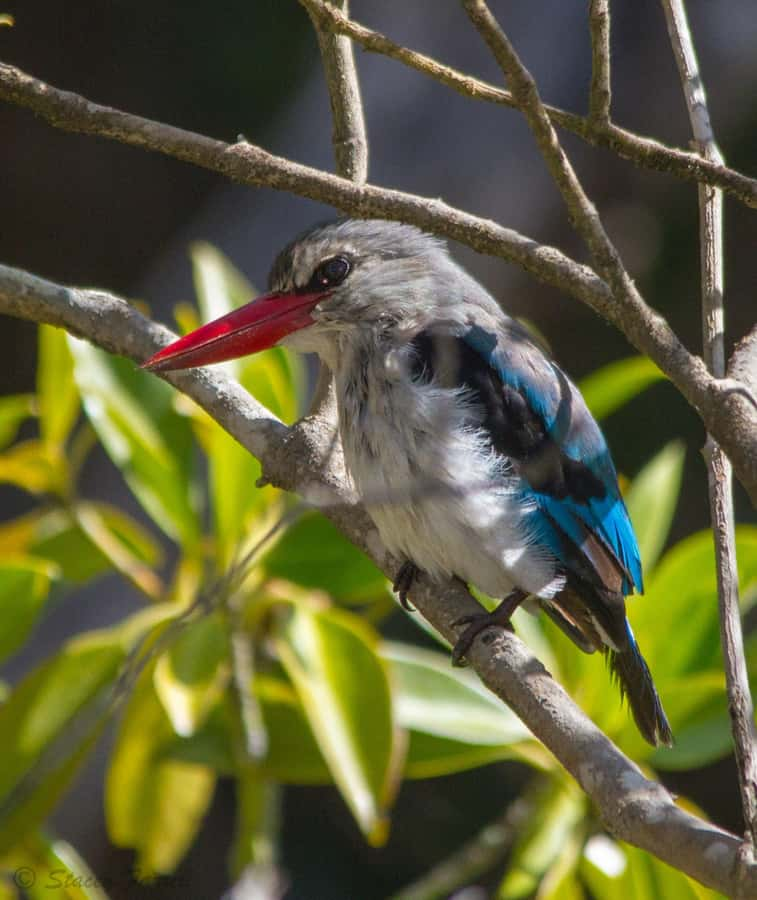
Birdlife is more consistent. The estuary supports hundreds of bird species, and the guide may stop to point out birds in the reeds, along the banks, or over the water. Fish eagles have been spotted, along with many other attractive water birds.
The bird stops help break up the hippo viewing and show why the estuary matters beyond its largest residents. You might also see smaller animals such as an iguana swimming near the boat. The experience is strongest when you treat the cruise as a wetland safari, not only a hippo ride.
Plant growth along the banks can be thick. This gives animals cover and makes the estuary feel wild, but it also limits views of antelope or hippos resting on land. From the low boat, you can miss an animal that a neighboring vessel sees from a higher position.
Why the guide can make or break the cruise
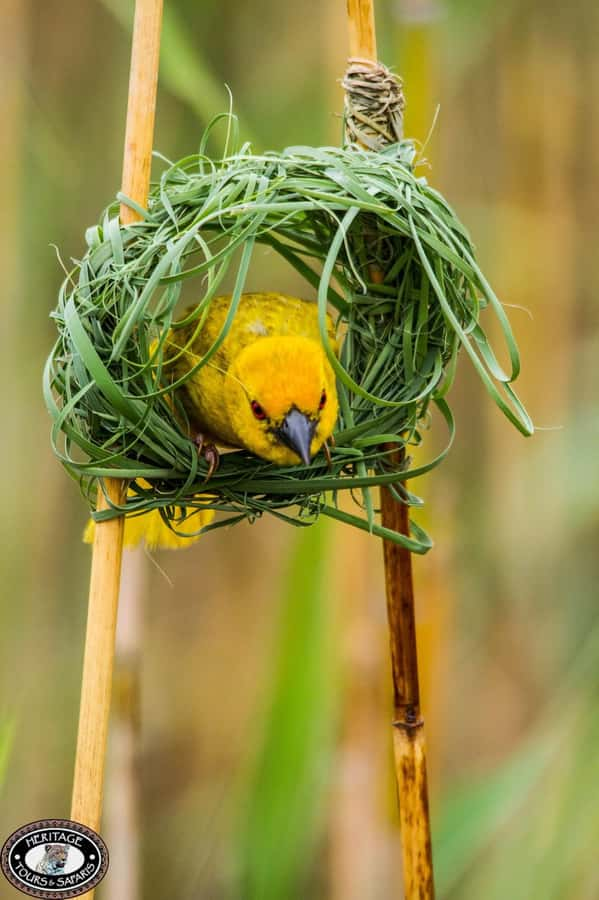
The boat and wildlife are important, but the guide shapes the quality of the two hours. The strongest guides do more than announce hippo sightings. They explain social groups, feeding habits, nesting behavior, and the wetland’s changing conditions.
Thobile has been singled out for clear explanations and patient answers. Other guides have included Brandon and Mr Brown, both noted for friendly, engaging commentary. You may not receive a particular guide, but the operation uses English-speaking skippers and guides familiar with the estuary.
A guide who knows the area can also find animals that you would miss. One guide was able to spot camouflaged wildlife from a considerable distance, while another steered the boat into useful viewing positions and waited while people took photos.
The commentary can follow familiar routes and stops, since the hippo groups tend to gather in the same areas. That is not necessarily a weakness. For a first visit, a repeatable route means the guide knows where to look and how to make the best use of the two-hour schedule.
Choosing your departure time and preparing for weather
The supplied schedule allows you to check available starting times, so choose carefully if you have flexibility. A later departure may give you more active hippos, especially as the afternoon progresses.
Light and weather also affect the mood. Clear conditions can bring bright views across the estuary, while a sunset trip may give you warm colors behind the hippos. A previous outing included hippos against an African sunset, including a mother and young animal along the bank.
Weather can turn a good trip into a chilly one if you dress too lightly. The roof protects you from some rain and sun, but it does not keep every seat dry during drizzle. Bring a jacket regardless of the forecast, and consider a waterproof layer if conditions look unsettled.
You may bring your own refreshments and snacks. Food and drinks are not included, so pack something if you are likely to want a drink during the two hours. Keep anything you bring secure and easy to store.
How this cruise compares with a larger boat
The 15-seat format is one of the clearest reasons to choose this trip. A smaller vessel usually gives you a better chance of hearing the guide and moving your view from one side to the other. It also feels closer to the water, which is valuable when hippos surface nearby.
There is a trade-off. The boat has no upper viewing deck, so the person in a larger, taller vessel may see over reeds more easily. If you want a wide elevated view of the entire estuary, this may not be the best design.
For close hippo watching, though, the low boat works well. It lets you see the animals at water level and keeps the group small enough that photography is not a constant battle for space.
Value, group size, and who should book
At $23 per person, this is a strong-value outing if you want a short wildlife experience from St Lucia. Two hours is long enough to see several hippo groups, listen to an explanation of the wetland, and look for birds without using an entire day.
It also suits families and mixed-age groups because the pace is gentle and the boat ride is straightforward. An 18-month-old child was accepted on one trip, although the provided information does not spell out a full child policy, so check before booking if you are bringing a young child.
Photographers should appreciate the close hippos and low sides, but should carry a jacket and be ready for plants to block some land-based sightings. Bird watchers should bring binoculars. Anyone hoping for crocodiles should keep expectations open.
Solo visitors should check the booking terms carefully. One solo customer had to reserve and pay for two places because a single-person reservation was not available. That is an important cost issue if you are traveling alone.
Free cancellation is available up to 24 hours before departure, and you can reserve now and pay later. If weather forces cancellation, a full refund is provided. These terms make it easier to fit the cruise into a changing South Africa itinerary.
Should you book the St Lucia hippo cruise?
Book it if you want close hippo encounters, a small boat, and useful guiding at a modest price. The main strengths are clear: hippos are commonly seen in several groups, the boat gives good water-level views, and the guides add far more than basic animal names.
Do not book it expecting a guaranteed crocodile sighting or a high boat with uninterrupted views over the reeds. Those are the two main limits. But if you are spending time in St Lucia, this is one of the most direct ways to understand the estuary and see its most famous residents.
The best plan is to choose a later departure if available, bring a jacket and binoculars, and leave room in your expectations for surprise sightings. A crocodile, fish eagle, swimming iguana, or mother hippo with a youngster may become the memory you take home.
FAQ
How long is the St Lucia hippo and crocodile cruise?
The cruise lasts two hours.
How much does the cruise cost?
The listed price is $23 per person.
Where does the cruise depart from?
It departs from Siyabonga Jetty in St Lucia, just before the bridge on the left as you enter town.
How early should I arrive?
Arrive 15 minutes before departure.
How many people fit on the boat?
The vessel has 15 seats.
What animals can I see?
You may see hippos, Nile crocodiles, and many bird species. Other wildlife, including an iguana, has also been spotted, but sightings vary.
Are crocodiles guaranteed?
No. Crocodiles can be elusive and may hide in grass or along the banks. Some trips see several, while others see none.
Can I bring food and drinks?
Yes. You may bring your own refreshments and snacks onboard.
What should I bring?
Bring a jacket, binoculars, and snacks. A jacket is useful even when the boat roof protects you from some sun and rain.
Just added in South Africa
- Cape Town: The Cape Wheel Ticket★ 4.6 · 350 reviews
- Cape Town: The Cape Point Instagram Small Group Tour★ 4.4 · 122 reviews
- Cape Town: Tandem Paragliding Flight with the Experts★ 4.7 · 280 reviews
- Stellenbosch: Historical Bike Tour & Wine Tasting★ 4.9 · 248 reviews
- From Cape Town: Stellenbosch Four Estate Full-Day Wine Tour★ 4.8 · 266 reviews
- Stellenbosch: Half-Day Wine Tour★ 4.7 · 601 reviews
- Stellenbosch: Wine Farm E-Bike Guided Tour★ 4.6 · 88 reviews
- Stellenbosch: Guided Historical Walking Tour★ 4.7 · 283 reviews
Cruises & Boat Tours, compared.
Orange Bay Island Boat Trip w/ Breakfast and Lunch
Read our review →
Ouzoud Waterfalls Guided Day Trip with Boat Ride
Read our review →
Royal Seascope Submarine Cruise with Snorkel Stop
Read our review →
3 Islands, Dolphins & Snorkel Yacht Trip w/ Lunch
Read our review →
Browse the lists this tour appears in