
Reviewed · TANZANIA · TOURS IN ARUSHA
8 Days Great Wildebeest Calving Migration Safari from Arusha
The main reason to choose this safari is its timing. From December through April, the southern Serengeti and Ndutu area can fill with wildebeest, newborn calves, zebras, and hungry predators. I like that the route does not stop with the migration: Tarangire’s elephants and baobabs and Ngorongoro Crater’s dense wildlife add two very different park experiences.
I also like the practical setup. Airport transfers, accommodation, meals, park fees, bottled water, and a private safari vehicle are included, so you are not solving travel problems every morning. The tradeoff is the amount of driving. Seven nights cover a lot of ground, and a full day in a safari vehicle can be tiring, especially on rough park roads.
Key points to know before booking
- Calving season is the star: The Ndutu portion is timed for the December to April migration, with the main calving period often around February for roughly three weeks.
- The route is varied: You visit Tarangire, Lake Manyara, Ndutu, central Serengeti, and Ngorongoro Crater.
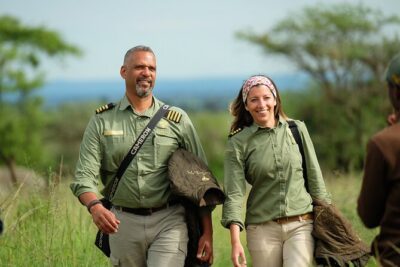
- Guiding matters here: Guides including William David, Albert, Emanuel, George Mathias, Calvin Kileo, Ombeni, and Michael Sangiwa are associated with praise for animal spotting, safe driving, and clear explanations.
- The package is close to all-inclusive: Lodging, meals, park entrance fees, private transport, airport transfers, and bottled water are covered.
- The group is capped at seven: That is small enough for a more personal vehicle experience, although the exact vehicle arrangement should be confirmed before booking.
- The finish is cultural as well as scenic: The final morning includes a Mto wa Mbu cultural tour and walking safari before returning to Arusha or the airport.
Why the wildebeest calving season matters
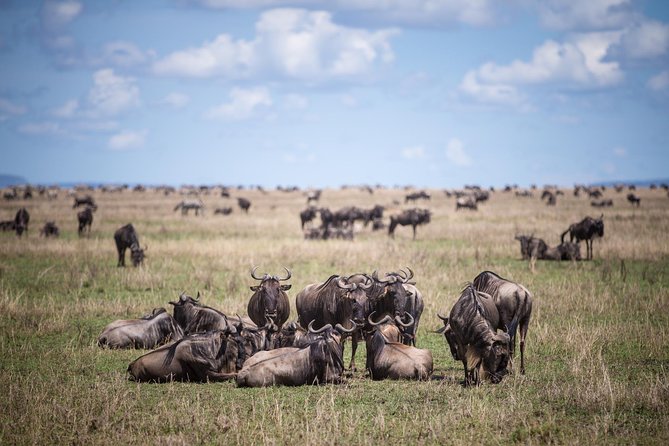
The Great Migration is not one single event in one fixed place. Herds move through the Serengeti ecosystem in response to rain and fresh grass, and the southern plains are especially important during calving season. This tour puts two nights in the Ndutu area at the heart of that period.
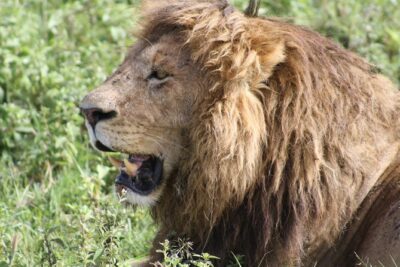
The attraction is not only the sight of a newborn wildebeest. Calving brings action. Young animals are vulnerable, and predators follow the herds. You might find lions, cheetahs, hyenas, or other hunters near the grazing animals, though wildlife sightings can never be promised.
The timing is strongest from December to April, with the heaviest calving often taking place around February and lasting about three weeks. If you are booking mainly for newborns, ask for the exact travel dates and the expected location of the herds. Nature does not follow a brochure.
This is also a good period for people who prefer a less crowded feel than the famous northern river crossings later in the year. The supplied information does not promise low visitor numbers, but the focus here is clearly the southern Serengeti calving grounds rather than the dramatic river crossings.
Other safaris booked from Arusha:
- Balloon Safari & Bush Breakfast in Serengeti – Miracle Experience
★ 5.0 · 1,646 reviews - 4 Days Group Camping Safari
★ 5.0 · 1,101 reviews - 5 Days Group Camping Safari
★ 5.0 · 730 reviews
Day 1: A soft landing at Mount Meru Hotel
Your trip begins with pickup at Kilimanjaro Airport and a transfer to Mount Meru Hotel in Arusha. This first night is useful. You are not expected to land and immediately spend hours heading toward the parks.
The tour officially begins from Arusha at 8:30 am, while the first day is mainly about arrival and settling in. Confirm your arrival details early, since the airport pickup is part of the package and the operator needs your flight information.
Arusha is the practical starting point for northern Tanzania safaris. Use this evening to check your camera batteries, organize a small day bag, and keep your warm layers handy. Safari mornings can be cool, while afternoons may feel hot.
Day 2: Tarangire’s elephants and baobabs
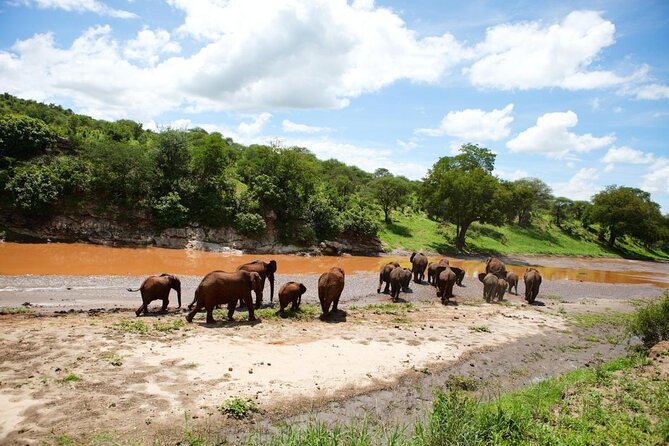
Tarangire National Park brings a strong opening act. The park is known for large elephant herds, baobab trees, tree-climbing lions, and the Tarangire River, which flows throughout the year.
That permanent water source helps explain why Tarangire can be productive for wildlife viewing. The baobabs give the park a distinctive look, and the elephants are a major reason to include it on a northern Tanzania route. Tree-climbing lions are possible, but they are not guaranteed on a particular drive.
You spend the night in a luxury tented camp. This is an important point for anyone comparing safari prices. A tented camp can mean canvas accommodation with a proper bed and lodge-style service, but standards vary from camp to camp. Ask the operator for the actual camp names and room details before paying if comfort is a major concern.
The first full park day also sets the rhythm for the rest of the trip: breakfast, long hours outside, wildlife watching, lunch, and an evening return to camp. Bring patience. The best sightings may come after a quiet stretch with little movement.
Day 3: A compact wildlife day at Lake Manyara
Lake Manyara National Park is a different kind of stop. It is smaller and more compact than the Serengeti, with a scenic lake and a varied mix of habitats. The route is useful because you can see a great deal without spending another entire day crossing a huge park.
The itinerary describes Lake Manyara as one of Tanzania’s most diverse reserves and points to its famous scenic appeal. You may see forest, open areas, lake edges, and wildlife in a relatively concentrated circuit. This makes it a pleasant change after Tarangire and before the longer run toward the southern Serengeti.
You spend this night in a luxury lodge rather than a tented camp. That change may appeal if you want a more conventional room after a day on rough roads.
The limitation is time. Lake Manyara receives one day, and the schedule does not promise a long walking program or a particular animal sighting. Think of it as a compact park visit that breaks up the transfer toward Ndutu, not as the central purpose of the safari.
Same base, a different sort of day:
- Tanzania Classic – 7 Days
★ 5.0 · 1,151 reviews - Materuni Waterfalls, coffee tour & Kikuletwa Hot Springs
★ 5.0 · 643 reviews - 3 Days Serengeti & Ngorongoro Group Camping Safari
★ 5.0 · 574 reviews - 7-Day Premium Luxury Tanzania Safari All-Inclusive
★ 5.0 · 426 reviews
Day 4: Reaching the Ndutu area in the southern Serengeti
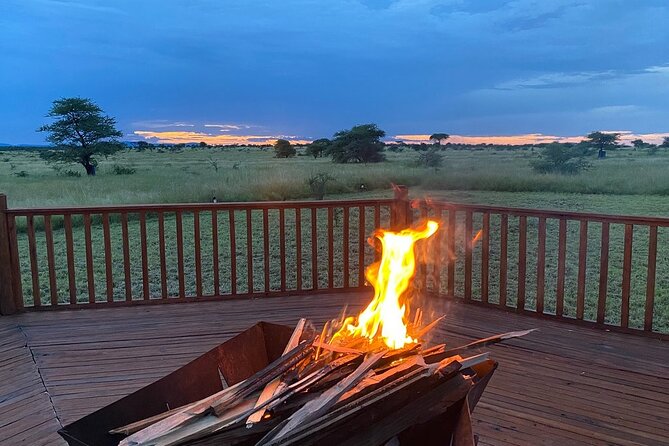
After breakfast, you head toward Lake Ndutu and the southern Serengeti ecosystem. The area lies within the Ngorongoro Conservation Area, but it functions ecologically as part of the broader Serengeti system.
Lake Ndutu is alkaline, as are many of the Rift Valley lakes, yet its water supports a wide range of wildlife. The appeal here is the mixture of soda lakes, open short-grass plains, woodland, and swamps. Different habitats mean different feeding and hunting opportunities.
This is the point when the safari becomes closely tied to the calving season. The southern plains are the place to watch for wildebeest herds and young animals during the right weeks.
You stay in a luxury tented camp. Camp location matters more than the word luxury. A camp close to the Ndutu action can save driving time and give you more hours for game viewing, so ask exactly where the camp is located and how seasonal conditions may affect access.
Day 5: A full Ndutu game drive
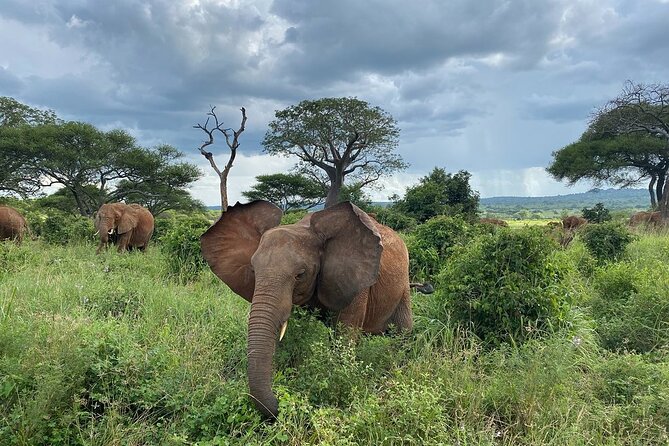
The fifth day is the strongest migration day on paper. You have a full game drive in the Ndutu area, with time to explore swamps, woodland, soda lakes, and the short-grass plains.
This matters because wildlife watching improves when you are not rushing from one park to another. Your guide can spend time checking likely areas, observing animal behavior, and waiting when something interesting develops.
The main calving period is described as a short window around February, lasting about three weeks for the majority of wildebeest births. Outside that peak, the area can still be worthwhile, but your chances of seeing very young calves may differ.
Predator sightings are part of the draw. The high number of young animals can attract big cats and hyenas. A guide with a sharp eye is especially valuable here. William David is praised for spotting animals, including black rhino, while Albert and Emanuel are associated with careful driving and patient support. Those names are useful to know, but you should confirm your assigned guide before departure.
The night is again in a luxury tented camp. Expect an outdoor-focused day rather than a polished resort schedule. You may spend several hours seated in the vehicle, so supportive clothing, sun protection, and a camera with spare batteries will make the day easier.
Day 6: Following the migration into central Serengeti
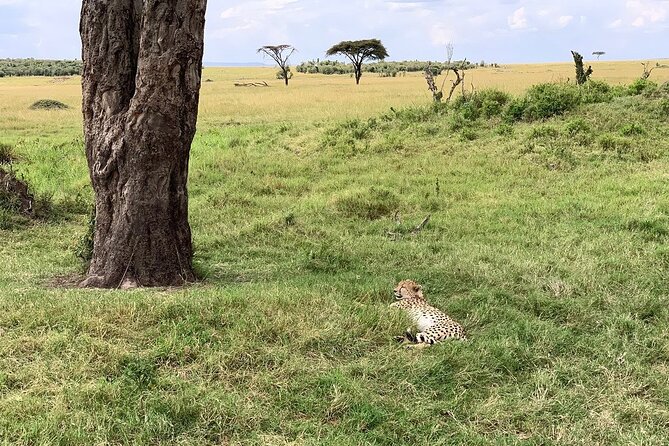
The sixth day moves into central Serengeti National Park, with full-day game drives following the migration trails. Central Serengeti is valuable because it adds a broader park experience after the concentrated calving focus of Ndutu.
The migration is constantly moving, and the exact position of the herds depends on recent rain and grazing conditions. Your guide’s role is not simply to drive you to a fixed attraction. It is to interpret tracks, animal behavior, habitat, and reports from the park network, then make sensible choices about where to spend time.
This is where the driver-guide can make or break the experience. Several named guides connected with this operator, including Calvin Kileo, Ombeni, George Mathias, and Michael Sangiwa, receive strong praise for animal identification, driving skill, humor, and patience with families. If you care about natural-history explanations, ask whether you can request a guide with strong interests in wildlife, plants, and local culture.
You spend another night in a luxury tented camp. Three consecutive tented-camp nights can feel wonderfully close to the bush, but it is worth checking the facilities if you need a particular level of privacy or comfort.
Day 7: Ngorongoro Crater, a concentrated wildlife finale
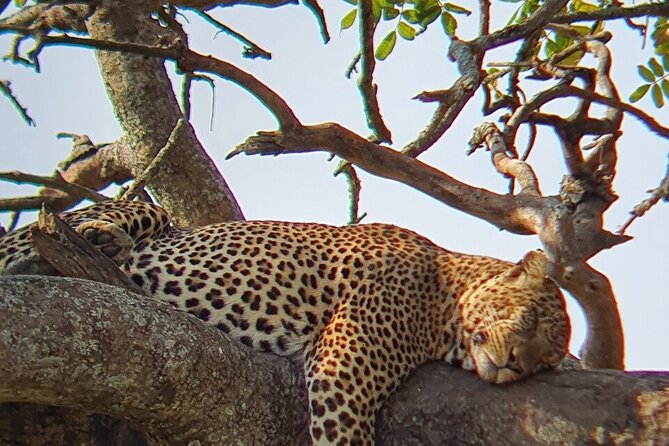
You leave the Serengeti for the Ngorongoro Conservation Area and descend about 600 meters into Ngorongoro Crater for a game drive. The crater is a dramatic setting and one of the most concentrated wildlife areas on this route.
A crater day feels different from the open Serengeti. The enclosed setting makes it easier to see a range of animals in a shorter area, although the number of vehicles and road conditions can affect the experience. The schedule gives you a crater descent and wildlife viewing, but it does not specify how many hours you spend on the crater floor.
The possibility of seeing the Big Five is part of the appeal, and several guides associated with the company have helped visitors find lion, leopard, rhinoceros, elephant, and buffalo. Still, no safari can guarantee all five. The value lies in having a guide who can explain what you are seeing rather than simply pointing toward an animal.
Your overnight stay is in a luxury lodge. After several nights in the Serengeti, a lodge night gives the trip a useful change of pace.
Day 8: Mto wa Mbu and the trip home
The final morning takes you to Mto wa Mbu for a cultural tour and walking safari, followed by a local lunch. This is a welcome change from sitting in a vehicle and watching the bush through a window.
The cultural stop gives the trip a human dimension, though the supplied details do not specify which communities, workshops, or sites are included. Ask the operator what the walking route involves and how long it lasts if this part is especially important to you.
In the afternoon, the vehicle returns you to Arusha or the airport for your flight home. Be careful with flight planning. The tour says airport drop-off is included, but it does not give a guaranteed arrival time, so leave a generous buffer before an international departure.
What the $2,999.62 price really covers
At $2,999.62 per person, this is not a budget overland trip. It is a packaged northern Tanzania safari with seven nights of accommodation, meals, park entrance fees, airport transfers, bottled water, a private vehicle, and a driver-guide.
That package can offer good value if you want the major costs handled in advance. Park fees alone can be significant, and moving between Tarangire, Manyara, Ndutu, central Serengeti, and Ngorongoro requires substantial transport and planning.
The strongest value comes from the route and the timing. You are not paying for one park and a quick look at the Serengeti. You are covering several major wildlife areas and spending a full day in Ndutu during the season that makes this region famous.
Still, compare carefully. Ask which specific camps and lodges are used, whether the vehicle is exclusively yours, and how many people will share it. The stated maximum is seven, which is reassuring, but the phrase private vehicle should be clarified in writing. Also check what is included at meals and whether drinks beyond bottled water cost extra. Alcoholic drinks are not included but can be bought.
The guide can shape the entire safari
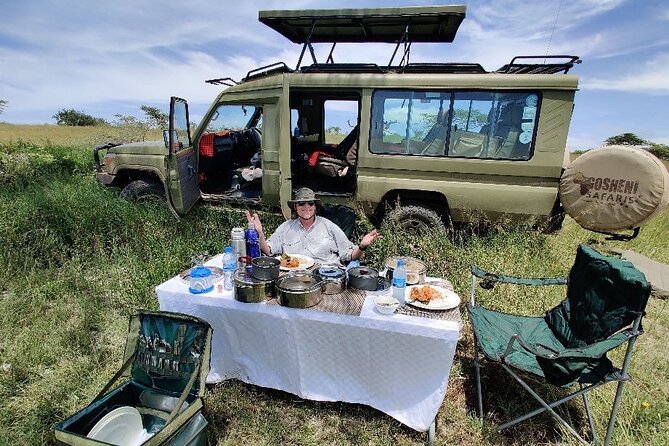
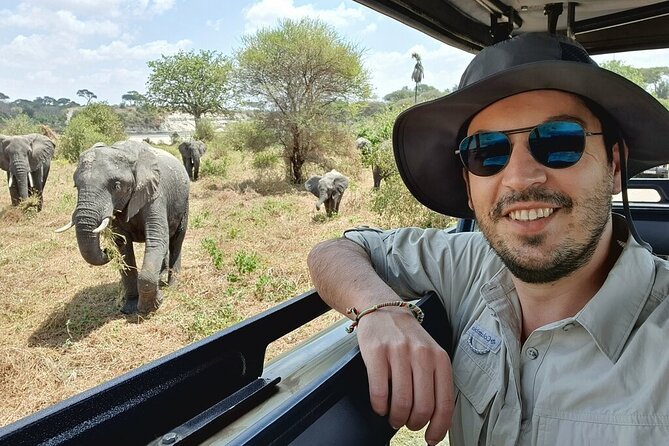
A safari vehicle is more than transport. Your driver-guide decides where to pause, how long to wait, and how much context you take home.
The strongest pattern in the available feedback is praise for guide quality. William David is associated with detailed explanations and excellent animal spotting. Albert is praised for seeing wildlife before others do, while Albert and Emanuel are noted for kindness and care with children. George Mathias is associated with professional driving and enthusiasm for finding animals.
Calvin Kileo is described as calm, patient, and strong on wildlife, plants, and the environment. Ombeni is praised for driving difficult roads, finding animals, and keeping the mood light. Michael Sangiwa is noted for warmth and patience with children.
You cannot assume you will receive a particular guide, so request one if the operator allows it. More important, tell the company what matters to you: photography, birds, big cats, family needs, botany, or cultural information.
Who should book this safari?
I would recommend this trip to a first-time Tanzania visitor who wants a broad northern circuit without arranging every hotel, transfer, and park fee alone. Families may also like the included logistics and the attentive guide style reported for this operation, though children need to manage long drives and full days outdoors.
It suits you especially well if wildebeest calving is the main goal and you can travel during the right months. It is less ideal if you want a slow, single-area safari with short transfers and plenty of free time at one lodge.
You should also be comfortable with changing accommodation styles. The route uses luxury tented camps and lodges, not one permanent resort. That variety is part of the safari experience, but it may not suit someone who wants predictable hotel facilities every night.
Practical details before you commit
Confirmation is sent within 48 hours, subject to availability. Children must be accompanied by an adult, and the operator asks you to provide dietary requirements when booking.
A moderate fitness level is required. The activity includes game drives, a walking safari, and cultural touring, so bring practical clothing and shoes rather than relying only on resort wear.
The tour has a mobile ticket and a maximum of seven people. Free cancellation is available up to 24 hours before the start time. Cancellations or changes inside that window are not refunded or accepted. Poor weather or failure to meet the minimum group size can lead to a new date, another experience, or a full refund.
Should you book it?
Book this safari if you want the southern Serengeti calving season at the center of a larger Tanzania route. The combination of Ndutu, central Serengeti, Ngorongoro Crater, Tarangire, and Lake Manyara gives you strong variety, while the included meals, park fees, lodging, and transfers simplify a complicated trip.
Before paying, confirm the travel dates, actual camps, group arrangement, vehicle details, and airport drop-off timing. If those answers suit you, the price is reasonable for a seven-night private-vehicle safari with this much park coverage. If you dislike long drives or want a slower holiday, choose a shorter route with more nights in one area.
FAQ
How long is the safari?
The experience lasts approximately eight days and includes seven nights of accommodation.
Where does the safari start?
The listed starting point is Arusha in Tanzania, with a start time of 8:30 am. Airport pickup is provided from Kilimanjaro Airport on arrival.
Which parks and areas are included?
The route includes Tarangire National Park, Lake Manyara National Park, the Lake Ndutu area, central Serengeti National Park, the Ngorongoro Conservation Area, and Ngorongoro Crater.
When is this safari scheduled?
It is designed for the Great Wildebeest Migration calving season from December through April. The main calving period is described as occurring around February for about three weeks.
Are meals included?
Yes. Meals are included according to the daily schedule. Breakfast, lunch, and dinner are provided on Days 2 through 7, while breakfast and lunch are included on Day 8.
Are park entrance fees included?
Yes. Park entrance fees are included in the package.
Is airport transportation included?
Yes. Airport pickup and drop-off are included. On the final day, you return to Arusha or the airport.
What type of accommodation is provided?
The itinerary includes Mount Meru Hotel, luxury tented camps, and luxury lodges. The exact camp and lodge names are not provided.
How many people can join the tour?
The maximum group size is seven people. The experience also includes transport by private vehicle, so confirm the vehicle arrangement when booking.
What happens if I need to cancel?
You can receive a full refund if you cancel at least 24 hours before the local start time. Cancellations or changes made less than 24 hours before the start are not accepted or refunded.
Just added in Arusha
- Tanzania Wildlife Encounters – 6 Days★ 5.0 · 277 reviews
- Maasai village visit, Materuni waterfalls & coffee experience★ 4.5 · 95 reviews
- Tanzania Enticing Explorations – 6 Days★ 5.0 · 106 reviews
- 3 Days Private Safari – manyara, Ngorongoro & Tarangire★ 5.0 · 94 reviews
- Tanzania Simba Safari – 5 Days★ 5.0 · 217 reviews
- Materuni Waterfalls & Coffee Tour from Moshi★ 5.0 · 92 reviews
- Tarangire Day Tour★ 5.0 · 95 reviews
- Materuni waterfalls coffee tour & Chemka hot springs Day trip★ 5.0 · 131 reviews
Tours in Arusha, compared.
Balloon Safari & Bush Breakfast in Serengeti – Miracle Experience
Read our review →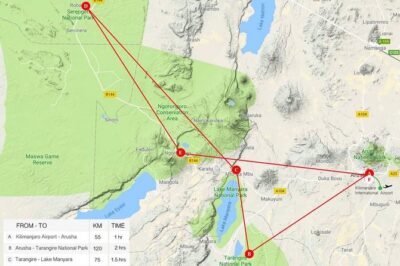
Materuni Waterfalls, coffee tour & Kikuletwa Hot Springs
Read our review →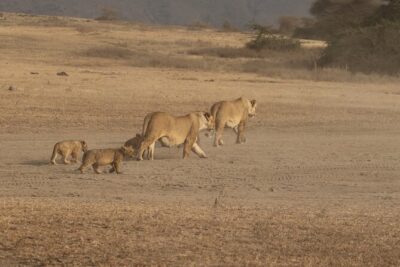
3 Days Serengeti & Ngorongoro Group Camping Safari
Read our review →
7-Day Premium Luxury Tanzania Safari All-Inclusive
Read our review →
5-Day Highlights mid-Range Crater, Serengeti, Tarangire
Read our review →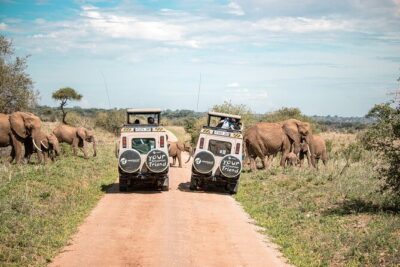
Browse the lists this tour appears in